
How Long Does a Heat Pump Defrost Cycle Take?

Quick Summary: A heat pump defrost cycle usually takes between 5 to 15 minutes. This process happens when ice builds up on the outdoor unit, reducing its efficiency. The heat pump temporarily switches to cooling mode to melt the ice, then returns to heating. Factors like humidity and temperature affect how often and how long the defrost cycle runs.
Is your heat pump making strange noises or blowing cool air in the winter? Don’t worry; it’s probably just defrosting! Many homeowners get concerned when they notice their heat pump going through a defrost cycle. Understanding why it happens and how long it takes can ease your mind. This guide will walk you through the defrost cycle, what to expect, and when to worry. We’ll break it down step by step, so you’ll know exactly what’s going on with your heat pump.
Understanding the Heat Pump Defrost Cycle

Heat pumps are fantastic for both heating and cooling your home, but they work a bit differently than traditional furnaces and air conditioners. In the winter, a heat pump extracts heat from the outside air to warm your home. This process can cause frost and ice to build up on the outdoor unit’s coils. That’s where the defrost cycle comes in.
Why Defrosting is Necessary
Ice buildup acts as an insulator, reducing the heat pump’s ability to extract heat from the air. This makes the system work harder and less efficiently. The defrost cycle melts this ice, allowing the heat pump to operate effectively. Without it, your heat pump would struggle to keep your home warm, and your energy bills would skyrocket.
How the Defrost Cycle Works
During the defrost cycle, the heat pump temporarily reverses its operation, briefly switching to cooling mode. This warms the outdoor coils, melting the ice. To prevent your home from getting too cold during this process, auxiliary or emergency heat (usually electric resistance heat) kicks in to provide warmth. The cycle ends when the ice is melted, and the system returns to normal heating mode.
Factors Affecting Defrost Cycle Duration

Several factors can influence how long a heat pump takes to defrost. Understanding these factors can help you troubleshoot potential issues and optimize your system’s performance.
Ambient Temperature
The outside temperature plays a significant role. Heat pumps tend to defrost more frequently when temperatures hover around freezing (32°F or 0°C). At these temperatures, moisture in the air readily freezes on the coils. When it’s significantly colder (below 20°F or -6.7°C), the air is often drier, reducing ice buildup and the need for frequent defrost cycles.
Humidity Levels
High humidity means more moisture in the air, leading to faster ice accumulation. If you live in an area with high humidity, your heat pump will likely defrost more often than in drier climates. Coastal regions, for example, often experience more frequent defrost cycles.
Heat Pump Model and Age
Newer heat pump models often have more efficient defrost mechanisms and sensors that accurately detect ice buildup. Older units may have less sophisticated controls, leading to longer or more frequent defrost cycles. Some high-end models also use demand defrost, which only activates when necessary, rather than on a fixed schedule.
System Maintenance
Regular maintenance is crucial for optimal performance. Dirty air filters, blocked coils, or low refrigerant levels can all cause the heat pump to work harder and ice up more quickly. Keeping your system clean and well-maintained ensures efficient operation and reduces the need for frequent defrost cycles. Schedule professional check-ups at least once a year to keep your system in top shape.
Typical Defrost Cycle Duration: What to Expect

So, how long should a defrost cycle last? Here’s a general guideline:
- Average Duration: Most heat pump defrost cycles last between 5 to 15 minutes.
- Frequency: A heat pump might defrost anywhere from every 30 minutes to every few hours, depending on the conditions mentioned above.
What Happens During the Defrost Cycle?
Here’s a breakdown of what you might notice during a typical defrost cycle:
- The fan stops: The outdoor unit’s fan will usually stop to maximize the heat available for melting the ice.
- Steam or fog: You might see steam or fog rising from the unit as the ice melts. This is normal.
- Cool air: You might feel cool air coming from your vents for a short period as the system briefly switches to cooling mode. The auxiliary heat should minimize this effect.
- Noises: You might hear gurgling, hissing, or other unusual sounds as the refrigerant reverses and the ice melts.
Troubleshooting Defrost Cycle Issues
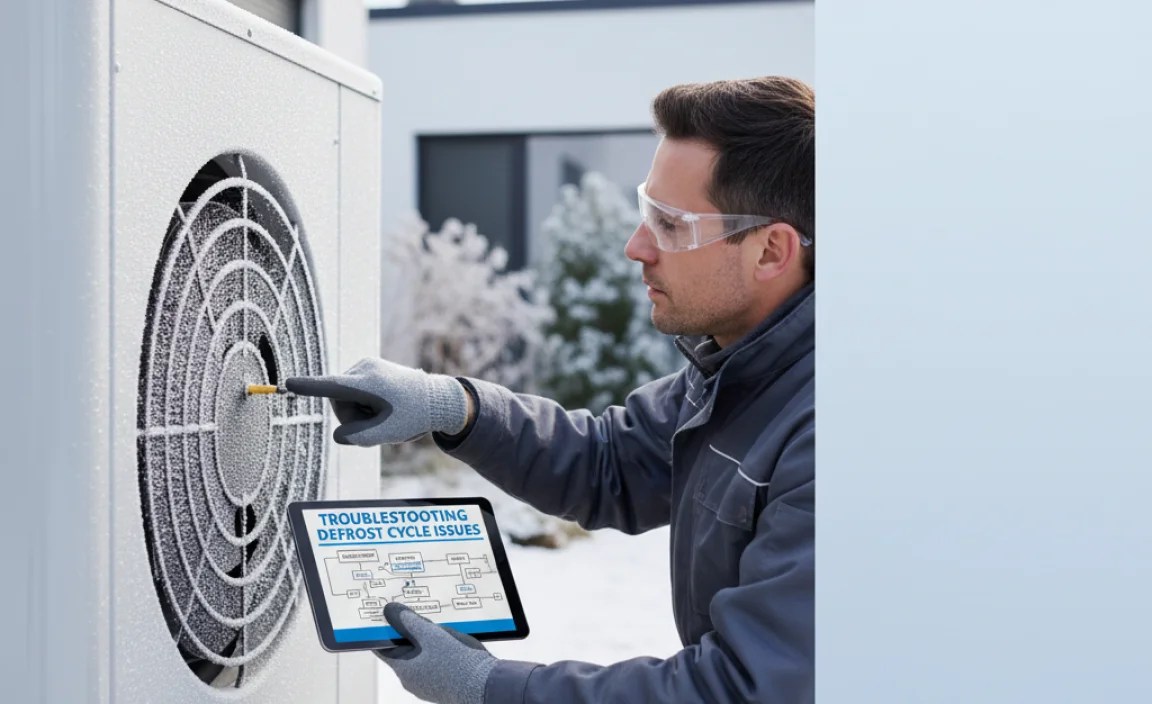
While the defrost cycle is a normal part of heat pump operation, some issues can arise. Here’s how to troubleshoot common problems:
Excessive Defrosting
If your heat pump is defrosting too frequently (e.g., more than once an hour), there might be an underlying problem. Here are a few things to check:
- Dirty Air Filter: A clogged air filter restricts airflow, causing the system to work harder and ice up more quickly. Replace the filter regularly (every 1-3 months).
- Dirty Coils: Over time, the outdoor coils can become covered in dirt, leaves, and debris. Clean the coils with a soft brush or garden hose (use a gentle spray).
- Refrigerant Leak: Low refrigerant levels can cause the system to ice up excessively. Call a professional HVAC technician to check for leaks and recharge the refrigerant.
- Faulty Defrost Sensor: The defrost sensor tells the system when to initiate the defrost cycle. If it’s malfunctioning, the system might defrost too often or not at all. A technician can test and replace the sensor if needed.
Lack of Defrosting
If you notice ice building up excessively on the outdoor unit without the system initiating a defrost cycle, there could be a problem with the defrost system itself.
- Defrost Timer: Some older units use a timer to initiate defrost cycles. If the timer is faulty, it might not trigger the defrost cycle.
- Defrost Control Board: The control board manages the defrost cycle. If it’s malfunctioning, it might not send the signal to initiate defrosting.
- Defrost Thermostat: This thermostat senses the coil temperature and signals when to start the defrost cycle. If it’s faulty, it might not detect ice buildup.
Cool Air During Defrost Cycle
Feeling cool air during the defrost cycle is normal, but it shouldn’t be excessive. If your home feels very cold during the defrost cycle, there might be an issue with the auxiliary heat.
- Auxiliary Heat Failure: Check the auxiliary heat settings on your thermostat. Make sure it’s set to “auto” or “emergency heat” if needed. If the auxiliary heat isn’t working, check the circuit breaker.
- Faulty Heating Elements: Electric resistance heating elements can burn out over time. A technician can test and replace them if needed.
Maintenance Tips to Optimize Defrost Cycles

Regular maintenance can help your heat pump run efficiently and minimize defrost cycle issues. Here are some tips:
- Change Air Filters Regularly: Replace your air filters every 1-3 months, or more often if you have pets or allergies.
- Clean Outdoor Coils: Clean the outdoor coils at least once a year, preferably in the spring. Use a soft brush or garden hose with a gentle spray.
- Trim Vegetation: Keep vegetation trimmed back around the outdoor unit to ensure proper airflow.
- Schedule Professional Maintenance: Have your heat pump inspected and serviced by a qualified HVAC technician at least once a year.
Understanding Defrost Cycle Indicators
Many modern heat pumps have indicators to let you know when they are in defrost mode. These can include:
- A light on the thermostat: Some thermostats have a specific “defrost” light that illuminates during the cycle.
- A message on the thermostat display: More advanced thermostats may display a message such as “defrosting” or “ice melting.”
- Changes in fan operation: As mentioned earlier, the outdoor fan usually stops during defrost. This can be a visual clue.
Demand Defrost vs. Timed Defrost
Heat pumps use different methods to determine when to initiate a defrost cycle. Here’s a comparison:
| Method | Description | Pros | Cons |
|---|---|---|---|
| Timed Defrost | Defrost cycles are initiated at fixed intervals, regardless of actual ice buildup. | Simple and reliable. | Can lead to unnecessary defrost cycles, wasting energy. |
| Demand Defrost | Defrost cycles are initiated based on actual ice buildup, using sensors to monitor coil temperature and pressure. | More efficient, as defrosting only occurs when needed. | More complex and potentially more expensive to repair. |
Is the Defrost Cycle Noisy?
Heat pumps can make various noises during the defrost cycle, which can be alarming if you’re not expecting them. Here are some common sounds and what they mean:
- Hissing or Gurgling: This is usually the sound of refrigerant reversing and melting ice. It’s generally normal.
- Clicking: Clicking sounds can come from relays and switches as the system changes modes.
- Loud Banging or Grinding: These sounds could indicate a problem, such as a loose fan blade or a malfunctioning compressor. Call a technician if you hear these noises.
Emergency Heat vs. Auxiliary Heat
During the defrost cycle, your heat pump relies on supplemental heat to keep your home warm. There are two main types of supplemental heat:
- Auxiliary Heat: This is the standard supplemental heat that kicks in during defrost cycles and when the heat pump can’t keep up with demand.
- Emergency Heat: This setting bypasses the heat pump entirely and relies solely on the supplemental heat source. It’s typically used only when the heat pump is malfunctioning.
It’s important to understand the difference between these settings to use your system efficiently. In most cases, the “auto” setting on your thermostat will automatically engage auxiliary heat when needed. Avoid using emergency heat unless your heat pump is completely broken, as it’s much less energy-efficient.
Heat Pump Efficiency and Defrost Cycles
The defrost cycle inevitably reduces the overall efficiency of your heat pump, as it requires energy to melt the ice. However, modern heat pumps are designed to minimize this impact. Here are some factors that affect efficiency:
- SEER and HSPF Ratings: Look for heat pumps with high Seasonal Energy Efficiency Ratio (SEER) and Heating Seasonal Performance Factor (HSPF) ratings for optimal efficiency.
- Demand Defrost: As mentioned earlier, demand defrost systems are more efficient than timed defrost systems.
- Proper Maintenance: Keeping your system well-maintained ensures it operates at peak efficiency, minimizing energy waste during defrost cycles.
DIY vs. Professional Help
Some heat pump maintenance tasks, such as changing air filters and cleaning outdoor coils, are easy to do yourself. However, more complex issues, such as refrigerant leaks, faulty sensors, or control board problems, require professional help. Here’s a general guideline:
| Task | DIY | Professional |
|---|---|---|
| Changing Air Filters | Yes | No |
| Cleaning Outdoor Coils | Yes | Sometimes |
| Checking Refrigerant Levels | No | Yes |
| Repairing Electrical Components | No | Yes |
| Diagnosing Complex Issues | Maybe | Yes |
FAQ About Heat Pump Defrost Cycles
Here are some frequently asked questions about heat pump defrost cycles:
Why does my heat pump blow cold air sometimes?
This usually happens during the defrost cycle. The heat pump temporarily switches to cooling mode to melt ice on the outdoor unit. Auxiliary heat should kick in to keep your home warm.
How often should my heat pump defrost?
It depends on the temperature and humidity. A heat pump might defrost every 30 minutes to every few hours in freezing, humid conditions.
Is it normal to see steam coming from my heat pump in winter?
Yes, that’s normal. The steam is created when the ice melts during the defrost cycle.
Can I manually defrost my heat pump?
Some thermostats have a manual defrost setting. However, it’s generally best to let the system defrost automatically. Manually defrosting can be inefficient and potentially damaging.
What should I do if my heat pump is constantly defrosting?
Check the air filter and outdoor coils. If they’re clean, call a professional HVAC technician. There might be a refrigerant leak or a faulty sensor.
Will defrosting increase my energy bill?
The defrost cycle does use energy, but modern heat pumps are designed to minimize the impact. Regular maintenance and efficient settings can help keep your energy bills in check.
How do I know if my heat pump is not defrosting properly?
If you notice excessive ice buildup on the outdoor unit, or if your home feels cold even when the heat pump is running, there might be a problem with the defrost system. Call a technician for assistance.
Conclusion
Understanding the heat pump defrost cycle can help you maintain a comfortable and efficient home. Remember, a typical defrost cycle lasts between 5 to 15 minutes and occurs when ice builds up on the outdoor unit. Regular maintenance, such as changing air filters and cleaning coils, can optimize performance and prevent issues. If you notice excessive defrosting, lack of defrosting, or other unusual problems, don’t hesitate to call a qualified HVAC technician. With the right knowledge and care, your heat pump will keep your home warm and cozy all winter long.
“`


