How to Read Fuel Pump Duty Cycle: A Beginner’s Guide

Quick Summary: Reading fuel pump duty cycle involves using an OBD2 scanner to monitor the percentage of time the fuel pump is actively powered. A higher duty cycle indicates the pump is working harder to meet fuel demands, often between 50-70% at idle and potentially reaching 80-90% at high loads. Understanding these readings helps diagnose fuel delivery issues and ensure optimal engine performance.
Ever wondered if your car’s fuel pump is working as hard as it should? It’s a common concern, especially when you notice performance issues. Understanding fuel pump duty cycle is like checking the pulse of your fuel system. It might sound complicated, but it’s actually quite simple to grasp. This guide will walk you through the process step-by-step, so you can confidently monitor your fuel pump’s performance. We’ll cover what the duty cycle means, how to read it using an OBD2 scanner, and what those readings tell you about your car’s health. Let’s get started!
What is Fuel Pump Duty Cycle?

Fuel pump duty cycle refers to the percentage of time that the fuel pump is actively powered “on” during a complete cycle. This measurement indicates how hard the fuel pump is working to supply the engine with the necessary fuel. Think of it like this: if the duty cycle is 50%, the pump is running half the time and resting the other half. A higher duty cycle means the pump is running more often to meet the engine’s demands.
Understanding this metric is crucial for diagnosing fuel delivery issues. If your engine isn’t getting enough fuel, it can lead to poor performance, stalling, or even engine damage. By monitoring the fuel pump duty cycle, you can identify potential problems before they become serious.
Why is it Important to Monitor Fuel Pump Duty Cycle?
Monitoring the fuel pump duty cycle offers several key benefits:
- Early Problem Detection: Identifies fuel delivery issues before they cause significant engine problems.
- Performance Optimization: Ensures the engine receives the correct amount of fuel for optimal performance.
- Fuel Efficiency: Helps maintain efficient fuel consumption by ensuring the fuel pump isn’t working harder than necessary.
- Preventative Maintenance: Provides insights into the health of the fuel pump, allowing for timely repairs or replacements.
Tools You’ll Need
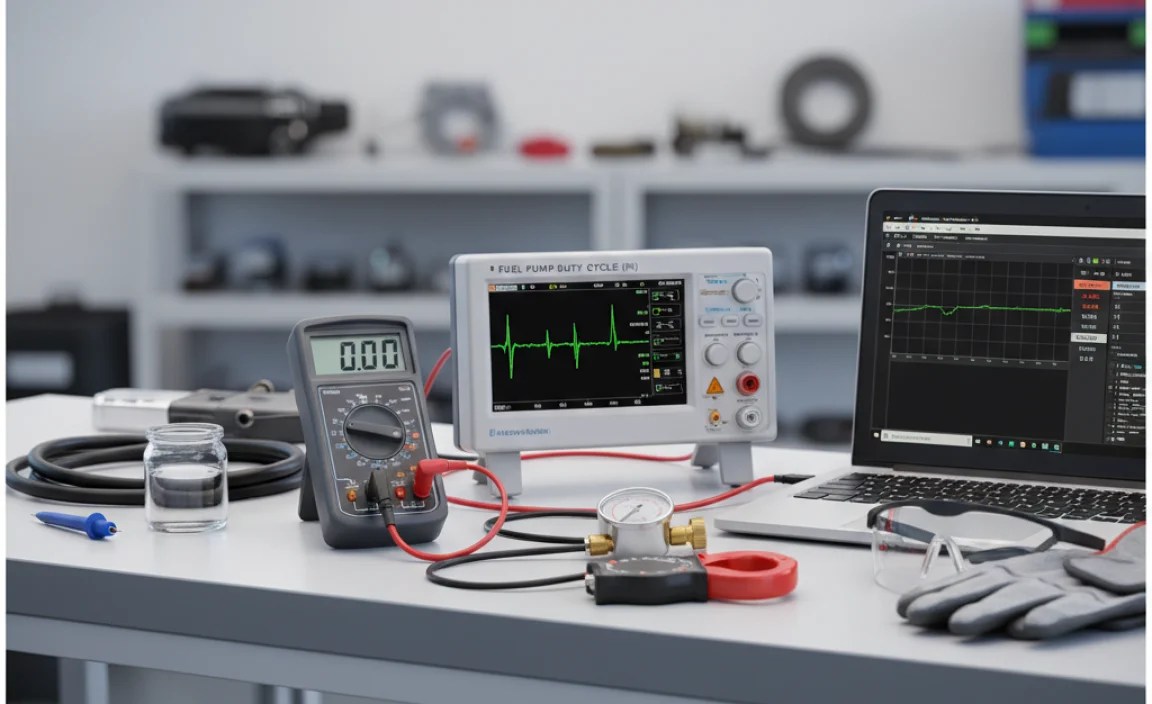
To read the fuel pump duty cycle, you’ll need a few essential tools:
- OBD2 Scanner: This is the primary tool for accessing your car’s computer and reading sensor data. Choose a scanner that supports live data streaming.
- Smartphone or Laptop: Many OBD2 scanners connect to your smartphone or laptop via Bluetooth or Wi-Fi.
- OBD2 App or Software: You’ll need an app or software that can interpret the data from the scanner. Popular options include Torque Pro, OBD Fusion, and manufacturer-specific software.
- Vehicle’s Repair Manual (Optional): This can be helpful for understanding specific readings and troubleshooting issues.
Step-by-Step Guide: How to Read Fuel Pump Duty Cycle

Follow these steps to accurately read your fuel pump duty cycle:
- Connect the OBD2 Scanner:
- Locate the OBD2 port in your vehicle. It’s typically found under the dashboard on the driver’s side.
- Plug the OBD2 scanner into the port.
- Turn on your vehicle’s ignition, but don’t start the engine.
- Pair the Scanner with Your Device:
- If your scanner connects via Bluetooth or Wi-Fi, pair it with your smartphone or laptop.
- Open your OBD2 app or software.
- Select the Correct PID:
- In the app, navigate to the live data or sensor readings section.
- Look for the “Fuel Pump Duty Cycle,” “Fuel Pump Control Module Duty Cycle,” or similar parameter. The exact name may vary depending on your vehicle and scanner. This parameter is often abbreviated as FPDM_DUTY.
- Select this parameter to monitor it in real-time.
- Start the Engine and Monitor Readings:
- Start your vehicle’s engine.
- Observe the fuel pump duty cycle readings at idle. Note the percentage.
- Increase the engine RPMs by gently pressing the accelerator. Watch how the duty cycle changes.
- Record and Analyze Data:
- Record the duty cycle readings at different engine speeds.
- Compare these readings to the expected values for your vehicle (refer to your repair manual or online resources).
- Analyze the data to identify any anomalies or potential issues.
Understanding Fuel Pump Duty Cycle Readings

Interpreting the readings is crucial for diagnosing fuel system issues. Here’s what different duty cycle percentages typically indicate:
- Low Duty Cycle (Below 20%):
- This might indicate a problem with the fuel pump control module, a wiring issue, or a faulty fuel pump.
- It could also mean that the engine’s fuel demand is very low, which is normal at idle for some vehicles.
- Normal Duty Cycle (20-70% at Idle):
- This is generally a healthy range. The fuel pump is working efficiently to supply the engine with the necessary fuel.
- The exact percentage can vary depending on the vehicle and engine load.
- High Duty Cycle (70-90% Under Load):
- This is normal when the engine is under heavy load, such as during acceleration or climbing a hill.
- The fuel pump is working harder to meet the increased fuel demand.
- Very High Duty Cycle (Above 90%):
- This indicates that the fuel pump is working near its maximum capacity.
- It could suggest a failing fuel pump, a clogged fuel filter, or a fuel pressure regulator issue.
- It’s a sign that the fuel system is struggling to keep up with the engine’s demands.
Troubleshooting Common Issues
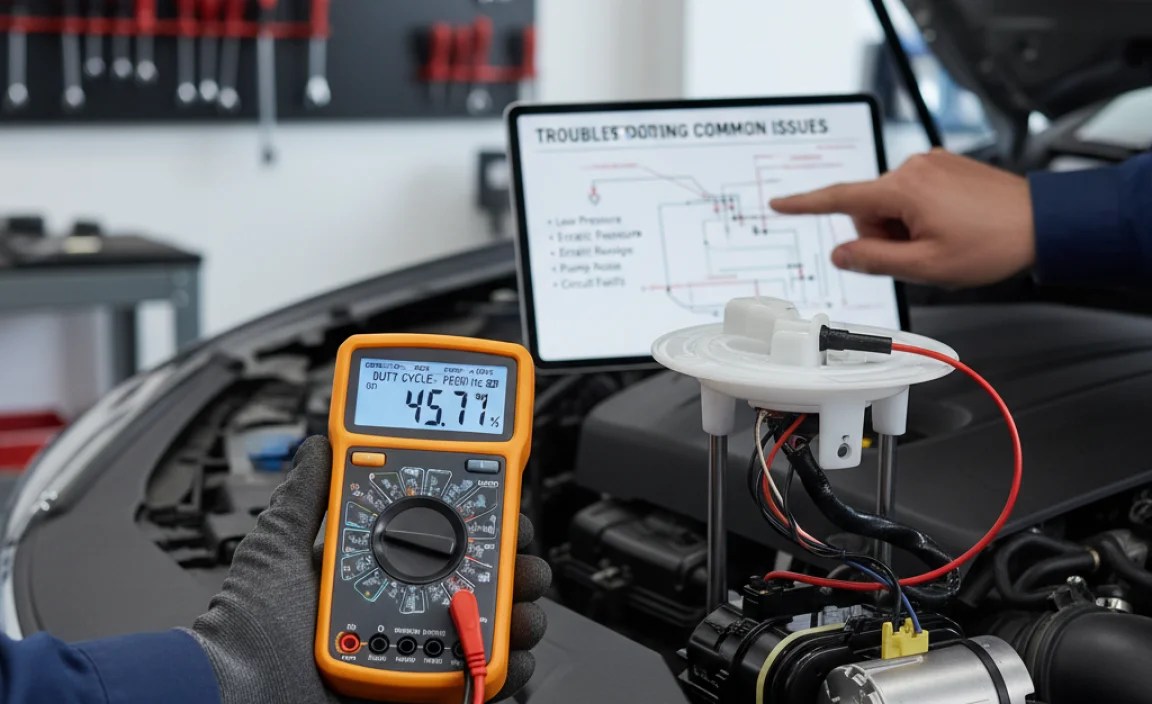
If your fuel pump duty cycle readings are abnormal, consider these troubleshooting steps:
- Check the Fuel Filter:
- A clogged fuel filter can restrict fuel flow and cause the fuel pump to work harder.
- Replace the fuel filter if it’s dirty or overdue for replacement.
- Inspect the Fuel Pump:
- Listen for unusual noises from the fuel pump, such as whining or buzzing.
- Check the fuel pump’s electrical connections for corrosion or damage.
- Consider testing the fuel pump’s pressure and flow rate.
- Examine the Fuel Pressure Regulator:
- A faulty fuel pressure regulator can cause incorrect fuel pressure, affecting the duty cycle.
- Check the regulator for leaks or damage.
- Test the fuel pressure with a fuel pressure gauge.
- Check the Fuel Pump Control Module (FPCM):
- The FPCM controls the fuel pump’s voltage and speed.
- Inspect the FPCM for corrosion or damage.
- Test the FPCM’s input and output signals with a multimeter.
- Inspect Wiring and Connections:
- Check all wiring and connectors related to the fuel pump and FPCM.
- Look for loose connections, corroded terminals, or damaged wires.
- Repair or replace any faulty wiring or connectors.
Example Scenarios
Let’s look at a few scenarios to illustrate how to interpret fuel pump duty cycle readings:
| Scenario | Fuel Pump Duty Cycle | Possible Cause | Troubleshooting Steps |
|---|---|---|---|
| Idling | 15% | Potential issue with FPCM, wiring, or fuel pump | Check FPCM connections, wiring, and fuel pump voltage |
| Idling | 45% | Normal | No action needed |
| Acceleration | 85% | Normal under heavy load | No action needed |
| Acceleration | 95% | Fuel pump struggling to meet demand | Check fuel filter, fuel pump, and fuel pressure regulator |
| Constant Speed | 75% | Possible fuel restriction or failing pump | Check fuel filter, fuel pressure, and fuel pump condition |
Advanced Tips and Considerations
- Use a Quality OBD2 Scanner: Invest in a reliable OBD2 scanner that provides accurate and consistent data.
- Understand Your Vehicle’s Specifications: Refer to your vehicle’s repair manual for specific duty cycle ranges and troubleshooting procedures.
- Monitor Fuel Pressure: Use a fuel pressure gauge to verify the fuel pressure at the fuel rail. This can help confirm whether the fuel pump is delivering adequate pressure.
- Check for Fuel Leaks: Inspect the fuel lines, fuel rail, and fuel injectors for any signs of leaks.
- Consider a Professional Diagnosis: If you’re unsure about the readings or troubleshooting steps, consult a qualified mechanic.
FAQ Section
Here are some frequently asked questions about fuel pump duty cycles:
- What is a normal fuel pump duty cycle at idle?
- A normal fuel pump duty cycle at idle typically ranges from 20% to 70%, depending on the vehicle and engine load.
- What does a high fuel pump duty cycle mean?
- A high fuel pump duty cycle (above 90%) indicates that the fuel pump is working near its maximum capacity, possibly due to a failing pump, clogged filter, or other fuel system issues.
- Can a bad fuel filter affect the duty cycle?
- Yes, a clogged fuel filter can restrict fuel flow, causing the fuel pump to work harder and increasing the duty cycle.
- How often should I check my fuel pump duty cycle?
- It’s a good idea to check your fuel pump duty cycle periodically, especially if you notice any performance issues or suspect a fuel system problem. Once a year is a good starting point.
- What is the Fuel Pump Control Module (FPCM)?
- The Fuel Pump Control Module (FPCM) is an electronic control unit that regulates the voltage and speed of the fuel pump to optimize fuel delivery. It helps to improve fuel efficiency and reduce fuel pump noise.
- Can I replace the fuel pump myself?
- Replacing a fuel pump can be a complex task, depending on the vehicle. It often involves removing the fuel tank and requires specialized tools and knowledge. If you’re not comfortable with automotive repairs, it’s best to have a professional mechanic handle the replacement.
- Is it safe to drive with a high fuel pump duty cycle?
- Driving with a consistently high fuel pump duty cycle can put excessive strain on the fuel pump and potentially lead to premature failure. It’s best to address the underlying issue as soon as possible to prevent further damage.
Conclusion
Understanding how to read and interpret fuel pump duty cycle is a valuable skill for any car owner. By following the steps outlined in this guide, you can monitor your fuel pump’s performance, identify potential issues early, and keep your engine running smoothly. Remember to use the right tools, understand your vehicle’s specifications, and don’t hesitate to seek professional help when needed. With a little effort, you can ensure your fuel system is always in top condition, providing you with reliable and efficient performance for years to come. Happy motoring!
“`