
Understanding Cycle Pump Volume: A Beginner’s Guide

Quick Summary: A cycle pump with a volume of 4.5 x 10^-5 m³ (0.000045 m³) or 45 cm³ refers to the amount of air it can push with each stroke. This volume impacts how quickly you can inflate your tires. Smaller volume pumps require more strokes, while larger volume pumps inflate faster but may need more effort. Choosing the right pump volume depends on your tire type and desired inflation speed.
Ever struggled to inflate your bike tires, wondering why it takes so many pumps? The secret lies in understanding the volume of your cycle pump. It’s a crucial factor that determines how efficiently you can inflate your tires, affecting your riding experience and overall maintenance. Many cyclists find themselves frustrated with slow or inefficient pumps. But don’t worry! This guide will break down everything you need to know about cycle pump volume, helping you choose the right pump and inflate your tires with ease. We’ll cover what volume means, how it affects inflation, and how to select the best pump for your needs. Let’s get started and make tire inflation a breeze!
What is Cycle Pump Volume?
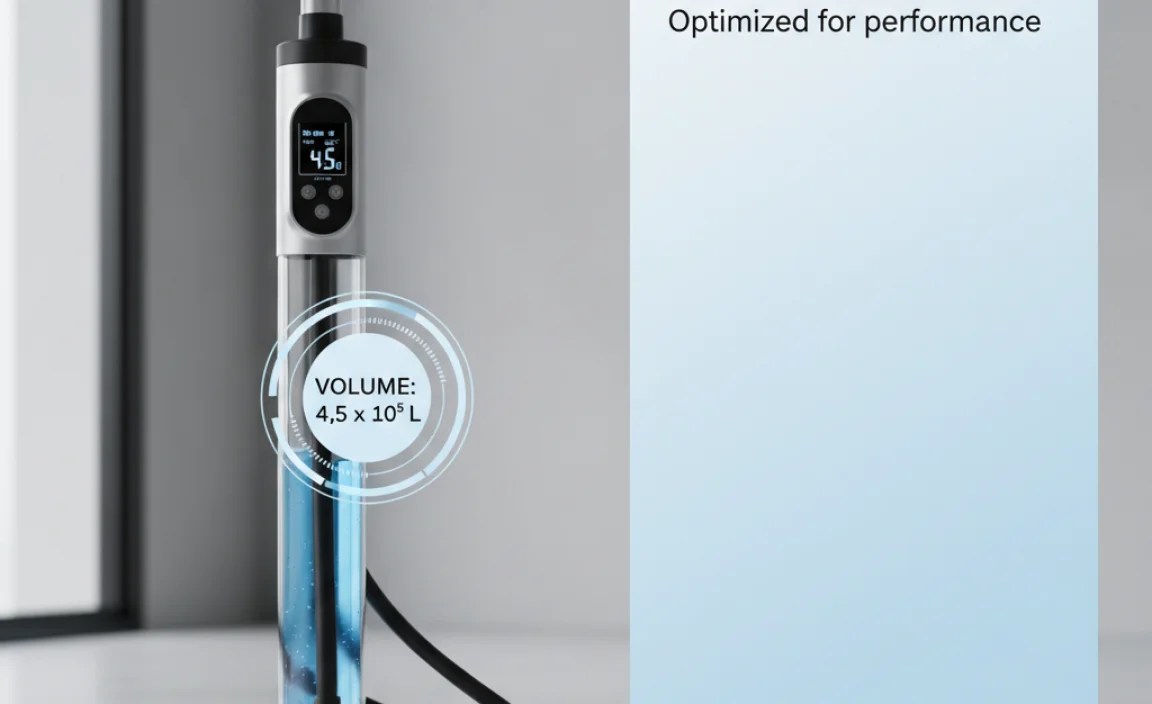
Cycle pump volume refers to the amount of air, typically measured in cubic centimeters (cm³) or cubic meters (m³), that a pump displaces with each stroke. Think of it as the “size” of each puff of air the pump delivers. A higher volume pump pushes more air per stroke, leading to quicker inflation, while a lower volume pump requires more strokes to achieve the same pressure.
Understanding the Units
The volume is given as 4.5 x 10^-5 m³, which can be a bit confusing. Let’s break it down:
- Scientific Notation: 4.5 x 10^-5 m³ is scientific notation. It means 4.5 multiplied by 10 to the power of -5.
- Conversion to Decimal: 4.5 x 10^-5 m³ = 0.000045 m³
- Conversion to Cubic Centimeters: Since 1 m³ = 1,000,000 cm³, then 0.000045 m³ = 45 cm³
So, a pump with a volume of 4.5 x 10^-5 m³ is the same as a pump with a volume of 45 cm³. This means with each stroke, the pump pushes 45 cubic centimeters of air into your tire.
Why Does Pump Volume Matter?
The volume of your cycle pump directly impacts the efficiency and speed of inflating your tires. Here’s why it’s important:
- Inflation Speed: A higher volume pump inflates tires faster, saving you time and effort.
- Effort Required: Lower volume pumps require more strokes to reach the desired pressure, which can be tiring, especially for high-pressure tires.
- Tire Type: Different tire types (road, mountain, gravel) require different pressures and volumes. Matching the pump volume to your tire type optimizes inflation.
- Riding Experience: Properly inflated tires improve your bike’s performance, handling, and rolling resistance, enhancing your overall riding experience.
Factors Affecting Pump Choice
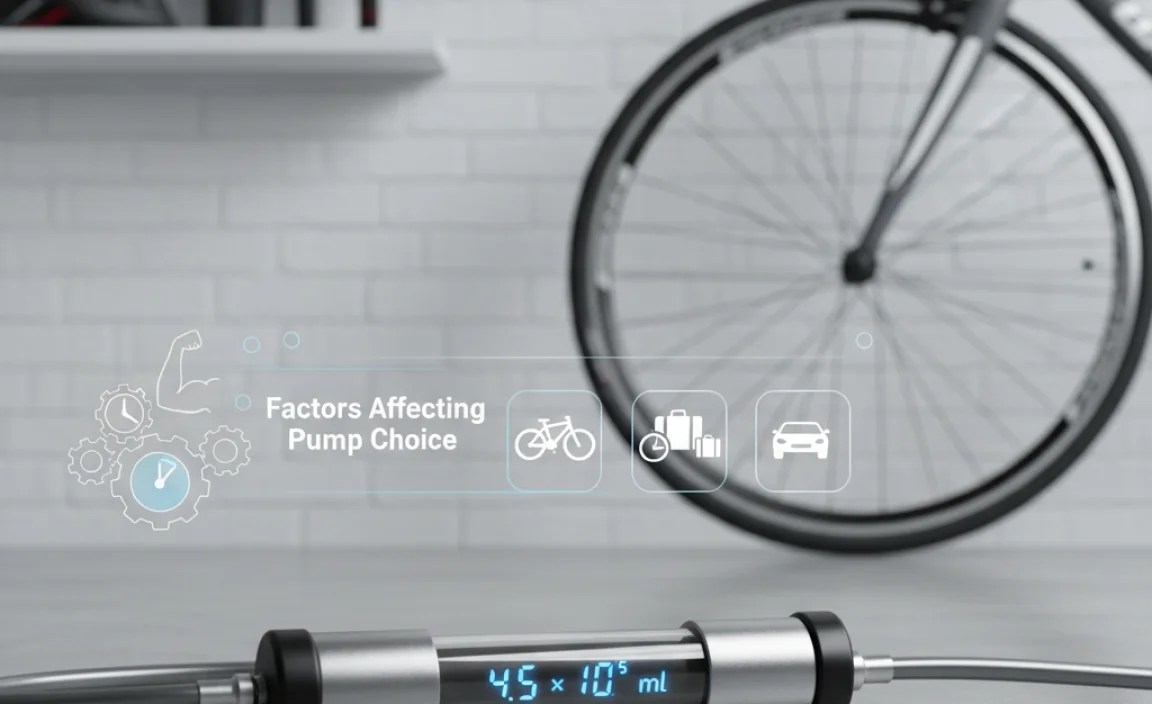
Choosing the right cycle pump involves considering several factors to ensure it meets your specific needs. Here’s a detailed look at the key factors:
1. Tire Type and Pressure Requirements
Different types of bikes and tires require different pressures. Road bikes typically need high pressures (80-130 PSI), while mountain bikes use lower pressures (25-40 PSI). Gravel bikes fall somewhere in between (30-60 PSI). Understanding these requirements is crucial.
Example: If you ride a road bike, you’ll want a pump designed for high pressures, even if it means a lower volume per stroke. For a mountain bike, a higher volume pump that can quickly fill the larger tire volume at lower pressures is ideal.
2. Pump Type: Floor vs. Hand
The type of pump also affects volume and ease of use:
- Floor Pumps: These are larger, more stable pumps that sit on the floor. They generally offer higher volumes and are easier to use for reaching high pressures.
- Hand Pumps: These are portable and designed for on-the-go use. They typically have lower volumes and require more effort to reach higher pressures.
3. Volume vs. Pressure
There’s a trade-off between volume and pressure. High-volume pumps are great for quickly filling tires but may struggle to reach very high pressures. High-pressure pumps excel at reaching those top PSI numbers but require more strokes.
Tip: Look for pumps that balance both, or consider owning multiple pumps for different bikes and situations.
Comparing Pump Volumes

To illustrate the impact of pump volume, let’s compare a few hypothetical pumps:
| Pump Type | Volume per Stroke (cm³) | Typical Use | Pros | Cons |
|---|---|---|---|---|
| High-Volume Floor Pump | 100 | Mountain Bikes, Fat Bikes | Fast inflation, easy to use | May struggle with very high pressures |
| Mid-Volume Floor Pump | 60 | Gravel Bikes, Hybrids | Good balance of speed and pressure | Not ideal for very high or very low pressure tires |
| Low-Volume Floor Pump | 40 | Road Bikes | Reaches high pressures easily | Slower inflation |
| Hand Pump | 30 | Emergency use, Road Bikes | Portable, lightweight | Requires more effort, slower inflation |
As you can see, the volume per stroke varies significantly, influencing the pump’s suitability for different applications.
How to Determine the Right Pump Volume for Your Needs

Choosing the correct pump volume involves a few simple steps:
- Identify Your Tire Pressure Needs: Check the recommended PSI range printed on your tire sidewall.
- Consider Your Tire Type: Road bikes need high-pressure, low-volume pumps; mountain bikes need high-volume, low-pressure pumps.
- Choose a Pump Type: Decide between a floor pump for home use and a hand pump for portability.
- Read Reviews and Specifications: Look for pumps that match your pressure and volume needs, and read user reviews to gauge performance.
Step-by-Step Guide to Inflating Your Tires
Now that you understand pump volume, let’s go through the process of inflating your tires:
Tools You’ll Need
- Your chosen cycle pump
- Your bicycle
- A pressure gauge (if not integrated into your pump)
Steps
- Prepare the Valve: Remove the valve cap from your tire.
- Connect the Pump: Attach the pump head securely to the valve. Make sure it’s a tight fit to prevent air leakage.
- Engage the Lever (if applicable): Some pumps have a lever to lock the pump head onto the valve. Engage it.
- Inflate the Tire: Begin pumping, using smooth, consistent strokes.
- Monitor the Pressure: Watch the pressure gauge on the pump or use a separate gauge to check the pressure periodically.
- Reach the Desired Pressure: Inflate the tire to the recommended PSI, as indicated on the tire sidewall.
- Disconnect the Pump: Disengage the lever (if applicable) and carefully remove the pump head from the valve.
- Replace the Valve Cap: Screw the valve cap back onto the valve to protect it from dirt and debris.
Troubleshooting Common Inflation Problems
Even with the right pump, you might encounter issues. Here are some common problems and how to fix them:
- Air Leakage: Ensure the pump head is securely attached to the valve. Check for worn-out pump head seals and replace if necessary.
- Difficulty Reaching High Pressure: Make sure you’re using a pump designed for high pressure. Check for leaks in the tire or valve.
- Bent or Damaged Valve: Inspect the valve for damage. Replace the inner tube or tire if the valve is bent or broken.
- Pump Not Working: Check the pump’s internal components for damage. Clean and lubricate the pump as needed.
For more information, you can check out resources from reputable cycling organizations like the League of American Bicyclists for safety tips and maintenance advice.
Maintaining Your Cycle Pump
Proper maintenance extends the life of your cycle pump and ensures reliable performance. Here’s how to care for your pump:
- Clean Regularly: Wipe down the pump with a clean cloth to remove dirt and grime.
- Lubricate Moving Parts: Apply a small amount of lubricant to the pump’s moving parts to keep them operating smoothly.
- Check for Wear and Tear: Inspect the pump head, hose, and seals for signs of wear and tear. Replace worn parts as needed.
- Store Properly: Store the pump in a dry, protected location to prevent damage.
Advanced Tips for Efficient Inflation
To maximize your inflation efficiency, consider these advanced tips:
- Use a Pump with a Gauge: A built-in pressure gauge ensures accurate inflation.
- Consider a Dual-Action Pump: These pumps inflate on both the upstroke and downstroke, increasing efficiency.
- Practice Proper Pumping Technique: Use your body weight to generate force, keeping your arms straight and your core engaged.
- Check Tire Pressure Regularly: Maintain optimal tire pressure for better performance and handling.
Cycle Pump Features: What to Look For
When shopping for a cycle pump, consider these features:
- Gauge Accuracy: A precise gauge ensures correct tire pressure.
- Pump Head Compatibility: Choose a pump head that works with both Presta and Schrader valves.
- Ergonomic Handle: A comfortable handle reduces fatigue during inflation.
- Durable Construction: Look for pumps made from high-quality materials for long-lasting performance.
- Stable Base (for Floor Pumps): A wide, stable base prevents tipping during use.
Recommended Cycle Pump Brands
Here are some reputable cycle pump brands known for quality and reliability:
- Lezyne: Known for high-quality, durable pumps with accurate gauges.
- Topeak: Offers a wide range of pumps for various needs and budgets.
- Park Tool: Makes professional-grade pumps for bike shops and serious cyclists.
- Blackburn: Provides reliable and affordable pumps for everyday use.
FAQ: Cycle Pump Volume
Here are some frequently asked questions about cycle pump volume:
- What does pump volume mean?
- Pump volume is the amount of air a pump pushes with each stroke, usually measured in cubic centimeters (cm³).
- Is a higher or lower pump volume better?
- It depends on your tires. Higher volume pumps are better for large tires (like mountain bikes), while lower volume pumps are better for high-pressure tires (like road bikes).
- How does pump volume affect inflation speed?
- Higher volume pumps inflate tires faster because they push more air per stroke.
- Can I use a high-volume pump for road bike tires?
- Yes, but it might take more strokes to reach the high pressure road tires require. A pump designed for high pressure is more efficient.
- What is the ideal pump volume for mountain bike tires?
- A higher volume pump (around 80-100 cm³ per stroke) is ideal for quickly inflating mountain bike tires.
- How do I know what pressure to inflate my tires to?
- Check the tire sidewall for the recommended PSI range. Use a pump with a gauge to accurately inflate to the correct pressure.
- What is the difference between a Presta and Schrader valve?
- Presta valves are narrow and have a locking nut, commonly found on road bikes. Schrader valves are wider, like car tire valves, and are often used on mountain and hybrid bikes. Make sure your pump is compatible with your valve type.
Conclusion
Understanding cycle pump volume is essential for efficient tire inflation and optimal bike performance. By considering your tire type, pressure requirements, and pump type, you can choose the right pump to make your rides more enjoyable. Whether you’re a road cyclist, mountain biker, or casual rider, investing in a quality pump and maintaining it properly will ensure your tires are always ready for the road. Remember to check your tire pressure regularly, and happy cycling!
“`


