
How Long Does a Defrost Cycle Last on a Heat Pump?

Quick Summary: A typical defrost cycle on a heat pump lasts between 5 to 15 minutes. The frequency depends on the outdoor temperature and humidity levels. Don’t worry if you see steam or feel cool air during this process – it’s perfectly normal! Understanding this cycle helps ensure your heat pump runs efficiently and keeps your home comfortable.
Is your heat pump acting a little strange in the winter? One common concern homeowners face is understanding the defrost cycle. It might seem odd that your heating system briefly blows cool air, but it’s a necessary process to keep your heat pump running efficiently. Figuring out how long this cycle should last and what to look for can save you from unnecessary worry and potential repair costs. Let’s dive into the details so you can confidently manage your home’s heating.
In this guide, we’ll cover:
- Typical defrost cycle duration
- Factors affecting defrost cycle frequency
- Signs of a normal vs. problematic defrost cycle
- Tips to optimize your heat pump’s performance
Understanding the Heat Pump Defrost Cycle

Heat pumps are designed to extract heat from the outside air, even when it’s cold. However, when outdoor temperatures drop below freezing, moisture in the air can freeze on the outdoor coil. This frost buildup reduces the heat pump’s ability to absorb heat, making it work harder and less efficiently. That’s where the defrost cycle comes in.
The defrost cycle temporarily reverses the heat pump process. It runs the system in cooling mode to warm the outdoor coil and melt the ice. While this is happening, auxiliary heat (usually electric resistance heat) kicks in to keep your home warm. Once the coil is clear of ice, the system switches back to normal heating mode.
Why is Defrosting Necessary?
Without regular defrosting, ice accumulation can severely impact your heat pump’s performance and lifespan. Here’s why it’s so important:
- Reduced Efficiency: Ice acts as an insulator, preventing the coil from effectively absorbing heat.
- Increased Energy Consumption: The heat pump has to work harder to overcome the ice barrier, leading to higher energy bills.
- Potential Damage: Excessive ice buildup can damage the coil and other components.
Typical Defrost Cycle Duration
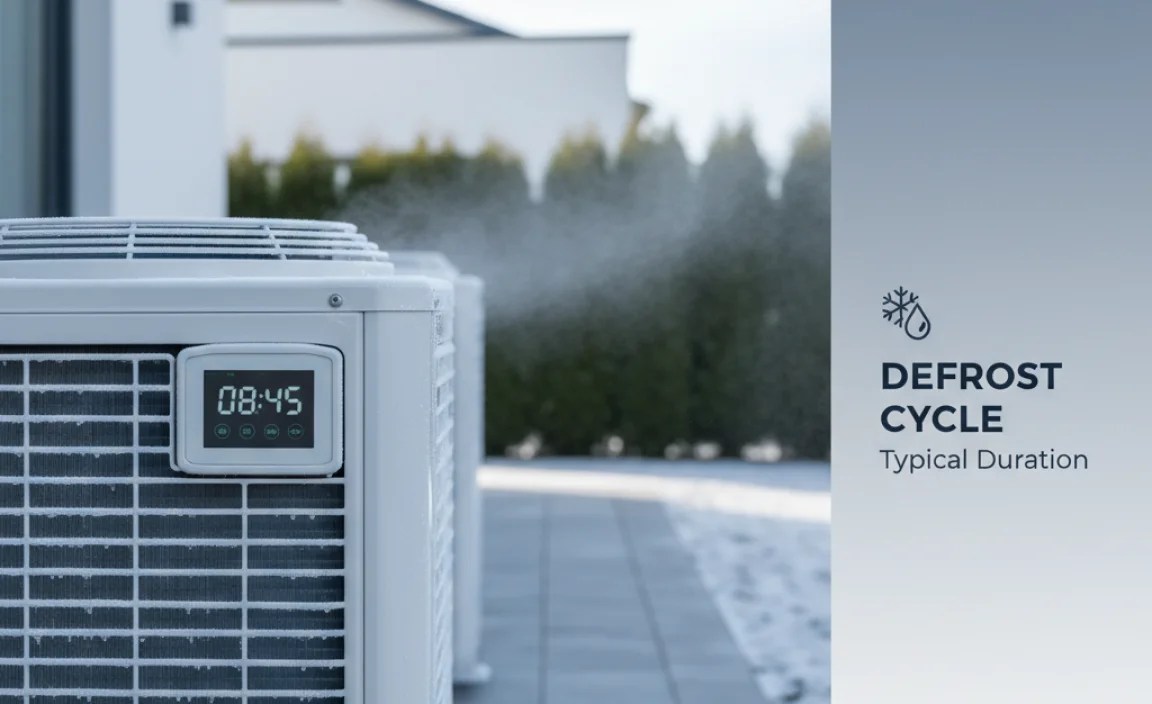
The typical defrost cycle lasts between 5 and 15 minutes. Here’s a breakdown of what to expect:
- Average Duration: Most heat pumps will defrost for about 8 to 10 minutes.
- Frequency: The frequency depends on the outdoor temperature and humidity. On a cold, humid day, the cycle might run every 30 to 60 minutes. On drier days, it could be much less frequent.
Keep in mind that these are general guidelines. The exact duration and frequency can vary based on your heat pump model, age, and local climate conditions.
Factors Affecting Defrost Cycle Frequency

Several factors influence how often your heat pump goes into defrost mode:
- Outdoor Temperature: The colder it is, the more frequently your heat pump will need to defrost. Ice forms more readily at lower temperatures.
- Humidity Levels: High humidity increases the rate of frost buildup on the outdoor coil.
- Heat Pump Model and Age: Newer, more efficient models may have advanced defrost controls that optimize the cycle for better performance. Older units might defrost more frequently due to less efficient operation.
- Airflow: Proper airflow around the outdoor unit is crucial. Blocked airflow can lead to increased frost buildup and more frequent defrost cycles. Make sure shrubs, snow, or debris aren’t obstructing the unit.
Signs of a Normal vs. Problematic Defrost Cycle

It’s important to distinguish between normal defrost cycle behavior and potential problems. Here’s what to look for:
Normal Defrost Cycle Signs
- Steam or Fog: You might see steam or fog rising from the outdoor unit as the ice melts. This is perfectly normal.
- Cool Air: During the defrost cycle, the heat pump temporarily switches to cooling mode, so you might feel cool air coming from your vents. Auxiliary heat should kick in to offset this.
- Noise: You might hear hissing, bubbling, or other noises as the refrigerant reverses and the ice melts.
- Short Duration: The cycle should last no more than 15 minutes.
Signs of a Problematic Defrost Cycle
- Excessive Duration: If the defrost cycle lasts longer than 20 minutes, there might be an issue.
- Frequent Cycling: If the heat pump is defrosting every 20 to 30 minutes, even in moderately cold weather, something could be wrong.
- Lack of Steam: If you don’t see any steam or fog during the cycle, the heat pump might not be defrosting effectively.
- Ice Buildup: If ice continues to accumulate on the coil despite the defrost cycle, there could be a malfunction.
- Auxiliary Heat Issues: If the auxiliary heat doesn’t activate during the defrost cycle, your home will get noticeably cold.
Troubleshooting Defrost Cycle Issues

If you suspect your heat pump is having defrost cycle problems, here are some troubleshooting steps you can take:
- Check Airflow: Ensure the outdoor unit is free from obstructions like snow, leaves, or shrubs. Clear away any debris that could be blocking airflow.
- Inspect the Coil: Look for excessive ice buildup. If the coil is completely encased in ice, try manually defrosting it with a garden hose (in warmer temperatures) or by turning off the heat pump for a few hours.
- Check the Air Filter: A dirty air filter can restrict airflow and cause the heat pump to work harder, potentially leading to more frequent defrost cycles. Replace the filter if it’s dirty.
- Inspect the Fan: Make sure the outdoor fan is running properly. If it’s not spinning, there could be a motor problem.
- Listen for Unusual Noises: Pay attention to any unusual sounds coming from the heat pump. Grinding, rattling, or hissing noises could indicate a mechanical issue.
If these steps don’t resolve the problem, it’s best to call a qualified HVAC technician. They can diagnose the issue and perform necessary repairs.
Common Causes of Defrost Cycle Problems
Several issues can cause defrost cycle problems. Here are some of the most common:
- Defrost Timer Malfunction: The defrost timer controls the frequency and duration of the defrost cycle. If it’s faulty, the cycle might run too often or not at all.
- Defrost Sensor Issues: The defrost sensor monitors the coil temperature and tells the system when to initiate the defrost cycle. A faulty sensor can lead to inaccurate readings and improper defrosting.
- Reversing Valve Problems: The reversing valve switches the flow of refrigerant between heating and cooling modes. If it’s stuck or malfunctioning, the heat pump might not be able to defrost properly.
- Refrigerant Leaks: Low refrigerant levels can reduce the heat pump’s efficiency and cause it to ice up more quickly.
- Faulty Control Board: The control board manages the various functions of the heat pump, including the defrost cycle. A malfunctioning control board can cause a variety of problems.
Here’s a table summarizing common problems and their potential solutions:
| Problem | Possible Cause | Solution |
|---|---|---|
| Excessive ice buildup | Defrost timer malfunction, defrost sensor issue, low refrigerant | Replace defrost timer, replace defrost sensor, recharge refrigerant |
| Defrost cycle too long | Defrost timer malfunction, faulty control board | Replace defrost timer, replace control board |
| Defrost cycle too frequent | Defrost sensor issue, airflow obstruction | Replace defrost sensor, clear airflow obstruction |
| No steam during defrost | Reversing valve problem, refrigerant leak | Replace reversing valve, repair refrigerant leak |
Tips to Optimize Your Heat Pump’s Performance
Here are some tips to keep your heat pump running efficiently and minimize defrost cycle issues:
- Regular Maintenance: Schedule annual maintenance with a qualified HVAC technician. They can inspect the system, clean the coils, check refrigerant levels, and identify potential problems before they become major issues.
- Clean the Outdoor Coil: Periodically clean the outdoor coil with a garden hose to remove dirt, leaves, and other debris. Be careful not to damage the fins.
- Replace Air Filters Regularly: Change your air filters every 1-3 months, depending on usage and air quality.
- Ensure Proper Airflow: Keep the area around the outdoor unit clear of obstructions. Trim shrubs and remove snow or debris that could block airflow.
- Seal Air Leaks: Seal any air leaks around windows, doors, and other openings to prevent heat loss and reduce the strain on your heat pump.
- Upgrade to a Smart Thermostat: A smart thermostat can optimize your heat pump’s performance by learning your heating and cooling patterns and adjusting the temperature accordingly.
The Role of Auxiliary Heat During Defrost
Auxiliary heat, often in the form of electric resistance heat, plays a crucial role during the defrost cycle. When the heat pump switches to cooling mode to defrost the outdoor coil, it stops providing heat to your home. To prevent your home from getting cold, the auxiliary heat kicks in to provide temporary warmth.
It’s normal to see a slight increase in your energy bill when the auxiliary heat is running. However, if the auxiliary heat is running excessively, it could indicate a problem with your heat pump or defrost cycle. Make sure your heat pump is properly sized for your home and that the defrost cycle is functioning correctly.
Energy Efficiency and the Defrost Cycle
The defrost cycle is a necessary part of heat pump operation, but it can impact energy efficiency. Here are some ways to minimize the energy consumption associated with defrosting:
- Choose an Energy-Efficient Heat Pump: Look for models with high SEER (Seasonal Energy Efficiency Ratio) and HSPF (Heating Seasonal Performance Factor) ratings. These models are designed to operate efficiently in both heating and cooling modes.
- Proper Installation: Ensure your heat pump is properly installed by a qualified technician. Incorrect installation can reduce efficiency and lead to more frequent defrost cycles.
- Regular Maintenance: As mentioned earlier, regular maintenance is crucial for maintaining energy efficiency. A well-maintained heat pump will operate more efficiently and require less frequent defrosting.
- Optimize Thermostat Settings: Avoid setting the thermostat too high or too low, as this can increase energy consumption. Use a programmable thermostat to automatically adjust the temperature based on your schedule.
Advanced Defrost Control Technologies
Modern heat pumps often incorporate advanced defrost control technologies to improve efficiency and performance. These technologies include:
- Demand Defrost: This system uses sensors to detect ice buildup on the coil and initiates the defrost cycle only when necessary. This minimizes unnecessary defrosting and saves energy.
- Intelligent Defrost: This system uses algorithms to optimize the defrost cycle based on various factors, such as outdoor temperature, humidity, and coil temperature. This ensures efficient and effective defrosting.
- Variable-Speed Compressors: Heat pumps with variable-speed compressors can adjust their output to match the heating demand. This can reduce the frequency of defrost cycles and improve overall efficiency.
When shopping for a new heat pump, consider models with these advanced features to maximize energy savings and minimize defrost cycle issues.
DIY vs. Professional Heat Pump Service
While some heat pump maintenance tasks can be performed by homeowners, others require the expertise of a qualified HVAC technician. Here’s a breakdown of what you can do yourself and when to call a pro:
DIY Tasks
- Cleaning the Outdoor Coil: You can clean the outdoor coil with a garden hose to remove dirt and debris.
- Replacing Air Filters: Changing air filters is a simple task that can improve airflow and efficiency.
- Clearing Airflow Obstructions: Remove any snow, leaves, or shrubs that are blocking airflow around the outdoor unit.
When to Call a Professional
- Refrigerant Leaks: Refrigerant leaks should be repaired by a licensed technician.
- Electrical Problems: Electrical repairs should be performed by a qualified electrician.
- Defrost Timer or Sensor Issues: Diagnosing and repairing defrost timer or sensor problems requires specialized knowledge and equipment.
- Reversing Valve Problems: Reversing valve repairs should be performed by a professional.
- Compressor Problems: Compressor repairs are complex and require specialized tools and expertise.
When in doubt, it’s always best to consult with a qualified HVAC technician. Attempting to repair complex issues yourself could void your warranty or cause further damage to the system.
Heat Pump Defrost Cycle FAQs
Here are some frequently asked questions about heat pump defrost cycles:
- Why does my heat pump blow cold air sometimes?
- This is normal during the defrost cycle. The heat pump temporarily switches to cooling mode to melt ice on the outdoor coil. Auxiliary heat should kick in to keep your home warm.
How Defrost Works on a Heat Pump! Explained Step by Step!

- How often should my heat pump defrost?
- The frequency depends on outdoor temperature and humidity. It could be as often as every 30-60 minutes on cold, humid days or much less frequent on drier days.
- Is it normal to see steam coming from my heat pump in the winter?
- Yes, this is normal during the defrost cycle. The steam is created when the ice on the coil melts.
- How long should a defrost cycle last?
- A typical defrost cycle lasts between 5 and 15 minutes.
- What happens if my heat pump doesn’t defrost?
- Ice will continue to accumulate on the coil, reducing efficiency and potentially damaging the system.
- Can I manually defrost my heat pump?
- In some cases, you can manually defrost the heat pump with a garden hose (in warmer temperatures) or by turning off the system for a few hours.
- Why is my auxiliary heat running so much?
- Excessive auxiliary heat usage could indicate a problem with your heat pump or defrost cycle. Have it checked by a qualified technician.
Conclusion
Understanding the defrost cycle is key to maintaining your heat pump’s efficiency and ensuring your home stays comfortable all winter long. Remember, a typical defrost cycle lasts between 5 to 15 minutes, and the frequency depends on weather conditions. Knowing the signs of a normal cycle versus a problem can help you catch issues early and prevent costly repairs.
By following the tips in this guide, you can optimize your heat pump’s performance, minimize energy consumption, and keep your home warm and cozy throughout the heating season. And if you ever encounter a problem you can’t handle yourself, don’t hesitate to call a qualified HVAC technician. Keeping your system well-maintained will save you headaches and money in the long run!
“`


