
Pump Gauge Impact Resistant: Powerful Durability!

Quick Summary: An impact-resistant pump gauge protects your tire pressure readings from accidental damage. Look for gauges with rubber bumpers, reinforced housings, or digital displays with recessed designs. Regular use of a pump gauge helps you maintain optimal tire pressure, leading to better handling, improved safety, and fewer flats on your rides!
Ever had your bike pump gauge take a tumble? It’s frustrating when a small bump throws off your pressure readings. A damaged gauge means inaccurate inflation, which can lead to poor performance, discomfort, or even dangerous flats. But don’t worry! There are plenty of ways to protect your pump gauge and keep it working like new. We’ll show you what to look for in an impact-resistant gauge and how to keep it safe so you can enjoy worry-free rides.
Understanding Impact Resistance in Pump Gauges

Impact resistance refers to a gauge’s ability to withstand shocks and impacts without losing accuracy or breaking. It’s a crucial feature, especially if you’re a cyclist who frequently travels with your pump or uses it in rough environments. Here’s why impact resistance matters:
- Accuracy: Impacts can damage the delicate internal mechanisms of a gauge, leading to inaccurate readings.
- Durability: A more robust gauge lasts longer, saving you money in the long run.
- Safety: Accurate pressure ensures optimal tire performance and reduces the risk of blowouts.
Types of Impact-Resistant Gauges

Not all gauges are created equal. Here’s a breakdown of the common types designed with impact resistance in mind:
Analog Gauges with Protective Features
These gauges use a needle to display pressure on a dial. Impact resistance is achieved through:
- Rubber Bumpers: A rubber casing around the gauge absorbs shocks from drops.
- Reinforced Housing: Thicker, more durable plastic or metal housings protect the internal components.
- Recessed Design: The gauge face is set back within the housing to minimize direct impacts.
Digital Gauges with Enhanced Durability
Digital gauges display pressure electronically. Their impact resistance comes from:
- Protective Cases: Similar to phone cases, these add an extra layer of shock absorption.
- Recessed Screens: The display screen is set back to prevent scratches and cracks.
- Solid-State Components: Digital gauges often use more robust electronic components that are less susceptible to damage from impacts.
Key Features to Look For

When shopping for an impact-resistant pump gauge, keep these features in mind:
- Material: Look for gauges made from durable materials like high-impact plastic, aluminum, or steel.
- Construction: Check for solid construction with tight seals and reinforced stress points.
- Display Protection: Ensure the gauge face or screen is recessed or covered with a protective layer.
- Calibration: Even with impact resistance, regular calibration ensures accuracy.
Top Pump Gauge Recommendations
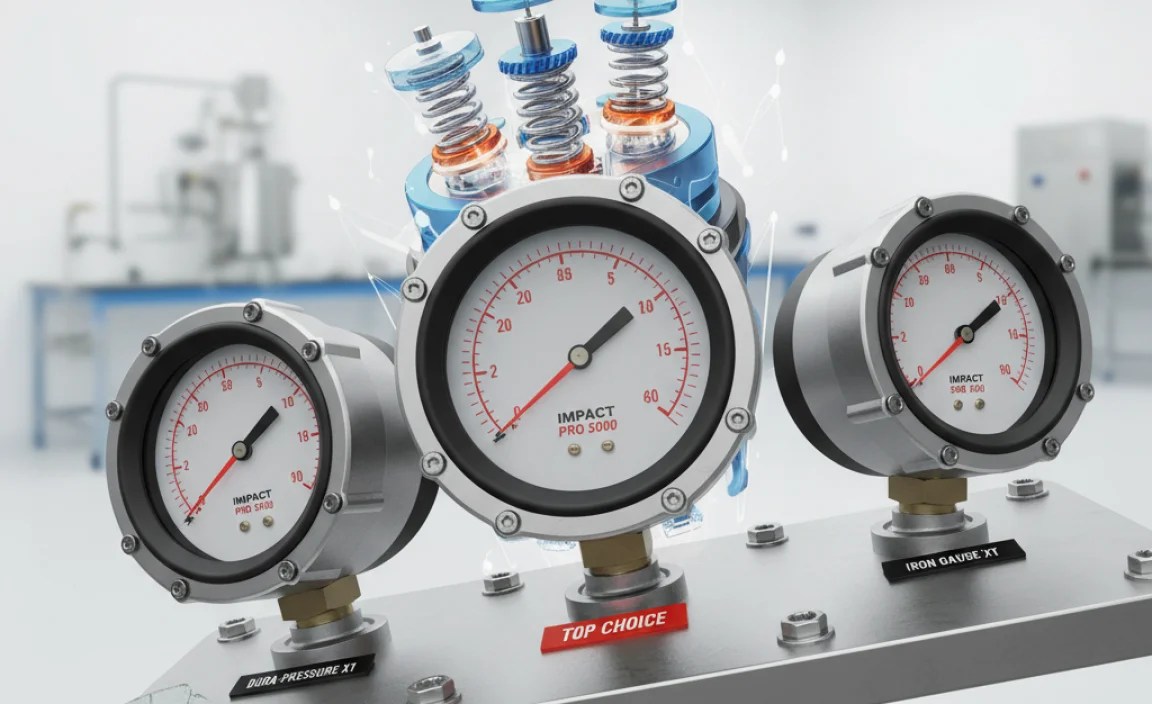
Here are some recommended impact-resistant pump gauges available on the market:
| Gauge Model | Type | Key Features | Approximate Price |
|---|---|---|---|
| Topeak SmartGauge D2X | Digital | Rotating head, Presta/Schrader valve compatible, precise digital display | $35-45 |
| SKS Airchecker | Digital | Compact, easy to use, accurate pressure readings | $30-40 |
| Accu-Gage Tire Pressure Gauge | Analog | Durable construction, easy-to-read dial, built for rugged use | $20-30 |
| Park Tool PMP-4 | Mini Pump with Gauge | Integrated gauge, compact design, durable alloy barrel | $40-50 |
Maintaining Your Impact-Resistant Gauge

Even the toughest gauge needs a little TLC. Here’s how to keep yours in top condition:
- Storage: Store your pump and gauge in a safe place where they won’t be knocked around.
- Cleaning: Wipe down your gauge regularly to remove dirt and grime.
- Handling: Avoid dropping or throwing your gauge.
- Calibration: Check the gauge’s accuracy periodically against a known standard.
Step-by-Step Guide to Protecting Your Pump Gauge
Follow these steps to maximize the lifespan of your pump gauge:
Step 1: Choose the Right Gauge
Start by selecting a gauge with built-in impact resistance, such as rubber bumpers or a reinforced housing.
Step 2: Add Extra Protection
Consider adding a protective case or sleeve to your gauge for added shock absorption. You can find these online or at your local bike shop.
Step 3: Secure the Gauge
When transporting your pump, secure the gauge to prevent it from bouncing around. Use straps, padding, or a dedicated pump bag.
Step 4: Handle with Care
Always handle your gauge gently. Avoid dropping it or subjecting it to unnecessary impacts.
Step 5: Regular Inspection
Check your gauge regularly for signs of damage, such as cracks, dents, or loose parts. If you notice any issues, have it repaired or replaced.
Step 6: Calibrate Periodically
Ensure your gauge remains accurate by calibrating it against a known standard. This will help you maintain optimal tire pressure and avoid potential problems.
Advanced Tips for Extending Gauge Life
Want to go the extra mile? Try these advanced tips:
- Use a Digital Gauge Calibrator: These devices provide a precise reference for calibrating your gauge.
- Store in a Climate-Controlled Environment: Extreme temperatures and humidity can damage sensitive components.
- Avoid Over-Tightening: When attaching the gauge to your tire valve, avoid over-tightening, which can damage the threads.
- Replace Worn Parts: Replace any worn or damaged parts, such as O-rings or valve adaptors, to maintain optimal performance.
DIY Solutions for Added Protection
Here are some simple DIY solutions to add extra protection to your pump gauge:
- Wrap with Foam Padding: Wrap your gauge with foam padding and secure it with tape or zip ties.
- Use a Small Pouch: Store your gauge in a small padded pouch or case.
- Create a Rubber Sleeve: Cut a piece of rubber tubing and slide it over your gauge for added shock absorption.
When to Replace Your Gauge
Even with the best care, a pump gauge will eventually need to be replaced. Here are some signs that it’s time for a new one:
- Inaccurate Readings: If your gauge consistently provides inaccurate readings, it’s time to replace it.
- Physical Damage: Cracks, dents, or broken parts can compromise the gauge’s accuracy and durability.
- Loose Connections: Loose connections or leaks can also affect the gauge’s performance.
- Age: Over time, the internal components of a gauge can wear out, leading to inaccurate readings.
Impact Resistance vs. Waterproofing
While impact resistance protects against physical shocks, waterproofing protects against water damage. Some gauges offer both features. Here’s a comparison:
| Feature | Protection | Benefits |
|---|---|---|
| Impact Resistance | Physical shocks and impacts | Prevents damage to internal components, maintains accuracy |
| Waterproofing | Water and moisture | Prevents corrosion and damage to electronic components |
If you frequently ride in wet conditions, consider a gauge that offers both impact resistance and waterproofing for maximum durability.
The Science Behind Gauge Accuracy
Understanding how gauges work helps you appreciate the importance of impact resistance. Analog gauges use a Bourdon tube, which flexes in response to pressure. Digital gauges use pressure sensors that convert pressure into an electrical signal. Impacts can disrupt these delicate mechanisms, leading to inaccurate readings. You can read more about pressure measurement from resources like NIST (National Institute of Standards and Technology) to understand the standards and science behind accurate measurements.
Troubleshooting Common Gauge Problems
Here are some common problems you might encounter with your pump gauge and how to fix them:
- Gauge Reads Zero: Check the valve connection and make sure it’s properly seated. Also, check for leaks in the hose or gauge.
- Gauge Reads Too High or Low: Calibrate the gauge against a known standard. If the problem persists, the gauge may need to be replaced.
- Gauge Needle Jumps or Fluctuates: This could indicate a problem with the internal mechanism. Try cleaning the gauge or have it repaired.
- Digital Display is Blank: Check the battery and replace if necessary. Also, check for damage to the display screen.
Real-World Examples of Gauge Protection
Here are some examples of how cyclists protect their pump gauges in real-world situations:
- Mountain Bikers: Use padded pump bags to protect their gauges from impacts on rough trails.
- Commuters: Store their pumps in panniers or backpacks with dedicated compartments for tools and accessories.
- Touring Cyclists: Use durable pumps with built-in gauges and reinforced housings.
FAQ: Impact Resistant Pump Gauges
What is an impact-resistant pump gauge?
An impact-resistant pump gauge is designed to withstand shocks and impacts without losing accuracy or breaking. They often feature rubber bumpers, reinforced housings, or recessed screens.
Why is impact resistance important for a pump gauge?
Impact resistance ensures that your gauge remains accurate, durable, and safe to use, even after accidental drops or bumps.
How can I protect my pump gauge from damage?
You can protect your gauge by choosing a model with impact-resistant features, adding a protective case, and handling it with care.
Are digital or analog gauges more impact-resistant?
Both types can be impact-resistant, but digital gauges often have recessed screens and solid-state components, while analog gauges may feature rubber bumpers and reinforced housings.
How often should I calibrate my pump gauge?
You should calibrate your pump gauge periodically, especially if you suspect it has been subjected to impacts or rough handling.
What are some signs that my pump gauge needs to be replaced?
Signs include inaccurate readings, physical damage, loose connections, and age-related wear and tear.
Can I repair a damaged pump gauge?
Some minor repairs may be possible, but it’s often more cost-effective to replace a damaged gauge, especially if the damage affects its accuracy.
Conclusion
Protecting your pump gauge is essential for maintaining accurate tire pressure and enjoying safe, comfortable rides. By choosing an impact-resistant gauge, following our maintenance tips, and taking a few simple precautions, you can extend the life of your gauge and ensure it provides reliable performance for years to come. So, gear up, pump up those tires, and hit the road with confidence!


