
Pump for Trial Bikes: Get the Perfect Pressure!

**Quick Summary:** Choosing the right pump for your trials bike means looking for one that can handle high pressures (at least 80-100 PSI), is durable enough for rough handling, and is portable for on-the-go adjustments. Mini pumps with pressure gauges or compact floor pumps are ideal for keeping your tires properly inflated so you can maintain optimal grip and control during your rides.
Getting the right tire pressure is super important when you’re out riding your trials bike. Too little air, and you risk pinch flats and poor handling. Too much, and you lose that crucial grip. Finding a pump that’s up to the task, reliable, and easy to carry can be a real game-changer. It can save you from frustrating mid-ride stops and keep you performing your best.
In this guide, I’ll walk you through exactly what to look for in a pump for your trials bike. We’ll cover everything from the different types of pumps to the features that matter most. By the end, you’ll know how to pick the perfect pump to keep your tires dialed and your rides smooth. Let’s dive in!
Understanding the Basics of Bike Pumps for Trials Bikes

Before we jump into specific recommendations, let’s cover the basics of what makes a good pump for trials bikes. This will help you understand why certain features are important and what to look for when you’re shopping around.
Types of Bike Pumps
There are several types of bike pumps, each with its own strengths and weaknesses. Here are the main ones you’ll encounter:
- Floor Pumps: These are the big pumps you typically keep at home or in your garage. They’re the most efficient for inflating tires to high pressures.
- Mini Pumps: These are small, portable pumps that you can carry with you on rides. They’re not as efficient as floor pumps, but they’re great for quick fixes on the trail.
- CO2 Inflators: These use cartridges of compressed CO2 to quickly inflate tires. They’re very fast and lightweight, but you need to carry spare cartridges.
- Frame-Mounted Pumps: These attach directly to your bike frame, so you always have them with you. They’re usually a bit longer than mini pumps for more efficient inflation.
Key Features to Look For
When choosing a pump for your trials bike, here are the key features to keep in mind:
- Pressure Capacity: Trials bike tires often need higher pressures than other types of bikes, typically between 80 and 100 PSI. Make sure the pump can handle these pressures.
- Gauge Accuracy: An accurate pressure gauge is essential for getting your tire pressure just right. Digital gauges are the most accurate, but analog gauges can also work well if they’re well-calibrated.
- Valve Compatibility: Most pumps can handle both Presta and Schrader valves, but it’s always a good idea to double-check. Some pumps have adapters, while others have dual heads.
- Durability: Trials riding can be tough on equipment, so you’ll want a pump that can withstand some abuse. Look for pumps made from high-quality materials like aluminum or steel.
- Portability: If you plan to carry the pump with you on rides, make sure it’s lightweight and compact. Mini pumps and CO2 inflators are the most portable options.
Choosing the Right Pump Type for Your Needs
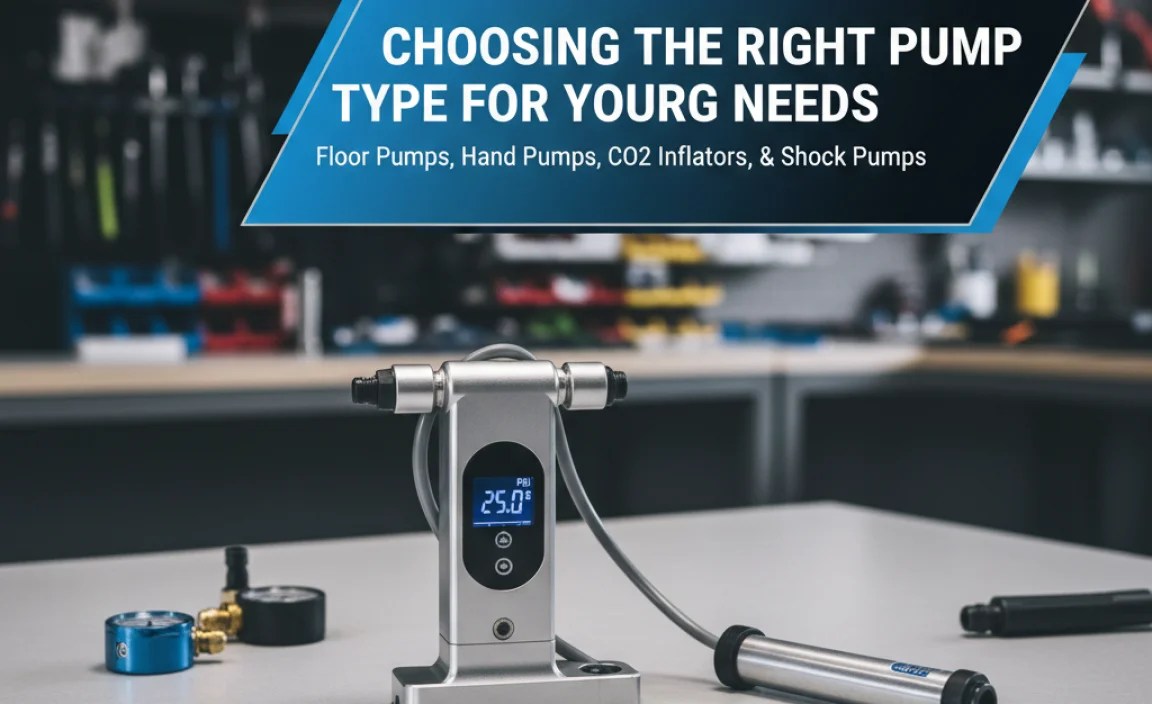
Now that you know the basics, let’s talk about which type of pump is best for different situations. Here’s a breakdown of the pros and cons of each type:
Floor Pumps
Floor pumps are great for home use and pre-ride preparation. They’re efficient, accurate, and easy to use. Here’s a quick look at their pros and cons:
| Pros | Cons |
|---|---|
| Efficient inflation | Not portable |
| Accurate pressure gauges | Bulky for travel |
| Easy to use | Requires storage space |
Mini Pumps
Mini pumps are ideal for carrying with you on rides. They’re small and lightweight, but they require more effort to inflate tires. Here’s what you need to know:
| Pros | Cons |
|---|---|
| Highly portable | Less efficient inflation |
| Lightweight | Can be tiring to use |
| Good for quick fixes | Gauge accuracy can vary |
CO2 Inflators
CO2 inflators are the fastest way to inflate tires on the go. They’re great for emergencies, but they require you to carry spare cartridges and can be wasteful. Let’s break it down:
| Pros | Cons |
|---|---|
| Extremely fast inflation | Requires CO2 cartridges |
| Very lightweight | Can be expensive over time |
| Compact and easy to carry | Not environmentally friendly |
Frame-Mounted Pumps
Frame-mounted pumps offer a balance between portability and efficiency. They’re always with you, and they’re usually more efficient than mini pumps. Here’s a summary:
| Pros | Cons |
|---|---|
| Always available | Can be longer than mini pumps |
| More efficient than mini pumps | May affect bike’s aesthetics |
| No need to carry separately | Can be exposed to elements |
Top Pump Recommendations for Trials Bikes

Now that you know what to look for, here are some specific pump recommendations for trials bikes. I’ve included a mix of floor pumps, mini pumps, and CO2 inflators to cover different needs and preferences.
Floor Pumps
- Topeak JoeBlow Sport III: This is a reliable and affordable floor pump with an accurate gauge and a durable construction. It can handle pressures up to 160 PSI, making it suitable for trials bikes.
- Park Tool PFP-5 Home Mechanic Floor Pump: Park Tool is known for its high-quality bike tools, and this floor pump is no exception. It features a sturdy steel barrel, a comfortable handle, and an easy-to-read gauge.
- Serfas TCPG: Known for its stability and ease of use, the Serfas TCPG floor pump features an oversized base and ergonomic handle for comfortable, efficient inflation. Its gauge is precise, and the pump is durable, making it a reliable choice for both home and workshop use.
Mini Pumps
- Lezyne Micro Floor Drive HP: This mini pump combines the efficiency of a floor pump with the portability of a mini pump. It has a foot peg and a fold-out handle for easy inflation, and it can reach pressures up to 160 PSI.
- Crankbrothers Sterling LG: This mini pump is lightweight, durable, and easy to use. It has a reversible head for Presta and Schrader valves, and it can inflate tires up to 100 PSI.
- Topeak Pocket Rocket Master Blaster: A lightweight and compact mini pump designed for high-pressure inflation, the Topeak Pocket Rocket Master Blaster is perfect for road cyclists and commuters. Its efficient pumping action and durable aluminum construction make it a reliable choice for on-the-go tire maintenance.
CO2 Inflators
- Genuine Innovations Ultraflate CO2 Inflator: This is a simple and reliable CO2 inflator that’s easy to use. It has a twist-to-inflate design and works with both Presta and Schrader valves.
- Lezyne Control Drive CO2: This CO2 inflator features a CNC-machined aluminum body and a precise control valve. It’s durable, lightweight, and easy to regulate the flow of CO2.
- Park Tool CO2-1 Inflator: The Park Tool CO2-1 Inflator offers a simple and reliable solution for quickly inflating tires on the go. Its compact design and easy-to-use valve make it a must-have for any cyclist’s toolkit.
Step-by-Step Guide to Inflating Your Trials Bike Tires

Now that you have a pump, let’s go through the process of inflating your trials bike tires. Here’s a step-by-step guide:
Step 1: Prepare Your Bike and Pump
First, make sure your bike is stable and that you have easy access to the tire valves. Prepare your pump by selecting the correct valve type (Presta or Schrader) and making sure the pump head is securely attached.
Step 2: Connect the Pump to the Valve
Remove the valve cap from your tire. If you have a Presta valve, loosen the valve nut. Press the pump head firmly onto the valve, making sure it’s fully engaged. If necessary, flip the locking lever on the pump head to secure it in place.
Step 3: Inflate the Tire
Begin pumping, using smooth and steady strokes. Watch the pressure gauge on the pump to monitor the tire pressure. For trials bikes, aim for a pressure between 80 and 100 PSI, but adjust based on your personal preference and riding conditions.
Step 4: Remove the Pump and Check the Pressure
Once you’ve reached the desired pressure, carefully remove the pump head from the valve. If you have a Presta valve, tighten the valve nut. Use a separate pressure gauge to double-check the tire pressure, as pump gauges can sometimes be inaccurate.
Step 5: Replace the Valve Cap
Finally, replace the valve cap to protect the valve from dirt and debris. You’re now ready to ride!
Maintaining Your Bike Pump for Longevity

A good bike pump can last for many years if you take care of it properly. Here are some tips for maintaining your bike pump:
- Clean the Pump Head: Regularly clean the pump head to remove dirt and debris that can interfere with the valve seal. Use a small brush or a clean cloth.
- Lubricate the Piston: If your pump starts to feel stiff or difficult to use, lubricate the piston with a silicone-based lubricant. This will keep the pump working smoothly.
- Check the Hoses and Seals: Inspect the hoses and seals for cracks or leaks. Replace them as needed to maintain optimal performance.
- Store the Pump Properly: Store your pump in a dry, clean place to protect it from the elements. Avoid leaving it in direct sunlight or extreme temperatures.
Troubleshooting Common Pump Problems
Even with proper maintenance, you may encounter some common pump problems. Here are some troubleshooting tips:
- Pump Won’t Inflate: Make sure the pump head is securely attached to the valve and that the valve is open. Check for leaks in the hose or pump head.
- Gauge Isn’t Accurate: If your pump gauge isn’t accurate, compare it to a separate pressure gauge. If it’s consistently off, you may need to replace the gauge.
- Pump is Hard to Use: If your pump is hard to use, lubricate the piston and check for any obstructions in the pump barrel.
- Valve Leaks After Inflation: Make sure the valve nut is tightened properly (for Presta valves). Check the valve core for damage and replace it if necessary.
Advanced Tips for Optimal Tire Pressure
Getting the right tire pressure for your trials bike can make a big difference in your performance and comfort. Here are some advanced tips to help you dial in your tire pressure:
- Consider Tire Width: Wider tires can run at lower pressures, which can improve grip and comfort. Experiment with different tire widths to find what works best for you.
- Adjust for Terrain: On smooth, hard surfaces, you can run higher pressures for faster rolling speed. On rough, loose surfaces, lower pressures will provide better grip and control.
- Use a Digital Gauge: For the most accurate pressure readings, use a digital tire pressure gauge. These gauges are more precise than analog gauges and can help you fine-tune your tire pressure.
- Experiment with Different Pressures: Don’t be afraid to experiment with different tire pressures to find what feels best for you. Start with the recommended pressure range and adjust up or down in small increments.
FAQ: Your Questions About Bike Pumps Answered
What PSI should I inflate my trials bike tires to?
Trials bike tires typically need to be inflated to between 80 and 100 PSI. Always check the recommended pressure range on the sidewall of your tire.
Can I use a regular air compressor to inflate my bike tires?
Yes, you can use a regular air compressor, but be very careful. Use a compressor with a pressure regulator and a gauge, and inflate in short bursts to avoid over-inflation.
How often should I check my tire pressure?
It’s a good idea to check your tire pressure before every ride, especially for trials bikes where precise pressure is important. Tires can lose pressure over time, so regular checks will help you maintain optimal performance.
What’s the difference between Presta and Schrader valves?
Presta valves are narrow valves with a small valve nut that needs to be loosened before inflating. Schrader valves are wider and similar to those found on car tires. Most pumps can handle both types of valves.
Can I convert my tires from Schrader to Presta or vice versa?
Yes, you can convert your rims from Schrader to Presta by using a valve hole adapter. Converting from Presta to Schrader is generally not recommended, as it requires drilling the rim, which can weaken it.
Why is my tire losing air even after I inflate it?
There could be several reasons: a puncture in the tire, a leaky valve core, or a poor seal between the tire and the rim. Inspect the tire and valve for damage, and consider using tire sealant to prevent future leaks.
What is a tubeless tire setup, and does it affect the type of pump I need?
A tubeless tire setup eliminates the need for an inner tube. It requires a special rim, tire, and sealant. While most pumps can inflate tubeless tires, some floor pumps are designed with a “boost” chamber to quickly seat the tire bead during installation.
Conclusion
Choosing the right pump for your trials bike is an investment in your riding experience. By understanding the different types of pumps, key features, and maintenance tips, you can keep your tires properly inflated and enjoy confident, controlled rides. Whether you opt for a reliable floor pump for home use or a portable mini pump for on-the-go adjustments, the right pump will make a noticeable difference in your performance and enjoyment. So, take the time to find the perfect pump for your needs, and get ready to shred those trials with confidence!


