
Best Pump for City Bikes: Ride Easy!

Quick Summary: Choosing the right pump for your city bike is simple! Look for pumps with both Schrader and Presta valve compatibility. A floor pump with a gauge makes tire inflation easy and accurate at home. For on-the-go fixes, a compact hand pump or CO2 inflator will keep you rolling. Prioritize ease of use and reliability to maintain proper tire pressure and enjoy smooth, safe rides.
Keeping your city bike tires properly inflated is key for a smooth, safe, and enjoyable ride. But with so many pump options out there, it can be tough to know where to start. Do you need a floor pump for your garage? Or a mini pump for quick fixes on the road? What about those fancy CO2 inflators? Don’t worry! This guide will walk you through everything you need to know to choose the perfect pump for your city bike. We’ll cover different types of pumps, valve compatibility, and how to use them. Let’s get rolling!
Understanding Bike Pumps for City Bikes

City bikes often use a combination of tire valve types, and riders have varied needs for at-home and on-the-go inflation. Choosing the right pump depends on these factors.
Valve Types
Understanding valve types is the first step in choosing the right pump.
- Schrader: This is the same type of valve you find on car tires. It’s common on many city bikes, especially those with wider tires.
- Presta: This valve is narrower and often found on road bikes and higher-end city bikes. It requires a different pump head or adapter.
Pump Types
Different pumps serve different purposes. Here’s a breakdown:
- Floor Pumps: These are ideal for home use. They offer stability, efficiency, and often include a pressure gauge for accurate inflation.
- Hand Pumps: Compact and portable, hand pumps are perfect for carrying on rides for emergency inflation.
- CO2 Inflators: These use compressed CO2 cartridges to quickly inflate tires. They are lightweight but require purchasing cartridges.
Key Features to Consider
When selecting a pump, consider these features:
- Valve Compatibility: Ensure the pump works with both Schrader and Presta valves, or choose one that matches your bike’s valve type.
- Pressure Gauge: A gauge helps you inflate your tires to the correct pressure, improving ride quality and preventing flats.
- Ergonomics: Look for a pump with a comfortable handle and stable base for easy use.
- Durability: Choose a pump made from high-quality materials to ensure it lasts.
Floor Pumps: The Home Mechanic’s Choice

Floor pumps are the go-to option for most city bike owners due to their efficiency and accuracy. Here’s what makes them so great:
Benefits of Using a Floor Pump
- Efficiency: Floor pumps deliver a large volume of air with each stroke, making inflation quick and easy.
- Accuracy: Many floor pumps have built-in pressure gauges, allowing you to inflate your tires to the exact PSI (pounds per square inch) recommended.
- Stability: The wide base and comfortable handle make floor pumps stable and easy to use.
Features to Look For
- Dual Head: A dual head pump is compatible with both Schrader and Presta valves without needing to switch parts.
- Large Gauge: An easy-to-read gauge ensures you inflate your tires to the correct pressure.
- Sturdy Construction: Look for a pump with a steel barrel and durable base for long-lasting performance.
Recommended Floor Pumps for City Bikes
| Pump Name | Key Features | Approximate Price |
|---|---|---|
| Topeak JoeBlow Sport III | Dual head, large gauge, steel barrel | $50 |
| Park Tool PFP-8 | Durable, easy-to-read gauge, comfortable handle | $65 |
| Serfas TCPG | Dual head, stable base, ergonomic design | $40 |
How to Use a Floor Pump
- Connect the Pump Head: Attach the pump head to your tire valve, ensuring a snug fit. For Presta valves, you may need to unscrew the valve core slightly before attaching the pump.
- Lock the Lever: Most floor pumps have a lever that locks the pump head onto the valve. Engage the lever to create a tight seal.
- Inflate the Tire: Pump the handle up and down, watching the pressure gauge as you inflate.
- Reach the Desired Pressure: Inflate the tire to the recommended PSI, which is usually printed on the tire sidewall.
- Release the Lever and Disconnect: Unlock the lever and carefully remove the pump head from the valve.
Hand Pumps: Portable Inflation for On-the-Go Repairs

Hand pumps are essential for cyclists who need a portable solution for flat tires and pressure adjustments while riding. They are compact and lightweight, making them easy to carry.
Benefits of Using a Hand Pump
- Portability: Hand pumps are small and lightweight, easily fitting in a backpack, saddlebag, or frame mount.
- Convenience: They allow you to inflate your tires anywhere, anytime, without needing to find a gas station or bike shop.
- Affordability: Hand pumps are generally less expensive than floor pumps or CO2 inflators.
Features to Look For
- Compact Size: Choose a pump that is small and lightweight enough to carry comfortably.
- Valve Compatibility: Look for a pump that works with both Schrader and Presta valves, or choose one that matches your bike’s valve type.
- High Volume/High Pressure: Some pumps are designed for high volume (inflating tires quickly), while others are designed for high pressure (reaching higher PSI). Choose one that suits your needs.
- Mounting Bracket: A mounting bracket allows you to attach the pump to your bike frame for easy access.
Recommended Hand Pumps for City Bikes
| Pump Name | Key Features | Approximate Price |
|---|---|---|
| Lezyne Micro Floor Drive HP | Compact, high pressure, foot peg for stability | $60 |
| Topeak Mini Morph | Fold-out foot peg, built-in gauge, dual head | $45 |
| Crankbrothers Sterling S | Compact, lightweight, dual valve compatibility | $30 |
How to Use a Hand Pump
- Connect the Pump Head: Attach the pump head to your tire valve, ensuring a snug fit. For Presta valves, you may need to unscrew the valve core slightly before attaching the pump.
- Secure the Pump: Some hand pumps have a lever or locking mechanism to secure the pump head to the valve. Engage it to create a tight seal.
- Inflate the Tire: Hold the pump firmly and pump the handle in and out, using your body weight to assist.
- Check the Pressure: If your pump has a gauge, monitor the pressure as you inflate. If not, periodically squeeze the tire to check its firmness.
- Reach the Desired Pressure: Inflate the tire until it feels firm to the touch. It’s often hard to reach the exact PSI with a hand pump, so aim for a pressure that allows you to ride comfortably and safely.
- Disconnect the Pump: Carefully remove the pump head from the valve.
CO2 Inflators: The Speedy Solution
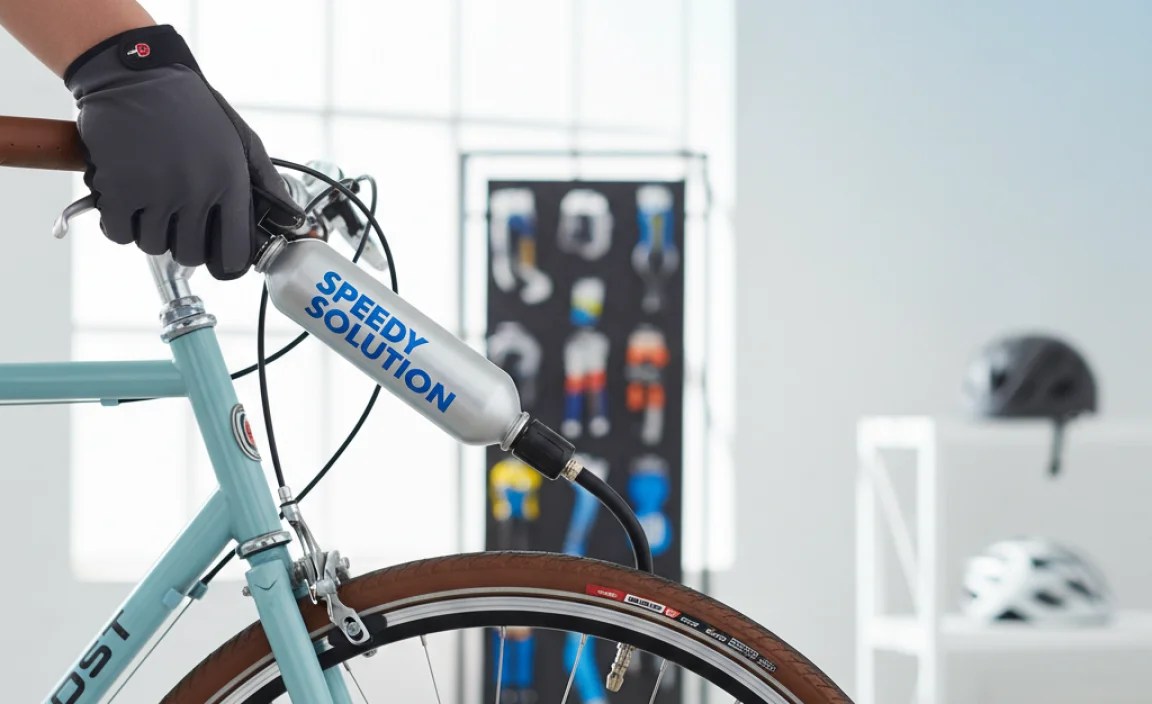
CO2 inflators offer the fastest way to inflate a tire, making them popular among racers and cyclists who want to get back on the road quickly. However, they require a bit of practice and understanding.
Benefits of Using CO2 Inflators
- Speed: CO2 inflators can inflate a tire in seconds, saving you time and effort.
- Lightweight: They are incredibly lightweight and compact, making them easy to carry in a saddlebag or pocket.
- Convenience: They are ideal for quick repairs during races or group rides.
Features to Look For
- Controlled Release: Look for an inflator with a control valve that allows you to regulate the flow of CO2.
- Insulated Sleeve: CO2 cartridges can get extremely cold when used, so an insulated sleeve will protect your hands.
- Valve Compatibility: Ensure the inflator works with both Schrader and Presta valves, or choose one that matches your bike’s valve type.
- Cartridge Size: CO2 cartridges come in different sizes (12g, 16g, 20g, 25g). Choose a size that is appropriate for your tire size and desired pressure.
Recommended CO2 Inflators for City Bikes
| Inflator Name | Key Features | Approximate Price |
|---|---|---|
| Genuine Innovations Ultraflate | Controlled release, compact, lightweight | $20 |
| Lezyne Control Drive | Precise control, durable aluminum construction | $30 |
| Topeak AirBooster | Compact, easy to use, includes insulated sleeve | $25 |
How to Use a CO2 Inflator
- Prepare the Cartridge: Screw the CO2 cartridge into the inflator head, but do not puncture it yet.
- Connect the Inflator: Attach the inflator head to your tire valve, ensuring a snug fit. For Presta valves, you may need to unscrew the valve core slightly before attaching the inflator.
- Inflate the Tire: Slowly open the control valve (if your inflator has one) to release the CO2 into the tire. If there is no control valve, puncture the cartridge to release the CO2.
- Monitor the Pressure: Be careful not to overinflate the tire. CO2 inflates tires very quickly, so release the CO2 in short bursts.
- Disconnect the Inflator: Once the tire is inflated to the desired pressure, carefully remove the inflator head from the valve.
- Dispose of the Cartridge: CO2 cartridges are single-use only and cannot be refilled. Dispose of the empty cartridge properly.
Safety Tips for Using CO2 Inflators
- Wear Gloves: CO2 cartridges can get extremely cold when used, so wear gloves to protect your hands from frostbite.
- Use Caution: CO2 inflates tires very quickly, so be careful not to overinflate the tire.
- Practice: Practice using a CO2 inflator at home before using it on the road.
- Check Tire Pressure: CO2 can permeate tire walls faster than regular air. Check your tire pressure more frequently after using CO2.
Maintaining Your Bike Pump

Regular maintenance will keep your bike pump in top condition, ensuring it’s ready whenever you need it.
Cleaning
Keep your pump clean by wiping it down with a damp cloth after each use. This prevents dirt and grime from building up and affecting its performance.
Lubrication
Periodically lubricate the moving parts of your pump with a silicone-based lubricant. This will keep the pump working smoothly and prevent wear and tear. Check the manufacturer’s instructions for specific lubrication recommendations.
Replacing Parts
Over time, some parts of your pump may wear out and need to be replaced. Common replacement parts include pump heads, hoses, and O-rings. Check your pump regularly for signs of wear and replace parts as needed.
You can find replacement parts at most bike shops or online retailers like Amazon or directly from manufacturers like Park Tool.
Troubleshooting Common Pump Problems
Even with proper maintenance, you may occasionally encounter problems with your bike pump. Here are some common issues and how to fix them:
Pump Not Inflating
If your pump is not inflating your tire, check the following:
- Valve Connection: Ensure the pump head is securely attached to the valve.
- Valve Core: Make sure the valve core is not blocked or damaged.
- Pump Head: Check the pump head for wear or damage. Replace if necessary.
Leaking Air
If your pump is leaking air, check the following:
- Pump Head Seal: Make sure the pump head seal is intact and properly seated.
- Hose Connection: Check the hose connection for leaks. Tighten or replace the hose if necessary.
- O-Rings: Inspect the O-rings in the pump for wear or damage. Replace if necessary.
Gauge Not Working
If your pump’s pressure gauge is not working, check the following:
- Gauge Connection: Ensure the gauge is securely connected to the pump.
- Gauge Calibration: The gauge may need to be recalibrated. Some pumps have a calibration adjustment screw.
- Gauge Replacement: If the gauge is damaged, it may need to be replaced.
FAQ About Bike Pumps for City Bikes
What type of pump is best for a city bike?
A floor pump is best for home use because it’s efficient and accurate. For on-the-go repairs, a hand pump or CO2 inflator is ideal.
How do I know what pressure to inflate my tires to?
The recommended tire pressure (PSI) is usually printed on the sidewall of your tire. Use a pump with a gauge to reach the correct pressure.
Can I use a car tire pump on my city bike?
Yes, if your bike has Schrader valves (like car tires). However, car tire pumps can be bulky and may overinflate your tires quickly, so be cautious.
What’s the difference between Schrader and Presta valves?
Schrader valves are wider and similar to car tire valves. Presta valves are narrower and often found on higher-end bikes. You’ll need a compatible pump head for each.
How often should I check my tire pressure?
Check your tire pressure at least once a week, or before each ride, to ensure optimal performance and safety.
Is it better to use a hand pump or CO2 inflator on the road?
A hand pump is reliable and doesn’t require cartridges, but it takes more effort. A CO2 inflator is faster and easier, but you need to carry cartridges and use them carefully.
How do I maintain my bike pump?
Keep your pump clean, lubricate moving parts with silicone lubricant, and replace worn parts like pump heads or O-rings as needed.
Conclusion
Choosing the right pump for your city bike doesn’t have to be complicated. Whether you opt for a reliable floor pump for home use, a portable hand pump for on-the-go repairs, or the speed of a CO2 inflator, the key is to understand your needs and choose a pump that matches your bike’s valve type and your riding style. Regular maintenance and proper usage will ensure your pump keeps you rolling smoothly and safely on all your city adventures. So, get out there and enjoy the ride, knowing you’re prepared for anything!


