
Best Pump for 26 Inch Tires: Ride Easy!

To pump up 26-inch tires, you’ll need a pump that can deliver enough pressure, ideally a floor pump with a gauge for accuracy. Make sure the pump head is compatible with your tire’s valve type (Presta or Schrader). Inflate to the recommended PSI (usually 30-50 PSI for mountain bikes, higher for road bikes) printed on the tire sidewall.
Ever felt like you’re fighting your bike just to get the tires inflated? It’s a common frustration, especially when dealing with the slightly different needs of 26-inch tires. Whether you’re hitting the trails on a mountain bike or cruising around town, properly inflated tires are key for a smooth, safe ride. Don’t worry; it’s easier than you think! This guide will walk you through choosing the right pump and inflating your tires like a pro. Get ready to roll with confidence!
Choosing the Right Pump for Your 26-Inch Tires

Selecting the correct pump is the first step in ensuring your 26-inch tires are always ready to go. Here’s what to consider:
Types of Bike Pumps
There are mainly two types of bike pumps that you can use for your 26-inch tires:
- Floor Pumps: These are the most efficient for home use. They deliver a high volume of air with each stroke, making inflation quick and easy. Look for one with a pressure gauge for accurate inflation.
- Hand Pumps: These are compact and portable, ideal for carrying on rides. However, they require more effort to inflate tires to the desired pressure.
Key Features to Look For
- Pressure Gauge: A gauge is essential for accurate inflation, preventing over or under-inflation.
- Valve Compatibility: Ensure the pump head is compatible with both Presta and Schrader valves, or choose one specifically for your valve type.
- Durable Construction: Look for a pump made from sturdy materials like steel or aluminum for longevity.
Recommended Pumps for 26-Inch Tires
Here are some pumps that work well with 26-inch tires:
- Schwinn 500 PSI Floor Pump: An affordable and reliable option for home use.
- Topeak JoeBlow Sport III Floor Pump: A popular choice known for its durability and ease of use.
- Lezyne Micro Floor Drive HP Hand Pump: A high-quality hand pump that delivers impressive performance for its size.
Understanding Tire Pressure
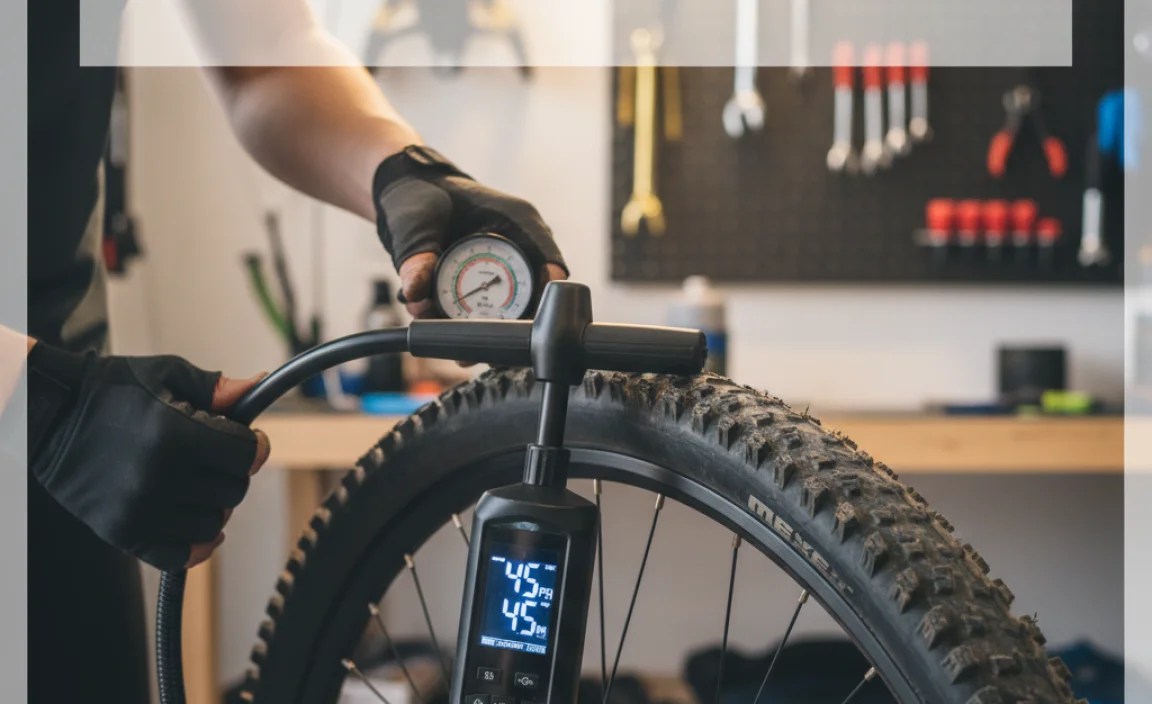
Proper tire pressure is crucial for performance, comfort, and safety. Here’s what you need to know:
Why Tire Pressure Matters
- Performance: Correct pressure reduces rolling resistance, making your ride faster and more efficient.
- Comfort: Proper inflation absorbs bumps and vibrations, improving ride quality.
- Safety: Under-inflated tires can lead to pinch flats and poor handling, while over-inflated tires can burst.
Finding the Right PSI
The recommended pressure range is usually printed on the tire sidewall. Here’s a general guideline:
- Mountain Bikes: 30-50 PSI
- Road Bikes: 80-130 PSI
- Hybrid Bikes: 50-70 PSI
Consider your weight, riding style, and terrain when adjusting pressure within this range. Heavier riders may need higher pressure, while riding on soft terrain may benefit from lower pressure for better traction.
Presta vs. Schrader Valves
Knowing your valve type is essential for using the correct pump head:
- Presta: Narrower valve with a locking nut at the tip. Unscrew the nut before inflating.
- Schrader: Wider valve, similar to those on car tires.
Most pumps come with adapters to fit both valve types. Make sure the pump head is securely attached to the valve before inflating.
Step-by-Step Guide to Pumping Your 26-Inch Tires

Follow these steps to inflate your tires quickly and efficiently:
Tools and Materials You’ll Need
- Bike pump (floor or hand pump)
- Tire pressure gauge (if not integrated into the pump)
- Rag or cloth (for cleaning the valve)
Step 1: Prepare the Valve
Clean the valve with a rag to remove any dirt or debris. For Presta valves, unscrew the locking nut at the tip.
Step 2: Attach the Pump Head
Securely attach the pump head to the valve. Make sure it’s a snug fit to prevent air leakage. For Presta valves, you may need to depress the valve tip briefly to ensure it’s open.
Step 3: Inflate the Tire
Begin pumping, using smooth, consistent strokes. Monitor the pressure gauge to avoid over-inflation. If using a hand pump, brace the tire against your body for stability.
Step 4: Check the Pressure
Once you reach the desired pressure, remove the pump head. For Presta valves, tighten the locking nut. Double-check the pressure with a separate gauge if needed.
Step 5: Repeat for the Other Tire
Follow the same steps to inflate the other tire to the correct pressure. Consistent pressure in both tires ensures balanced handling.
Troubleshooting Common Pumping Problems
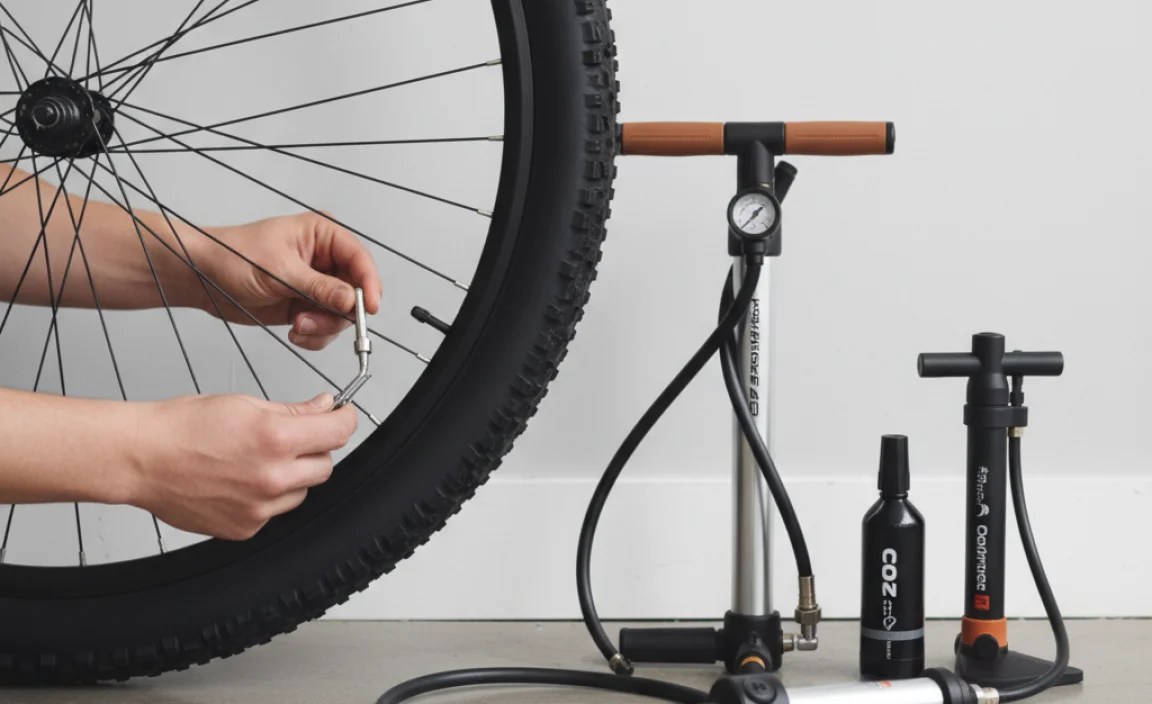
Sometimes, things don’t go as planned. Here are some common issues and how to fix them:
Air Leaking from the Valve
- Problem: Air escapes when you try to inflate the tire.
- Solution: Ensure the pump head is securely attached to the valve. Check the valve core for damage and replace if necessary.
Pump Not Building Pressure
- Problem: The pump feels loose, and no air is going into the tire.
- Solution: Check the pump head for proper valve compatibility. Inspect the pump for any leaks or damage.
Difficulty Attaching the Pump Head
- Problem: The pump head won’t fit onto the valve.
- Solution: Make sure you’re using the correct adapter for your valve type (Presta or Schrader). Clean the valve and pump head to remove any obstructions.
Maintaining Your Bike Pump

Proper maintenance will extend the life of your bike pump and ensure it’s always ready when you need it:
Cleaning and Storage Tips
- Cleaning: Wipe down the pump regularly with a damp cloth to remove dirt and grime.
- Storage: Store the pump in a dry place away from direct sunlight to prevent damage to the seals and hoses.
Replacing Worn Parts
Over time, certain parts may wear out and need replacement:
- Hoses: Replace cracked or brittle hoses to prevent air leaks.
- Seals: Replace worn seals to maintain proper pressure.
- Pump Head: Replace damaged or worn pump heads for a secure fit.
Regular Inspections
Periodically inspect your pump for any signs of damage or wear. Check the pressure gauge for accuracy and calibrate if necessary. Addressing issues early can prevent more significant problems down the road.
Advanced Tips for Tire Inflation
Ready to take your tire inflation skills to the next level? Here are some advanced tips:
Using a Tire Pressure Gauge
A separate tire pressure gauge provides more accurate readings than built-in gauges. Digital gauges are especially precise and easy to read.
Adjusting Pressure for Different Terrains
Experiment with different tire pressures to find the optimal setting for various terrains:
- Hardpack: Higher pressure for lower rolling resistance.
- Soft Terrain: Lower pressure for better traction and floatation.
Tubeless Tire Inflation
Inflating tubeless tires requires a pump that can deliver a large volume of air quickly. A tubeless-specific floor pump or an air compressor is recommended. Make sure the tire bead is properly seated on the rim before inflating to the desired pressure.
Table: Troubleshooting Tire Inflation Issues
| Issue | Possible Cause | Solution |
|---|---|---|
| Air Leaking | Loose pump head, damaged valve core | Secure pump head, replace valve core |
| No Pressure | Incorrect valve setting, pump damage | Adjust valve setting, inspect pump |
| Hard Pumping | Over-inflation, pump malfunction | Check pressure, service pump |
| Valve Damage | Improper pump use, worn valve | Use correct pump technique, replace valve |
Table: Recommended Tire Pressure for 26-Inch Tires
| Bike Type | Tire Width | Recommended PSI |
|---|---|---|
| Mountain Bike | 2.0 – 2.5 inches | 30-50 PSI |
| Road Bike | 1.0 – 1.25 inches | 80-130 PSI |
| Hybrid Bike | 1.5 – 1.75 inches | 50-70 PSI |
FAQ About Pumping 26-Inch Tires
Here are some frequently asked questions about inflating 26-inch tires:
What PSI should my 26-inch mountain bike tires be?
The ideal PSI for 26-inch mountain bike tires typically ranges from 30 to 50 PSI. Check the tire sidewall for the manufacturer’s recommendation and adjust based on your weight, riding style, and terrain.
Can I use a car tire pump for my bike tires?
While you can use a car tire pump with a Schrader valve, it’s not ideal. Car pumps often deliver too much air pressure too quickly, making it difficult to achieve the precise PSI needed for bike tires. A dedicated bike pump is recommended for better control and accuracy.
How often should I pump my bike tires?
Check and inflate your bike tires before each ride, especially if you notice they feel soft. Tires lose pressure over time, so regular inflation is essential for optimal performance and safety.
What’s the difference between Presta and Schrader valves?
Presta valves are narrow with a locking nut at the tip and are commonly found on road bikes. Schrader valves are wider, similar to car tires, and are often used on mountain and hybrid bikes. Pumps usually come with adapters to fit both types.
How do I know if my tires are over-inflated?
Over-inflated tires will feel rock-hard and may cause a harsh ride. Check the pressure with a gauge and release air until you reach the recommended PSI. Over-inflating can also increase the risk of tire blowouts.
What happens if my tires are under-inflated?
Under-inflated tires can lead to pinch flats (snake bites), poor handling, and increased rolling resistance. They also make it harder to pedal and can damage your rims. Always maintain the recommended PSI for your tires.
Can I use a hand pump to inflate my tires to high pressure?
While you can use a hand pump, it requires more effort and time to reach higher pressures. A floor pump is more efficient for inflating tires to the higher PSI typically needed for road bikes.
Conclusion
Pumping your 26-inch tires doesn’t have to be a chore. With the right pump, a little know-how, and regular maintenance, you can keep your tires properly inflated for a smooth, safe, and enjoyable ride. Remember to choose a pump that suits your needs, understand your tire’s pressure requirements, and follow the step-by-step guide for efficient inflation. Happy riding!


