
Pump Cross-Section Types: The Ultimate Guide

Quick Summary: Pump cross-sections reveal the internal workings of pumps, showing you how they move fluids. Common types include volute, diffuser, and circular casings, each affecting pump efficiency and pressure. Understanding these helps you select the right pump or troubleshoot performance issues.
Ever wondered what’s going on inside your bike pump or the pumps used in larger systems? The cross-section of a pump tells the whole story, revealing the internal design and how it works. While it sounds complicated, understanding the basics can help you choose the right pump or diagnose problems. This guide breaks down the main types of pump cross-sections in simple terms, so you can pump with confidence.
We’ll cover the most common pump cross-section types, like volute and diffuser, explaining how each one impacts performance. We’ll also look at the pros and cons of each, and how to identify them. Let’s dive in!
Understanding Pump Cross-Section Types
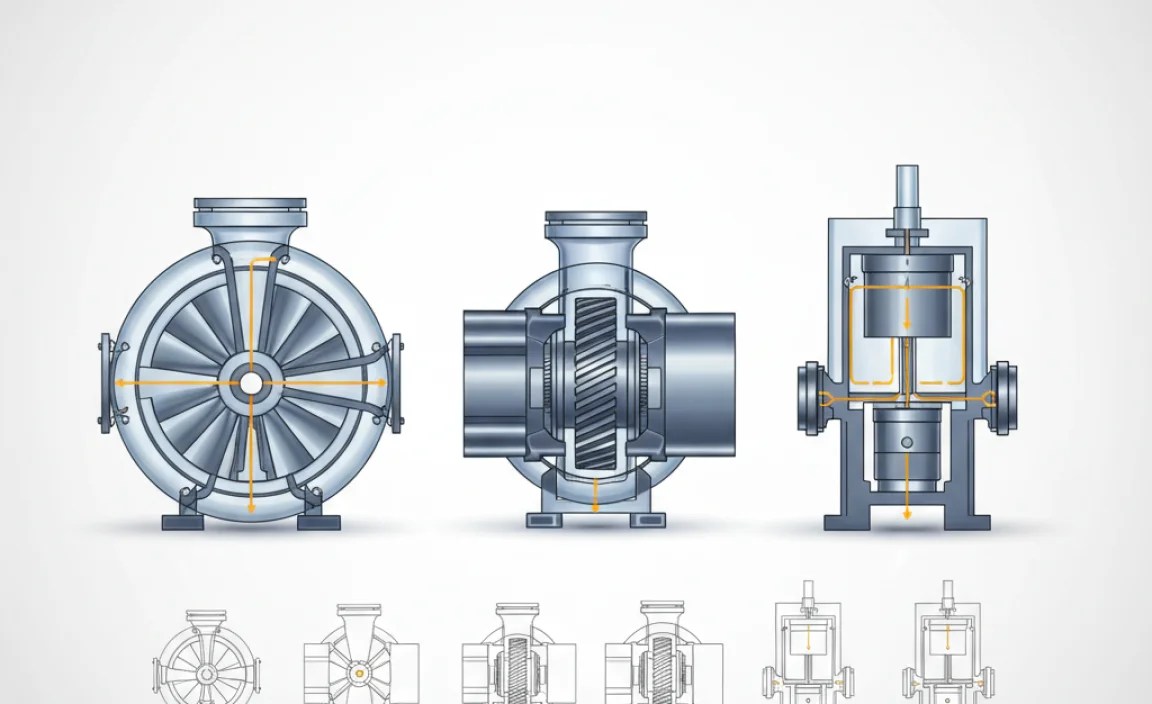
A pump’s cross-section refers to the shape and configuration of its internal components when viewed as if the pump were sliced in half. This view reveals the design of the impeller, casing, and other parts that affect how the pump moves fluids.
Why Pump Cross-Sections Matter
Understanding pump cross-sections is important for several reasons:
- Performance: The cross-section affects the pump’s efficiency, pressure, and flow rate.
- Selection: Knowing the different types helps you choose the right pump for a specific application.
- Troubleshooting: Understanding the design can aid in diagnosing and fixing pump problems.
Common Pump Cross-Section Types
Here are some of the most common types of pump cross-sections:
- Volute
- Diffuser
- Circular
- Specialty Designs
Volute Pump Cross-Sections
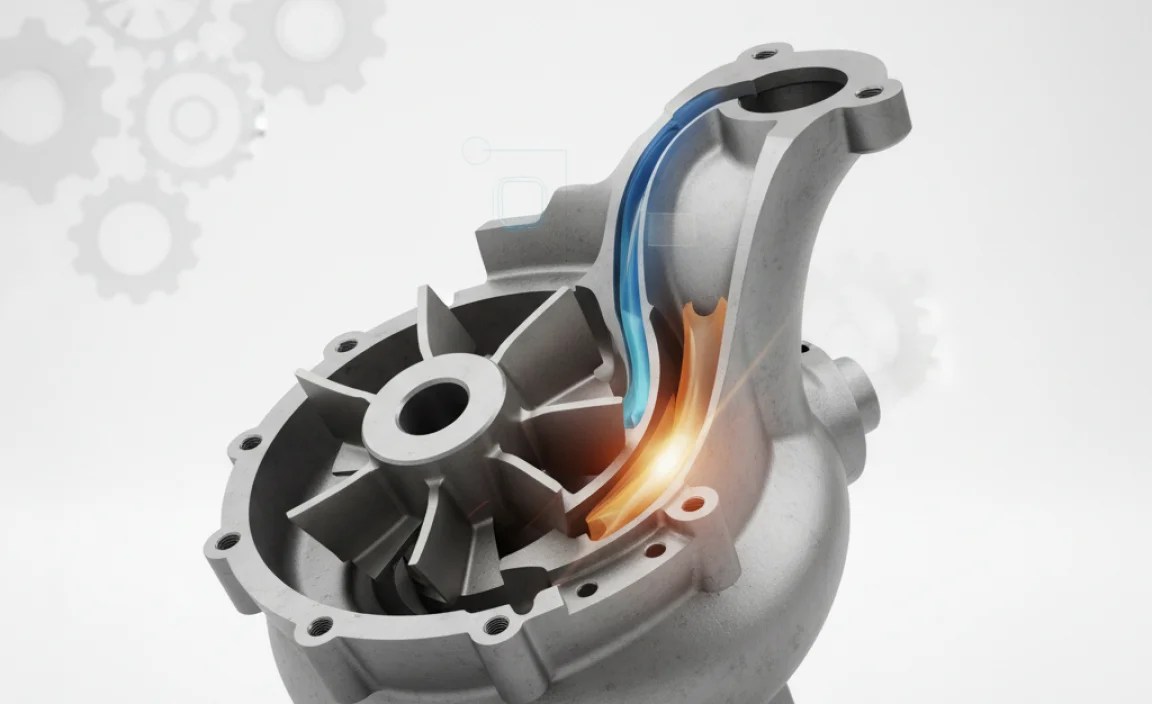
A volute pump features a spiral-shaped casing that gradually increases in area as it approaches the outlet. This design helps convert the kinetic energy (velocity) of the fluid into pressure.
How Volute Pumps Work
The impeller in a volute pump spins, drawing fluid into the center and then pushing it outward. As the fluid moves through the volute casing, its velocity decreases, and its pressure increases. This pressure is then directed to the outlet.
Advantages of Volute Pumps
- Simple Design: Volute pumps are relatively simple to manufacture and maintain.
- Cost-Effective: They are generally less expensive than other types of pumps.
- Versatile: Volute pumps can handle a wide range of flow rates and pressures.
Disadvantages of Volute Pumps
- Lower Efficiency: Compared to diffuser pumps, volute pumps can be less efficient, especially at higher flow rates.
- Increased Noise: The turbulent flow within the volute can generate more noise.
Applications of Volute Pumps
Volute pumps are commonly used in:
- Water supply systems
- Irrigation
- HVAC systems
- General industrial applications
Diffuser Pump Cross-Sections
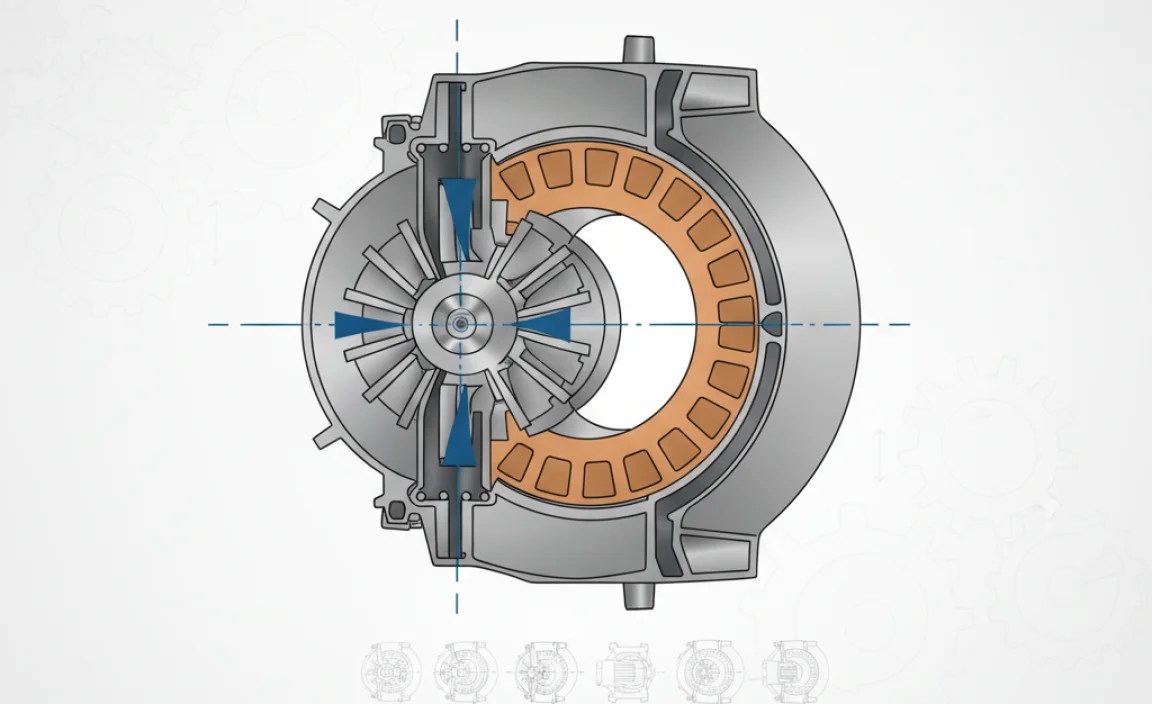
A diffuser pump uses a series of stationary vanes (diffusers) around the impeller to slow down the fluid gradually and increase its pressure. This design is more efficient than a volute pump at converting kinetic energy into pressure.
How Diffuser Pumps Work
In a diffuser pump, the impeller discharges fluid into the diffuser vanes. These vanes gradually expand the flow area, which slows down the fluid and increases its pressure. The high-pressure fluid is then collected and directed to the outlet.
Advantages of Diffuser Pumps
- Higher Efficiency: Diffuser pumps are generally more efficient than volute pumps, especially at higher flow rates.
- Reduced Noise: The gradual slowing of the fluid reduces turbulence and noise.
- Stable Performance: Diffuser pumps tend to have more stable performance curves.
Disadvantages of Diffuser Pumps
- Complex Design: Diffuser pumps are more complex to manufacture and maintain.
- Higher Cost: They are typically more expensive than volute pumps.
- Sensitivity to Solids: The narrow passages in the diffuser can be more susceptible to clogging by solids.
Applications of Diffuser Pumps
Diffuser pumps are commonly used in:
- High-pressure water systems
- Boiler feed applications
- Multi-stage pumps
- Applications requiring high efficiency
Circular Pump Cross-Sections
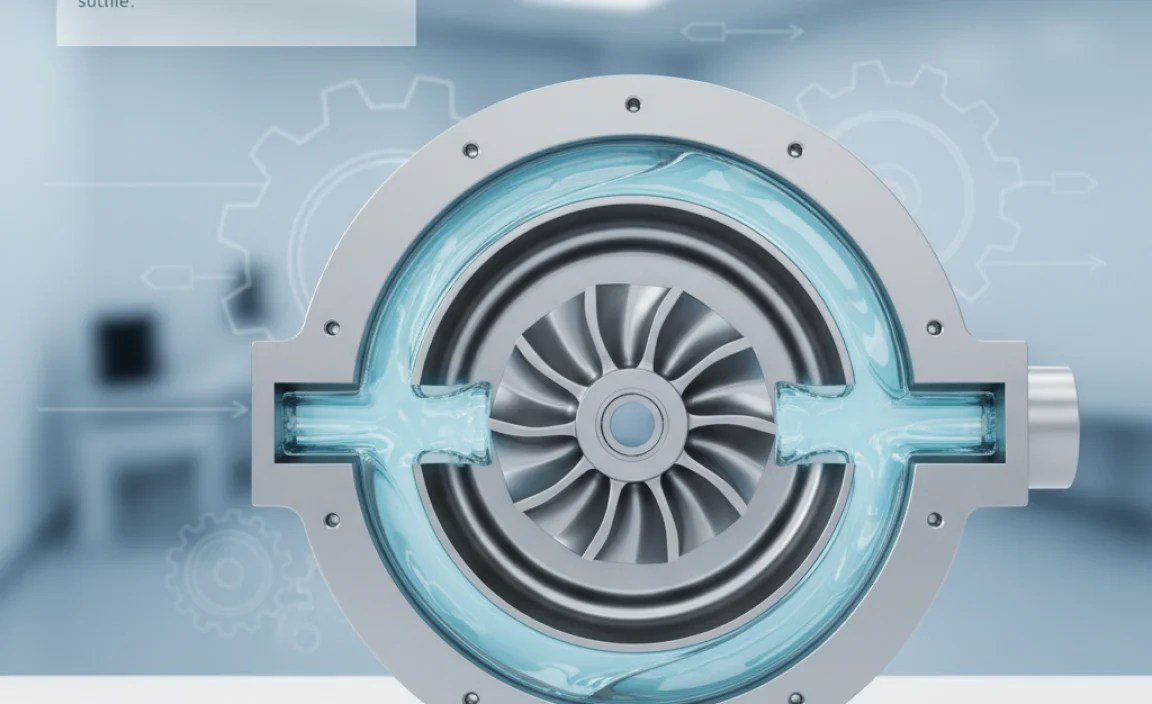
Circular pumps, also known as turbine or regenerative pumps, use a circular casing with a vaned impeller to impart energy to the fluid multiple times as it passes through the pump.
How Circular Pumps Work
The impeller in a circular pump has vanes on both sides that create a series of small chambers. As the impeller rotates, fluid is repeatedly drawn into these chambers and discharged, gaining energy with each pass. This “regenerative” action allows the pump to develop high pressure at relatively low flow rates.
Advantages of Circular Pumps
- High Pressure at Low Flow: Circular pumps can generate high pressures at low flow rates.
- Compact Size: They are generally smaller and lighter than other types of pumps with similar performance.
- Self-Priming Capability: Some circular pumps are self-priming, meaning they can start pumping even if the pump casing is not initially filled with fluid.
Disadvantages of Circular Pumps
- Lower Efficiency: Circular pumps tend to be less efficient than volute or diffuser pumps.
- Limited Flow Rate: They are not suitable for high-flow applications.
- Sensitivity to Viscosity: The performance of circular pumps can be significantly affected by changes in fluid viscosity.
Applications of Circular Pumps
Circular pumps are commonly used in:
- Chemical dosing
- High-pressure cleaning equipment
- Fuel pumps
- Small boiler feed systems
Specialty Pump Cross-Section Designs
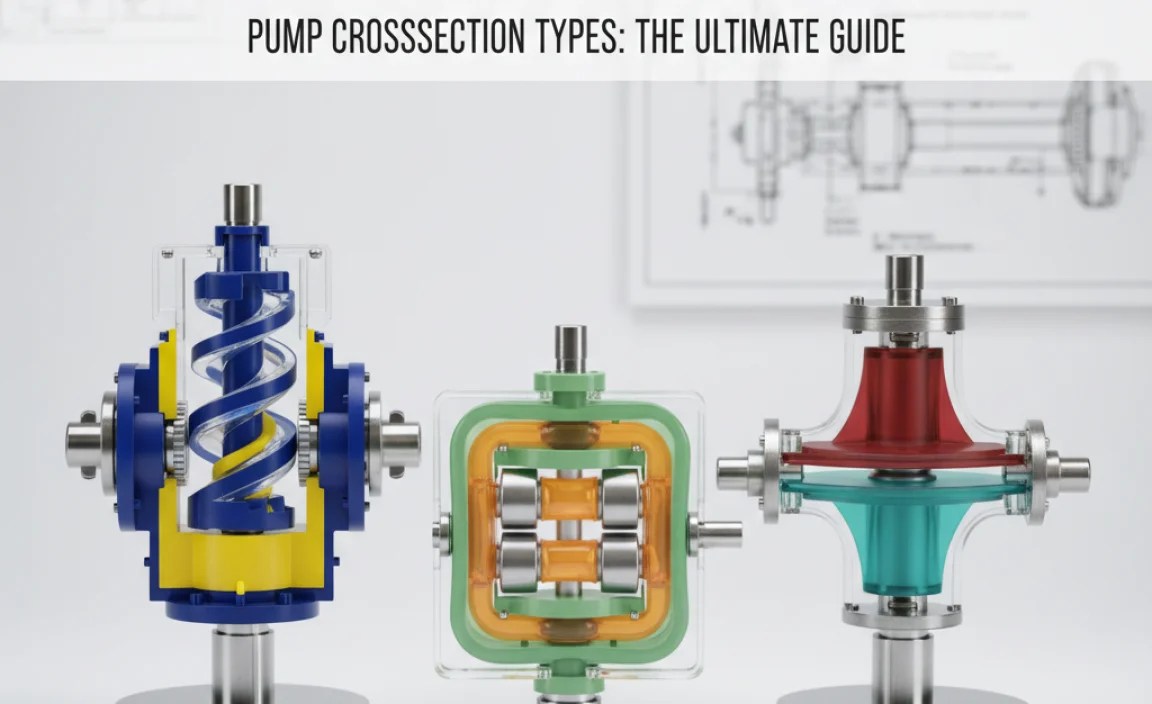
Beyond the common types, there are also specialized pump designs tailored for specific applications. These include axial-flow pumps, mixed-flow pumps, and peripheral pumps.
Axial-Flow Pumps
Axial-flow pumps, also known as propeller pumps, feature an impeller that resembles a propeller. The fluid flows parallel to the impeller’s axis of rotation.
How Axial-Flow Pumps Work
The impeller in an axial-flow pump pushes fluid in a straight line along the axis of the pump. This design is well-suited for moving large volumes of fluid at low pressures.
Advantages of Axial-Flow Pumps
- High Flow Rate: Axial-flow pumps can deliver very high flow rates.
- Simple Design: They have a relatively simple and compact design.
Disadvantages of Axial-Flow Pumps
- Low Pressure: Axial-flow pumps are not suitable for high-pressure applications.
- Limited Head: They have a limited ability to overcome elevation changes (head).
Applications of Axial-Flow Pumps
Axial-flow pumps are commonly used in:
- Irrigation
- Flood control
- Wastewater treatment
- Circulating water in power plants
Mixed-Flow Pumps
Mixed-flow pumps combine features of both axial-flow and centrifugal pumps. The fluid flows both axially and radially through the impeller.
How Mixed-Flow Pumps Work
The impeller in a mixed-flow pump imparts energy to the fluid in both axial and radial directions. This design provides a balance between flow rate and pressure.
Advantages of Mixed-Flow Pumps
- Moderate Flow and Pressure: Mixed-flow pumps offer a good balance between flow rate and pressure.
- Higher Efficiency than Axial-Flow: They are generally more efficient than axial-flow pumps at higher pressures.
Disadvantages of Mixed-Flow Pumps
- More Complex than Axial-Flow: Mixed-flow pumps are more complex to design and manufacture than axial-flow pumps.
Applications of Mixed-Flow Pumps
Mixed-flow pumps are commonly used in:
- Water supply
- Drainage
- Circulation
Peripheral Pumps
Peripheral pumps, also called turbine or regenerative pumps (similar to circular pumps), use a vaned impeller rotating in a circular channel to impart energy to the fluid multiple times.
How Peripheral Pumps Work
The impeller in a peripheral pump has vanes that extend into a circular channel. As the impeller rotates, fluid is repeatedly drawn into and discharged from the vanes, gaining energy with each pass. This regenerative action allows the pump to develop high pressure at relatively low flow rates.
Advantages of Peripheral Pumps
- High Pressure at Low Flow: Peripheral pumps can generate high pressures at low flow rates.
- Self-Priming Capability: Many peripheral pumps are self-priming.
Disadvantages of Peripheral Pumps
- Low Efficiency: Peripheral pumps tend to be less efficient than other types of pumps.
- Sensitivity to Solids: The narrow passages in the impeller and channel can be easily clogged by solids.
Applications of Peripheral Pumps
Peripheral pumps are commonly used in:
- Chemical dosing
- Fuel pumps
- Small water systems
Comparing Pump Cross-Section Types
Here’s a table summarizing the key differences between the main pump cross-section types:
| Pump Type | Design | Advantages | Disadvantages | Applications |
|---|---|---|---|---|
| Volute | Spiral-shaped casing | Simple, cost-effective, versatile | Lower efficiency, increased noise | Water supply, irrigation, HVAC |
| Diffuser | Stationary vanes around impeller | Higher efficiency, reduced noise, stable performance | Complex, higher cost, sensitive to solids | High-pressure water systems, boiler feed |
| Circular | Circular casing with vaned impeller | High pressure at low flow, compact, self-priming | Lower efficiency, limited flow rate, sensitive to viscosity | Chemical dosing, high-pressure cleaning, fuel pumps |
| Axial-Flow | Propeller-like impeller | High flow rate, simple design | Low pressure, limited head | Irrigation, flood control, wastewater treatment |
| Mixed-Flow | Combination of axial and radial flow | Moderate flow and pressure, higher efficiency than axial-flow | More complex than axial-flow | Water supply, drainage, circulation |
| Peripheral | Vaned impeller in circular channel | High pressure at low flow, self-priming | Low efficiency, sensitive to solids | Chemical dosing, fuel pumps, small water systems |
Factors to Consider When Choosing a Pump
When selecting a pump, consider the following factors:
- Flow Rate: The volume of fluid the pump needs to deliver per unit of time.
- Pressure (Head): The amount of pressure the pump needs to generate to overcome elevation changes and friction losses.
- Fluid Properties: The viscosity, density, and chemical compatibility of the fluid.
- Efficiency: The amount of energy the pump consumes to deliver the required flow rate and pressure.
- Cost: The initial cost of the pump, as well as the operating and maintenance costs.
Practical Tips for Pump Maintenance
To keep your pump running smoothly, follow these maintenance tips:
- Regular Inspections: Check for leaks, unusual noises, and vibrations.
- Lubrication: Follow the manufacturer’s recommendations for lubricating bearings and other moving parts.
- Cleaning: Keep the pump and surrounding area clean to prevent debris from entering the pump.
- Seal Replacement: Replace worn or damaged seals to prevent leaks.
- Impeller Inspection: Periodically inspect the impeller for wear, damage, or blockage.
Troubleshooting Common Pump Problems
Here are some common pump problems and how to troubleshoot them:
- Pump Not Starting:
- Check the power supply.
- Check for tripped circuit breakers or blown fuses.
- Check for obstructions in the impeller.
- Low Flow Rate:
- Check for clogged suction lines or filters.
- Check for air leaks in the suction line.
- Check for a worn or damaged impeller.
- Pump Overheating:
- Check for inadequate cooling.
- Check for excessive back pressure.
- Check for a worn or damaged motor.
- Excessive Noise or Vibration:
- Check for cavitation (caused by low suction pressure).
- Check for misalignment of the pump and motor.
- Check for worn bearings or other moving parts.
Resources for Further Learning
Here are some resources for learning more about pumps and fluid mechanics:
- The Engineering ToolBox – Pumps
- Hydraulic Institute
FAQ: Pump Cross-Section Types
Here are some frequently asked questions about pump cross-section types:
What is a pump cross-section?
A pump cross-section is a view of the internal components of a pump, revealing the design of the impeller, casing, and other parts.
Why is understanding pump cross-sections important?
Understanding pump cross-sections helps you choose the right pump, troubleshoot problems, and optimize performance.
What is a volute pump?
A volute pump has a spiral-shaped casing that converts fluid velocity into pressure.
What is a diffuser pump?
A diffuser pump uses stationary vanes to slow down the fluid gradually and increase its pressure.
What are the advantages of a diffuser pump over a volute pump?
Diffuser pumps are generally more efficient and quieter than volute pumps.
What is a circular pump?
A circular pump uses a circular casing with a vaned impeller to impart energy to the fluid multiple times.
When would I use an axial-flow pump?
Axial-flow pumps are ideal for moving large volumes of fluid at low pressures, such as in irrigation or flood control.
Conclusion
Understanding pump cross-section types empowers you to make informed decisions about pump selection, maintenance, and troubleshooting. Whether you’re dealing with a simple bike pump or a complex industrial system, knowing the basics of volute, diffuser, circular, and specialty designs can save you time and money.
Remember to consider factors like flow rate, pressure, fluid properties, and efficiency when choosing a pump. Regular inspections and maintenance will keep your pump running smoothly for years to come. With this knowledge, you’re well-equipped to handle any pumping challenge that comes your way. Keep on pumping!


