
Ultimate Pump for Road & MTB: Ride Worry-Free!

Quick Summary:
Finding the right pump for your road or mountain bike (MTB) can be simple. For road bikes, focus on high pressure (100+ PSI) floor pumps or mini-pumps. For MTBs, prioritize higher volume for quickly filling larger tires, often with lower pressure. Consider features like gauge accuracy, pump head compatibility (Presta and Schrader valves), and portability based on your typical riding style and needs.
Choosing the right pump for your road bike or mountain bike can feel overwhelming. Are you tired of struggling to inflate your tires before a ride? Many cyclists face this frustration, but don’t worry! The right pump makes a huge difference. This guide will walk you through the key factors to consider when selecting a pump that perfectly matches your bike and riding style. We’ll cover everything from pump types and pressure ratings to valve compatibility and essential features. Get ready to say goodbye to pre-ride inflation stress!
Understanding Bike Pump Basics
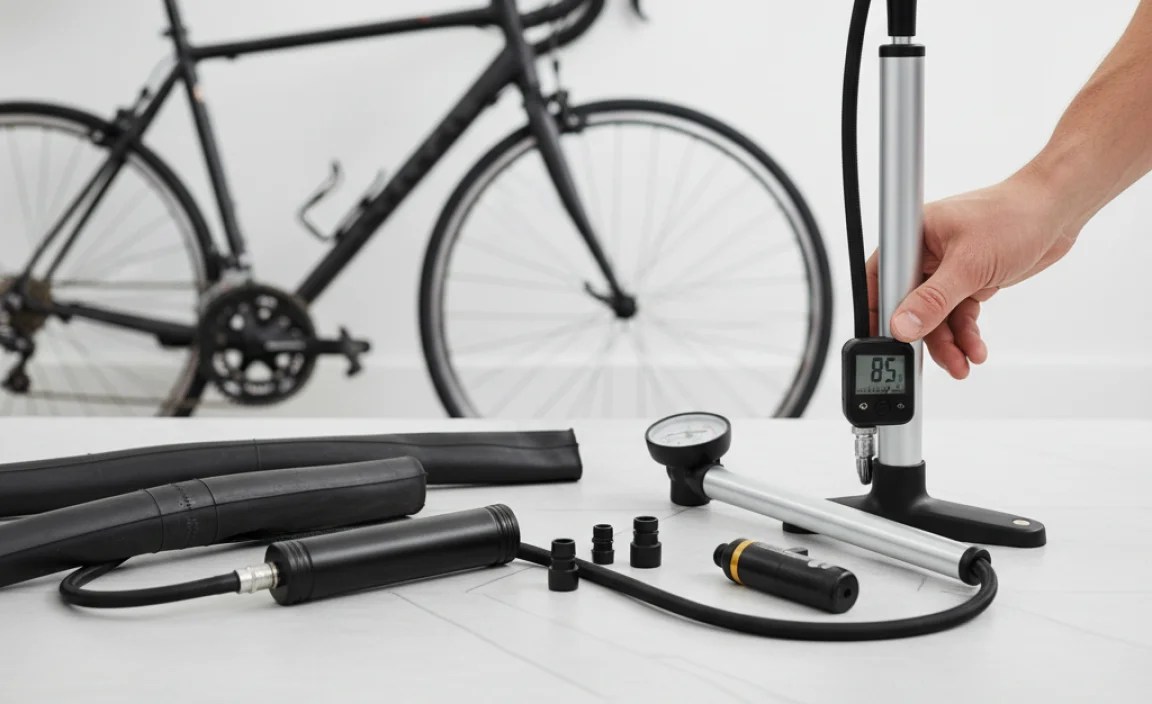
Before diving into specific pump recommendations, let’s cover some fundamental concepts. Bike pumps aren’t one-size-fits-all; different bikes and tires require different types of pumps.
Types of Bike Pumps
- Floor Pumps: These are larger pumps designed for home use. They offer stability and leverage, making it easier to inflate tires to higher pressures.
- Mini-Pumps: Compact and portable, mini-pumps are ideal for carrying on rides. They’re less efficient than floor pumps but can get you back on the road (or trail) in a pinch.
- CO2 Inflators: These use cartridges of compressed CO2 to quickly inflate tires. They’re lightweight and fast but require purchasing cartridges.
- Frame-Mounted Pumps: These pumps attach directly to your bike frame for convenient access. They strike a balance between portability and ease of use.
Key Features to Consider
- Pressure Gauge: A gauge allows you to accurately inflate your tires to the desired pressure. Look for a gauge that’s easy to read and accurate.
- Valve Compatibility: Most pumps are designed to work with both Presta and Schrader valves. Some pumps have switchable heads, while others automatically adjust to the valve type.
- Pump Head: The pump head is the part that attaches to the valve. Look for a secure and easy-to-use pump head that minimizes air leakage.
- Volume vs. Pressure: Volume refers to the amount of air pumped per stroke, while pressure refers to the force of the air. Road bikes typically require higher pressure, while mountain bikes often benefit from higher volume.
Road Bike Pumps: Prioritizing High Pressure

Road bikes typically use tires that require high pressure, often between 80 and 130 PSI. Therefore, road bike pumps are designed to efficiently deliver high pressure with each stroke.
Recommended Pump Types for Road Bikes
- Floor Pumps: A high-quality floor pump is essential for road bike owners. Look for a pump with a sturdy base, an accurate gauge, and a comfortable handle.
- Mini-Pumps: A lightweight mini-pump is a must-have for road rides. Choose a model that can reach high pressures and is easy to carry.
- CO2 Inflators: CO2 inflators are a popular choice for road cyclists who prioritize speed and weight savings.
Features to Look for in a Road Bike Pump
- High-Pressure Rating: Ensure the pump can reach at least 120 PSI.
- Accurate Gauge: A precise gauge is crucial for achieving optimal tire pressure.
- Efficient Pumping Action: Look for a pump that delivers a good amount of air with each stroke, even at high pressures.
- Presta Valve Compatibility: Road bikes almost exclusively use Presta valves, so make sure the pump is compatible.
Road Bike Pump Recommendations
| Pump Type | Recommended Model | Key Features |
|---|---|---|
| Floor Pump | Lezyne Classic Floor Drive | High pressure, accurate gauge, durable construction |
| Mini-Pump | Topeak RaceRocket HP | Lightweight, high pressure, Presta/Schrader compatible |
| CO2 Inflator | Genuine Innovations Ultraflate | Compact, easy to use, reliable |
MTB Pumps: Focusing on High Volume

Mountain bikes typically use wider tires that require lower pressure but higher volume. MTB pumps are designed to quickly fill these larger tires without requiring excessive force.
Recommended Pump Types for MTBs
- Floor Pumps: A floor pump with a large volume chamber is ideal for quickly inflating MTB tires.
- Mini-Pumps: A durable mini-pump is essential for trailside repairs. Choose a model that can handle the rigors of off-road riding.
- Frame-Mounted Pumps: Frame-mounted pumps offer a convenient way to carry a pump without taking up space in your pack.
Features to Look for in an MTB Pump
- High-Volume Chamber: Look for a pump that moves a large amount of air with each stroke.
- Lower Pressure Rating: MTB tires typically run between 20 and 40 PSI, so a pump with a lower pressure range is sufficient.
- Durable Construction: Choose a pump that can withstand the bumps and vibrations of off-road riding.
- Schrader Valve Compatibility: While some MTBs use Presta valves, Schrader valves are more common, especially on entry-level bikes.
MTB Pump Recommendations
| Pump Type | Recommended Model | Key Features |
|---|---|---|
| Floor Pump | Serfas TCPG | High volume, easy to read gauge, durable |
| Mini-Pump | Crankbrothers Sterling LG | High volume, compact, Presta/Schrader compatible |
| Frame-Mounted Pump | Lezyne Grip Drive HV | High volume, secure frame mount, durable |
Valve Types: Presta vs. Schrader

Understanding the difference between Presta and Schrader valves is crucial for choosing the right pump and inflating your tires correctly.
Presta Valves
Presta valves are commonly found on road bikes and high-end mountain bikes. They’re narrower than Schrader valves and have a locking nut at the tip.
Pros of Presta Valves:
- Better for high-pressure applications
- Lighter than Schrader valves
- The valve core can be replaced
Cons of Presta Valves:
- More fragile than Schrader valves
- Require a special adapter to inflate at gas stations
Schrader Valves
Schrader valves are similar to those found on car tires. They’re wider and more robust than Presta valves and have a spring-loaded pin in the center.
Pros of Schrader Valves:
- More durable than Presta valves
- Can be inflated at gas stations
- Easier to use for some people
Cons of Schrader Valves:
- Not as good for high-pressure applications
- Heavier than Presta valves
Step-by-Step Guide to Inflating Your Tires

Now that you know about different pump types and valve types, let’s go through the process of inflating your tires.
Step 1: Prepare Your Pump and Tire
Make sure your pump is compatible with your valve type. If necessary, switch the pump head or use an adapter.
Step 2: Attach the Pump Head
For Presta valves, unscrew the locking nut at the tip of the valve. For Schrader valves, simply remove the valve cap. Firmly press the pump head onto the valve, ensuring a secure seal.
Step 3: Inflate the Tire
Begin pumping, using smooth and consistent strokes. Keep an eye on the pressure gauge to avoid over-inflating the tire.
Step 4: Remove the Pump Head
Once you’ve reached the desired pressure, carefully remove the pump head from the valve. For Presta valves, tighten the locking nut.
Step 5: Check the Tire Pressure
Use a separate tire pressure gauge to double-check the pressure. This is especially important if your pump’s gauge is inaccurate.
A digital pressure gauge like this one from Schwalbe allows for precise measurements: Schwalbe Digital Pressure Gauge
Troubleshooting Common Pumping Problems
Sometimes, inflating your tires can be frustrating. Here are some common problems and how to fix them.
Air Leaking Around the Valve
This is often caused by a loose pump head or a damaged valve. Try tightening the pump head or replacing the valve.
Difficulty Pumping
This could be due to a clogged pump head or a faulty valve. Try cleaning the pump head or replacing the valve.
Inaccurate Gauge Readings
If your pump’s gauge is consistently inaccurate, it may need to be replaced. Use a separate tire pressure gauge to verify the pressure.
Maintaining Your Bike Pump
Proper maintenance can extend the life of your bike pump and ensure it performs optimally. Here are some tips:
- Clean the Pump Head: Regularly clean the pump head to remove dirt and debris.
- Lubricate Moving Parts: Apply a small amount of lubricant to the pump’s moving parts to keep them working smoothly.
- Store the Pump Properly: Store the pump in a dry and protected location to prevent damage.
FAQ: Your Bike Pump Questions Answered
What PSI should I inflate my tires to?
The recommended tire pressure is usually printed on the sidewall of your tire. Road bike tires typically range from 80-130 PSI, while mountain bike tires are usually between 20-40 PSI. Always stay within the manufacturer’s recommended range.
Can I use a car tire pump on my bike?
Yes, if your bike has Schrader valves. However, car tire pumps often deliver air at a very high volume and can easily over-inflate a bicycle tire, so use caution. It’s best to use a pump specifically designed for bicycles.
How often should I check my tire pressure?
Ideally, you should check your tire pressure before every ride. Tires slowly lose air over time, and riding with properly inflated tires improves performance, comfort, and safety.
What’s the difference between a floor pump and a mini-pump?
Floor pumps are larger, more efficient pumps designed for home use. Mini-pumps are compact and portable, ideal for carrying on rides. Floor pumps are easier to use and can reach higher pressures, while mini-pumps are essential for trailside repairs.
My pump isn’t working with my Presta valve. What should I do?
Make sure the pump head is fully engaged with the valve and that the Presta valve’s locking nut is unscrewed. Sometimes the valve core can get stuck; gently depress it to ensure it’s moving freely. If the pump head isn’t sealing properly, try replacing the O-rings inside the pump head.
Can I use a CO2 inflator on both Presta and Schrader valves?
Yes, most CO2 inflators come with adapters that allow them to be used with both Presta and Schrader valves. Make sure you have the correct adapter installed before inflating.
What does “tubeless ready” mean for tire inflation?
“Tubeless ready” means your rims and tires are designed to create an airtight seal without inner tubes. Inflating tubeless tires often requires a high-volume pump or a compressor to quickly seat the tire bead. Once seated, a standard pump can maintain the pressure.
Conclusion
Choosing the right pump for your road or mountain bike is essential for maintaining optimal performance, safety, and enjoyment. By understanding the different pump types, valve types, and key features, you can select a pump that perfectly meets your needs. Remember to regularly check your tire pressure, maintain your pump, and troubleshoot any issues that arise. With the right pump and a little bit of knowledge, you’ll be able to keep your tires properly inflated and enjoy countless miles of smooth and trouble-free riding. Happy cycling!


