
How to Mount Mini Pump on Bike Frame: Easy Guide

Quick Summary: Mounting a mini pump to your bike frame is easy! Use the included bracket and Velcro straps or bolts to attach it to your frame, usually along the seat tube or down tube. Make sure it’s secure and doesn’t interfere with pedaling or cables. This keeps your pump handy for quick tire inflation on the go.
Ever been stuck on the side of the road with a flat tire and no pump? It’s a cyclist’s worst nightmare! Carrying a mini pump is a must, but stuffing it in your backpack isn’t ideal. Mounting it to your bike frame keeps it handy and ready to go. It sounds tricky, but it’s actually super simple. I’ll walk you through it step-by-step, so you can hit the road with confidence.
Why Mount a Mini Pump to Your Bike Frame?


Let’s face it: nobody *wants* to carry extra gear. But a mini pump is essential. Here’s why mounting it to your bike frame is the best option:
- Convenience: Your pump is always there when you need it. No digging through bags!
- Accessibility: Quick access means faster repairs, getting you back on the road sooner.
- Space Saving: Frees up valuable space in your pockets, saddlebag, or backpack.
- Weight Distribution: Keeps the weight on your bike, rather than on your body.
Choosing the Right Mini Pump
Before we get to mounting, let’s make sure you have the right pump. Here’s what to look for:
- Size and Weight: Smaller and lighter is better for frame mounting.
- Pumping Efficiency: Look for a pump that delivers a good amount of air per stroke.
- Valve Compatibility: Make sure it works with both Presta and Schrader valves (or get one that’s easily convertible).
- Mounting Bracket: Check that it includes a secure mounting bracket.
Here are some of my favorite mini pumps that are perfect for frame mounting:
| Pump Name | Features | Why I Recommend It |
|---|---|---|
| Lezyne Road Drive | Lightweight, high pressure, efficient | Excellent for road bikes, pumps tires quickly. Learn more here. |
| Topeak Mini Morph | Fold-out foot pad, gauge, versatile | Great for all types of bikes, easy to use. See details here. |
| Crankbrothers Sterling LG | High volume, easy switching between valves | Ideal for mountain bikes with wider tires. Check it out here. |
Tools You’ll Need
Mounting a mini pump is usually a tool-free process, but here’s what you might need:
- Mini Pump with Mounting Bracket: This is the most important thing!
- Allen Wrench Set: Some brackets use bolts, so have these handy.
- Scissors or Utility Knife: To trim Velcro straps if needed.
- Cleaning Cloth: To clean the frame before mounting.
Step-by-Step Guide: How to Mount Your Mini Pump
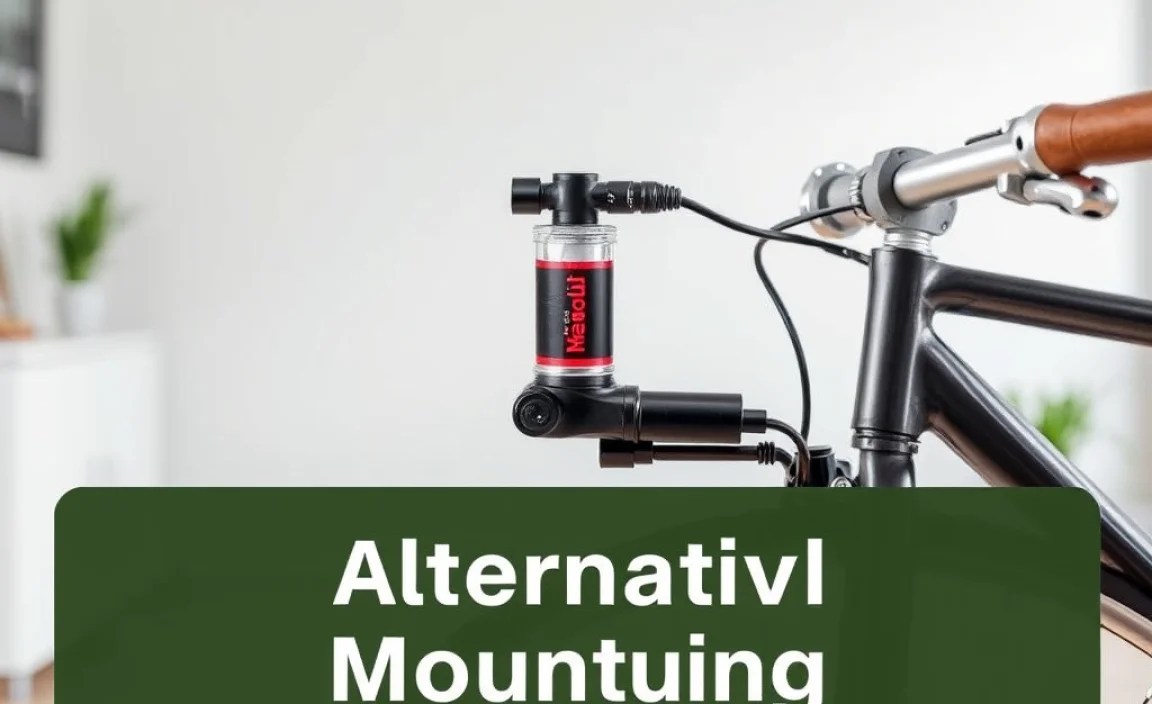
Alright, let’s get that pump mounted! Here’s a detailed guide:
Step 1: Choose the Mounting Location
The most common places to mount your mini pump are:
- Seat Tube: The vertical tube that the seatpost goes into.
- Down Tube: The tube that connects the head tube to the bottom bracket.
- Under the Top Tube: The tube that connects the head tube to the seat tube. (Less common, but works for some bikes).
Consider these factors when choosing a location:
- Clearance: Make sure the pump doesn’t interfere with your legs while pedaling.
- Cable Routing: Avoid blocking or pinching any cables.
- Water Bottle Cages: Don’t mount the pump where it will interfere with your water bottle.
- Accessibility: Choose a spot where you can easily reach the pump while riding (or stopped, of course!).
Pro Tip: Temporarily hold the pump in different locations with tape to visualize how it will fit before permanently mounting.
Step 2: Prepare the Mounting Area
Clean the area on your frame where you’ll be mounting the pump. Use a clean cloth to wipe away any dirt, grime, or moisture. This will help the bracket adhere better and prevent scratches.
Step 3: Attach the Mounting Bracket
Most mini pumps come with a bracket that attaches to the bike frame. Here’s how to attach it, depending on the type of bracket:
Velcro Straps
- Position the bracket on the frame.
- Thread the Velcro straps through the slots on the bracket.
- Wrap the straps around the frame tubes.
- Tighten the straps securely.
- Trim any excess strap length.
Bolts
- Locate the water bottle cage mounts on your frame.
- Align the pump bracket with the water bottle cage mounts.
- Use the bolts (usually included with the bracket) to secure the bracket to the frame.
- Tighten the bolts with an Allen wrench. Be careful not to overtighten!
Some brackets use a combination of Velcro and bolts for extra security.
Step 4: Secure the Mini Pump to the Bracket
Now that the bracket is attached, slide the mini pump into the bracket. Most brackets have a clip or strap to hold the pump in place. Make sure it’s securely fastened and won’t fall out while riding.
Step 5: Double-Check Everything
Give the pump a good wiggle to make sure the bracket is secure and the pump is properly attached. Check that nothing interferes with your pedaling or cables. Go for a short test ride to ensure everything stays in place.
Alternative Mounting Options
If you don’t want to mount your pump to the frame, here are a few other options:
- Saddlebag: A small bag that attaches under your seat. Great for carrying tools, tubes, and a mini pump.
- Backpack: If you already carry a backpack, you can simply toss the pump inside.
- Jersey Pocket: Some cyclists prefer to keep their pump in a jersey pocket, but it can be uncomfortable on long rides.
However, frame mounting is usually the most convenient and accessible option.
Troubleshooting Common Issues
Sometimes things don’t go as planned. Here are some common problems and how to fix them:
- Bracket Won’t Stay Put: Make sure the frame is clean and the straps or bolts are tight enough. You can also try using a rubber pad between the bracket and the frame for extra grip.
- Pump Rattles: Ensure the pump is securely fastened in the bracket. You can also add a small piece of foam or rubber to dampen vibrations.
- Interference with Cables: Try a different mounting location or adjust the cable routing.
- Bracket Doesn’t Fit: Some frames have limited space or odd tube shapes. Try a different bracket style or consider an alternative mounting location.
Maintaining Your Mini Pump
To keep your mini pump in good working order, follow these tips:
- Clean it Regularly: Wipe down the pump with a damp cloth to remove dirt and grime.
- Lubricate Moving Parts: Use a silicone-based lubricant on the pump’s piston and seals to keep it working smoothly.
- Inspect for Damage: Check the pump for cracks, leaks, or other damage. Replace any worn or damaged parts.
- Store it Properly: When not in use, store the pump in a dry place to prevent corrosion.
Understanding Different Types of Bike Pumps
While we’re focusing on mini pumps for frame mounting, it’s helpful to know about other types of bike pumps:
| Pump Type | Description | Pros | Cons |
|---|---|---|---|
| Floor Pump | Large pump with a gauge and footpad. | Efficient, accurate pressure readings. | Not portable. |
| Mini Pump | Small, portable pump for on-the-go inflation. | Compact, lightweight. | Less efficient, can be tiring to use. |
| CO2 Inflator | Uses a CO2 cartridge to quickly inflate tires. | Fast inflation, very compact. | Requires cartridges, can be wasteful. |
Each type has its place, but a mini pump is essential for carrying with you on rides.
FAQ About Mounting Mini Pumps
Here are some frequently asked questions about mounting mini pumps on bike frames:
1. Will a mini pump fit on any bike frame?
Most mini pumps are designed to fit a wide range of bike frames. However, some frames with limited space or unusual tube shapes may pose a challenge. Always check for clearance and cable interference before mounting.
2. Can I mount a mini pump if I already have water bottle cages?
Yes, many mini pump brackets are designed to be compatible with water bottle cages. They often share the same mounting points, allowing you to attach both the pump bracket and the water bottle cage to the frame.
3. Is it safe to mount a mini pump on a carbon fiber frame?
Yes, it’s generally safe to mount a mini pump on a carbon fiber frame. However, be extra careful not to overtighten the bolts or straps, as this could damage the carbon fiber. Use a torque wrench if possible, and follow the manufacturer’s recommendations.
4. What if my mini pump doesn’t come with a mounting bracket?
You can purchase aftermarket mini pump brackets separately. Look for a bracket that is compatible with your pump and bike frame. Alternatively, you can use Velcro straps or zip ties to secure the pump to the frame, but this may not be as secure as a dedicated bracket.
5. How do I prevent my mini pump from getting stolen?
Unfortunately, there’s no foolproof way to prevent theft. However, you can make it more difficult by using a tamper-resistant bolt or strap. You can also remove the pump from the bracket when you leave your bike unattended in public places.
6. Will mounting a mini pump affect my bike’s performance?
The added weight of a mini pump is minimal and unlikely to have a noticeable impact on your bike’s performance. However, if you’re a serious racer or weight weenie, you may prefer to carry the pump in your jersey pocket or use a CO2 inflator to save a few grams.
7. Where can I buy a mini pump and mounting bracket?
You can find mini pumps and mounting brackets at most local bike shops or online retailers like Amazon, REI, and Backcountry. Be sure to read reviews and compare prices before making a purchase.
Conclusion
Mounting a mini pump to your bike frame is a simple yet essential step for any cyclist. It keeps your pump readily available, saves space, and provides peace of mind on every ride. By following these steps, you can confidently mount your mini pump and be prepared for any unexpected flat tires. So, grab your pump, choose your mounting location, and hit the road with confidence! Remember, a little preparation goes a long way in ensuring a smooth and enjoyable cycling experience.


