
How to Pump Wheelbarrow Tyre with Hand Pump? Easy!

Quick Summary: Pumping a wheelbarrow tire with a hand pump is easy! First, locate the valve stem. Remove the valve cap and firmly attach the pump head. Inflate the tire to the PSI indicated on the sidewall, using the pump’s gauge. Detach the pump, replace the valve cap, and you’re ready to roll!
Is your wheelbarrow tire looking a little flat? A deflated tire makes moving heavy loads much harder. You might think you need special tools, but most of the time, a simple hand pump is all you need to get your wheelbarrow back in action. It’s a quick and easy fix that can save you a lot of effort when you’re working in the garden or on a construction site.
This guide will walk you through each step, from finding the right pump to knowing how much air to add. We’ll cover everything you need to know to keep your wheelbarrow tires properly inflated and ready for any job. Let’s get started!
What You’ll Need

Before you start, make sure you have these items handy:
- Hand Pump: A standard bicycle pump or a hand pump with a pressure gauge will work.
- Valve Adapter (if needed): Some wheelbarrows have different valve types.
- Tire Pressure Gauge (optional): If your pump doesn’t have a gauge, a separate gauge is useful.
- Rag or Cloth: To wipe off any dirt or debris.
Step-by-Step Guide to Pumping Your Wheelbarrow Tire

Step 1: Locate the Valve Stem
The valve stem is where you’ll attach the pump. It’s usually a small, rubber or metal piece sticking out from the tire. It might be covered by a valve cap, so look closely!
Step 2: Clean the Valve Stem
Use a rag or cloth to wipe off any dirt or debris from the valve stem. This will help ensure a good seal when you attach the pump.
Step 3: Remove the Valve Cap
If there’s a valve cap, unscrew it and set it aside in a safe place. You don’t want to lose it!
Step 4: Identify the Valve Type
Wheelbarrows typically use two types of valves: Schrader and Presta. Schrader valves are more common and look like the valves on car tires. Presta valves are narrower and usually have a small nut at the tip that needs to be loosened before inflating.
Schrader Valve: Wider, with a spring-loaded pin in the center.
Presta Valve: Narrower, with a lock nut at the tip.
Step 5: Attach the Pump Head
Now, attach the pump head to the valve stem. Make sure it’s firmly connected to create a good seal. Depending on your pump, you might need to flip a lever to lock it in place.
- For Schrader valves: Press the pump head straight onto the valve stem.
- For Presta valves: First, loosen the lock nut. Then, press the pump head onto the valve stem.
Step 6: Check the Connection
Before you start pumping, make sure the connection is secure. If you hear air leaking, readjust the pump head until the seal is tight.
Step 7: Start Pumping
Begin pumping in a steady, consistent motion. Keep an eye on the pressure gauge (if your pump has one) to avoid over-inflating the tire.
Step 8: Monitor the Tire Pressure
Check the sidewall of the tire for the recommended PSI (pounds per square inch). This is the optimal pressure for your wheelbarrow tire. Inflate the tire until it reaches this pressure.
Note: If your pump doesn’t have a gauge, you can use a separate tire pressure gauge to check the pressure periodically.
Step 9: Remove the Pump Head
Once the tire is inflated to the correct pressure, carefully remove the pump head. If you have a Presta valve, remember to tighten the lock nut.
Step 10: Replace the Valve Cap
Screw the valve cap back onto the valve stem. This will help keep dirt and debris out and prevent air from leaking.
Step 11: Check the Tire
Give the tire a quick check to make sure it feels firm and rolls smoothly. If it still seems soft, add a little more air.
Troubleshooting Tips
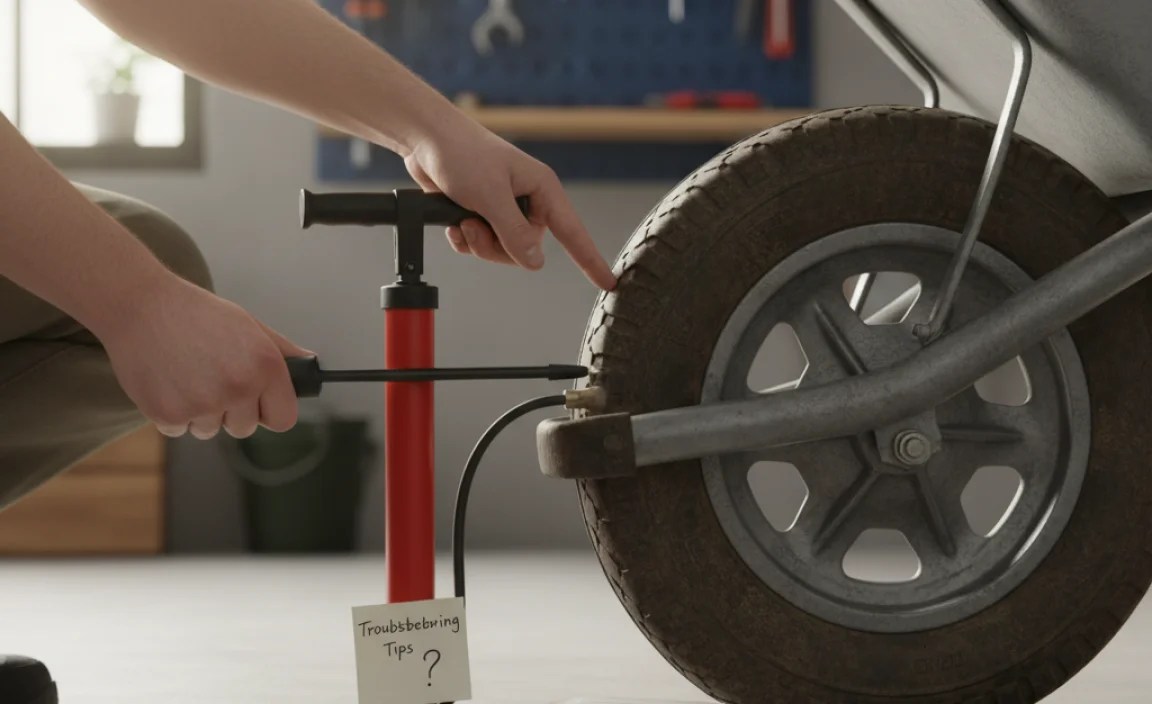
Sometimes, things don’t go as planned. Here are a few common issues and how to fix them:
- Air Leaking: If you hear air leaking when you attach the pump, make sure the pump head is securely connected to the valve stem. You might need to adjust it or try a different pump head.
- Can’t Attach Pump: If you’re having trouble attaching the pump, check the valve type. You might need a valve adapter to connect the pump properly.
- Tire Won’t Inflate: If the tire won’t inflate, there might be a hole in the tire or tube. You’ll need to repair or replace the tire or tube.
Choosing the Right Hand Pump

Not all hand pumps are created equal. Here’s what to look for when choosing a hand pump for your wheelbarrow tire:
- Pressure Gauge: A built-in pressure gauge makes it easy to monitor the tire pressure and avoid over-inflating.
- Valve Compatibility: Make sure the pump is compatible with the valve type on your wheelbarrow tire (Schrader or Presta). Some pumps come with adapters for both types of valves.
- Durability: Look for a pump made from high-quality materials that can withstand regular use.
- Comfort: Choose a pump with a comfortable handle and a stable base for easy pumping.
Hand Pump Types: A Quick Comparison
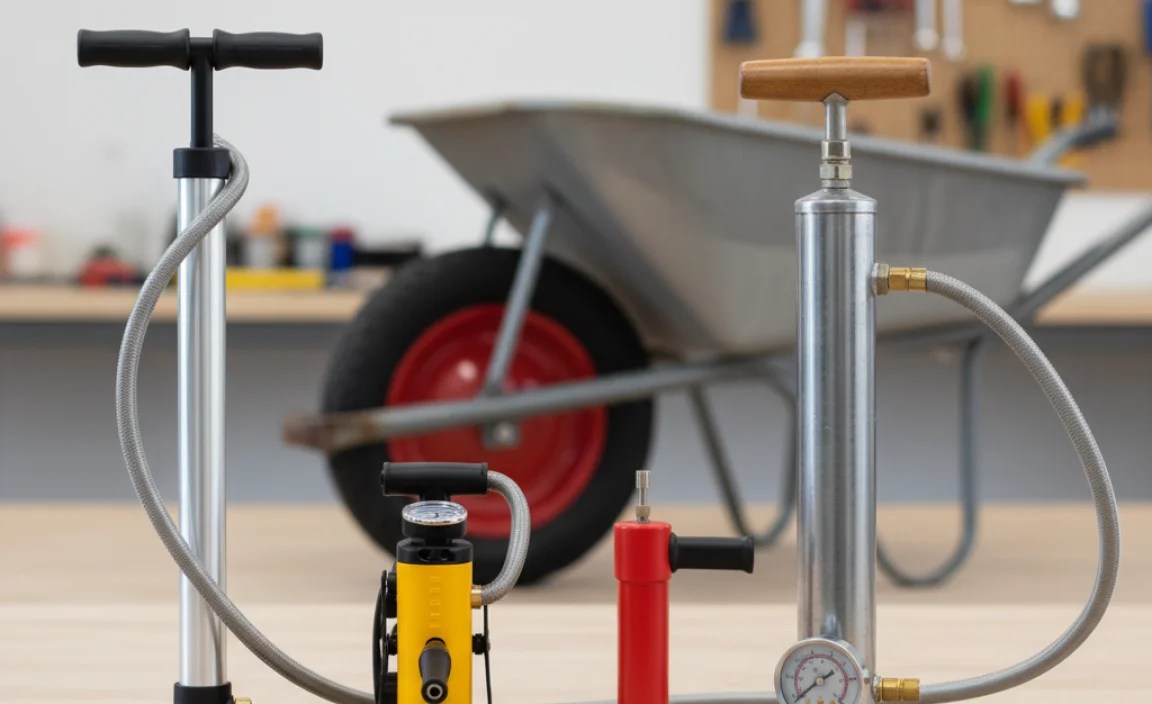
Here’s a table comparing the different types of hand pumps you might consider:
| Pump Type | Pros | Cons | Best For |
|---|---|---|---|
| Standard Bicycle Pump | Affordable, easy to use, often has a gauge. | Can be bulky, may require an adapter for some valves. | General use, occasional tire inflation. |
| Mini Pump | Compact, lightweight, easy to carry. | Can be less efficient, may not have a gauge. | Emergency use, on-the-go inflation. |
| Floor Pump | Stable, efficient, usually has a gauge. | Larger, less portable. | Home use, frequent tire inflation. |
| Dual-Action Pump | Inflates on both push and pull strokes, faster inflation. | Can be more expensive. | Frequent use, larger tires. |
Maintaining Your Wheelbarrow Tires
Properly inflated tires make a big difference in how your wheelbarrow performs. Here are some tips for maintaining your wheelbarrow tires:
- Check Tire Pressure Regularly: Check the tire pressure before each use to make sure it’s within the recommended range.
- Avoid Overloading: Overloading your wheelbarrow can damage the tires and reduce their lifespan.
- Store Properly: Store your wheelbarrow in a dry place to prevent the tires from cracking or deteriorating.
- Inspect for Damage: Regularly inspect the tires for cuts, cracks, or bulges. Replace them if you notice any damage.
Understanding Tire Pressure
Knowing the correct tire pressure is crucial for optimal performance and safety. Here’s a breakdown of why it matters:
- Optimal Performance: Correct tire pressure ensures the wheelbarrow rolls smoothly and efficiently.
- Load Capacity: Proper inflation allows the tire to support the intended load without damage.
- Safety: Under-inflated tires can lead to instability and increase the risk of accidents. Over-inflated tires can burst.
- Tire Longevity: Maintaining the correct pressure prevents premature wear and extends the life of the tire.
Consequences of Incorrect Tire Pressure
Using a wheelbarrow with incorrect tire pressure can lead to several issues. Here’s a table outlining the potential problems:
| Condition | Problems | Solutions |
|---|---|---|
| Under-Inflated |
|
|
| Over-Inflated |
|
|
Alternative Inflation Methods
While a hand pump is often the most convenient option, there are other ways to inflate your wheelbarrow tire:
- Air Compressor: If you have an air compressor, you can use it to inflate the tire. Just be careful not to over-inflate it.
- Bicycle Pump with Gauge: A floor bicycle pump works well because it typically includes a reliable pressure gauge.
- At a Gas Station: Many gas stations have air pumps that you can use for a small fee.
Safety Tips
Here are a few safety tips to keep in mind when pumping your wheelbarrow tire:
- Wear Safety Glasses: Protect your eyes from debris or unexpected bursts.
- Check Tire Condition: Inspect the tire for wear or damage before inflating.
- Don’t Exceed Max PSI: Never inflate the tire beyond the maximum pressure listed on the sidewall.
- Secure the Wheelbarrow: Ensure the wheelbarrow is stable and won’t roll away while you’re pumping.
FAQ: Pumping Wheelbarrow Tires
Q: How often should I pump my wheelbarrow tire?
A: Check the tire pressure before each use. If it’s noticeably low, inflate it to the recommended PSI. Over time, tires naturally lose air.
Q: What is the correct PSI for my wheelbarrow tire?
A: Look for the recommended PSI on the tire’s sidewall. It’s usually a range, such as 25-30 PSI. Stay within that range.
Q: Can I use a car tire inflator on my wheelbarrow tire?
A: Yes, but be very careful! Car tire inflators can quickly over-inflate a wheelbarrow tire. Use short bursts and check the pressure frequently with a gauge.
Q: What if I don’t have a pressure gauge?
A: It’s best to get a pressure gauge for accurate inflation. However, you can estimate by feel. The tire should feel firm but not rock hard. If in doubt, it’s better to under-inflate than over-inflate.
Q: Why does my wheelbarrow tire keep losing air?
A: There could be a slow leak. Check the valve stem for damage and make sure the valve core is tight. You might also have a puncture in the tire or tube.
Q: What is the difference between a Schrader and Presta valve?
A: A Schrader valve is wider and has a spring-loaded pin in the center, like car tires. A Presta valve is narrower and has a lock nut at the tip. They require different pump head fittings.
Q: Can I use an electric pump to inflate my wheelbarrow tire?
A: Yes, you can use an electric pump, but be cautious. Electric pumps can inflate tires very quickly, so monitor the pressure closely to avoid over-inflation. Use short bursts and check the pressure frequently.
Conclusion
Pumping a wheelbarrow tire with a hand pump is a simple task that can make a big difference in your work. By following these steps, you can keep your tires properly inflated and your wheelbarrow rolling smoothly. Remember to check the tire pressure regularly, use the correct pump head, and avoid over-inflating. With a little practice, you’ll be able to maintain your wheelbarrow tires like a pro, making your gardening or construction tasks much easier. Now get out there and get rolling!


