
Mountain Bike Fork Types: Easy Ultimate Guide

Mountain Bike Fork Types: A Simple Guide
Quick Summary: Mountain bike forks come in rigid or suspension types, each designed for different riding styles and terrain. Suspension forks offer travel to absorb bumps, with coil and air springs as the main options. Understanding these differences helps you choose the right fork for comfort, control, and performance on the trails.
Choosing the right mountain bike fork can feel overwhelming. There are so many options, and it’s hard to know where to start! But don’t worry, understanding the basics will make the decision much easier. A good fork makes a huge difference in comfort and control. Let’s break down the different types of mountain bike forks, so you can pick the perfect one for your riding style and terrain. You’ll learn about rigid forks, suspension forks, coil vs. air springs, and more. Get ready to improve your ride!
Understanding Mountain Bike Forks

Mountain bike forks are a key part of your bike’s front end. They connect the front wheel to the frame. The right fork can dramatically improve your ride quality, handling, and overall enjoyment on the trails. Let’s explore the main types of mountain bike forks available.
Rigid Forks
Rigid forks are the simplest type. They’re made from one piece of material, like steel, aluminum, or carbon fiber. Rigid forks don’t have any moving parts or suspension. They are known for their durability and low maintenance.
Pros of Rigid Forks:
- Lightweight: Rigid forks are much lighter than suspension forks.
- Low Maintenance: With no moving parts, there’s very little to maintain.
- Direct Feel: They provide a very direct connection to the trail.
- Affordable: Rigid forks are generally less expensive than suspension forks.
Cons of Rigid Forks:
- Less Comfortable: They don’t absorb bumps, so the ride can be rougher.
- Less Control: On rough terrain, they offer less control compared to suspension forks.
- Fatigue: Can lead to more fatigue on longer, rougher rides.
Ideal for: Smooth trails, bike packing, commuting, and riders who prioritize simplicity and weight savings.
Suspension Forks
Suspension forks are designed to absorb impacts and vibrations from the trail. They use springs and dampers to provide a smoother, more controlled ride. Suspension forks are essential for tackling technical terrain and improving overall comfort.
Key Components of a Suspension Fork:
- Spring: The spring provides the initial resistance to compression. This can be a coil spring or an air spring.
- Damper: The damper controls the rate at which the fork compresses and rebounds. This prevents the fork from bouncing uncontrollably.
- Stanchions: These are the upper tubes of the fork that slide into the lowers.
- Lowers: These are the lower part of the fork that holds the front wheel axle.
Types of Suspension Forks

Suspension forks come in different travel lengths and with different types of springs and dampers. The right choice depends on your riding style and the type of terrain you ride.
Coil Forks
Coil forks use a metal spring to provide resistance. They are known for their linear feel and durability.
Pros of Coil Forks:
- Linear Feel: Coil forks provide a consistent feel throughout their travel.
- Durability: Coil springs are very durable and require minimal maintenance.
- Performance in Cold Weather: They perform consistently in cold temperatures.
- Affordable: Generally more affordable than high-end air forks.
Cons of Coil Forks:
- Heavier: Coil springs are heavier than air springs.
- Less Adjustable: Adjusting the spring rate requires swapping out the coil.
Ideal for: Riders who prioritize durability, consistent performance, and don’t mind a bit of extra weight. They are also great for beginners due to their simplicity.
Air Forks
Air forks use compressed air as the spring. They are lighter and more adjustable than coil forks.
Pros of Air Forks:
- Lightweight: Air forks are significantly lighter than coil forks.
- Highly Adjustable: Air pressure can be easily adjusted to suit different rider weights and riding styles.
- Progressive Feel: Air forks tend to become more resistant to compression as they move through their travel.
Cons of Air Forks:
- More Maintenance: Air forks require more frequent maintenance to ensure proper sealing.
- Performance in Cold Weather: Can be affected by temperature changes.
- More Expensive: Generally more expensive than coil forks.
Ideal for: Riders who prioritize weight savings, adjustability, and performance. They are suitable for a wide range of riding styles and terrain.
Travel
Travel refers to the amount of distance the suspension fork can compress. It’s measured in millimeters (mm). The amount of travel you need depends on the type of riding you do.
- Cross-Country (XC): 80-120mm of travel
- Trail: 130-150mm of travel
- Enduro: 160-180mm of travel
- Downhill (DH): 180-200mm+ of travel
Longer travel forks are designed for more aggressive riding and bigger impacts. Shorter travel forks are lighter and more efficient for climbing and smoother trails.
Dampers
The damper controls the rate at which the fork compresses and rebounds. It prevents the fork from bouncing uncontrollably and helps maintain control. There are different types of dampers, each with its own characteristics.
- Open Bath Dampers: These dampers use a large volume of oil to lubricate and cool the internal parts. They are known for their smooth feel and reliability.
- Cartridge Dampers: These dampers use a sealed cartridge filled with oil. They offer more precise control and are less prone to cavitation (formation of air bubbles in the oil).
- Adjustments: Many suspension forks offer adjustable damping settings, such as rebound and compression.
Remote Lockout
Some suspension forks come with a remote lockout. This allows you to stiffen or completely lock out the fork from the handlebars. This is useful for climbing or riding on smooth surfaces where you don’t need suspension.
Mountain Bike Fork Materials

The materials used in a mountain bike fork affect its weight, stiffness, and durability. Here are the common materials used:
- Aluminum: A popular choice for its balance of weight, strength, and cost.
- Carbon Fiber: Lightweight and stiff, offering excellent vibration damping. Often used in high-end forks.
- Steel: Durable and affordable, but heavier than aluminum or carbon fiber. Primarily used in rigid forks and some coil suspension forks.
Choosing the Right Fork
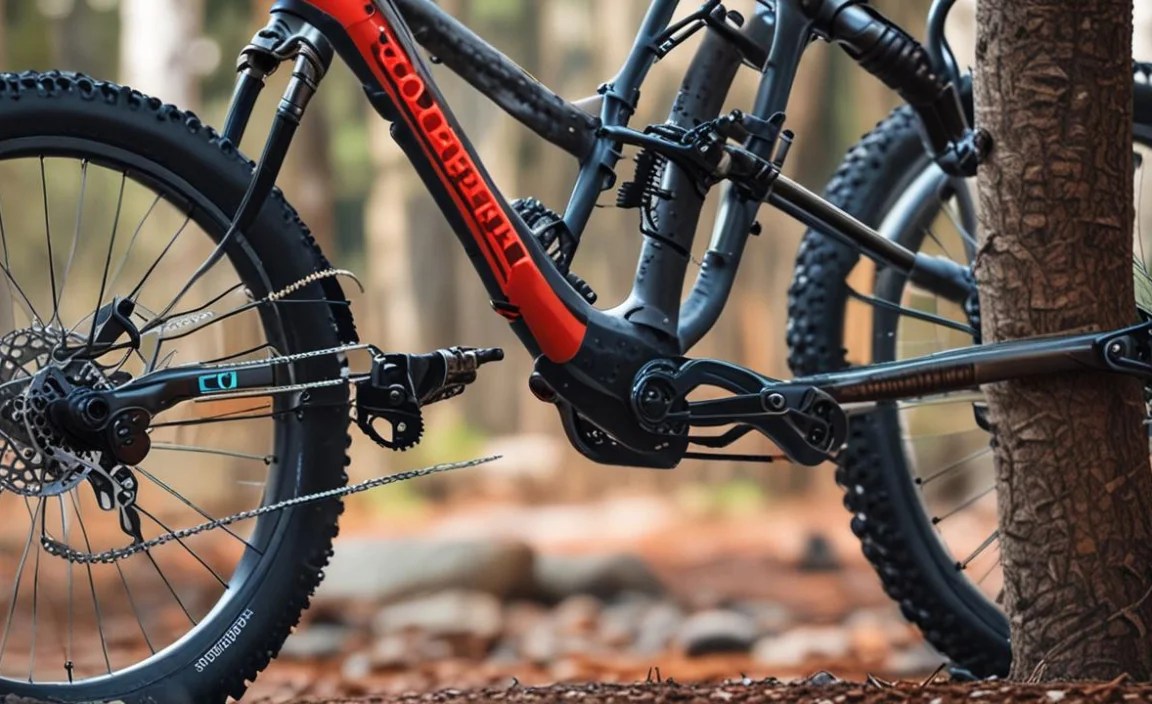
Choosing the right mountain bike fork depends on several factors, including your riding style, terrain, budget, and personal preferences. Here’s a breakdown to help you make the best decision.
Consider Your Riding Style
Your riding style is the most important factor to consider. Are you a cross-country racer, a trail rider, an enduro racer, or a downhill enthusiast? Each discipline requires a different type of fork.
- Cross-Country (XC): Lightweight air fork with 80-120mm of travel. Remote lockout is a plus.
- Trail: Versatile air or coil fork with 130-150mm of travel. Adjustable damping is beneficial.
- Enduro: Robust air fork with 160-180mm of travel. Focus on stiffness and damping performance.
- Downhill (DH): Heavy-duty air or coil fork with 180-200mm+ of travel. Maximum durability and damping control are essential.
Evaluate the Terrain
The type of terrain you ride also influences your choice. Smooth trails require less travel and damping than rough, technical trails.
- Smooth Trails: Rigid fork or short-travel suspension fork (80-100mm).
- Moderate Trails: Mid-travel suspension fork (120-140mm).
- Rough Trails: Long-travel suspension fork (150mm+).
Set a Budget
Mountain bike forks range in price from a few hundred dollars to over a thousand. Set a budget and look for the best value within that range. Keep in mind that investing in a quality fork can significantly improve your riding experience.
Consider Maintenance
Some forks require more maintenance than others. Coil forks are generally lower maintenance than air forks. Consider your willingness to perform regular maintenance when making your decision.
Mountain Bike Fork Brands

Several reputable brands manufacture high-quality mountain bike forks. Here are some of the most popular:
- Fox Racing Shox: Known for their high-performance air and coil forks. Fox offers a wide range of options for different riding styles.
- RockShox: Another leading brand with a diverse lineup of air and coil forks. RockShox is known for its innovative technologies.
- Marzocchi: Offers a range of forks known for their plush feel and durability.
- SR Suntour: Provides affordable and reliable forks for entry-level and mid-range bikes.
Mountain Bike Fork Types: Comparison Table
Here’s a table summarizing the key differences between the main types of mountain bike forks:
| Fork Type | Spring Type | Travel | Pros | Cons | Ideal For |
|---|---|---|---|---|---|
| Rigid | N/A | N/A | Lightweight, low maintenance, affordable | Less comfortable, less control on rough terrain | Smooth trails, bike packing, commuting |
| Coil Suspension | Coil Spring | 80-200mm+ | Linear feel, durable, consistent performance | Heavier, less adjustable | Riders prioritizing durability and consistent performance |
| Air Suspension | Air Spring | 80-200mm+ | Lightweight, highly adjustable, progressive feel | More maintenance, affected by temperature | Riders prioritizing weight savings and adjustability |
Maintaining Your Mountain Bike Fork
Proper maintenance is essential to keep your mountain bike fork performing its best. Here are some tips:
- Clean Regularly: Wipe down the stanchions after each ride to remove dirt and debris.
- Lubricate: Apply a small amount of fork-specific lubricant to the stanchions periodically.
- Check Air Pressure: Regularly check and adjust the air pressure in air forks.
- Service Regularly: Follow the manufacturer’s recommended service intervals for oil changes and seal replacements.
FAQ About Mountain Bike Forks
Q: What is fork travel?
A: Fork travel is the amount the suspension fork can compress, measured in millimeters (mm). More travel is better for rougher terrain.
Q: What’s the difference between coil and air forks?
A: Coil forks use a metal spring and offer a consistent feel. Air forks use compressed air, making them lighter and more adjustable.
Q: How do I choose the right fork travel for my bike?
A: Choose travel based on your riding style. Cross-country uses 80-120mm, trail uses 130-150mm, enduro uses 160-180mm, and downhill uses 180mm+.
Q: What does a damper do in a suspension fork?
A: A damper controls how quickly the fork compresses and rebounds. This keeps the fork from bouncing too much and improves control.
Q: How often should I service my suspension fork?
A: Follow the manufacturer’s recommendations, but generally, service your fork every 50-100 hours of riding to keep it in good condition.
Q: Can I upgrade my rigid fork to a suspension fork?
A: Yes, but make sure the suspension fork is compatible with your bike frame’s head tube and axle type. It might change the bike’s geometry.
Q: What is a remote lockout on a fork?
A: A remote lockout lets you stiffen or lock the fork from your handlebars, useful for climbing or smooth roads where you don’t need suspension.
Conclusion
Understanding the different types of mountain bike forks is essential for choosing the right one for your needs. Whether you prioritize simplicity and low maintenance with a rigid fork, or performance and adjustability with a suspension fork, there’s an option for every rider. By considering your riding style, terrain, budget, and maintenance preferences, you can select a fork that enhances your riding experience and helps you tackle any trail with confidence. So get out there, explore the options, and find the perfect fork to elevate your mountain biking adventures!


