
Why Is My Water Pump Short Cycling? A Simple Guide

Quick Summary: A water pump short cycles when it turns on and off too frequently. This is usually caused by low water pressure, a faulty pressure tank, a leak in the system, or a clogged well screen. Addressing these issues promptly can extend your pump’s life and maintain consistent water pressure.
Is your water pump acting up, switching on and off more often than it should? This problem, called short cycling, isn’t just annoying—it can also damage your pump and leave you with inconsistent water pressure. Don’t worry! Figuring out why your pump is short cycling is often straightforward. This guide will walk you through the common causes and how to fix them, step by step. We’ll cover everything from checking your pressure tank to spotting leaks, so you can get your water system back on track. Let’s dive in!
Understanding Water Pump Short Cycling

Water pump short cycling happens when your pump turns on and off too rapidly. Ideally, a water pump should run for a reasonable period to build pressure and then shut off until the pressure drops to a certain level. When it starts and stops too quickly, it puts extra strain on the motor and other components, shortening its lifespan and potentially causing premature failure. Think of it like constantly starting and stopping your car—it wears down the engine faster.
Why is Short Cycling Harmful?
Here’s why you should address short cycling as soon as you notice it:
- Reduced Pump Lifespan: Frequent starts and stops cause excessive wear and tear on the motor and pump components.
- Increased Energy Consumption: Starting a motor requires a surge of electricity, so short cycling wastes energy.
- Inconsistent Water Pressure: You may experience fluctuations in water pressure, making showers and other water-dependent activities frustrating.
- Potential for Overheating: Rapid cycling can cause the pump motor to overheat, leading to damage or failure.
Common Causes of Water Pump Short Cycling

Several factors can lead to short cycling. Let’s explore the most common culprits:
1. Faulty Pressure Tank
The pressure tank is a crucial component of your water system. It stores water under pressure, allowing the pump to run less frequently. A faulty pressure tank is one of the most common causes of short cycling.
How it Works: The pressure tank contains a bladder or diaphragm that separates the water from compressed air. As water is pumped into the tank, it compresses the air. This compressed air maintains pressure in the system, so when you turn on a faucet, the water flows from the tank, not directly from the pump. When the pressure drops to a set level, the pump turns on to refill the tank.
What Goes Wrong: Over time, the bladder in the pressure tank can become waterlogged or lose its air charge. When this happens, the tank can’t store water properly, causing the pump to cycle on and off rapidly.
Testing the Pressure Tank
Here’s how to check if your pressure tank is the problem:
- Turn off the pump: Locate the circuit breaker for your water pump and switch it off.
- Drain the tank: Open a faucet or valve downstream of the pressure tank to relieve the water pressure. Let the water drain completely.
- Check the air pressure: Locate the Schrader valve (like the one on your car tire) on top of the pressure tank. Use a tire pressure gauge to check the air pressure. It should be 2 PSI below the pump’s cut-in pressure (typically around 28 PSI for a 30/50 pump setting).
- What the readings mean: If water comes out of the Schrader valve, the bladder is likely ruptured, and the tank needs replacement. If the air pressure is significantly lower than it should be, try adding air with an air compressor. If it won’t hold pressure, the tank is faulty.
2. Low Water Level in Well
If your well’s water level is too low, the pump may struggle to maintain pressure, leading to short cycling. This is more common during droughts or periods of high water usage.
How it Happens: When the water level drops below the pump intake, the pump starts sucking air. This causes the pressure to fluctuate rapidly, turning the pump on and off quickly.
Checking the Water Level
Determining the water level in your well can be tricky, but here are a few methods:
- Well Sounder: You can use a well sounder, which is a device designed to measure the water level in a well. It typically consists of a weighted tape measure that you lower into the well until it hits the water.
- Professional Assessment: If you’re unsure, it’s best to contact a well service company. They have specialized equipment to accurately measure the water level and assess the well’s condition.
Note: If low water level is the issue, conserving water and adjusting pump settings might help. In severe cases, you may need to deepen the well or consider alternative water sources. Contact a well-drilling professional for advice. You can also contact your local USGS branch to get information on the local water table and any drought advisories.
3. Leaks in the Plumbing System
Even small leaks can cause a significant drop in water pressure, triggering the pump to cycle on and off frequently. Leaks can occur anywhere in your plumbing system, from faucets and toilets to underground pipes.
How it Works: As water leaks out, the pressure in the system drops. The pump turns on to compensate, but if the leak is significant, the pressure quickly drops again, causing the pump to cycle rapidly.
Finding Leaks
Here’s how to hunt down those pesky leaks:
- Check Faucets and Toilets: Look for dripping faucets and running toilets. These are often the easiest leaks to spot and fix.
- Inspect Visible Pipes: Examine exposed pipes in your basement or crawl space for signs of leaks, such as water stains or corrosion.
- Listen for Running Water: If you hear water running when no fixtures are in use, it could indicate a hidden leak.
- Check Underground Pipes: Leaks in underground pipes are harder to detect. Look for wet spots in your yard or unusually high water bills. You may need to hire a professional leak detection service.
4. Clogged Well Screen or Foot Valve
The well screen (or foot valve) is located at the bottom of the well and prevents debris from entering the pump. If it becomes clogged with sediment, minerals, or other debris, it can restrict water flow and cause the pump to short cycle.
How it Works: A clogged screen reduces the amount of water that can enter the pump, causing it to work harder to maintain pressure. This can lead to rapid cycling as the pump struggles to keep up with demand.
Checking and Cleaning the Well Screen
Cleaning a well screen can be challenging and often requires professional help. Here are the general steps involved:
- Turn off the pump: Disconnect the power to the pump.
- Remove the pump: Carefully pull the pump out of the well. This may require specialized equipment.
- Inspect the screen: Examine the well screen for clogs and damage.
- Clean the screen: Use a stiff brush and a solution of water and muriatic acid (follow safety precautions) to remove debris.
- Reinstall the pump: Carefully lower the pump back into the well.
Important: Handling well pumps and chemicals can be dangerous. If you’re not comfortable performing these steps yourself, contact a qualified well service technician.
5. Incorrect Pump Size or Settings
An improperly sized pump or incorrect pressure switch settings can also contribute to short cycling.
How it Works: If the pump is too powerful for your system, it may fill the pressure tank too quickly, causing it to cycle on and off rapidly. Similarly, if the pressure switch is set incorrectly, it may trigger the pump to turn on and off at inappropriate times.
Checking Pump Size and Settings
- Pump Size: Ensure that the pump’s flow rate (gallons per minute or GPM) is appropriate for your household’s water demand. A pump that’s too large will cycle more frequently.
- Pressure Switch Settings: The pressure switch controls the pump’s cut-in (turn-on) and cut-out (turn-off) pressure. Check the switch’s settings and adjust them according to the manufacturer’s recommendations. Typically, a 30/50 switch is used, meaning the pump turns on at 30 PSI and off at 50 PSI.
Step-by-Step Troubleshooting Guide
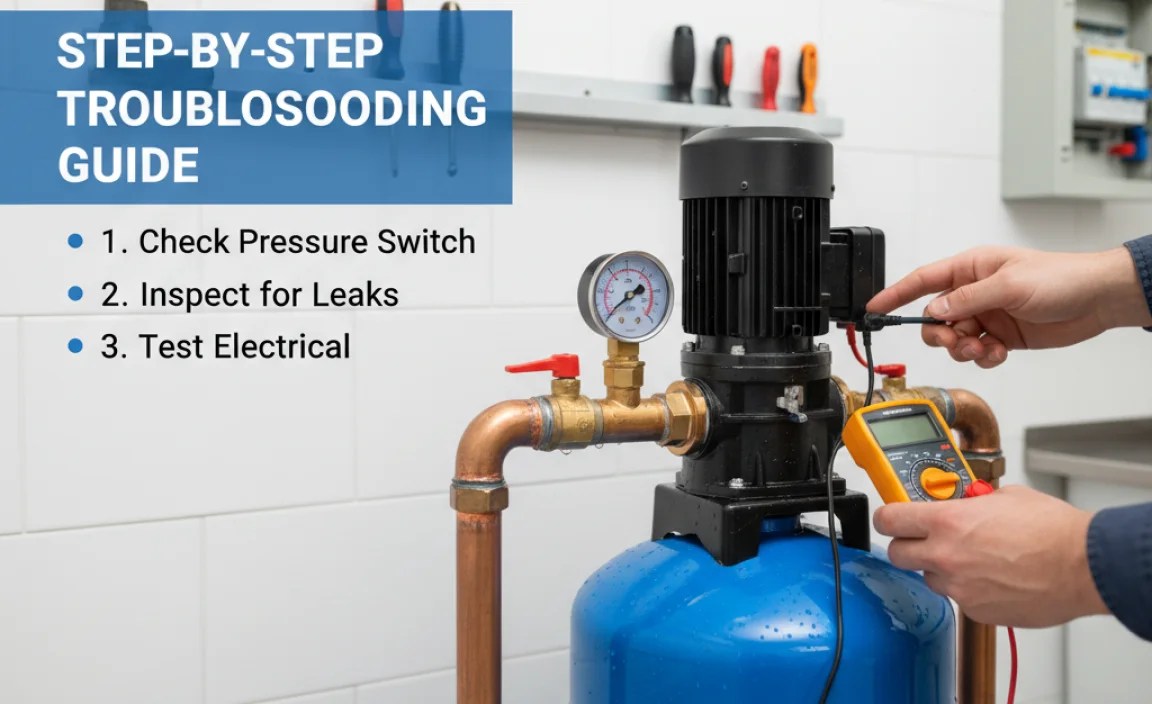
Here’s a structured approach to diagnosing and fixing water pump short cycling:
- Gather Information: Note when the short cycling occurs (e.g., during specific times of day or when using certain appliances).
- Check for Obvious Leaks: Inspect faucets, toilets, and visible pipes for leaks. Repair any leaks you find.
- Test the Pressure Tank: Follow the steps outlined earlier to check the air pressure and bladder condition of the pressure tank.
- Assess Water Level: If possible, determine the water level in your well. Consider having a professional assessment if needed.
- Inspect Well Screen: If you suspect a clogged well screen, consider professional cleaning or inspection.
- Verify Pump Settings: Check the pump’s size and pressure switch settings. Adjust as needed.
- Monitor the System: After making any changes, monitor the system to see if the short cycling has stopped.
Tools You Might Need

Here are some tools that can help you troubleshoot water pump short cycling:
- Tire Pressure Gauge: For checking the air pressure in the pressure tank.
- Air Compressor: For adding air to the pressure tank.
- Wrenches: For tightening fittings and making adjustments.
- Screwdrivers: For removing and installing components.
- Multimeter: For testing electrical components (if you’re comfortable working with electricity).
- Well Sounder: For measuring the water level in the well (optional).
Preventing Future Short Cycling

Once you’ve resolved the short cycling issue, take steps to prevent it from happening again:
- Regular Maintenance: Schedule annual inspections of your water system, including the pump, pressure tank, and well.
- Monitor Water Usage: Be mindful of your water consumption, especially during dry periods.
- Address Leaks Promptly: Fix any leaks as soon as you notice them.
- Install a Whole-House Filter: A filter can prevent sediment and debris from clogging the well screen and damaging the pump.
- Consider a Constant Pressure System: These systems use variable frequency drives (VFDs) to maintain constant water pressure, reducing pump cycling and extending its lifespan.
When to Call a Professional
While many short cycling issues can be resolved with DIY troubleshooting, some situations require professional help:
- Complex Electrical Problems: If you’re not comfortable working with electricity, leave electrical repairs to a qualified electrician.
- Deep Well Issues: Servicing deep wells requires specialized equipment and expertise.
- Suspected Well Contamination: If you suspect your well water is contaminated, contact a well service company for testing and treatment.
- Persistent Short Cycling: If you’ve tried the troubleshooting steps and the problem persists, it’s time to call a professional.
Cost Considerations
Addressing water pump short cycling can involve various costs, depending on the cause and the extent of the repairs. Here’s a general idea of what you might expect:
| Repair | Estimated Cost | Description |
|---|---|---|
| Replacing Pressure Tank | $200 – $600 | Cost of a new pressure tank plus installation. |
| Repairing Leaks | $50 – $500+ | Cost depends on the location and complexity of the leak. |
| Cleaning Well Screen | $300 – $800 | Professional service to remove and clean the well screen. |
| Adjusting Pump Settings | $50 – $150 | Cost of a service call to adjust the pressure switch. |
| Replacing Pump | $500 – $1500+ | Cost of a new pump plus installation. |
These are just estimates, and the actual cost may vary depending on your location and the specific circumstances of your situation. It’s always a good idea to get quotes from multiple contractors before proceeding with any repairs.
FAQ: Water Pump Short Cycling
Here are some frequently asked questions about water pump short cycling:
- Why is my water pump turning on and off so quickly?
- This is likely due to a faulty pressure tank, low water level in the well, leaks in the plumbing, a clogged well screen, or incorrect pump settings.
- How do I check my pressure tank?
- Turn off the pump, drain the tank, and check the air pressure at the Schrader valve. If water comes out, the bladder is likely ruptured.
- Can a small leak cause short cycling?
- Yes, even small leaks can cause a significant drop in pressure, triggering the pump to cycle on and off frequently.
- How often should my water pump cycle on and off?
- A properly functioning pump should run for several minutes to fill the pressure tank and then remain off until the pressure drops to a certain level. Rapid cycling indicates a problem.
- Is it safe to drink water from a well that’s short cycling?
- Short cycling itself doesn’t necessarily make the water unsafe, but it’s essential to address the underlying issue to prevent damage to the pump and ensure consistent water pressure. If you have concerns about water quality, have it tested.
WHAT CAUSES A WELL PUMP TO SHORT CYCLE?
- Can I fix short cycling myself?
- Many causes of short cycling can be fixed with DIY troubleshooting, such as repairing leaks or adjusting pump settings. However, some issues, like a clogged well screen or deep well problems, require professional help.
- What does a new water pump cost?
- Expect to pay between $500 and $1500 for a new pump and installation. Prices vary depending on pump type, size, and labor costs.
Conclusion
Water pump short cycling can be a frustrating issue, but with a systematic approach, you can often diagnose and resolve the problem yourself. Remember to start with the simplest solutions, like checking for leaks and testing the pressure tank. If you’re not comfortable working with electricity or dealing with deep well issues, don’t hesitate to call a professional. By addressing short cycling promptly, you can extend the life of your pump, maintain consistent water pressure, and save money on energy bills. Happy troubleshooting!
“`


