
How to Tell If Your Well Pump Is Short Cycling

Quick Summary: Short cycling happens when your well pump turns on and off too frequently. You can spot it by listening for rapid pump starts and stops, noticing pressure fluctuations in your water, or seeing a higher than usual electricity bill. Checking the pressure tank and switch are key to fixing the problem.
Is your well pump acting up? Does it sound like it’s constantly switching on and off? You might be dealing with a common issue called short cycling. This isn’t just annoying; it can seriously damage your pump and leave you without water when you need it most. But don’t worry! Identifying short cycling early can save you a lot of headaches and money. This guide will walk you through the easy steps to recognize the signs of short cycling and understand what might be causing it. We’ll also point you in the right direction for fixing the problem. Let’s get started!
What is Short Cycling?

Short cycling is when your well pump turns on and off much more often than it should. Instead of running for a longer period to fill the pressure tank and then shutting off, it starts and stops rapidly. This puts extra stress on the pump motor and other components, leading to premature wear and potential failure. Think of it like repeatedly starting and stopping your car engine in quick succession – it’s not good for it!
Why is Short Cycling Bad for Your Well Pump?

Here’s why short cycling is a problem:
- Reduced Pump Lifespan: The constant starting and stopping wears out the motor and other parts faster.
- Increased Energy Consumption: Each start-up requires a surge of electricity, wasting energy.
- Overheating: Frequent starts can cause the motor to overheat, leading to damage.
- Water Pressure Fluctuations: You might experience inconsistent water pressure in your home.
- Potential for Complete Failure: If left unaddressed, short cycling can eventually cause the pump to fail completely.
How to Tell If Your Well Pump Is Short Cycling: A Step-by-Step Guide

Here’s how to diagnose short cycling:
Step 1: Listen to Your Pump
The easiest way to detect short cycling is to listen to your well pump. Go to where your pressure tank and well pump are located. This is often in the basement, garage, or a utility closet. Then, listen closely.
- Normal Operation: A healthy well pump will run for a noticeable period (several minutes) to build pressure and then shut off. It will remain off until the pressure drops to a certain level, then turn on again.
- Short Cycling: If you hear the pump turning on and off every few seconds or minutes, that’s a sign of short cycling. The starts and stops will be much more frequent than normal.
Step 2: Observe Your Water Pressure
Keep an eye on your water pressure. You can do this by:
- Checking Faucets: Turn on a faucet and watch the water flow. If the pressure fluctuates noticeably – going up and down quickly – it could be due to short cycling.
- Monitoring Pressure Gauge: Your pressure tank should have a pressure gauge. Watch the gauge while the pump is running. If it rapidly bounces between the cut-in and cut-out pressures (e.g., 40 PSI and 60 PSI) with very short run times, that indicates short cycling.
Step 3: Check Your Electrical Bill
An unexplained increase in your electricity bill can be a clue. Short cycling forces the pump to start more often, and each start requires a surge of power. Compare your current bill to previous months. If you haven’t changed your water usage habits, a significant increase could be a sign of a problem.
Step 4: Inspect the Pressure Tank
The pressure tank plays a crucial role in maintaining consistent water pressure and preventing short cycling. Here’s how to inspect it:
- Locate the Tank: Find the pressure tank, usually a blue or gray tank near the well pump.
- Check for Leaks: Look for any signs of water leaking from the tank or its connections.
- Test the Air Charge:
- Turn off the pump’s power at the breaker.
- Drain all the water from the system by opening a faucet at the lowest point in your house.
- Locate the Schrader valve (like a tire valve) on top of the tank.
- Use a tire pressure gauge to check the air pressure. It should be 2 PSI below the cut-in pressure of your pump (e.g., if your pump turns on at 40 PSI, the tank pressure should be 38 PSI).
- If the pressure is too low, use an air compressor to add air. If water comes out of the valve, the bladder inside the tank has likely failed, and the tank needs replacing.
Step 5: Examine the Pressure Switch
The pressure switch controls when the pump turns on and off based on the water pressure. Here’s how to check it:
- Locate the Switch: Find the pressure switch, a small, box-like device usually located on or near the pressure tank.
- Inspect the Wiring: Make sure the wires are securely connected and not corroded.
- Check the Contacts:
- Turn off the power to the pump at the breaker.
- Carefully remove the cover of the pressure switch.
- Inspect the contacts for dirt, corrosion, or damage. Clean them gently with a small brush or electrical contact cleaner.
Step 6: Look for Leaks in Your Plumbing
Even small leaks can cause a pressure drop, leading to short cycling. Check all visible pipes, faucets, and toilets for leaks. Pay close attention to connections and joints. A running toilet is a common culprit.
Step 7: Check the Well Itself
While less common, issues within the well can sometimes contribute to short cycling. If your well is running dry or the water level is very low, the pump may struggle to maintain pressure. This is more difficult to diagnose yourself, so consider consulting a well professional.
Common Causes of Well Pump Short Cycling

Here are some of the most frequent reasons why your well pump might be short cycling:
- Low Air Charge in the Pressure Tank: This is the most common cause. The air in the tank provides a cushion that helps maintain pressure. If the air charge is too low, the pump will cycle on and off rapidly.
- Waterlogged Pressure Tank: If the bladder inside the tank has failed, the tank can become filled with water, reducing its ability to maintain pressure.
- Faulty Pressure Switch: A malfunctioning pressure switch can cause the pump to turn on and off at incorrect pressure levels.
- Leaks in the Plumbing: Leaks, even small ones, can cause a drop in pressure, triggering the pump to cycle more frequently.
- Clogged Well Screen or Low Well Yield: If the well can’t supply enough water to meet demand, the pump may cycle on and off as it tries to maintain pressure.
Troubleshooting Table
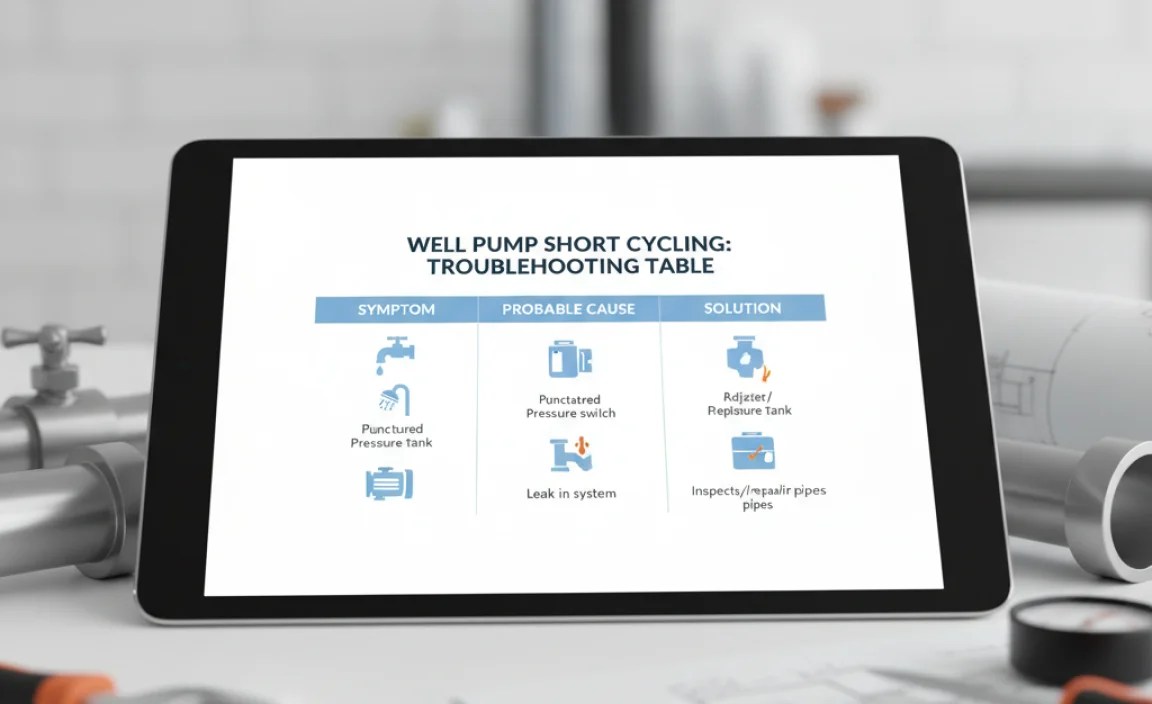
This table provides a quick reference for diagnosing and addressing common causes of short cycling.
| Problem | Possible Cause | Troubleshooting Steps |
|---|---|---|
| Rapid pump cycling | Low air charge in pressure tank | Turn off pump, drain tank, check air pressure, add air if needed. |
| Pump cycles even with minimal water use | Waterlogged pressure tank | Check for water coming out of the air valve when draining the tank. Replace the tank if the bladder is damaged. |
| Pump doesn’t shut off or cycles erratically | Faulty pressure switch | Inspect wiring, clean contacts, replace switch if necessary. |
| Pressure drops quickly, pump cycles frequently | Leaks in plumbing | Check for leaks at faucets, toilets, and pipes. Repair or replace as needed. |
| Pump cycles more frequently during peak usage | Clogged well screen or low well yield | Consult a well professional to inspect the well and screen. |
Tools You Might Need
Here’s a list of tools you might need for troubleshooting and fixing short cycling:
- Screwdrivers (various sizes): For removing covers and tightening connections.
- Wrenches (adjustable and pipe wrenches): For tightening and loosening fittings.
- Tire Pressure Gauge: For checking the air pressure in the pressure tank.
- Air Compressor: For adding air to the pressure tank.
- Multimeter: For testing the pressure switch (if you’re comfortable working with electricity).
- Electrical Contact Cleaner: For cleaning the contacts on the pressure switch.
- Plumber’s Tape: For sealing pipe threads.
- Bucket and Hose: For draining the pressure tank.
When to Call a Professional
While many short cycling issues can be resolved with some DIY troubleshooting, there are times when it’s best to call a professional:
- You’re Not Comfortable Working with Electricity: Working with electrical components can be dangerous. If you’re not comfortable, call a qualified electrician.
- You Suspect a Problem with the Well Itself: Issues like a low well yield or a clogged well screen require specialized equipment and knowledge.
- You’ve Tried Troubleshooting and the Problem Persists: If you’ve followed the steps above and the pump is still short cycling, it’s time to call a well pump professional.
- You’re Not Sure What’s Causing the Problem: A professional can diagnose the issue accurately and recommend the best solution.
Preventative Maintenance Tips
Here are some tips to help prevent short cycling and extend the life of your well pump:
- Regularly Check the Air Charge in Your Pressure Tank: At least once a year, check the air pressure in the tank and add air as needed.
- Inspect Your Plumbing for Leaks: Periodically check for leaks around faucets, toilets, and pipes.
- Consider a Well Inspection: Have your well inspected by a professional every few years to check for issues like sediment buildup or a declining water level.
- Use Water Wisely: Avoid excessive water use, especially during peak hours, to reduce the strain on your well pump.
FAQ About Well Pump Short Cycling
Here are some frequently asked questions about well pump short cycling:
- What does “short cycling” mean for a well pump?
- Short cycling is when your well pump turns on and off too frequently in a short period. Instead of running for a longer time to fill the pressure tank, it starts and stops rapidly.
- Why is my well pump turning on and off so often?
- Common causes include a low air charge in the pressure tank, a waterlogged tank, a faulty pressure switch, or leaks in your plumbing.
- How do I check the air pressure in my pressure tank?
- Turn off the pump, drain the tank, and use a tire pressure gauge to check the air pressure at the Schrader valve (like a tire valve) on top of the tank. It should be about 2 PSI below the pump’s cut-in pressure.
- Can a leaky toilet cause short cycling?
- Yes, even a small leak, like a running toilet, can cause a pressure drop, leading to the pump cycling more frequently.
- Is it safe to drink water if my well pump is short cycling?
- Short cycling itself doesn’t directly contaminate your water, but it puts stress on the pump and can lead to system failures. It’s always a good idea to test your water regularly, especially if you notice any changes.
- How much does it cost to fix short cycling?
- The cost varies depending on the cause. Fixing a low air charge might be free, while replacing a pressure tank or pump can cost several hundred dollars or more.
- When should I call a professional for well pump issues?
- If you’re uncomfortable working with electricity, suspect a problem with the well itself, or have tried troubleshooting and the problem persists, it’s best to call a well pump professional.
Conclusion
Detecting and addressing well pump short cycling early can save you from costly repairs and potential water outages. By listening to your pump, monitoring your water pressure, and inspecting key components like the pressure tank and switch, you can often identify the problem and take corrective action. Remember to prioritize safety and call a professional when needed. With a little knowledge and preventative maintenance, you can keep your well pump running smoothly for years to come!
“`


