
Why Is My Sump Pump Short Cycling? Simple Fixes

Quick Summary: A sump pump short cycles when it turns on and off too frequently. Common causes include a pump that’s too large, a clogged intake, a stuck float switch, or a check valve issue. Addressing these problems promptly prevents premature pump failure and potential flooding.
Is your sump pump acting like it has a nervous twitch, turning on and off way too often? This annoying behavior, called short cycling, isn’t just a nuisance – it’s a sign that something’s not right, and it can seriously shorten the lifespan of your pump. Don’t worry; you’re not alone! Short cycling is a common issue, and often, the fix is something you can handle yourself. We’ll walk you through the most common causes and how to troubleshoot them, step by step. Let’s get that pump running smoothly again!
Understanding Sump Pump Short Cycling

Before we dive into fixes, let’s make sure we’re all on the same page. A sump pump’s job is to remove water that accumulates in a sump pit, typically found in the basement of a home. When the water level rises to a certain point, a float switch activates the pump, which then discharges the water away from your foundation. Short cycling happens when this on-off cycle becomes excessively frequent, often within minutes or even seconds. This puts extra stress on the motor and can lead to premature failure.
Why Short Cycling is Bad
Think of your sump pump like a car engine. Starting and stopping frequently causes more wear and tear than continuous operation. Here’s why short cycling is bad news:
- Reduced Lifespan: Each start-up puts a strain on the motor. Frequent starts accelerate wear and tear, shortening the pump’s lifespan.
- Increased Energy Consumption: Starting a motor requires a surge of energy. Short cycling wastes energy and increases your electricity bill.
- Overheating: Frequent starts can cause the motor to overheat, leading to damage and potential failure.
- Potential Flooding: A pump that’s constantly starting and stopping may not be able to keep up with incoming water, increasing the risk of flooding.
Common Causes of Sump Pump Short Cycling and How to Fix Them

Now, let’s get to the heart of the matter: figuring out why your sump pump is short cycling and what you can do about it. Here are the most common culprits:
1. Incorrect Pump Size
The Problem: A pump that’s too powerful for your sump pit will quickly remove the water, causing it to shut off. Then, the pit refills rapidly, triggering another cycle. This is like using a fire hose to fill a teacup!
The Solution:
- Assess Your Needs: Consider the size of your sump pit and the typical water flow. If you rarely have water accumulating, a smaller pump might be sufficient.
- Check the Pump’s GPM Rating: The pump’s GPM (gallons per minute) rating indicates how much water it can pump. Compare this to your actual needs.
- Consider a Variable Speed Pump: These pumps adjust their speed based on the water level, preventing short cycling.
Pro Tip: Consult with a plumbing professional to determine the appropriate pump size for your specific situation. They can assess your water table and drainage needs.
2. Clogged Intake
The Problem: Debris, sediment, or other obstructions can clog the pump’s intake, restricting water flow. This causes the pump to struggle and cycle on and off as it tries to clear the blockage.
The Solution:
- Disconnect the Pump: Always disconnect the pump from the power source before attempting any maintenance. Safety first!
- Remove the Pump: Carefully remove the pump from the sump pit.
- Inspect the Intake: Look for any visible debris, such as gravel, dirt, or leaves, blocking the intake screen.
- Clean the Intake: Use a brush or hose to remove any obstructions. A stiff brush can help dislodge stubborn debris.
- Reinstall the Pump: Place the pump back in the sump pit and reconnect the power.
Maintenance Tip: Regularly inspect and clean your sump pit to prevent debris from accumulating. Consider using a sump pit liner to prevent sediment from entering the pit.
3. Stuck or Obstructed Float Switch
The Problem: The float switch is responsible for activating the pump when the water level rises. If the float is stuck or obstructed, it can cause the pump to turn on and off erratically.
The Solution:
- Inspect the Float: Check the float for any obstructions, such as debris or mineral buildup.
- Ensure Free Movement: Make sure the float can move freely up and down without any restrictions.
- Adjust the Tether: If the float is tethered, adjust the tether length to ensure proper activation and deactivation. The tether should allow the float to move freely within the pit without getting caught on anything.
- Clean the Float: Clean the float with a mild detergent and water to remove any buildup.
- Replace the Switch: If the float switch is damaged or malfunctioning, replace it with a new one.
Troubleshooting Tip: Manually lift the float to see if the pump activates. Lower the float to see if it deactivates. If it doesn’t respond properly, the switch may need to be replaced.
4. Check Valve Issues
The Problem: The check valve prevents water from flowing back into the sump pit after the pump shuts off. If the check valve is faulty or missing, water will flow back, causing the pump to cycle on again shortly after. This is a very common reason for short cycling.
The Solution:
- Locate the Check Valve: The check valve is typically located on the discharge pipe, above the pump.
- Inspect the Valve: Check the valve for any signs of damage or wear.
- Ensure Proper Installation: Make sure the check valve is installed correctly, with the arrow pointing in the direction of water flow.
- Clean the Valve: Clean the valve to remove any debris that may be preventing it from sealing properly.
- Replace the Valve: If the check valve is faulty, replace it with a new one. A swing-type check valve is often more reliable than a flapper-type.
Installation Tip: When installing a new check valve, use Teflon tape on the threads to ensure a watertight seal. Also, make sure the valve is easily accessible for future maintenance.
5. Sump Pit Size
The Problem: A sump pit that’s too small will fill up quickly, causing the pump to cycle frequently. This is especially true if you have a high water table or heavy rainfall.
The Solution:
- Assess the Pit Size: Evaluate the size of your sump pit relative to the amount of water it typically handles.
- Consider a Larger Pit: If the pit is too small, consider installing a larger one. This will provide more storage capacity and reduce the frequency of pump cycles.
- Consult a Professional: Consult with a plumbing professional to determine the appropriate sump pit size for your specific needs.
Construction Tip: When installing a new sump pit, make sure it’s properly sealed to prevent groundwater from seeping in. Use a sump pit liner to protect the pit from damage and prevent sediment from entering.
6. Frozen Discharge Line
The Problem: In cold climates, the discharge line can freeze, preventing water from being expelled. This causes the pump to run continuously or cycle on and off as it struggles to push water through the ice. This can be a subtle issue, as the pump may sound like it’s working normally, but no water is being discharged.
The Solution:
- Inspect the Discharge Line: Check the discharge line for any signs of freezing.
- Thaw the Line: Use a heat gun or warm water to thaw the frozen section of the line. Be careful not to overheat the pipe, as this could damage it.
- Insulate the Line: Insulate the discharge line to prevent it from freezing in the future. Use pipe insulation or heat tape to protect the pipe from cold temperatures.
- Consider a Freeze-Resistant Discharge: Install a freeze-resistant discharge adapter that allows water to drain back into the pit, preventing it from freezing in the pipe.
Prevention Tip: To prevent the discharge line from freezing, make sure it slopes downward away from the house. This will allow water to drain out of the pipe after the pump shuts off.
7. Electrical Issues
The Problem: Electrical problems, such as a loose connection or a faulty switch, can cause the pump to cycle erratically. Voltage fluctuations can also affect the pump’s performance.
The Solution:
- Check the Power Cord: Inspect the power cord for any signs of damage or wear.
- Ensure a Secure Connection: Make sure the power cord is securely plugged into the outlet.
- Test the Outlet: Use a multimeter to test the outlet and ensure it’s providing the correct voltage.
- Consult an Electrician: If you suspect an electrical problem, consult with a qualified electrician. Do not attempt to repair electrical issues yourself unless you are trained and qualified to do so.
Safety Tip: Always disconnect the pump from the power source before attempting any electrical troubleshooting. Water and electricity are a dangerous combination.
Troubleshooting Table
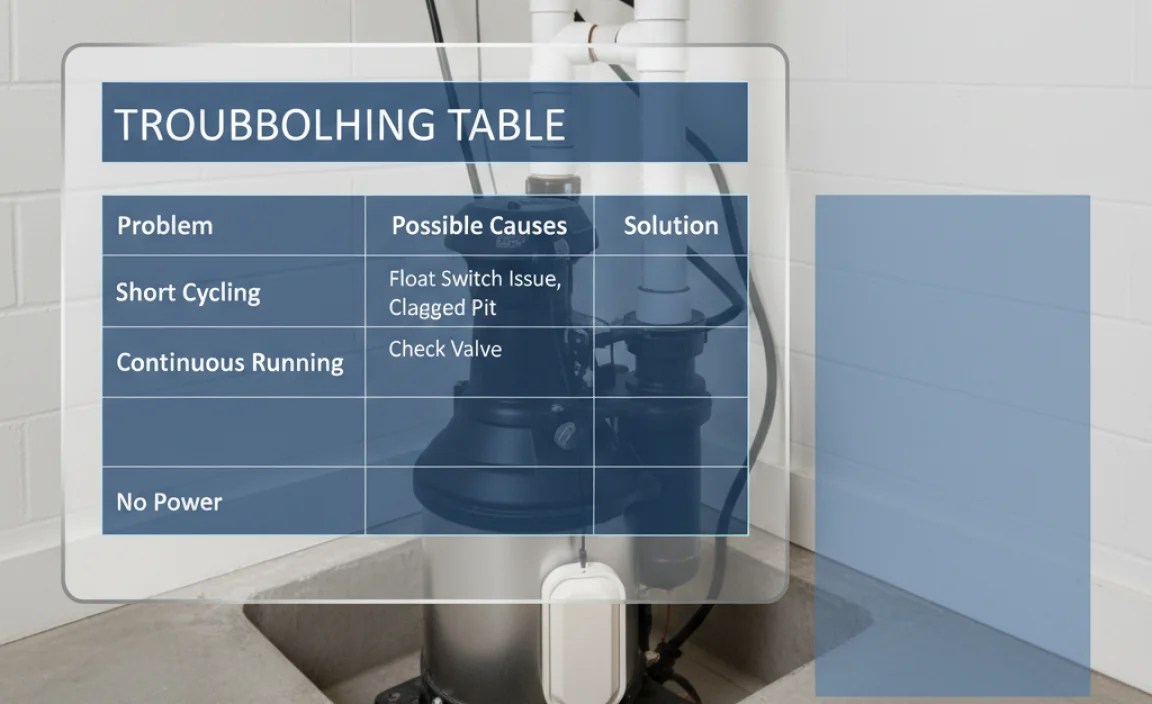
Here’s a quick reference table to help you diagnose and fix your short-cycling sump pump:
| Problem | Possible Causes | Solution |
|---|---|---|
| Short Cycling | Oversized pump | Replace with smaller GPM pump |
| Short Cycling | Clogged intake | Clean intake screen |
| Short Cycling | Stuck float switch | Adjust/replace float switch |
| Short Cycling | Faulty check valve | Replace check valve |
| Short Cycling | Small sump pit | Install larger sump pit |
| Short Cycling | Frozen discharge line | Thaw/insulate discharge line |
| Short Cycling | Electrical issues | Check connections/consult electrician |
Step-by-Step Troubleshooting Guide
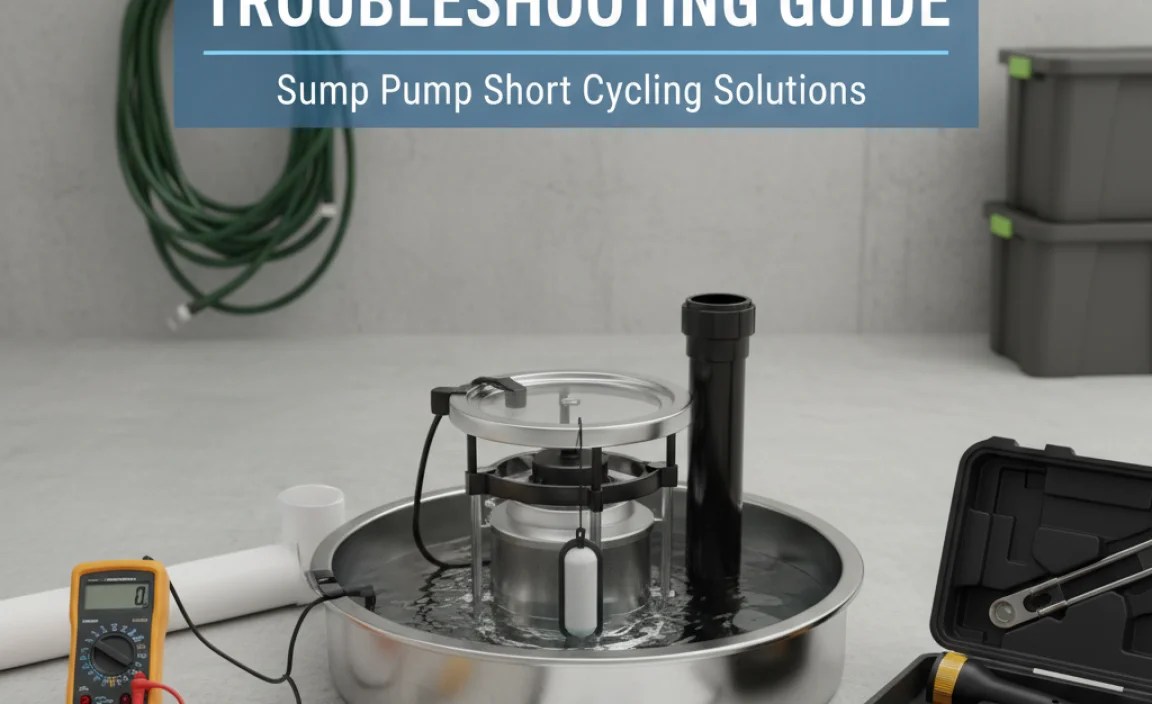
Here’s a more detailed, step-by-step guide to help you troubleshoot your short-cycling sump pump:
- Safety First: Disconnect the pump from the power source.
- Visual Inspection: Examine the pump, sump pit, and discharge pipe for any obvious signs of damage or obstructions.
- Clean the Sump Pit: Remove any debris or sediment from the sump pit.
- Check the Intake: Inspect and clean the pump’s intake screen.
- Test the Float Switch: Manually lift and lower the float to ensure it’s working properly.
- Inspect the Check Valve: Check the check valve for proper operation and replace if necessary.
- Evaluate the Pump Size: Determine if the pump is appropriately sized for your sump pit.
- Check the Discharge Line: Inspect the discharge line for any signs of freezing or blockage.
- Electrical Check: Verify that the pump is receiving adequate power.
- Reassemble and Test: Reconnect the pump to the power source and observe its operation.
When to Call a Professional

While many sump pump issues can be resolved with DIY troubleshooting, there are times when it’s best to call a professional. Here are some situations where you should seek expert help:
- Persistent Short Cycling: If you’ve tried the above solutions and the pump is still short cycling, there may be a more complex underlying issue.
- Electrical Problems: If you suspect an electrical problem, it’s best to consult with a qualified electrician.
- Plumbing Issues: If you’re not comfortable working with plumbing, or if you suspect a major plumbing issue, call a licensed plumber.
- Warranty Concerns: If your pump is still under warranty, attempting to repair it yourself may void the warranty.
Sump Pump Maintenance Tips
Preventing problems is always better than fixing them. Here are some tips to keep your sump pump running smoothly:
- Regular Inspections: Inspect your sump pump and pit at least twice a year, preferably in the spring and fall.
- Clean the Pit: Remove any debris or sediment from the sump pit regularly.
- Test the Pump: Periodically test the pump by manually filling the pit with water.
- Check the Discharge Line: Ensure the discharge line is clear and free of obstructions.
- Replace the Pump: Sump pumps typically last 7-10 years. Replace your pump proactively before it fails.
FAQ: Sump Pump Short Cycling
Here are some frequently asked questions about sump pump short cycling:
Q: What does “short cycling” mean for a sump pump?
A: Short cycling is when your sump pump turns on and off too frequently, often within a few minutes or even seconds. It’s like a car engine constantly starting and stopping – it puts extra stress on the system.
Q: Is short cycling bad for my sump pump?
A: Yes! Short cycling significantly reduces the lifespan of your sump pump, wastes energy, and can lead to overheating and potential flooding. It’s important to address the issue promptly.
Q: Can a sump pump be too powerful?
A: Absolutely. An oversized pump will quickly remove water from the sump pit, causing it to shut off and then rapidly cycle on again as the pit refills. Choose a pump that’s appropriately sized for your needs.
Q: How do I clean my sump pump intake?
A: Disconnect the pump from the power, remove it from the pit, and inspect the intake screen for debris. Use a brush or hose to remove any obstructions. Regular cleaning prevents clogs and ensures efficient operation.
Q: What is a check valve, and why is it important?
A: A check valve prevents water from flowing back into the sump pit after the pump shuts off. If the check valve is faulty or missing, water will flow back, causing the pump to cycle on again shortly after. It’s essential for preventing short cycling.
Q: My discharge line is frozen. What should I do?
A: Carefully thaw the frozen section of the line using a heat gun or warm water. Insulate the line to prevent future freezing. Consider a freeze-resistant discharge adapter to allow water to drain back into the pit.
Q: When should I replace my sump pump?
A: Sump pumps typically last 7-10 years. If your pump is nearing the end of its lifespan, replace it proactively to avoid unexpected failures and potential flooding.
Conclusion
Dealing with a short-cycling sump pump can be frustrating, but with a little troubleshooting, you can often identify and fix the problem yourself. By understanding the common causes and following the steps outlined in this guide, you can keep your sump pump running smoothly and protect your home from water damage. Remember to prioritize safety, perform regular maintenance, and don’t hesitate to call a professional when needed. A well-maintained sump pump is a small investment that can save you from costly repairs and the headache of a flooded basement. Now, go forth and conquer that short cycling!
“`


