
Can You Cycle a Pump with a Pump Start Relay? A Simple Guide

Quick Summary: Yes, you can use a pump start relay (PSR) to control a cycling pump. A PSR acts like a switch, turning your pump on and off based on a signal from a timer, controller, or float switch. This is commonly used in irrigation, hydroponics, and other systems where automated pump cycling is needed. Just make sure your PSR is rated for the pump’s voltage and amperage to avoid damage.
Ever wondered how to automatically turn your water pump on and off for irrigation or another system? It can be frustrating trying to manually control the pump, especially when you need consistent cycles. The good news is, a pump start relay (PSR) makes this easy! It’s like a smart switch that allows a timer, controller, or float switch to manage your pump. This guide will walk you through how a PSR works and how to use it to automate your pump cycles. Let’s get started and make your pumping system work smarter, not harder!
What is a Pump Start Relay (PSR)?

A pump start relay, often called a PSR, is an electrical switch that controls the power supply to a pump. It’s designed to be activated by a low-voltage signal from a timer, controller, or float switch. Think of it like a middleman between your control system and the pump itself. The PSR allows the low-voltage controller to safely switch the high-voltage power required to run the pump.
Here’s why PSRs are so useful:
- Safety: Low-voltage control prevents electrical hazards.
- Automation: Enables precise pump cycling based on timers or sensors.
- Protection: Prevents the control system from being overloaded by the pump’s power demands.
When Would You Use a Pump Start Relay?

PSRs are commonly used in various applications where automated pump control is needed. Here are a few examples:
- Irrigation Systems: Automating watering schedules for lawns, gardens, and farms.
- Hydroponics: Controlling nutrient solution delivery in hydroponic setups.
- Water Transfer: Moving water between tanks or reservoirs automatically.
- Sump Pumps: Activating a sump pump when water levels reach a certain point.
- Industrial Processes: Managing fluid transfer and circulation in manufacturing.
How Does a Pump Start Relay Work?
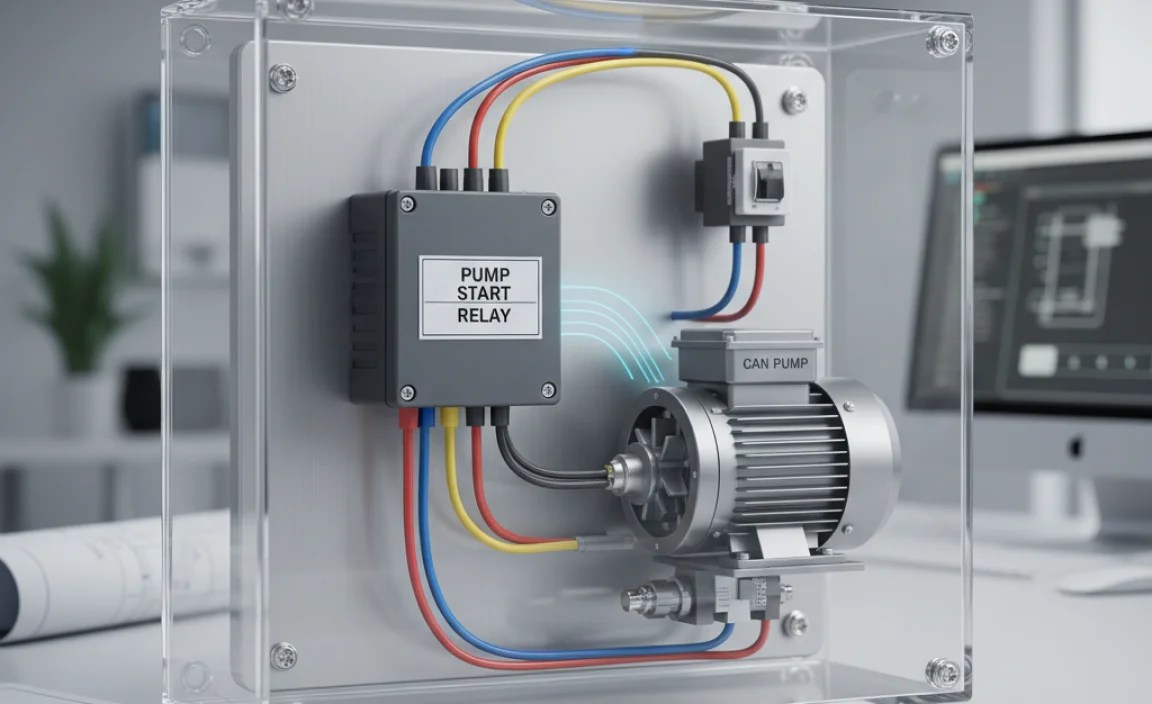
A PSR works by using a low-voltage signal to activate a high-voltage switch. Here’s a simplified explanation:
- Control Signal: A timer, controller, or float switch sends a low-voltage signal (usually 24V AC) to the PSR.
- Relay Activation: The low-voltage signal energizes a coil within the PSR, creating an electromagnetic field.
- Switch Closure: The electromagnetic field pulls a switch closed, completing the high-voltage circuit to the pump.
- Pump Activation: The pump receives power and starts running.
- Signal Termination: When the low-voltage signal stops, the electromagnetic field collapses, and the switch opens, cutting power to the pump.
Choosing the Right Pump Start Relay

Selecting the correct PSR is crucial for safety and performance. Here are the key factors to consider:
- Voltage Rating: Ensure the PSR is rated for the voltage of your pump (e.g., 120V AC, 240V AC).
- Amperage Rating: The PSR must handle the pump’s maximum current draw (amperage). Check the pump’s nameplate for this information. It’s always a good idea to choose a PSR with a slightly higher amperage rating than your pump requires for safety margin.
- Coil Voltage: Match the PSR’s coil voltage to the output voltage of your controller (e.g., 24V AC).
- Enclosure Type: Choose an enclosure suitable for the environment. Outdoor installations require a weatherproof enclosure.
- Compatibility: Make sure the PSR is compatible with your controller or timer.
Here’s a table summarizing the key considerations:
| Factor | Description | Example |
|---|---|---|
| Voltage Rating | The maximum voltage the PSR can handle. | 120V AC, 240V AC |
| Amperage Rating | The maximum current the PSR can handle. | 10A, 20A, 30A |
| Coil Voltage | The voltage required to activate the relay. | 24V AC |
| Enclosure Type | The type of enclosure protecting the PSR. | Weatherproof, Indoor |
Step-by-Step Guide: Wiring a Pump Start Relay

Disclaimer: Working with electricity can be dangerous. If you are not comfortable with electrical work, consult a qualified electrician.
Tools and Materials You’ll Need:
- Pump Start Relay
- Electrical Wire (rated for the voltage and amperage)
- Wire Strippers
- Screwdrivers (matching the terminal screws on the PSR and pump)
- Voltage Tester
- Electrical Tape or Wire Connectors
- Conduit and Fittings (if required by local codes)
- Safety Glasses
- Gloves
Step 1: Safety First!
Turn off the power to both the pump circuit and the control circuit at the circuit breaker. Verify that the power is off using a voltage tester.
Step 2: Mount the Pump Start Relay
Choose a suitable location for the PSR, preferably near the pump and controller. Ensure the location is dry and protected from the elements. Mount the PSR enclosure securely to a wall or post.
Step 3: Wiring the High-Voltage Side (Pump Power)
- Locate the Power Wires: Identify the power wires (usually black and white) coming from the circuit breaker and going to the pump.
- Connect the Wires:
- Connect the power wire from the circuit breaker to one of the high-voltage terminals on the PSR (usually labeled “Line” or “Power In”).
- Connect another wire from the other high-voltage terminal on the PSR (usually labeled “Load” or “Power Out”) to the corresponding terminal on the pump.
- Connect the neutral wires (usually white) together using a wire connector or by connecting them to a designated neutral terminal in the PSR enclosure.
- Connect the ground wires (usually green or bare copper) together using a wire connector or by connecting them to a designated ground terminal in the PSR enclosure.
Step 4: Wiring the Low-Voltage Side (Control Signal)
- Locate the Control Wires: Identify the control wires coming from your timer, controller, or float switch. These are usually low-voltage wires (e.g., 24V AC).
- Connect the Wires: Connect the control wires to the low-voltage terminals on the PSR (usually labeled “Control” or “+/-“). Polarity may matter depending on the PSR, so refer to the manufacturer’s instructions.
Step 5: Double-Check Your Wiring
Carefully review all your wiring connections to ensure they are secure and correct. Make sure no bare wires are exposed.
Step 6: Test the System
- Turn on the power to the control circuit and the pump circuit at the circuit breaker.
- Activate the control signal (e.g., by setting the timer to turn on).
- Verify that the pump starts when the control signal is active and stops when the control signal is inactive.
- If the pump does not start or stop as expected, immediately turn off the power and re-check your wiring.
Troubleshooting Common Issues
Here are some common problems you might encounter and how to solve them:
- Pump Doesn’t Start:
- Check the power supply to the pump and the PSR.
- Verify the control signal is present.
- Inspect the PSR for damage.
- Ensure the wiring is correct and secure.
- Pump Doesn’t Stop:
- Check the control signal is turning off.
- Inspect the PSR for a stuck relay.
- Ensure the wiring is correct and secure.
- PSR Fails Prematurely:
- Make sure the PSR is rated for the pump’s voltage and amperage.
- Protect the PSR from moisture and extreme temperatures.
Tips for Extending the Life of Your Pump Start Relay
Here are some tips to help your PSR last longer:
- Proper Sizing: Always choose a PSR with an amperage rating slightly higher than your pump requires.
- Weather Protection: Use a weatherproof enclosure for outdoor installations.
- Regular Inspection: Periodically inspect the PSR for signs of damage or corrosion.
- Clean Connections: Keep the wiring connections clean and tight.
- Surge Protection: Consider using a surge protector to protect the PSR from voltage spikes. A whole-house surge protector can help protect all of your home’s electronics, not just your pump system, from power surges due to lightning or other electrical events.
Pump Start Relay vs. Contactor
While both PSRs and contactors are used to control electrical circuits, they have some key differences:
| Feature | Pump Start Relay (PSR) | Contactor |
|---|---|---|
| Size | Smaller, more compact | Larger, more robust |
| Amperage Rating | Lower amperage capacity | Higher amperage capacity |
| Application | Typically used for smaller pumps and irrigation systems | Used for larger pumps, motors, and industrial equipment |
| Cost | Less expensive | More expensive |
Generally, PSRs are suitable for residential and small commercial applications, while contactors are used in heavy-duty industrial settings.
FAQ About Pump Start Relays
Here are some frequently asked questions about pump start relays:
What voltage should my pump start relay be?
The voltage of your pump start relay needs to match the voltage of your pump. Common voltages are 120V AC and 240V AC. Check your pump’s label to find its voltage.
How do I know what size pump start relay I need?
The size of the pump start relay depends on your pump’s amperage. Look for the “amps” or “current” rating on your pump’s label. Choose a PSR with an amperage rating that is equal to or slightly higher than your pump’s rating.
Can I use a regular relay instead of a pump start relay?
While a regular relay might work in some cases, it’s not recommended. PSRs are specifically designed to handle the high inrush current of pumps, which can damage a regular relay over time.
What does the 24V AC mean on a pump start relay?
The 24V AC refers to the voltage needed to activate the relay’s coil. This low-voltage signal comes from your timer, controller, or float switch.
Do I need a special enclosure for my pump start relay?
If your PSR is installed outdoors or in a damp environment, you’ll need a weatherproof enclosure to protect it from the elements. Indoor installations may not require a special enclosure.
How often should I replace my pump start relay?
The lifespan of a PSR depends on usage and environmental conditions. Inspect it regularly for signs of wear or damage. Replace it if you notice any problems, such as the pump not starting or stopping correctly.
Can a pump start relay save energy?
Yes, by automating your pump cycles, a PSR ensures that your pump only runs when needed, which can save energy and reduce water waste.
Conclusion
Using a pump start relay to control your cycling pump is a simple yet effective way to automate your systems, whether for irrigation, hydroponics, or other applications. By choosing the right PSR and following the wiring steps carefully, you can ensure safe and reliable operation. Remember to always prioritize safety when working with electricity and consult a professional if you’re unsure about any part of the process. With the right setup, you’ll enjoy the convenience and efficiency of automated pump control for years to come.
“`


