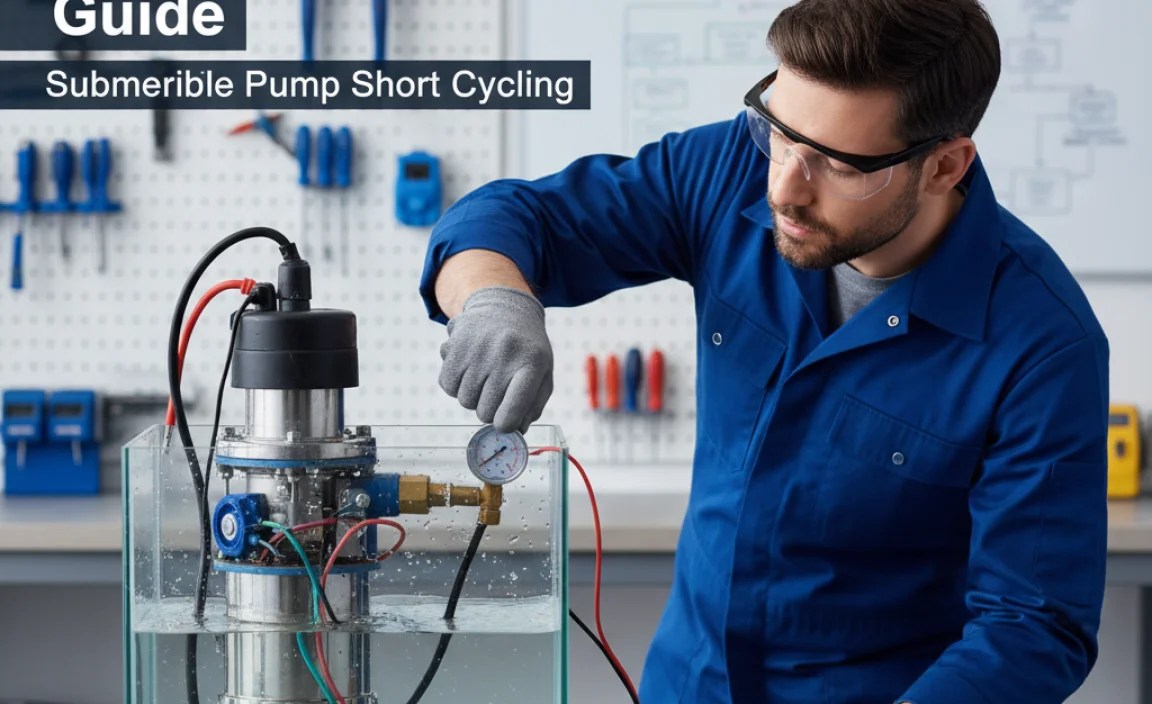
Why Is My Submersible Pump Short Cycling? A Simple Guide

Quick Summary: Submersible pump short cycling means your pump turns on and off too frequently. This is often due to a waterlogged pressure tank, incorrect pressure switch settings, a faulty check valve, or even a leak in your well system. Addressing these issues promptly will extend your pump’s life and ensure a steady water supply.
Is your submersible pump acting up, turning on and off way too often? This annoying issue, called short cycling, isn’t just a nuisance. It puts extra stress on your pump, leading to premature failure and costly repairs. But don’t worry! Figuring out why your pump is short cycling and fixing it is often something you can handle yourself with a little know-how.
In this guide, we’ll walk you through the most common causes of short cycling, step by step. We’ll show you how to diagnose the problem and offer simple solutions to get your pump running smoothly again. Get ready to troubleshoot like a pro!
Understanding Submersible Pump Short Cycling

Short cycling, in simple terms, is when your submersible pump rapidly turns on and off. Ideally, a pump should run for a reasonable amount of time to fill the pressure tank and then shut off until the pressure drops again. When it starts and stops too quickly, it indicates an underlying problem in your well system.
Why is Short Cycling Bad?
Think of your pump like a car engine. Constant starting and stopping wear it out faster than continuous operation. Short cycling leads to:
- Reduced Pump Lifespan: The frequent starts put extra strain on the motor, shortening its life.
- Increased Energy Consumption: Each start requires a surge of electricity, wasting energy and increasing your bills.
- Water Pressure Fluctuations: You might experience inconsistent water pressure in your home.
- Overheating: Excessive starting and stopping can cause the pump motor to overheat.
Common Causes of Submersible Pump Short Cycling

Several factors can cause short cycling. Let’s break down the most frequent culprits:
1. Waterlogged Pressure Tank
The pressure tank is crucial for maintaining consistent water pressure. It stores water under pressure, allowing the pump to run less frequently. Over time, the air cushion inside the tank can diminish, causing it to become waterlogged. This means the tank fills mostly with water, reducing its ability to maintain pressure and causing the pump to cycle rapidly.
How to Check:
- Turn off the pump: Locate the breaker switch for your well pump and turn it off.
- Drain the tank: Open a faucet and let the water run until the tank is empty.
- Check the air pressure: Use a tire pressure gauge to check the air pressure at the Schrader valve (usually located at the top of the tank, often under a cap). The pressure should be 2 PSI below the pump’s cut-in pressure (the pressure at which the pump turns on). For example, if your pump turns on at 40 PSI, the tank pressure should be 38 PSI.
Solutions:
- Recharge the air pressure: If the pressure is low, use an air compressor to add air until it reaches the correct level.
- Replace the tank: If the tank is severely waterlogged and won’t hold air, it might need replacement.
2. Incorrect Pressure Switch Settings
The pressure switch controls when the pump turns on and off based on the water pressure in the tank. If the settings are too close together, the pump will cycle more frequently.
How to Check:
- Locate the pressure switch: It’s usually a small, box-shaped device near the pressure tank with wires connected to it.
- Inspect the settings: Remove the cover (after turning off the power!) and look for the pressure settings. Common settings are 30/50 PSI or 40/60 PSI (cut-in/cut-out).
Solutions:
- Adjust the differential: Increase the difference between the cut-in and cut-out pressures. For example, if it’s set at 20 PSI differential (30/50), increasing it to 30 PSI (30/60) may help. Important: Only adjust the pressure switch if you are comfortable working with electrical components and understand the risks. If unsure, consult a qualified electrician.
- Clean the switch: Sometimes, debris can interfere with the switch’s operation. Gently clean the internal components with a soft brush.
3. Faulty Check Valve
The check valve prevents water from flowing back into the well when the pump shuts off. If it fails, water drains back into the well, causing the pressure to drop quickly and the pump to restart.
How to Check:
Unfortunately, directly checking the check valve is difficult without specialized equipment. However, if you suspect a faulty check valve and have ruled out other causes, this is a likely culprit.
Solutions:
- Replace the check valve: This usually involves pulling the pump out of the well, which is a significant undertaking. It’s often best to hire a professional for this task.
4. Leaks in the Well System
Leaks, whether in the piping, fittings, or even the well casing itself, can cause a loss of pressure, leading to short cycling. Even a small leak can have a big impact.
How to Check:
- Inspect visible pipes and fittings: Look for any signs of water leakage around connections and joints.
- Check the well casing: Examine the above-ground portion of the well casing for cracks or damage.
- Pressure test: After turning off the pump, observe how quickly the pressure drops. A rapid drop indicates a leak.
Solutions:
- Repair or replace leaking pipes and fittings: Tighten loose connections or replace damaged components.
- Seal well casing leaks: Small cracks can sometimes be sealed with epoxy. For significant damage, consult a well professional.
5. Low Well Water Level
If the water level in your well is too low, the pump may struggle to maintain pressure, leading to short cycling. This is more common during periods of drought or heavy water usage.
How to Check:
- Monitor well production: Notice if your water flow decreases significantly during pump operation.
- Consult well records: Check your well log for the static water level (the water level when the pump is not running). If the water level is close to the pump intake, it could be the issue.
Solutions:
- Lower the pump: If possible, lower the pump further into the well. Important: Ensure the pump remains submerged to prevent damage.
- Conserve water: Reduce water usage to allow the well to recover.
- Deepen the well: In severe cases, you may need to deepen the well or consider alternative water sources.
6. Clogged or Dirty Pump Intake
A clogged pump intake can restrict water flow, causing the pump to work harder and cycle more frequently. Sediment, debris, or mineral buildup can all contribute to this problem.
How to Check:
This requires pulling the pump out of the well for inspection, which is usually a job for a professional.
Solutions:
- Clean the pump intake: Remove any debris or buildup from the pump screen or intake.
- Install a well screen: If sediment is a recurring problem, consider installing a well screen to filter out particles.
Step-by-Step Troubleshooting Guide
Here’s a systematic approach to diagnosing and fixing short cycling:
- Check the Pressure Tank: Turn off the pump, drain the tank, and check the air pressure. Adjust as needed.
- Inspect the Pressure Switch: Verify the settings and clean the switch if necessary.
- Look for Leaks: Examine all visible pipes, fittings, and the well casing for leaks.
- Monitor Water Flow: Observe if the water flow decreases during pump operation.
- Consider Professional Help: If you’ve checked the above and the problem persists, consult a well professional to inspect the check valve, pump intake, or well water level.
Tools You Might Need

- Tire Pressure Gauge: For checking pressure tank air pressure.
- Air Compressor: To add air to the pressure tank.
- Wrenches: For tightening or replacing pipe fittings.
- Screwdrivers: For accessing and adjusting the pressure switch.
- Multimeter (Optional): For testing electrical components (use with caution and knowledge).
Submersible Pump Short Cycling: Troubleshooting Table

Here’s a handy table to guide your troubleshooting:
| Problem | Possible Cause | Solution |
|---|---|---|
| Short Cycling | Waterlogged pressure tank | Drain tank, check air pressure, recharge if needed, replace if necessary. |
| Short Cycling | Incorrect pressure switch settings | Adjust cut-in and cut-out pressures, clean the switch. |
| Short Cycling | Faulty check valve | Replace the check valve (hire a professional). |
| Short Cycling | Leaks in the well system | Inspect and repair or replace leaking pipes and fittings. |
| Short Cycling | Low well water level | Lower the pump (if possible), conserve water, deepen the well (if necessary). |
| Short Cycling | Clogged pump intake | Clean the pump intake (hire a professional). |
Preventative Measures
To minimize the risk of short cycling, consider these preventative measures:
- Regularly Check Pressure Tank: Check the air pressure in your pressure tank every 6-12 months.
- Inspect for Leaks: Periodically inspect your well system for any signs of leaks.
- Maintain Water Conservation: Practice water conservation to reduce the strain on your well and pump.
- Professional Inspection: Have your well system professionally inspected every few years. The EPA recommends regular well maintenance.
FAQ About Submersible Pump Short Cycling
What is the ideal run time for a submersible pump?
The ideal run time depends on the size of your pressure tank and water usage, but generally, a pump should run for at least one to two minutes to fill the tank adequately.
Can short cycling damage my well?
While short cycling primarily damages the pump, the constant starting and stopping can also cause stress on the well components over time.
How much does it cost to replace a submersible pump?
Replacement costs vary depending on the pump type, well depth, and labor charges, but typically range from $800 to $2,500 or more.
Is it safe to drink water from a well that’s short cycling?
Short cycling itself doesn’t directly contaminate the water, but the underlying issues causing it (like leaks or low water level) could potentially affect water quality. Regular water testing is always recommended.
Can a bad pressure switch cause short cycling?
Yes, a malfunctioning or improperly adjusted pressure switch is a common cause of short cycling.
How do I know if my pressure tank is bad?
If your pressure tank is waterlogged, loses air pressure quickly, or has physical damage like rust or leaks, it likely needs to be replaced.
Can cold weather affect my submersible pump?
Yes, freezing temperatures can cause pipes to burst, leading to leaks and short cycling. Insulate your well components to prevent freezing.
Conclusion
Dealing with a short cycling submersible pump can be frustrating, but by understanding the potential causes and following these troubleshooting steps, you can often resolve the issue yourself. Remember to prioritize safety when working with electrical and plumbing components, and don’t hesitate to call a professional if you’re uncomfortable or encounter a complex problem. Regular maintenance and preventative measures will go a long way in ensuring a reliable and long-lasting water supply for your home.
“`