
How the Refrigeration Cycle is Reversed in a Heat Pump

Quick Summary: Heat pumps reverse the refrigeration cycle using a reversing valve. This valve changes the direction of refrigerant flow, allowing the heat pump to either heat or cool a space. In heating mode, heat is absorbed from the outside air and released inside. In cooling mode, heat is absorbed from inside and released outside, effectively reversing the process.
Ever wondered how a heat pump can both warm your house in the winter and cool it in the summer? It seems like magic, but it’s all about reversing a clever process called the refrigeration cycle. Many folks find this confusing, but don’t worry! We’ll break it down step-by-step. This guide will explain exactly how a heat pump switches from heating to cooling and back again. Get ready to understand the inner workings of this amazing appliance!
Understanding the Basic Refrigeration Cycle
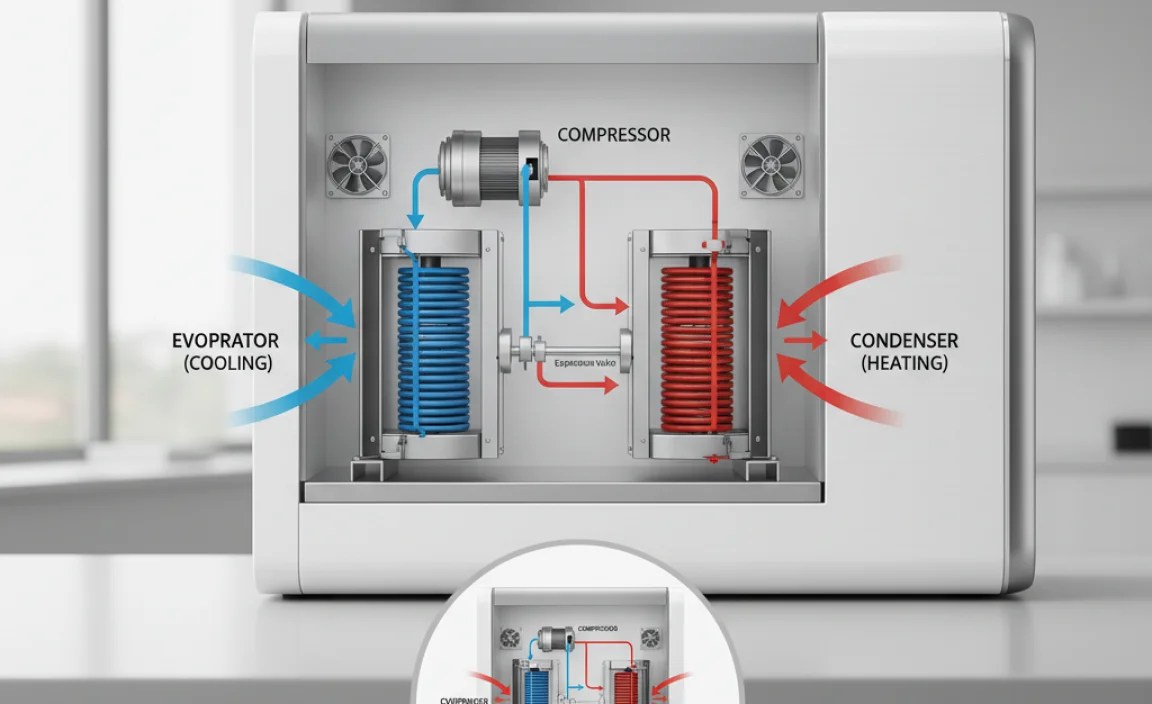
Before diving into how a heat pump reverses its cycle, let’s quickly recap the basic refrigeration cycle. This cycle is the foundation of how heat pumps (and air conditioners) work.
The Four Main Components
The refrigeration cycle consists of four main components:
- Compressor: This is the heart of the system. It compresses the refrigerant, increasing its temperature and pressure.
- Condenser: Here, the hot, high-pressure refrigerant releases heat to the surroundings and condenses into a liquid.
- Expansion Valve (or Metering Device): This reduces the pressure of the liquid refrigerant, causing it to cool down significantly.
- Evaporator: The cold, low-pressure refrigerant absorbs heat from the surroundings, causing it to evaporate into a gas.
The Cycle in Action
Here’s how these components work together:
- Compression: The compressor increases the refrigerant’s pressure and temperature.
- Condensation: The hot refrigerant flows through the condenser, releasing heat and turning into a liquid.
- Expansion: The liquid refrigerant passes through the expansion valve, dropping its pressure and temperature.
- Evaporation: The cold refrigerant flows through the evaporator, absorbing heat and turning back into a gas.
This cycle continuously moves heat from one place to another. In a refrigerator, it moves heat from inside the fridge to the outside. In an air conditioner, it moves heat from inside your home to the outside.
The Key: The Reversing Valve

So, how does a heat pump switch between heating and cooling? The answer lies in a component called the reversing valve (also known as a four-way valve). This valve is the key to reversing the flow of refrigerant.
What is a Reversing Valve?
The reversing valve is a valve that can change the direction of refrigerant flow in a heat pump. It has four ports that connect to the compressor, condenser, and evaporator.
Here’s a simple analogy: Imagine a train track switch. Normally, the train goes straight. But when you flip the switch, the train is diverted to a different track. The reversing valve does the same thing for the refrigerant in a heat pump.
How it Works
The reversing valve has two positions:
- Heating Mode: In this mode, the valve directs the hot refrigerant from the compressor to the indoor coil (which acts as the condenser). The refrigerant releases heat into your home. The cooled refrigerant then flows to the outdoor coil (which acts as the evaporator), where it absorbs heat from the outside air.
- Cooling Mode: In this mode, the valve directs the hot refrigerant from the compressor to the outdoor coil (now acting as the condenser). The refrigerant releases heat to the outside air. The cooled refrigerant then flows to the indoor coil (now acting as the evaporator), where it absorbs heat from inside your home.
Heating Mode vs. Cooling Mode: A Detailed Comparison

Let’s take a closer look at what happens in each mode.
Heating Mode
In heating mode, the heat pump works like this:
- The compressor compresses the refrigerant, making it hot and high-pressure.
- The reversing valve directs this hot refrigerant to the indoor coil.
- The indoor coil acts as a condenser, releasing heat into your home.
- The refrigerant cools and condenses into a liquid.
- The liquid refrigerant flows through the expansion valve, reducing its pressure and temperature.
- The cold refrigerant flows to the outdoor coil.
- The outdoor coil acts as an evaporator, absorbing heat from the outside air (even when it’s cold outside!).
- The refrigerant evaporates back into a gas.
- The gas flows back to the compressor, and the cycle repeats.
Cooling Mode
In cooling mode, the process is reversed:
- The compressor compresses the refrigerant, making it hot and high-pressure.
- The reversing valve directs this hot refrigerant to the outdoor coil.
- The outdoor coil acts as a condenser, releasing heat to the outside air.
- The refrigerant cools and condenses into a liquid.
- The liquid refrigerant flows through the expansion valve, reducing its pressure and temperature.
- The cold refrigerant flows to the indoor coil.
- The indoor coil acts as an evaporator, absorbing heat from inside your home.
- The refrigerant evaporates back into a gas.
- The gas flows back to the compressor, and the cycle repeats.
Visualizing the Change
Here’s a table to help you visualize the role reversal:
| Component | Heating Mode | Cooling Mode |
|---|---|---|
| Indoor Coil | Condenser (releases heat) | Evaporator (absorbs heat) |
| Outdoor Coil | Evaporator (absorbs heat) | Condenser (releases heat) |
The Reversing Valve in Detail

Let’s delve a little deeper into the reversing valve itself.
Components of a Reversing Valve
A typical reversing valve consists of:
- Solenoid Coil: This is an electromagnet that, when energized, moves the pilot valve.
- Pilot Valve: This small valve controls the pressure that moves the main slide valve.
- Slide Valve: This is the main component that redirects the refrigerant flow. It’s a sliding cylinder with ports that align to change the flow path.
How the Valve Switches
Here’s how the reversing valve switches between modes:
- Mode Selection: When you change the thermostat from heating to cooling (or vice versa), the control system sends a signal to the solenoid coil.
- Solenoid Activation: The solenoid coil is energized (or de-energized, depending on the design).
- Pilot Valve Movement: The energized solenoid moves the pilot valve, which changes the pressure on either side of the slide valve.
- Slide Valve Movement: The pressure difference causes the slide valve to move to the opposite position.
- Refrigerant Redirection: The movement of the slide valve redirects the flow of refrigerant, switching the heat pump between heating and cooling modes.
Why Heat Pumps are Efficient
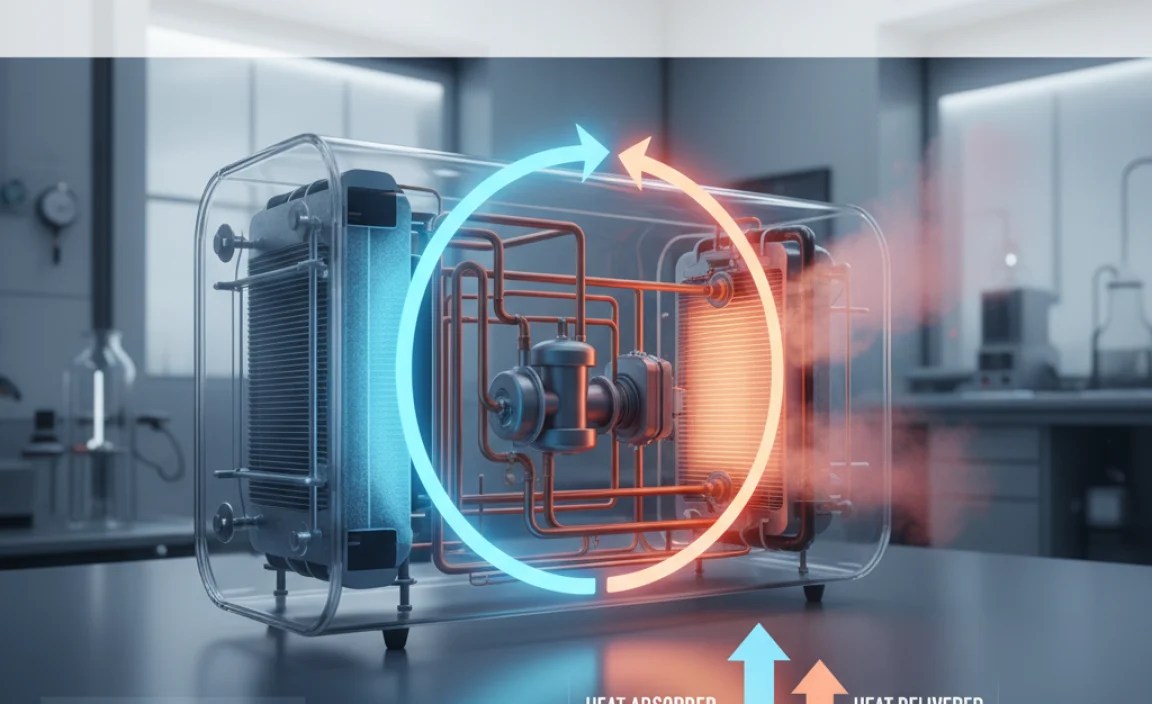
Heat pumps are incredibly efficient because they move heat rather than generate it. This makes them much more energy-efficient than traditional heating systems like electric resistance heaters or furnaces.
Coefficient of Performance (COP)
The efficiency of a heat pump is measured by its Coefficient of Performance (COP). The COP is the ratio of heat output to energy input. For example, a heat pump with a COP of 3 can deliver 3 units of heat for every 1 unit of electricity it consumes.
A COP of 3 means that for every watt of electricity used, the heat pump moves three watts of heat. This is why heat pumps can be so much cheaper to run than electric resistance heaters, which have a COP of 1 (one watt in equals one watt out).
Seasonal Energy Efficiency Ratio (SEER) and Heating Seasonal Performance Factor (HSPF)
In addition to COP, heat pumps are also rated using SEER (Seasonal Energy Efficiency Ratio) for cooling and HSPF (Heating Seasonal Performance Factor) for heating. These ratings provide a more comprehensive measure of efficiency over an entire season.
- SEER: Measures cooling efficiency. Higher SEER ratings indicate better energy efficiency during the cooling season.
- HSPF: Measures heating efficiency. Higher HSPF ratings indicate better energy efficiency during the heating season.
Troubleshooting Common Issues
Sometimes, heat pumps can run into problems. Here are a few common issues and how to troubleshoot them.
Heat Pump Not Heating or Cooling
If your heat pump isn’t heating or cooling, consider these potential causes:
- Reversing Valve Problems: The reversing valve might be stuck or malfunctioning.
- Refrigerant Leaks: Low refrigerant levels can prevent the heat pump from working correctly.
- Compressor Issues: A faulty compressor can stop the entire cycle.
- Airflow Problems: Blocked filters or obstructed vents can reduce airflow and efficiency.
Reversing Valve Problems
If you suspect a problem with the reversing valve:
- Listen for Clicking: When the heat pump switches modes, you should hear a clicking sound from the reversing valve. If you don’t hear this, the valve might be stuck.
- Check the Solenoid: Use a multimeter to check if the solenoid coil is receiving power. If not, there might be an electrical issue.
- Call a Professional: Reversing valve repairs often require specialized tools and knowledge. It’s best to call a qualified HVAC technician.
Refrigerant Leaks
Refrigerant leaks can significantly reduce the performance of your heat pump. Signs of a refrigerant leak include:
- Reduced Heating or Cooling: The heat pump isn’t heating or cooling as effectively as it used to.
- Ice Buildup: Ice forms on the coils, even when it’s not freezing outside.
- Hissing Sound: You hear a hissing sound coming from the unit.
Refrigerant leaks should be repaired by a professional. They have the tools and expertise to locate and fix the leak and recharge the system with the correct amount of refrigerant.
Maintenance Tips for Your Heat Pump
Regular maintenance can keep your heat pump running efficiently and prevent costly repairs.
Regular Filter Changes
Change your air filters regularly (usually every 1-3 months). Dirty filters restrict airflow and reduce efficiency.
Coil Cleaning
Keep the indoor and outdoor coils clean. Dirt and debris can insulate the coils and reduce their ability to transfer heat.
Professional Inspections
Schedule regular professional inspections and maintenance. A qualified HVAC technician can identify and fix potential problems before they become major issues.
The Future of Heat Pump Technology
Heat pump technology is constantly evolving, with new innovations aimed at improving efficiency and performance.
Advanced Compressors
Newer heat pumps are using advanced compressor technologies, such as variable-speed compressors, to improve efficiency and comfort. Variable-speed compressors can adjust their speed to match the heating or cooling demand, providing more consistent temperatures and using less energy.
Smart Controls
Smart thermostats and control systems can optimize heat pump performance based on your usage patterns and preferences. These systems can learn your schedule and adjust the temperature accordingly, saving you energy and money.
Cold-Climate Heat Pumps
Cold-climate heat pumps are designed to operate efficiently in extremely cold temperatures. These heat pumps use advanced technologies to extract heat from the air even when it’s well below freezing.
Pros and Cons of Heat Pumps
Here’s a quick overview of the pros and cons of using heat pumps.
Pros
- Energy Efficiency: Heat pumps are more energy-efficient than traditional heating systems.
- Dual Functionality: They provide both heating and cooling.
- Reduced Emissions: They can reduce your carbon footprint compared to fossil fuel-based heating systems.
- Long Lifespan: With proper maintenance, heat pumps can last for many years.
Cons
- Upfront Cost: Heat pumps can be more expensive to install than traditional heating systems.
- Performance in Extreme Cold: Traditional heat pumps may struggle in extremely cold temperatures (though cold-climate models are improving).
- Maintenance: They require regular maintenance to maintain efficiency and prevent problems.
FAQ About Reversing the Refrigeration Cycle
Here are some frequently asked questions about how heat pumps reverse the refrigeration cycle.
What is a reversing valve?
A reversing valve is a component in a heat pump that changes the direction of refrigerant flow, allowing the heat pump to switch between heating and cooling modes.
How does a heat pump switch from heating to cooling?
The reversing valve redirects the refrigerant flow. In heating mode, it sends hot refrigerant to the indoor coil. In cooling mode, it sends hot refrigerant to the outdoor coil.
Why are heat pumps more efficient than electric heaters?
Heat pumps move heat rather than generate it. They use a small amount of electricity to move a larger amount of heat, resulting in higher efficiency.
What happens if the reversing valve fails?
If the reversing valve fails, the heat pump may be stuck in one mode (either heating or cooling) or may not work at all.
Can I repair a reversing valve myself?
Reversing valve repairs often require specialized tools and knowledge. It’s best to call a qualified HVAC technician.
How often should I maintain my heat pump?
You should change your air filters regularly (every 1-3 months) and schedule professional inspections and maintenance at least once a year.
Are heat pumps suitable for cold climates?
Yes, especially cold-climate heat pumps, which are designed to operate efficiently in extremely cold temperatures.
Conclusion
Understanding how a heat pump reverses the refrigeration cycle can seem daunting at first, but hopefully, this guide has made it clear and easy to grasp. The reversing valve is the key component that allows these systems to efficiently heat and cool your home. By understanding the basics of the refrigeration cycle and the role of the reversing valve, you can better appreciate the technology that keeps you comfortable year-round. Regular maintenance and prompt attention to any issues will ensure your heat pump operates efficiently and reliably for years to come.
“`


