
What Starts a Defrost Cycle in a Heat Pump? A Simple Guide

Quick Summary: A heat pump defrost cycle starts when the system detects ice buildup on the outdoor coil. This is usually triggered by a combination of factors, including low outdoor temperature, coil temperature, and the amount of time the system has been running in heating mode. Sensors monitor these conditions and signal the heat pump to melt the ice, ensuring efficient operation.
Heat pumps are fantastic for keeping your home comfortable all year round, but they can sometimes ice up in the winter. When this happens, your heat pump needs to go into defrost mode to melt the ice and keep running efficiently. Understanding what triggers this defrost cycle can help you troubleshoot issues and keep your system in tip-top shape. Don’t worry, it’s not as complicated as it sounds. We’ll walk you through the main factors and how they work together to initiate the defrost cycle, so you can stay warm and cozy all winter long.
Understanding Heat Pump Defrost Cycles

A heat pump works by transferring heat from one place to another. In the winter, it extracts heat from the outside air and moves it inside your home. When the outdoor temperature drops below freezing, moisture in the air can freeze on the outdoor coil. This ice buildup reduces the heat pump’s ability to extract heat, making it work harder and less efficiently. That’s where the defrost cycle comes in. It temporarily reverses the heat pump’s operation to melt the ice, ensuring it can continue to heat your home effectively.
Why Defrosting is Necessary
Ice buildup on the outdoor coil can lead to several problems:
- Reduced Efficiency: Ice acts as an insulator, preventing the coil from absorbing heat from the outside air.
- Increased Energy Consumption: The heat pump has to work harder to compensate for the reduced efficiency, leading to higher energy bills.
- Potential Damage: Excessive ice buildup can damage the coil and other components of the heat pump.
The defrost cycle is designed to prevent these issues by quickly melting the ice, allowing the heat pump to operate efficiently and reliably.
Key Factors That Initiate a Defrost Cycle

Several factors work together to tell your heat pump when it’s time to defrost. These include temperature sensors, timers, and pressure readings. Let’s take a closer look at each of these components.
1. Outdoor Temperature
The outdoor temperature is one of the primary factors that influence the defrost cycle. Most heat pumps are programmed to initiate a defrost cycle when the outdoor temperature drops below a certain threshold, typically around 32 to 40 degrees Fahrenheit (0 to 4.4 degrees Celsius). This is because ice is more likely to form on the coil at these temperatures.
2. Coil Temperature
The temperature of the outdoor coil itself is also a crucial factor. Sensors monitor the coil temperature, and when it drops below freezing, the defrost cycle is more likely to be initiated. This is a more direct measurement of ice formation than just the ambient air temperature.
3. Time Interval
Many heat pumps use a timer to initiate a defrost cycle at regular intervals, regardless of the temperature. This is a preventative measure to ensure that ice doesn’t build up excessively. The typical time interval between defrost cycles is 30, 60, or 90 minutes, depending on the model and settings.
4. Pressure Differential
Some advanced heat pumps use pressure sensors to detect ice buildup. Ice restricts airflow across the coil, which causes a pressure drop. When the pressure differential between the air entering and exiting the coil reaches a certain level, the defrost cycle is initiated.
5. Defrost Thermostat
A defrost thermostat is a temperature-sensitive switch that monitors the coil temperature. When the coil temperature drops to a set point (usually around 28°F or -2°C), the thermostat closes, signaling the control board to start the defrost cycle.
How the Defrost Cycle Works: A Step-by-Step Guide

Now that you know the factors that initiate a defrost cycle, let’s look at what actually happens during the cycle.
- Reversing Valve Activation: The reversing valve switches the flow of refrigerant, essentially putting the heat pump into cooling mode. This sends hot refrigerant to the outdoor coil.
- Outdoor Fan Shutdown: The outdoor fan turns off to keep the heat concentrated on the coil, maximizing the melting effect.
- Electric Heat Activation (Auxiliary Heat): To compensate for the temporary cooling effect inside your home, the auxiliary or emergency heat (usually electric resistance heaters) is activated to provide warmth.
- Ice Melting: The hot refrigerant melts the ice on the outdoor coil. You may see steam or water dripping from the unit during this process.
- Cycle Termination: Once the coil temperature reaches a certain level (usually around 50 to 60 degrees Fahrenheit), the defrost thermostat opens, signaling the control board to end the defrost cycle. The reversing valve switches back to heating mode, the outdoor fan restarts, and the auxiliary heat turns off.
Troubleshooting Common Defrost Cycle Issues
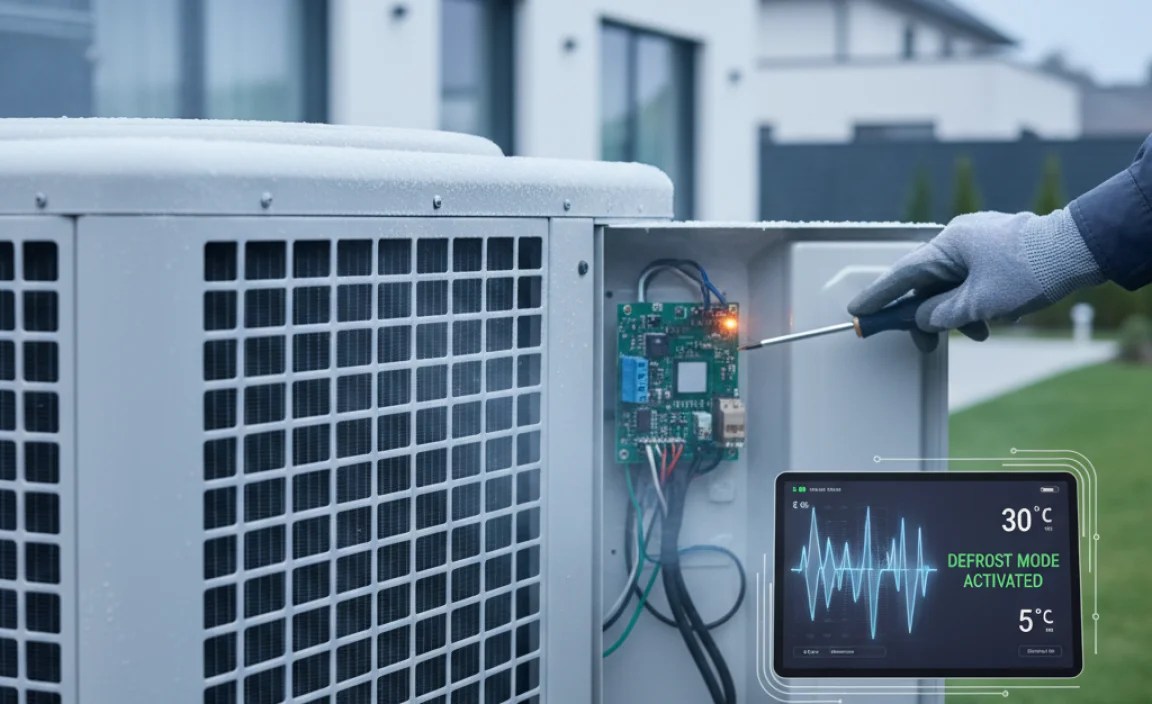
Sometimes, the defrost cycle may not work as expected. Here are some common issues and how to troubleshoot them.
1. Heat Pump Not Defrosting
If your heat pump isn’t defrosting, ice can build up excessively, reducing its efficiency and potentially causing damage. Here’s what to check:
- Check the Defrost Thermostat: Use a multimeter to test if the defrost thermostat is working correctly. It should be closed when the coil temperature is below freezing and open when it’s above freezing.
- Inspect the Reversing Valve: The reversing valve could be stuck or faulty. You may need a professional to diagnose and replace it.
- Examine the Control Board: The control board could be malfunctioning, preventing the defrost cycle from initiating.
2. Frequent Defrost Cycles
If your heat pump is defrosting too frequently, it could be a sign of other issues.
- Check the Refrigerant Level: Low refrigerant can cause the coil to ice up more quickly.
- Inspect the Airflow: Restricted airflow due to dirty filters or blocked vents can also cause frequent defrost cycles.
- Evaluate the Defrost Timer: The defrost timer might be set incorrectly. Adjust it to a longer interval if necessary.
3. Long Defrost Cycles
A defrost cycle that lasts too long can cause discomfort inside your home, as the auxiliary heat may not be sufficient to maintain a comfortable temperature.
- Check the Auxiliary Heat: Make sure the auxiliary heat is working correctly. If it’s not, you may need to check the breakers or heating elements.
- Inspect the Reversing Valve: A leaky reversing valve can cause the defrost cycle to take longer.
Maintenance Tips to Ensure Proper Defrosting

Regular maintenance can help prevent defrost cycle issues and keep your heat pump running efficiently.
- Clean the Outdoor Coil: Regularly clean the outdoor coil to remove dirt, debris, and leaves that can restrict airflow and cause ice buildup. Use a garden hose with a gentle spray nozzle.
- Replace Air Filters: Change your air filters regularly (every 1-3 months) to ensure proper airflow and prevent the heat pump from working harder than necessary.
- Trim Vegetation: Trim any vegetation around the outdoor unit to ensure adequate airflow.
- Schedule Professional Maintenance: Have your heat pump professionally inspected and serviced at least once a year. A technician can identify and address potential issues before they become major problems.
Understanding Defrost Cycle Components
To fully understand what initiates a defrost cycle, it’s helpful to know the key components involved.
| Component | Function | Troubleshooting Tips |
|---|---|---|
| Defrost Thermostat | Monitors coil temperature and signals the control board to start/stop the defrost cycle. | Use a multimeter to check for continuity. Replace if faulty. |
| Reversing Valve | Reverses the flow of refrigerant to switch between heating and cooling modes. | Listen for a clicking sound when the heat pump switches modes. If it’s stuck, it may need replacement. |
| Control Board | Controls the operation of the heat pump, including the defrost cycle. | Check for burnt components or loose connections. Replacement may be necessary. |
| Temperature Sensors | Monitor outdoor temperature and coil temperature. | Check for accurate readings. Replace if giving incorrect data. |
| Defrost Timer | Initiates defrost cycles at regular intervals. | Ensure the timer is set correctly. Adjust the interval if needed. |
Comparing Defrost Methods
Heat pumps use different methods to initiate and manage the defrost cycle. Here’s a comparison of the most common approaches:
| Defrost Method | Description | Pros | Cons |
|---|---|---|---|
| Time-Temperature Defrost | Uses a timer and temperature sensors to initiate defrost cycles. | Simple and reliable. | May initiate defrost cycles unnecessarily. |
| Demand Defrost | Uses pressure sensors and temperature sensors to detect ice buildup and initiate defrost cycles only when needed. | More efficient and reduces unnecessary defrost cycles. | More complex and potentially more expensive. |
| Smart Defrost | Uses advanced algorithms and sensors to optimize the defrost cycle based on real-time conditions. | Highly efficient and adaptable to changing conditions. | Most complex and expensive. |
DIY vs. Professional Help
While some defrost cycle issues can be resolved with simple troubleshooting and maintenance, others may require professional help. Here’s a guideline:
DIY Solutions
- Cleaning the outdoor coil
- Replacing air filters
- Adjusting the defrost timer
- Checking for obstructions around the unit
When to Call a Professional
- Diagnosing and replacing a faulty defrost thermostat
- Repairing or replacing a stuck reversing valve
- Addressing control board issues
- Recharging refrigerant
- Any complex electrical or mechanical repairs
If you’re not comfortable working with electrical components or refrigerant, it’s always best to call a qualified HVAC technician.
FAQ: Defrost Cycles in Heat Pumps
1. How do I know if my heat pump is in defrost mode?
You’ll typically notice steam or water dripping from the outdoor unit, and the outdoor fan will be off. You might also feel a temporary drop in temperature inside your home.
2. Is it normal for my heat pump to make noise during the defrost cycle?
Yes, it’s normal for the heat pump to make gurgling or hissing sounds as the refrigerant flows and the ice melts.
3. How long does a defrost cycle usually last?
A typical defrost cycle lasts between 5 and 15 minutes.
4. Can I manually start a defrost cycle?
Some heat pumps have a manual defrost setting. Check your owner’s manual for instructions. However, it’s generally best to let the system defrost automatically.
5. What happens if my heat pump gets stuck in defrost mode?
If your heat pump gets stuck in defrost mode, it will continue to run in cooling mode, which can cause your home to get cold. Contact a professional HVAC technician for assistance.
6. Will a dirty air filter cause my heat pump to go into defrost mode?
Yes, a dirty air filter restricts airflow, causing the coil to get colder and ice up more quickly, which can trigger the defrost cycle more frequently.
7. How often should my heat pump defrost?
The frequency of defrost cycles depends on the outdoor temperature and humidity levels. In general, a heat pump may defrost every 30 to 90 minutes during cold weather.
Conclusion
Understanding what initiates a defrost cycle in your heat pump is essential for maintaining its efficiency and longevity. By knowing the key factors—outdoor temperature, coil temperature, time intervals, and pressure differentials—you can better troubleshoot issues and ensure your system operates smoothly. Regular maintenance, such as cleaning the outdoor coil and replacing air filters, can also prevent problems and keep your heat pump running efficiently for years to come. When in doubt, don’t hesitate to call a qualified HVAC technician for professional assistance. Stay warm!
“`


