
How to Repair Worn-Out Hose Clamps: Easy Fix!

Quick Summary:
Repairing worn-out hose clamps is usually straightforward. First, inspect the clamp for rust or damage. If minor, clean and lubricate it. For stripped threads, try using a slightly larger screw. If the clamp is severely corroded or broken, replace it with a new clamp of the same size and material. Regular inspection and maintenance can prevent future issues.
Hose clamps might seem small and insignificant, but they play a crucial role in keeping your bike running smoothly. They secure hoses carrying vital fluids, like coolant or brake fluid. When these clamps wear out, they can cause leaks, leading to bigger problems down the road. Dealing with worn-out hose clamps can be frustrating, but don’t worry! It’s a repair you can easily handle yourself with a few simple steps.
In this guide, I’ll walk you through identifying, repairing, and replacing worn-out hose clamps. I’ll also share some tips on preventing future wear and tear. Let’s get started and keep your bike in top shape!
Understanding Hose Clamps

Before we dive into repairs, let’s understand what hose clamps are and why they’re important. Hose clamps are circular metal bands used to secure hoses onto fittings, preventing leaks. They’re commonly found in various systems on a bike.
Types of Hose Clamps
There are several types of hose clamps, each designed for specific applications:
- Worm-Gear Clamps: These are the most common type, featuring a screw that tightens the band around the hose.
- Spring Clamps: These clamps use spring tension to maintain a constant pressure on the hose.
- T-Bolt Clamps: These provide a strong, uniform clamping force, ideal for high-pressure applications.
- Ear Clamps: These are crimped onto the hose for a permanent seal.
Materials Used in Hose Clamps
Hose clamps are typically made from stainless steel or zinc-plated steel. Stainless steel clamps are more resistant to corrosion, making them ideal for harsh environments.
Identifying Worn-Out Hose Clamps

Recognizing a worn-out hose clamp early can prevent bigger problems. Here are some common signs to look for:
- Rust and Corrosion: This is a clear sign that the clamp is deteriorating and needs attention.
- Loose Fit: If the clamp doesn’t tighten properly or feels loose, it’s likely worn.
- Stripped Threads: The screw mechanism may be damaged, preventing proper tightening.
- Visible Damage: Cracks, bends, or breaks in the clamp are obvious signs of wear.
- Leaks: If you notice fluid leaking near the clamp, it’s a sign that the seal is compromised.
Tools and Materials Needed
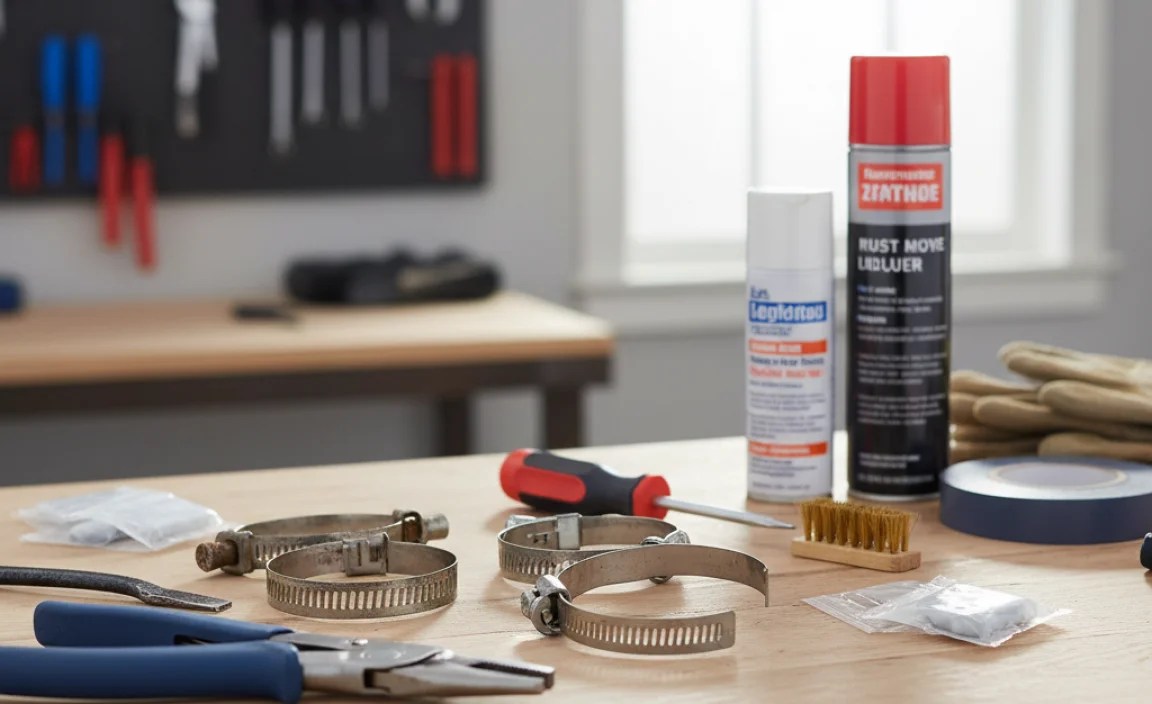
Before you start repairing or replacing hose clamps, gather the necessary tools and materials. Here’s a list to get you started:
- Screwdrivers: Both flathead and Phillips head screwdrivers for tightening and loosening clamps.
- Pliers: For manipulating and positioning clamps.
- Wire Brush: To clean rust and corrosion from the clamps.
- Lubricant: To help loosen and tighten the clamp screw (e.g., WD-40 or silicone spray).
- Replacement Hose Clamps: Ensure you have the correct size and type.
- Safety Glasses: To protect your eyes from debris.
- Gloves: To keep your hands clean and protected.
- Rags or Shop Towels: For cleaning up spills and wiping down parts.
Step-by-Step Guide to Repairing Worn-Out Hose Clamps

Let’s walk through the process of repairing hose clamps. This section covers cleaning, tightening, and dealing with stripped threads.
Step 1: Inspect the Hose Clamp
Start by visually inspecting the hose clamp. Look for signs of rust, corrosion, cracks, or other damage. Check if the clamp is properly positioned on the hose and fitting.
Step 2: Clean the Hose Clamp
Use a wire brush to remove any rust or corrosion from the clamp. This will help improve its functionality and make it easier to work with. Wipe the clamp clean with a rag.
Step 3: Lubricate the Hose Clamp
Apply a small amount of lubricant to the screw mechanism. This will help loosen any stuck parts and make it easier to tighten or loosen the clamp. Let the lubricant sit for a few minutes before proceeding.
Step 4: Tighten the Hose Clamp
Use a screwdriver to tighten the hose clamp. Be careful not to overtighten, as this can damage the hose. Tighten the clamp until it is snug but not excessively tight. Check for leaks after tightening.
Step 5: Dealing with Stripped Threads
If the threads on the hose clamp are stripped, you may not be able to tighten it properly. Here are a few options:
- Try a Larger Screw: If possible, replace the original screw with a slightly larger one. This may provide a better grip on the threads.
- Use a Thread Repair Kit: These kits can help repair damaged threads, allowing you to reuse the original screw.
- Replace the Clamp: If the threads are severely damaged, it’s best to replace the entire clamp.
Step-by-Step Guide to Replacing Worn-Out Hose Clamps

Sometimes, repairing a hose clamp isn’t enough. If the clamp is severely damaged or corroded, it’s best to replace it. Here’s how:
Step 1: Gather Your Tools and Materials
Make sure you have all the necessary tools and materials, including a replacement hose clamp of the correct size and type, screwdrivers, pliers, and safety glasses.
Step 2: Loosen and Remove the Old Hose Clamp
Use a screwdriver to loosen the old hose clamp. Once it’s loose, carefully remove it from the hose. If the clamp is stuck, use pliers to gently pry it open.
Step 3: Inspect the Hose and Fitting
Before installing the new clamp, inspect the hose and fitting for any damage. Clean any dirt or debris from the hose and fitting with a rag. If the hose is cracked or damaged, replace it as well.
Step 4: Position the New Hose Clamp
Slide the new hose clamp over the hose and position it correctly on the fitting. Make sure the clamp is properly aligned and covers the area where the hose connects to the fitting.
Step 5: Tighten the New Hose Clamp
Use a screwdriver to tighten the new hose clamp. Tighten the clamp until it is snug but not excessively tight. Overtightening can damage the hose or fitting. Check for leaks after tightening.
Step 6: Test the Connection
After tightening the new hose clamp, test the connection to ensure there are no leaks. Start the bike and allow it to run for a few minutes. Check the connection for any signs of leakage. If you notice any leaks, tighten the clamp further or inspect the hose and fitting for damage.
Tips for Preventing Hose Clamp Wear
Preventing hose clamp wear is better than having to repair or replace them. Here are some tips to keep your hose clamps in good condition:
- Regular Inspections: Inspect your hose clamps regularly for signs of rust, corrosion, or damage. Catching problems early can prevent them from escalating.
- Proper Installation: Ensure that hose clamps are installed correctly and tightened to the proper torque. Overtightening can damage the hose, while undertightening can lead to leaks.
- Use Quality Clamps: Invest in high-quality hose clamps made from durable materials like stainless steel. These clamps are more resistant to corrosion and wear.
- Apply Protective Coatings: Consider applying a protective coating to your hose clamps to prevent rust and corrosion. Products like anti-seize compounds or silicone sprays can help.
- Avoid Over-Tightening: Overtightening hose clamps can damage the hose and the clamp itself. Tighten the clamp until it is snug but not excessively tight.
- Replace When Necessary: Don’t wait until a hose clamp fails completely before replacing it. If you notice signs of wear or damage, replace the clamp as soon as possible.
- Clean Regularly: Keep your hose clamps clean by wiping them down with a rag. This will help remove dirt and debris that can contribute to corrosion.
Choosing the Right Replacement Hose Clamp
Selecting the right replacement hose clamp is crucial for a successful repair. Here are some factors to consider:
- Size: Ensure that the replacement hose clamp is the correct size for the hose and fitting. Measure the diameter of the hose to determine the appropriate clamp size.
- Material: Choose a hose clamp made from a durable material like stainless steel. Stainless steel clamps are more resistant to corrosion and will last longer.
- Type: Select the appropriate type of hose clamp for the application. Worm-gear clamps are suitable for most general applications, while T-bolt clamps are better for high-pressure situations.
- Quality: Invest in high-quality hose clamps from a reputable manufacturer. Cheap clamps may be more prone to failure.
Common Mistakes to Avoid
When repairing or replacing hose clamps, it’s easy to make mistakes. Here are some common pitfalls to avoid:
- Overtightening: Overtightening hose clamps can damage the hose and the clamp itself. Tighten the clamp until it is snug but not excessively tight.
- Using the Wrong Size: Using the wrong size hose clamp can lead to leaks or damage to the hose. Ensure that you select the correct size clamp for the hose and fitting.
- Neglecting Inspection: Failing to inspect hose clamps regularly can allow problems to escalate. Inspect your hose clamps regularly for signs of rust, corrosion, or damage.
- Using Damaged Clamps: Using damaged or corroded hose clamps can lead to leaks or failures. Replace any clamps that show signs of wear or damage.
- Ignoring Leaks: Ignoring leaks near hose clamps can lead to bigger problems down the road. Address any leaks promptly to prevent damage to your bike.
Cost Considerations
Repairing or replacing hose clamps is a relatively inexpensive maintenance task. Here’s a breakdown of the costs involved:
| Item | Estimated Cost |
|---|---|
| Replacement Hose Clamps | $1 – $5 per clamp |
| Screwdrivers | $5 – $20 |
| Pliers | $10 – $30 |
| Wire Brush | $5 – $10 |
| Lubricant | $5 – $15 |
| Thread Repair Kit | $10 – $30 |
As you can see, the cost of repairing or replacing hose clamps is minimal compared to the potential damage that can result from neglecting this maintenance task. Investing a few dollars in new clamps and tools can save you from costly repairs in the future.
Alternative Solutions
While repairing or replacing hose clamps is the most common solution, there are alternative approaches you can consider:
- Hose Sleeves: These sleeves can be placed over the hose and clamp to provide additional protection and support.
- Self-Fusing Silicone Tape: This tape can be wrapped around the hose and clamp to create a watertight seal.
- Liquid Electrical Tape: This can be applied to the clamp and hose to provide a protective coating.
These alternative solutions may be suitable for temporary repairs or as a preventative measure, but they are not a substitute for properly repairing or replacing worn-out hose clamps.
FAQ: Repairing Worn-Out Hose Clamps
1. How often should I inspect my hose clamps?
You should inspect your hose clamps at least every three months, or more frequently if you ride in harsh conditions.
2. Can I reuse a hose clamp after removing it?
It depends on the condition of the clamp. If it’s in good shape and not damaged, you can reuse it. However, it’s always best to replace it with a new one to ensure a secure seal.
3. What type of lubricant should I use on hose clamps?
You can use a general-purpose lubricant like WD-40 or a silicone-based lubricant. Avoid using oil-based lubricants, as they can degrade the rubber hose over time.
4. How tight should I tighten a hose clamp?
Tighten the clamp until it is snug but not excessively tight. Overtightening can damage the hose. A good rule of thumb is to tighten it until you see the hose slightly compress under the clamp.
5. Can I use a regular screwdriver to tighten hose clamps?
Yes, you can use a regular flathead or Phillips head screwdriver, depending on the type of screw on the clamp. Make sure the screwdriver fits properly to avoid stripping the screw.
6. What should I do if I can’t remove a rusted hose clamp?
Try spraying the clamp with a penetrating oil and letting it sit for a few minutes. You can also use a wire brush to remove some of the rust. If it’s still stuck, you may need to cut it off with pliers or a small saw.
7. Are stainless steel hose clamps better than regular steel clamps?
Yes, stainless steel hose clamps are more resistant to corrosion and will last longer than regular steel clamps, especially in wet or salty environments.
Conclusion
Repairing or replacing worn-out hose clamps is a simple yet essential maintenance task that can prevent major problems with your bike. By following the steps outlined in this guide, you can easily inspect, clean, tighten, and replace hose clamps, keeping your bike running smoothly and safely.
Remember to regularly inspect your hose clamps, use quality replacements, and avoid common mistakes like overtightening. With a little bit of care and attention, you can keep your hose clamps in good condition and enjoy worry-free riding. Happy cycling!


