
How To Get My 05 WRX ABS Pump To Cycle: Easy Fix!

“`html
How to Get Your 2005 Subaru WRX ABS Pump to Cycle
Quick Summary: To cycle your 2005 Subaru WRX ABS pump, you’ll need to use a scan tool that supports ABS bleeding or Subaru’s SSM (Subaru Select Monitor) software. Connect the tool, navigate to the ABS control module, and follow the prompts to activate the ABS pump. This process forces fluid through the ABS system, removing air bubbles and ensuring proper brake function.
Got spongy brakes on your 2005 Subaru WRX? It could be air trapped in your ABS (Anti-lock Braking System). This isn’t just annoying; it can seriously affect your braking performance. The ABS pump needs to cycle to flush out that air and get your brakes back to feeling solid. Don’t worry; it’s a task you can tackle with the right tools and a bit of know-how.
In this guide, we’ll walk you through the process of cycling your 2005 WRX’s ABS pump. We’ll cover the tools you’ll need, step-by-step instructions, and some helpful tips to make the job easier. By the end, you’ll be able to confidently bleed your ABS system and restore your WRX’s braking power. Let’s get started!
Understanding Your WRX’s ABS System

Before diving in, let’s quickly cover the basics. Your 2005 WRX’s ABS system prevents your wheels from locking up during hard braking. It does this by rapidly pulsing the brakes, allowing you to maintain steering control. The ABS pump is a key component, responsible for delivering brake fluid pressure when the system activates.
When air gets into the ABS module, it can interfere with the pump’s ability to properly modulate pressure. This leads to a spongy brake pedal and reduced braking effectiveness. Cycling the ABS pump forces fluid through the system, pushing out any trapped air.
Tools and Materials You’ll Need

Gathering the right tools beforehand will make the process much smoother. Here’s what you’ll need:
- Scan Tool with ABS Bleeding Function: This is the most crucial tool. Look for a scan tool that specifically supports ABS bleeding or bi-directional control. Some popular options include those from Autel, Snap-on, and Launch.
- Subaru Select Monitor (SSM): If you prefer using Subaru’s diagnostic software, you’ll need an SSM interface and a laptop with the software installed.
- Brake Fluid: Use the correct type of brake fluid specified for your 2005 WRX (usually DOT 3 or DOT 4). Check your owner’s manual for the exact recommendation.
- Brake Bleeder Kit (Optional): A pressure bleeder or vacuum bleeder can make the bleeding process easier and more efficient.
- Wrench for Bleeder Screws: You’ll need the correct size wrench to open and close the brake bleeder screws. Typically, this is an 8mm or 10mm wrench.
- Clear Tubing: Attach this to the bleeder screw to direct the fluid into a container.
- Catch Container: To collect the old brake fluid.
- Jack and Jack Stands: To safely lift your WRX.
- Wheel Chocks: For added safety.
- Gloves and Eye Protection: To protect yourself from brake fluid.
- Rags or Shop Towels: For cleaning up spills.
Step-by-Step Guide to Cycling the ABS Pump

Now, let’s get to the main event. Follow these steps carefully to cycle your 2005 WRX’s ABS pump:
- Prepare Your WRX:
- Park your WRX on a level surface.
- Engage the parking brake.
- Chock the rear wheels for added safety.
- Loosen the lug nuts on all four wheels.
- Jack up the WRX and securely place it on jack stands.
- Remove all four wheels.
- Access the ABS Module:
- Locate the ABS module in your WRX. It’s usually in the engine bay. Consult your service manual if needed.
- Connect the Scan Tool or SSM:
- Plug your scan tool into the OBD-II port. This port is typically located under the dashboard on the driver’s side.
- Turn the ignition key to the “ON” position, but do not start the engine.
- If using SSM, connect the interface to your laptop and the OBD-II port, then launch the software.
- Navigate to the ABS Control Module:
- Using your scan tool or SSM software, navigate to the ABS control module. The exact menu options will vary depending on the tool, but look for terms like “ABS,” “Brakes,” or “Anti-lock System.”
- Initiate the ABS Bleeding Procedure:
- Within the ABS control module, find the option for “ABS Bleeding,” “ABS Cycling,” or “Service Bleed.”
- Follow the on-screen prompts to begin the procedure. The scan tool will likely instruct you to open and close the bleeder screws on each brake caliper in a specific sequence.
- Bleed the Brakes:
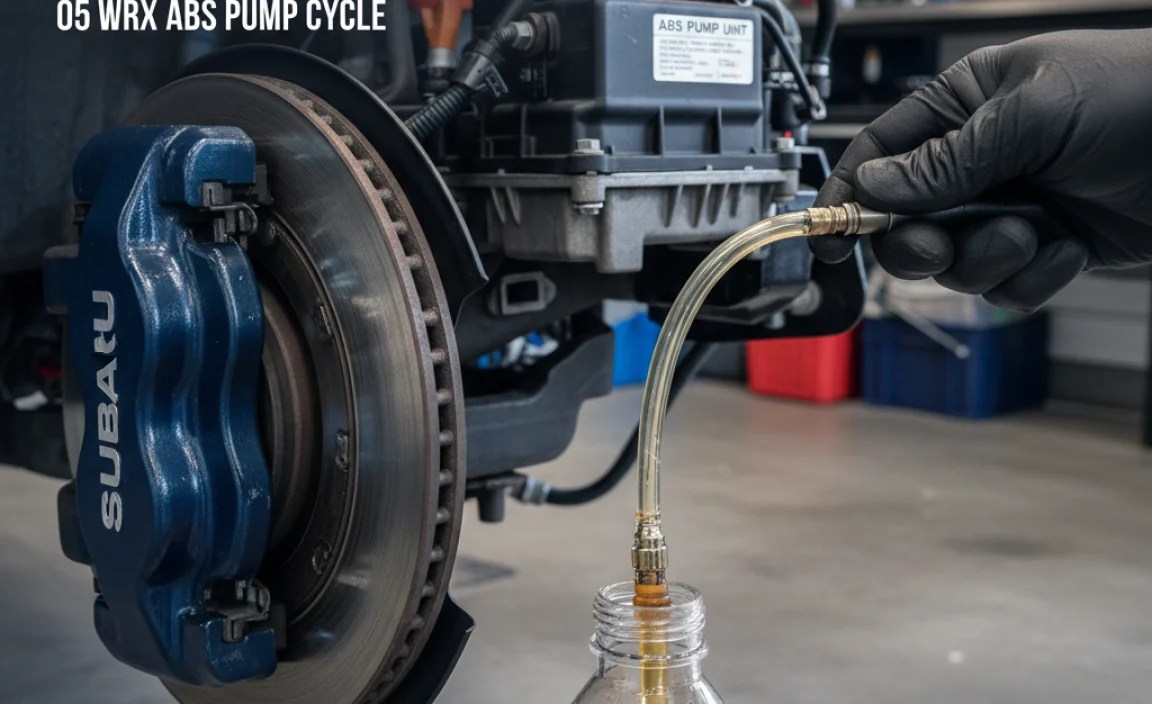
- Starting with the brake caliper furthest from the master cylinder (usually the right rear), attach the clear tubing to the bleeder screw and place the other end into the catch container.
- Loosen the bleeder screw while the scan tool is activating the ABS pump.
- Observe the fluid flowing through the tubing. Continue bleeding until no air bubbles are visible.
- Tighten the bleeder screw before the scan tool stops activating the pump.
- Repeat this process for each brake caliper, following the sequence specified by the scan tool (usually right rear, left rear, right front, left front).
- Ensure the brake fluid reservoir remains full throughout the bleeding process. Add fluid as needed to prevent air from entering the system.
- Finalize and Test:
- Once you’ve bled all four brakes, disconnect the scan tool or SSM.
- Top off the brake fluid reservoir to the “MAX” line.
- Reinstall the wheels and tighten the lug nuts to the proper torque specification.
- Carefully lower the WRX back to the ground.
- Pump the brake pedal several times to ensure it feels firm.
- Take the WRX for a test drive in a safe area. Perform several controlled braking maneuvers to verify the ABS system is functioning correctly.
Tips for a Successful ABS Bleeding
Here are some extra tips to ensure a smooth and effective ABS bleeding process:
- Use Fresh Brake Fluid: Brake fluid absorbs moisture over time, which can reduce its effectiveness and corrode brake components. Always use fresh, unopened brake fluid.
- Don’t Let the Reservoir Run Dry: Keep a close eye on the brake fluid reservoir and add fluid as needed. Allowing the reservoir to run dry can introduce air into the system, requiring you to start the bleeding process over.
- Follow the Correct Bleeding Sequence: Bleeding the brakes in the correct sequence (furthest to closest from the master cylinder) ensures that air is properly purged from the system.
- Tighten Bleeder Screws Properly: Avoid overtightening the bleeder screws, as this can damage them. Tighten them just enough to seal them properly.
- Consider a Pressure Bleeder: A pressure bleeder applies constant pressure to the brake fluid reservoir, making the bleeding process easier and more efficient. It also reduces the risk of air entering the system.
Troubleshooting Common Issues
Sometimes, things don’t go exactly as planned. Here are some common issues you might encounter and how to address them:
- Spongy Brake Pedal After Bleeding: This usually indicates that there is still air in the system. Double-check your work and repeat the bleeding process, paying close attention to the ABS module.
- Scan Tool Not Connecting to ABS Module: Ensure your scan tool is compatible with your 2005 WRX and that you have selected the correct vehicle information. Check the connection to the OBD-II port and try again.
- Bleeder Screw Stripped or Broken: If a bleeder screw is stripped or broken, you’ll need to replace it before you can bleed the brakes. Use a screw extractor if necessary.
- ABS Light Remains On: If the ABS light remains on after bleeding the brakes, there may be an underlying issue with the ABS system. Use a scan tool to read the ABS codes and diagnose the problem.
ABS Bleeding Without a Scan Tool (Not Recommended)
While it’s highly recommended to use a scan tool for cycling the ABS pump, there are some methods that people try without one. These methods are generally less effective and may not fully bleed the ABS system. However, for informational purposes, here’s a brief overview:
- Aggressive Braking on a Loose Surface: Some people attempt to activate the ABS by repeatedly braking hard on a gravel road or other loose surface. The idea is that this will force the ABS pump to cycle and purge air. However, this method is unreliable and can be dangerous.
- Traditional Brake Bleeding: Performing a standard brake bleeding procedure (without cycling the ABS pump) can sometimes help remove some air from the system, but it won’t address air trapped specifically within the ABS module.
Important Note: These methods are not recommended as a substitute for using a scan tool. They may not fully bleed the ABS system and could potentially damage your brakes. Always prioritize using the proper tools and procedures for safety and effectiveness.
Table: Scan Tool Comparison
Choosing the right scan tool can make a big difference. Here’s a quick comparison of some popular options:
| Scan Tool | Price Range | Key Features | Pros | Cons |
|---|---|---|---|---|
| Autel MaxiCOM MK808BT | $500 – $700 | ABS Bleeding, Bi-Directional Control, Full System Diagnostics | User-friendly, wide vehicle coverage, advanced features | Can be expensive for basic use |
| Launch X431 V+ | $800 – $1200 | ABS Bleeding, Bi-Directional Control, Advanced Coding, Online Programming | Extensive functionality, professional-grade features | High price point, steeper learning curve |
| FOXWELL NT630 Plus | $200 – $300 | ABS Bleeding, SRS Reset, Basic Diagnostics | Affordable, easy to use, good for DIYers | Limited advanced features |
Table: Brake Fluid Types
Using the correct brake fluid is crucial for optimal performance and safety. Here’s a comparison of common brake fluid types:
| Brake Fluid Type | Boiling Point (Dry) | Boiling Point (Wet) | Characteristics | Compatibility |
|---|---|---|---|---|
| DOT 3 | 205°C (401°F) | 140°C (284°F) | Glycol-based, absorbs moisture | Compatible with most vehicles, including 2005 WRX |
| DOT 4 | 230°C (446°F) | 155°C (311°F) | Glycol-based, absorbs moisture, higher boiling point than DOT 3 | Compatible with vehicles that require DOT 3, often recommended for performance applications |
| DOT 5 | 260°C (500°F) | 180°C (356°F) | Silicone-based, does not absorb moisture | Not compatible with ABS systems designed for glycol-based fluids, not recommended for 2005 WRX |
| DOT 5.1 | 260°C (500°F) | 180°C (356°F) | Glycol-based, absorbs moisture, higher boiling point than DOT 4 | Compatible with vehicles that require DOT 3 or DOT 4, suitable for high-performance braking |
Note: Always consult your vehicle’s owner’s manual to determine the correct brake fluid type for your 2005 Subaru WRX.
External Resources
For more in-depth information on brake systems and ABS technology, consider exploring these resources:
- National Highway Traffic Safety Administration (NHTSA): Provides valuable information on vehicle safety standards and regulations.
- Brake & Front End Magazine: A trade publication covering the latest trends and technologies in brake service and repair.
- AA1Car.com: Offers detailed technical articles on automotive systems, including brakes and ABS.
FAQ: Cycling Your WRX ABS Pump
Here are some frequently asked questions about cycling your 2005 WRX’s ABS pump:
Q: How often should I cycle my ABS pump?
A: You should cycle your ABS pump whenever you replace brake components, suspect air in the system, or experience a spongy brake pedal. Generally, every 2-3 years or with every brake fluid flush is a good practice.
Q: Can I damage my ABS system by cycling the pump too often?
A: No, cycling the ABS pump according to the manufacturer’s instructions will not damage the system. However, avoid excessive cycling without proper bleeding, as this could potentially overheat the pump.
Q: What happens if I don’t bleed my ABS system after replacing brake lines?
A: If you don’t bleed the ABS system after replacing brake lines, air can get trapped in the ABS module, leading to a spongy brake pedal and reduced braking performance. The ABS may not function correctly in an emergency.
Q: Can I use any scan tool to cycle my ABS pump?
A: No, not all scan tools have the capability to cycle the ABS pump. You need a scan tool that specifically supports ABS bleeding or bi-directional control. Check the tool’s specifications before purchasing.
Q: Is it necessary to bleed all four brakes when cycling the ABS pump?
A: Yes, it’s important to bleed all four brakes when cycling the ABS pump to ensure that air is completely purged from the entire system. Follow the recommended bleeding sequence (furthest to closest from the master cylinder).
Q: What does it mean when the ABS light stays on after bleeding the brakes?
A: If the ABS light remains on after bleeding the brakes, it indicates that there is still a problem with the ABS system. Use a scan tool to read the ABS codes and diagnose the issue. It could be a faulty sensor, a wiring problem, or a malfunctioning ABS module.
Q: Can I bleed my brakes myself, or should I take it to a professional?
A: If you are comfortable working on your car and have the necessary tools, you can bleed your brakes yourself. However, if you are unsure or uncomfortable with the process, it’s best to take it to a professional mechanic.
Conclusion
Cycling your 2005 Subaru WRX’s ABS pump is a crucial maintenance task that ensures your braking system functions properly and keeps you safe on the road. While it may seem daunting at first, following these steps and tips, you can confidently tackle this job yourself.
Remember to use the right tools, follow the correct procedures, and prioritize safety. If you encounter any issues or feel unsure about any part of the process, don’t hesitate to seek professional help. With a little patience and attention to detail, you’ll have your WRX’s brakes feeling firm and responsive in no time. Happy driving!
“`


