
How to Cycle the ABS Pump on a VW Touareg: A Simple Guide

Quick Summary: Cycling your VW Touareg’s ABS pump helps bleed air from the system after repairs. You’ll need a diagnostic tool like VCDS or similar to activate the pump. Connect the tool, access the ABS module, and run the pump cycling function. Bleed the brakes as instructed by the tool while the pump runs. Repeat as necessary to ensure all air is removed for safe and effective braking.
Dealing with brakes can be tricky, especially when air gets trapped in your VW Touareg’s ABS system. This can happen after replacing brake lines, calipers, or even when the master cylinder runs dry. The ABS pump needs to be cycled to properly bleed the system and restore your brakes to their peak performance. Don’t worry, it’s a manageable task with the right tools and a little guidance. We’ll walk you through each step, making sure you get your Touareg stopping safely and reliably. Let’s get started!
What You’ll Need

Before diving in, gather these essential tools and supplies. Having everything ready will make the process smooth and efficient.
- Diagnostic Tool (VCDS or equivalent): This is crucial for activating the ABS pump.
- Brake Fluid (DOT 4 or as specified in your owner’s manual): Use the correct type of brake fluid for your vehicle.
- Brake Bleeder Wrench: Typically an 11mm wrench.
- Clear Bleeder Hose and Catch Bottle: To collect old brake fluid.
- Jack and Jack Stands: For safely lifting and securing your Touareg.
- Wheel Chocks: To prevent the vehicle from rolling.
- Gloves and Eye Protection: Safety first!
- Shop Rags: For cleaning up spills.
Step-by-Step Guide to Cycling the ABS Pump

Follow these steps carefully to cycle your VW Touareg’s ABS pump and bleed your brakes effectively. Safety is paramount, so take your time and double-check each step.
Step 1: Prepare Your Touareg
First, ensure your vehicle is safely prepped for the process. This involves securing it and preparing the brake system.
- Park your Touareg on a level surface.
- Engage the parking brake and use wheel chocks behind the rear wheels for added safety.
- Loosen the lug nuts on all four wheels.
- Use a jack to lift the vehicle and securely place it on jack stands.
- Remove all four wheels.
- Locate the brake fluid reservoir under the hood and check the fluid level. Ensure it’s at the “MAX” line.
Step 2: Connect the Diagnostic Tool
Now, connect your diagnostic tool to your Touareg’s OBD-II port. This port is typically located under the dashboard on the driver’s side.
- Turn the ignition on, but do not start the engine.
- Plug your VCDS (or equivalent diagnostic tool) into the OBD-II port.
- Turn on the diagnostic tool and allow it to connect to the vehicle.
Step 3: Access the ABS Module
Navigate through your diagnostic tool’s menu to access the ABS module. The exact steps may vary slightly depending on your tool, but the general process is similar.
- Select “Control Modules” or a similar option.
- Choose “ABS Brakes” or “Brake Electronics” from the list of modules.
- Wait for the tool to connect to the ABS module and display its information.
Step 4: Activate the ABS Pump Cycling Function
Find and activate the function that cycles the ABS pump. This is sometimes labeled as “Output Tests,” “Basic Settings,” or “Bleeding Procedure.”
- Look for an option like “Output Tests,” “Basic Settings,” or “Bleeding Procedure.”
- Select the function that specifically mentions cycling the ABS pump or bleeding the ABS system.
- Follow the on-screen instructions provided by the diagnostic tool. This will typically involve running a sequence of tests or activations.
Step 5: Bleed the Brakes
While the ABS pump is cycling, bleed each brake caliper in the correct sequence. The diagnostic tool will often provide specific instructions for this process.
- Start with the brake caliper furthest from the master cylinder (usually the rear passenger side).
- Attach the clear bleeder hose to the bleeder screw on the caliper. Place the other end of the hose into the catch bottle.
- Have an assistant slowly pump the brake pedal several times and hold it down.
- While the pedal is held down, open the bleeder screw with the brake bleeder wrench. Observe the brake fluid flowing into the catch bottle.
- Close the bleeder screw before your assistant releases the brake pedal.
- Repeat this process until no air bubbles are visible in the brake fluid flowing through the hose.
- Move to the next brake caliper, following the correct sequence (rear driver side, front passenger side, front driver side).
- Continuously check the brake fluid level in the reservoir and top it off as needed to prevent air from entering the system.
Step 6: Repeat and Verify
After bleeding all four brakes, repeat the ABS pump cycling and bleeding process to ensure all air is removed. Verify your work by test-driving the vehicle.
- Repeat steps 4 and 5 to cycle the ABS pump again and re-bleed all four brakes.
- Once finished, ensure the brake fluid reservoir is filled to the “MAX” line.
- Reinstall the wheels and torque the lug nuts to the manufacturer’s specification.
- Carefully lower the vehicle from the jack stands.
- Take the Touareg for a test drive in a safe area. Check the brake pedal feel and ensure the brakes are functioning correctly.
Troubleshooting Tips

Sometimes, things don’t go as planned. Here are a few troubleshooting tips to help you overcome common issues.
- Diagnostic Tool Not Connecting: Ensure the ignition is on and the tool is properly plugged into the OBD-II port. Check the tool’s software and update if necessary.
- Air Bubbles Persisting: Double-check all connections in the brake lines and calipers for leaks. Ensure the bleeder screws are tightened properly.
- Soft Brake Pedal: This indicates air is still in the system. Repeat the bleeding process thoroughly. If the problem persists, there may be an internal leak in the master cylinder or ABS module.
- ABS Warning Light: If the ABS warning light remains on after the procedure, use the diagnostic tool to read and clear any fault codes.
ABS Pump Cycling: Dos and Don’ts

Keep these dos and don’ts in mind to avoid mistakes and ensure a successful outcome.
- Do use the correct type of brake fluid specified in your owner’s manual.
- Do keep the brake fluid reservoir topped off throughout the bleeding process.
- Do follow the correct bleeding sequence for your vehicle (usually furthest to closest from the master cylinder).
- Don’t allow the brake fluid reservoir to run dry, as this will introduce more air into the system.
- Don’t reuse old brake fluid. Always use fresh, clean fluid.
- Don’t skip any steps or rush through the process. Take your time and pay attention to detail.
Understanding the ABS System
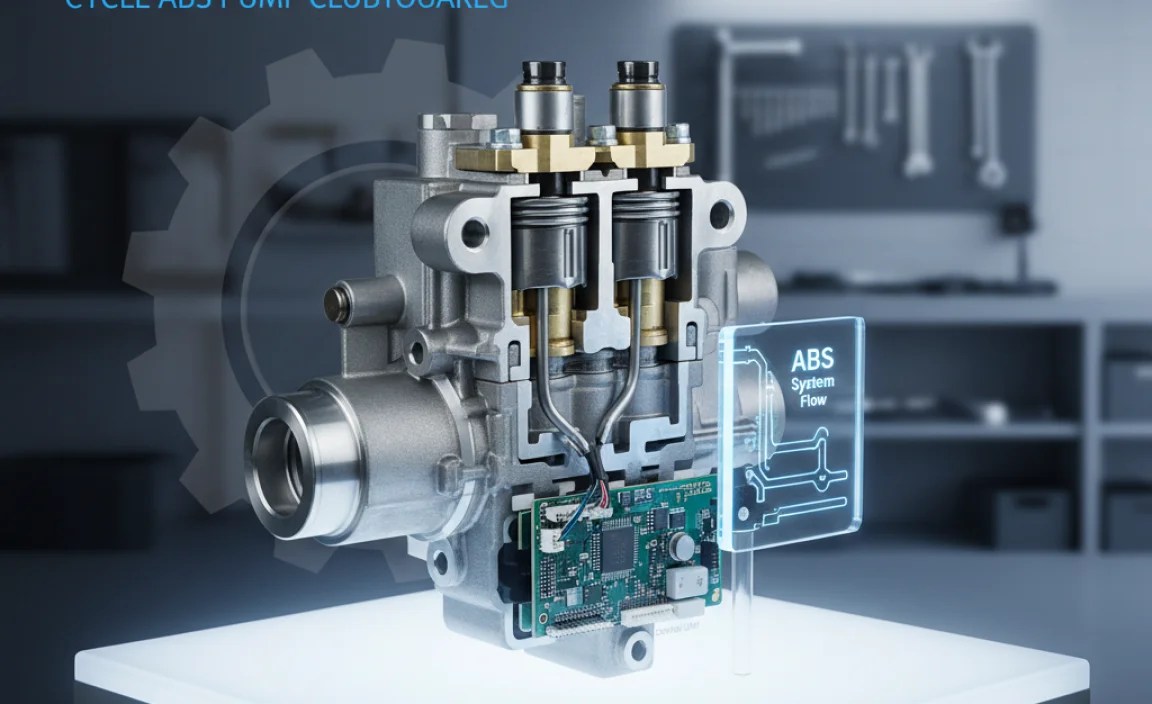
The Anti-lock Braking System (ABS) is a crucial safety feature in modern vehicles. It prevents the wheels from locking up during hard braking, allowing the driver to maintain steering control. The ABS system consists of several components, including wheel speed sensors, a hydraulic control unit (HCU), and an electronic control unit (ECU). The HCU contains the ABS pump, which modulates brake pressure to prevent wheel lockup.
When you cycle the ABS pump, you are essentially activating this pump to help force air bubbles out of the brake lines. This is especially important after any maintenance or repair work that involves opening the brake system.
Brake Fluid: Choosing the Right Type
Using the correct brake fluid is crucial for the performance and longevity of your braking system. Brake fluid is classified by DOT (Department of Transportation) ratings, such as DOT 3, DOT 4, and DOT 5. DOT 4 is a common choice for many vehicles, including the VW Touareg, but always refer to your owner’s manual for the specific recommendation.
Here’s a quick comparison of common brake fluid types:
| Brake Fluid Type | Boiling Point (Dry) | Boiling Point (Wet) | Typical Use |
|---|---|---|---|
| DOT 3 | 205°C (401°F) | 140°C (284°F) | Older vehicles, light-duty applications |
| DOT 4 | 230°C (446°F) | 155°C (311°F) | Most modern vehicles, including VW Touareg |
| DOT 5 | 260°C (500°F) | 180°C (356°F) | High-performance vehicles, racing applications |
| DOT 5.1 | 260°C (500°F) | 180°C (356°F) | Vehicles with ABS, extreme conditions |
Important Note: DOT 5 is silicone-based and should not be mixed with DOT 3, DOT 4, or DOT 5.1 fluids, as they are glycol-based. Mixing these fluids can cause serious damage to your braking system.
Tools of the Trade: Diagnostic Tools
A reliable diagnostic tool is essential for cycling the ABS pump and performing other advanced functions on your VW Touareg. While VCDS (VAG-COM Diagnostic System) is a popular choice among VW enthusiasts, several other options are available.
Here’s a comparison of some popular diagnostic tools:
| Diagnostic Tool | Price Range | Key Features |
|---|---|---|
| VCDS (VAG-COM Diagnostic System) | $200 – $400 | Full VW/Audi diagnostics, coding, adaptations, ABS pump cycling |
| OBDeleven | $50 – $200 (with Pro license) | App-based diagnostics, coding, one-click apps, ABS pump cycling |
| Autel MaxiCOM MK808 | $500 – $700 | Extensive vehicle coverage, advanced diagnostics, service functions, ABS pump cycling |
| LAUNCH X431 V+ | $800 – $1200 | Comprehensive diagnostics, coding, programming, ABS pump cycling |
Choose a diagnostic tool that fits your budget and meets your specific needs. Consider factors such as vehicle coverage, ease of use, and available features.
When to Cycle the ABS Pump
Knowing when to cycle the ABS pump can save you time and prevent potential brake issues. Here are common scenarios where cycling the ABS pump is necessary:
- After Replacing Brake Lines: Air can enter the system when brake lines are disconnected.
- After Replacing Brake Calipers: Similar to brake lines, replacing calipers can introduce air.
- After Replacing the Master Cylinder: The master cylinder is a critical component, and replacing it often requires bleeding the ABS system.
- When the Brake Fluid Reservoir Runs Dry: If the reservoir empties, air will enter the system.
- When the Brake Pedal Feels Spongy: A spongy pedal indicates air in the brake lines.
- After ABS Module Replacement or Repair: Any work on the ABS module itself will require cycling the pump.
Safety First: Important Precautions
Working on brakes involves potential hazards, so always prioritize safety. Here are essential precautions to keep in mind:
- Wear Gloves and Eye Protection: Brake fluid can irritate your skin and eyes.
- Work in a Well-Ventilated Area: Brake fluid fumes can be harmful.
- Use Jack Stands: Never work under a vehicle supported only by a jack.
- Dispose of Brake Fluid Properly: Brake fluid is hazardous waste and should be disposed of according to local regulations. Take it to a recycling center or auto parts store.
- Keep Brake Fluid Away from Painted Surfaces: Brake fluid can damage paint. Clean up any spills immediately.
FAQ: Cycling ABS Pump on VW Touareg
Here are some frequently asked questions about cycling the ABS pump on a VW Touareg:
- Q: What happens if I don’t cycle the ABS pump after brake work?
- A: If you don’t cycle the ABS pump, air can remain trapped in the system, leading to a spongy brake pedal and reduced braking performance. This can compromise your safety.
- Q: Can I cycle the ABS pump without a diagnostic tool?
- A: No, you need a diagnostic tool like VCDS or equivalent to activate the ABS pump cycling function. The tool communicates with the ABS module and tells the pump to run.
- Q: How often should I bleed my brakes?
- A: It’s generally recommended to bleed your brakes every two years or 30,000 miles, or whenever you notice a decrease in braking performance. Check your owner’s manual for specific recommendations.
- Q: Can I use any diagnostic tool to cycle the ABS pump?
- A: Not all diagnostic tools have the capability to cycle the ABS pump. Make sure the tool you choose specifically supports this function for your VW Touareg.
- Q: What if I accidentally get brake fluid on my skin or in my eyes?
- A: If brake fluid gets on your skin, wash it off immediately with soap and water. If it gets in your eyes, flush them with plenty of water for at least 15 minutes and seek medical attention.
- Q: Is it necessary to bleed all four brakes, even if I only worked on one?
- A: Yes, it’s best to bleed all four brakes to ensure all air is removed from the system. This ensures consistent and reliable braking performance.
- Q: How do I know if I’ve successfully bled the brakes?
- A: The brake pedal should feel firm and responsive, and there should be no air bubbles visible in the brake fluid flowing through the bleeder hose. Also, a test drive should confirm improved braking performance.
Alternative Methods
While using a diagnostic tool like VCDS is the most effective method for cycling the ABS pump, some alternative methods exist. However, these methods are generally less reliable and may not completely remove all air from the system.
- Gravity Bleeding: This involves opening the bleeder screws and allowing gravity to slowly push the brake fluid through the system. It’s a passive method that doesn’t require pumping the brake pedal.
- Pressure Bleeding: This uses a pressure bleeder connected to the brake fluid reservoir to force fluid through the system. It’s more efficient than gravity bleeding but still may not fully activate the ABS pump.
- Manual Bleeding (Two-Person Method): This involves having an assistant pump the brake pedal while you open and close the bleeder screws. It’s a common method but can be less effective for bleeding the ABS system.
These alternative methods may be suitable for routine brake bleeding, but for cycling the ABS pump, a diagnostic tool is highly recommended.
Conclusion
Cycling the ABS pump on your VW Touareg might seem daunting at first, but with the right tools and a clear understanding of the process, it’s a manageable task. By following these steps carefully and taking the necessary precautions, you can ensure your brakes are functioning optimally, keeping you safe on the road. Remember, if you’re ever unsure about any aspect of this procedure, it’s always best to consult a qualified mechanic. Happy cycling!
“`


