
How to Adjust Pump Cycle on Digital Pad for Spa

Quick Summary: Adjusting your spa’s pump cycle using the digital pad is usually straightforward. First, locate the “Settings” or “Programming” menu on the pad. Then, find the pump cycle settings, typically labeled as “Filter Cycle” or similar. Use the up and down arrows to adjust the start time, duration, and frequency of the pump cycle. Save your changes, and you’re all set to enjoy a cleaner, more efficient spa! Always consult your spa’s manual for specific instructions.
Ever jumped into your spa only to find the water a bit murky? One of the most common culprits is an improperly set pump cycle. This can be frustrating, but thankfully, adjusting your spa’s pump cycle using the digital pad is usually a breeze. This guide will walk you through the process step-by-step, so you can keep your spa water crystal clear without any hassle. We’ll cover everything from finding the right settings to understanding what those settings actually mean. Ready to dive in?
Understanding Your Spa’s Pump Cycle
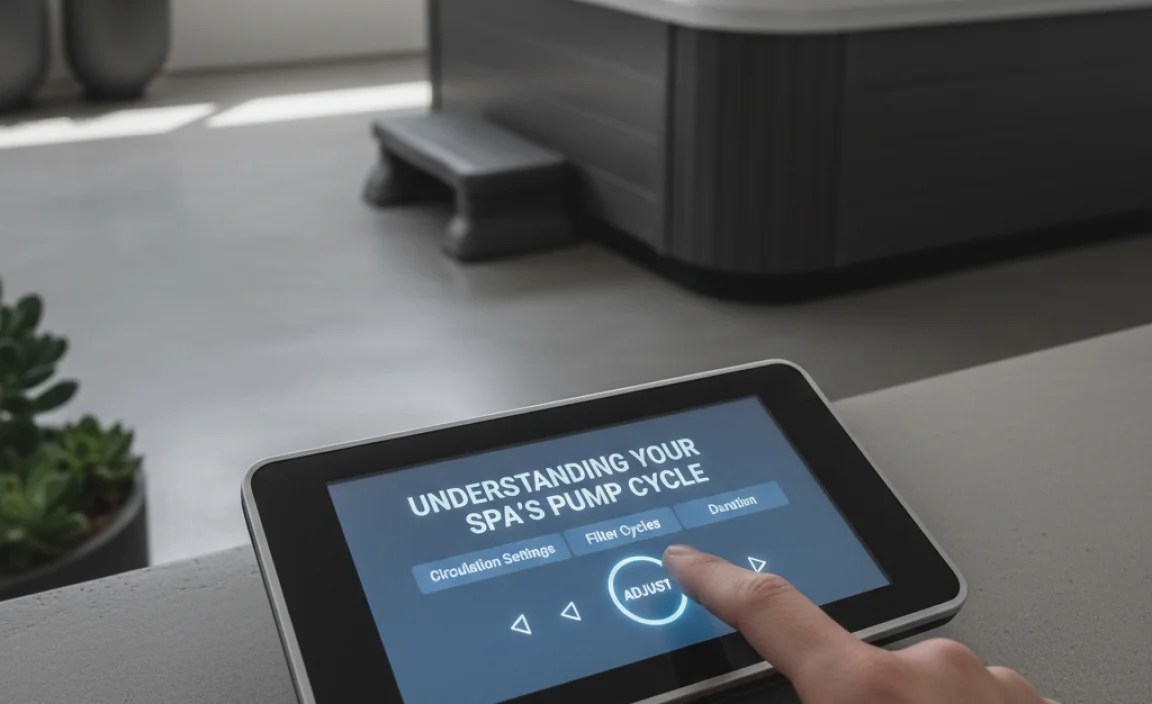
Before we get into the how-to, let’s quickly cover the basics of what a pump cycle is and why it’s important. Your spa’s pump cycle refers to how often and for how long the water is circulated through the filter. This circulation is crucial for removing debris, distributing chemicals evenly, and maintaining water clarity. An inadequate pump cycle can lead to cloudy water, algae growth, and increased chemical usage. On the other hand, an overly aggressive pump cycle can waste energy and wear out your equipment faster. Finding the right balance is key.
Why Adjusting the Pump Cycle Matters
- Water Clarity: Proper filtration keeps your spa water sparkling clean.
- Chemical Efficiency: Even circulation helps chemicals work effectively.
- Energy Savings: Optimized cycles prevent unnecessary energy consumption.
- Equipment Longevity: Balanced usage reduces wear and tear on your pump and filter.
Step-by-Step Guide: Adjusting the Pump Cycle
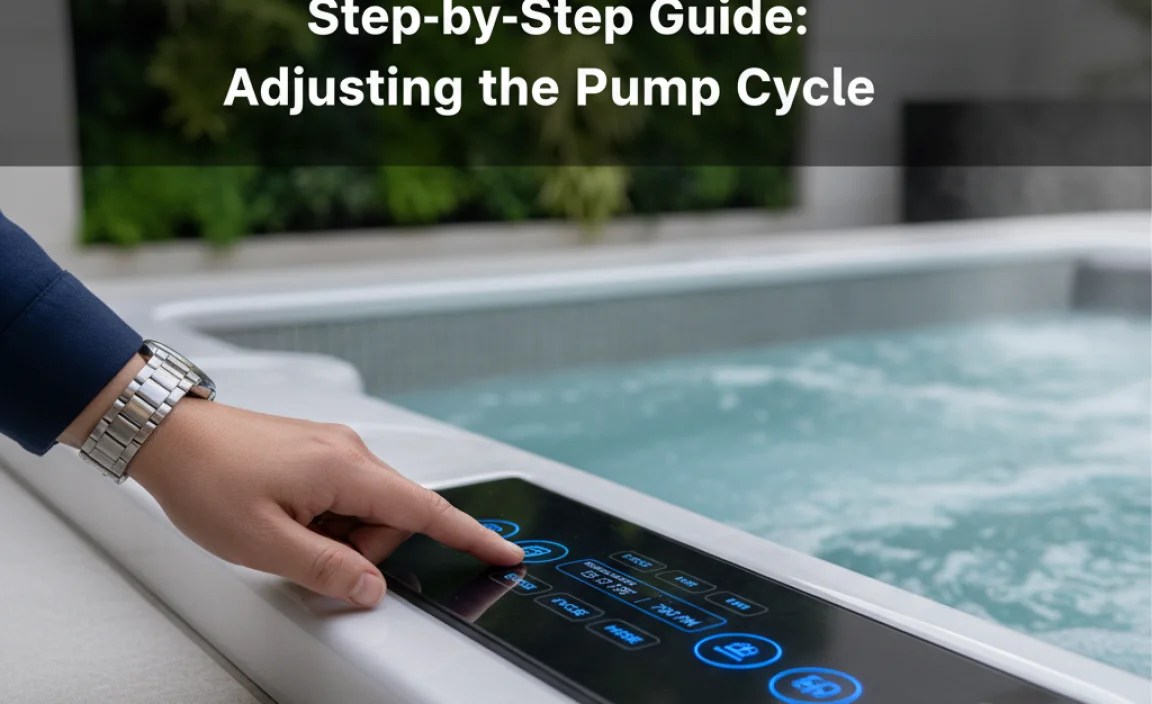
Now, let’s get to the main event. Here’s a detailed, step-by-step guide on how to adjust the pump cycle on your spa’s digital pad. Keep in mind that the exact menu names and button layouts may vary slightly depending on your spa’s manufacturer and model, so always refer to your owner’s manual for specific instructions.
Step 1: Access the Settings Menu
The first step is to access the settings menu on your spa’s digital pad. This is usually done by pressing a button labeled “Menu,” “Settings,” “Program,” or something similar. Look for a button that clearly indicates access to configuration options. Some spas may require you to press and hold the button for a few seconds.
Step 2: Navigate to the Pump Cycle Settings
Once you’re in the settings menu, you’ll need to navigate to the pump cycle settings. Look for options like “Filter Cycle,” “Filtration,” “Pump Schedule,” or something along those lines. Use the up and down arrow buttons to scroll through the menu options until you find the relevant setting. Press the “Select” or “Enter” button to access it.
Step 3: Adjust the Start Time
The start time determines when the pump cycle begins each day. You’ll typically see options to adjust the hour and minute. Consider setting the start time for a period when the spa is not in use, such as overnight or during the day when everyone is at work or school. This minimizes disruption and maximizes the effectiveness of the filtration process.
Step 4: Adjust the Duration
The duration determines how long the pump will run during each cycle. The ideal duration depends on the size of your spa, the frequency of use, and the efficiency of your filter. A good starting point is 2-4 hours per cycle. You can always adjust this later based on the water clarity and chemical balance. Use the up and down arrow buttons to increase or decrease the duration, and press “Select” or “Enter” to confirm your choice.
Step 5: Adjust the Frequency
The frequency determines how many times per day the pump cycle will run. For most residential spas, running the pump cycle once or twice a day is sufficient. If you use your spa frequently or have a larger spa, you may need to increase the frequency to maintain water quality. Again, monitor the water clarity and chemical balance to determine the optimal frequency.
Step 6: Save Your Changes
Once you’ve adjusted the start time, duration, and frequency to your liking, be sure to save your changes. Look for a “Save,” “Apply,” or “Exit” option in the menu. Press the corresponding button to store your new settings. Some spas may automatically save the changes when you exit the settings menu.
Step 7: Monitor and Adjust
After adjusting the pump cycle, monitor your spa water for a few days to ensure that the new settings are effective. Check the water clarity, chemical balance, and overall cleanliness. If you notice any issues, such as cloudy water or algae growth, you may need to further adjust the pump cycle. Don’t be afraid to experiment until you find the settings that work best for your spa.
Troubleshooting Common Issues
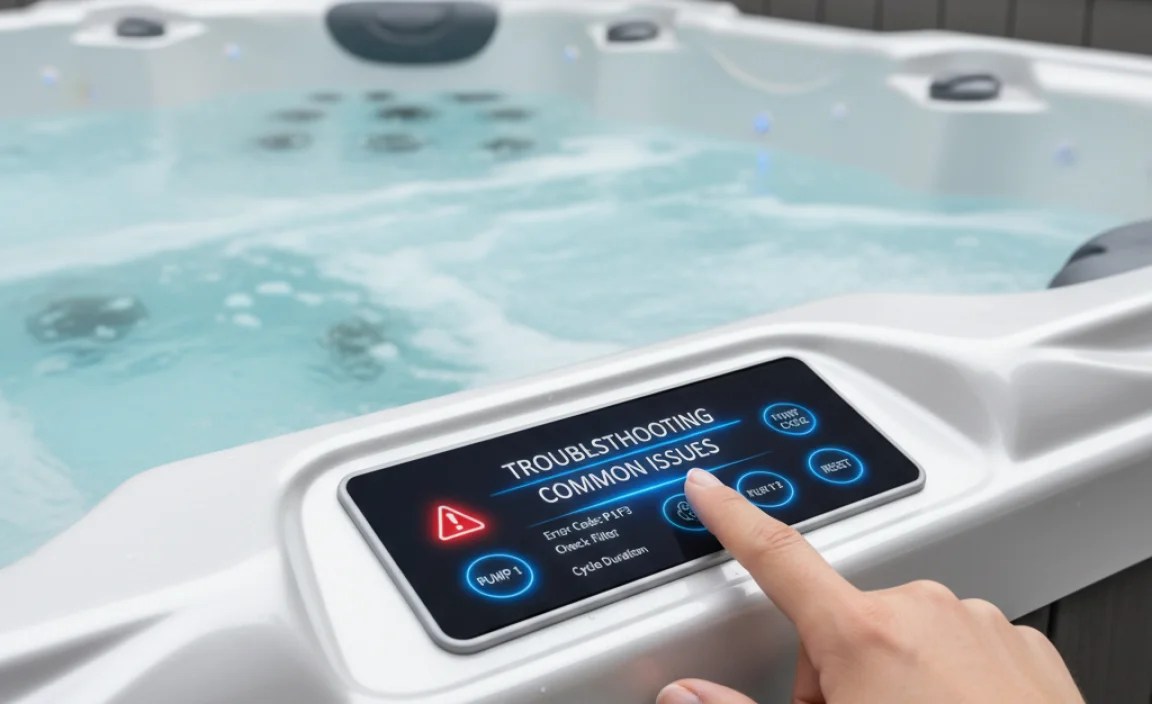
Sometimes, even with the best instructions, things don’t go quite as planned. Here are a few common issues you might encounter when adjusting your spa’s pump cycle, along with some troubleshooting tips.
Issue 1: Digital Pad Not Responding
If your digital pad is not responding, the first thing to check is the power supply. Make sure the spa is properly connected to the electrical outlet and that the circuit breaker is not tripped. If the power supply is fine, try resetting the spa by turning off the breaker for a few minutes and then turning it back on. If the pad still doesn’t respond, there may be a problem with the pad itself, and you may need to contact a qualified technician.
Issue 2: Settings Not Saving
If you’re adjusting the pump cycle settings but they don’t seem to be saving, make sure you’re following the correct procedure for saving the changes. Some spas require you to press a specific button, such as “Save” or “Apply,” to store the settings. Also, check that the spa is not in a “lockout” mode, which prevents changes to the settings. If you’re still having trouble, consult your owner’s manual for specific instructions.
Issue 3: Water Still Cloudy
If your spa water is still cloudy even after adjusting the pump cycle, there may be other factors at play. Check the filter to make sure it’s clean and in good condition. A clogged or damaged filter can significantly reduce the effectiveness of the filtration process. Also, test the water chemistry to ensure that the pH, alkalinity, and sanitizer levels are within the recommended ranges. Imbalances in these levels can contribute to cloudy water.
Advanced Tips for Optimal Pump Cycle Settings
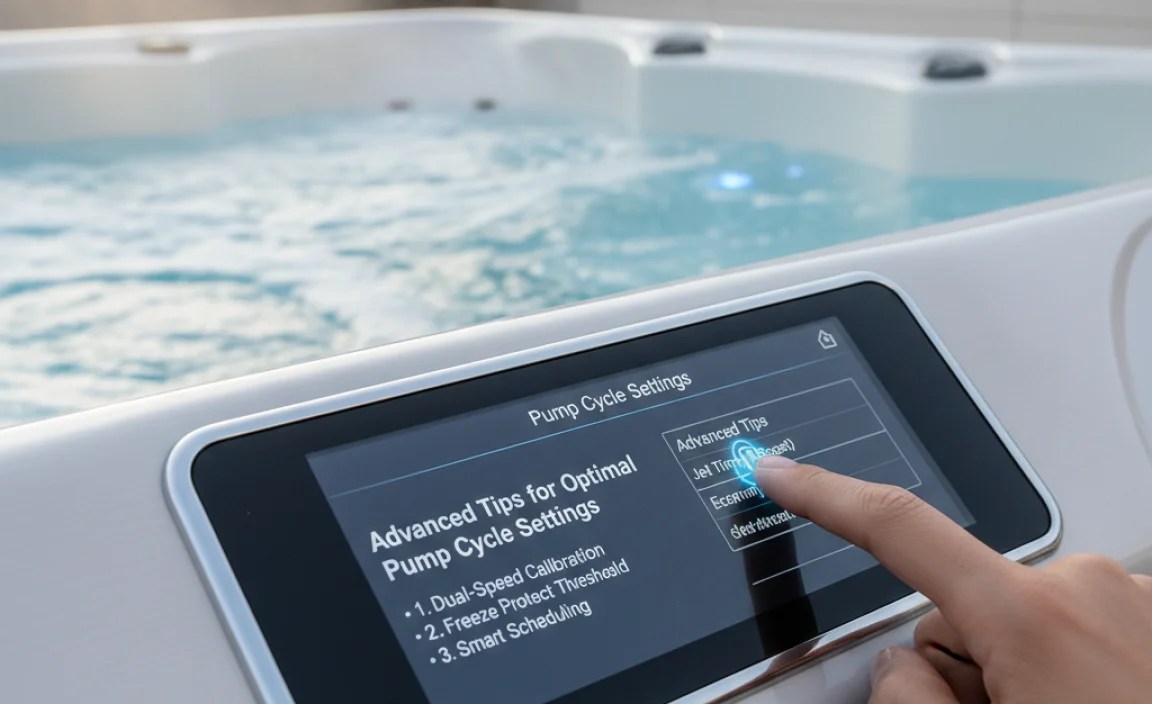
Once you’ve mastered the basics of adjusting your spa’s pump cycle, you can start experimenting with more advanced settings to optimize performance and efficiency. Here are a few tips to consider.
Tip 1: Consider Off-Peak Hours
If your electricity provider offers lower rates during off-peak hours, consider setting your pump cycle to run during these times. This can save you money on your energy bill without sacrificing water quality. Check with your electricity provider to find out when off-peak hours occur in your area.
Tip 2: Use Multiple Short Cycles
Instead of running one long pump cycle, consider breaking it up into multiple shorter cycles throughout the day. This can help maintain more consistent water quality and prevent debris from settling at the bottom of the spa. For example, you could run the pump for one hour in the morning and another hour in the evening.
Tip 3: Adjust Seasonally
The ideal pump cycle settings may vary depending on the season. During the summer, when the spa is used more frequently, you may need to increase the duration or frequency of the pump cycle to maintain water quality. During the winter, when the spa is used less often, you may be able to reduce the pump cycle to save energy.
Understanding Different Spa Control Systems
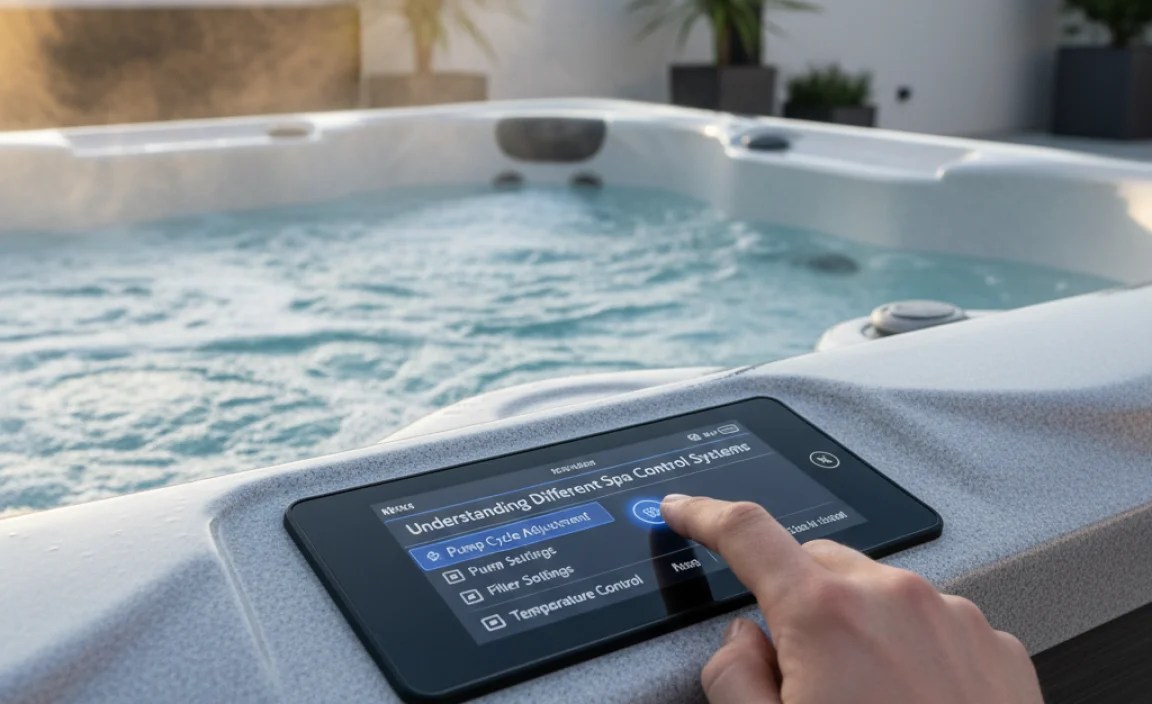
While the basic principles of adjusting the pump cycle remain the same, different spa control systems may have slightly different interfaces and features. Here’s a brief overview of some common types of spa control systems.
Balboa Water Group
Balboa is one of the most popular manufacturers of spa control systems. Their digital pads typically feature intuitive menus and easy-to-use buttons. The pump cycle settings are usually found under the “Filter Cycle” or “Filtration” menu.
Gecko Alliance
Gecko is another leading manufacturer of spa control systems. Their digital pads often have advanced features, such as Wi-Fi connectivity and smartphone integration. The pump cycle settings can usually be found under the “Settings” or “Configuration” menu.
HydroQuip
HydroQuip is a well-known manufacturer of spa control systems and heaters. Their systems are known for reliability and ease of use. The pump cycle settings are commonly located within the “Program” or “Filter” options.
Tools and Resources for Spa Maintenance
Maintaining your spa involves more than just adjusting the pump cycle. Here’s a list of essential tools and resources to help you keep your spa in top condition.
- Test Strips or Kit: Regularly test your water’s pH, alkalinity, and sanitizer levels.
- Spa Chemicals: Balance your water with pH adjusters, alkalinity increasers, and sanitizers.
- Filter Cleaner: Keep your filter clean for optimal performance.
- Spa Cover: Protect your spa from debris and heat loss.
- Owner’s Manual: Always refer to your spa’s manual for specific instructions and troubleshooting tips.
Pump Cycle Settings Table
Here’s a handy table to help guide your initial pump cycle settings based on spa size and usage.
| Spa Size (Gallons) | Usage Frequency | Recommended Duration (Hours) | Recommended Frequency (Cycles/Day) |
|---|---|---|---|
| 200-300 | Low (1-2 times/week) | 2 | 1 |
| 200-300 | Medium (3-4 times/week) | 3 | 1 |
| 200-300 | High (5+ times/week) | 3 | 2 |
| 300-400 | Low (1-2 times/week) | 3 | 1 |
| 300-400 | Medium (3-4 times/week) | 4 | 1 |
| 300-400 | High (5+ times/week) | 4 | 2 |
| 400-500 | Low (1-2 times/week) | 4 | 1 |
| 400-500 | Medium (3-4 times/week) | 4 | 2 |
| 400-500 | High (5+ times/week) | 5 | 2 |
Remember, these are just starting points. Adjust based on your specific needs and water conditions.
Pros and Cons of Different Pump Cycle Durations
Choosing the right pump cycle duration can be tricky. Here’s a breakdown of the pros and cons of shorter versus longer cycles.
| Duration | Pros | Cons |
|---|---|---|
| Shorter (1-2 hours) |
|
|
| Longer (4+ hours) |
|
|
Expert Insights on Spa Water Chemistry
Maintaining proper water chemistry is as important as setting the right pump cycle. Here are some key insights from industry experts:
- pH Level: According to the Centers for Disease Control and Prevention (CDC), maintaining a pH level between 7.2 and 7.8 is crucial for sanitizer effectiveness and preventing skin irritation.
- Sanitizer Levels: The CDC recommends a chlorine level of 1-3 ppm or a bromine level of 3-5 ppm for safe and effective sanitization.
- Alkalinity: Proper alkalinity helps stabilize the pH level, preventing drastic fluctuations. Aim for a range of 80-120 ppm.
FAQ: Adjusting Your Spa’s Pump Cycle
Q1: How often should I adjust my spa’s pump cycle?
A: You should adjust your spa’s pump cycle whenever you notice changes in water clarity or if you change your spa usage habits. Seasonal adjustments may also be necessary.
Q2: What happens if my pump cycle is too short?
A: If your pump cycle is too short, your spa water may become cloudy or develop algae growth due to inadequate filtration.
Q3: Can I damage my spa by running the pump cycle too long?
A: Running the pump cycle too long can increase energy consumption and potentially shorten the lifespan of your pump, but it’s unlikely to cause serious damage.
Q4: Where can I find my spa’s owner’s manual?
A: Your spa’s owner’s manual is usually included with the spa when you purchase it. If you can’t find it, you may be able to download a copy from the manufacturer’s website.
Q5: What does “filtration rate” mean?
A: Filtration rate refers to how quickly the pump cycles the total volume of water through the filter. A higher filtration rate means more frequent and thorough cleaning.
Q6: Is it okay to run my spa pump 24/7?
A: While running the pump 24/7 ensures constant filtration, it’s generally not necessary and can significantly increase your energy costs. Most spas can maintain water quality with a few hours of filtration per day.
Q7: How do I know if my filter needs cleaning or replacing?
A: If your spa water is consistently cloudy despite having balanced chemicals and an adequate pump cycle, your filter may need cleaning or replacing. Check the filter for visible dirt and debris, and clean it according to the manufacturer’s instructions. If cleaning doesn’t improve the water clarity, it’s time to replace the filter.
Conclusion
Adjusting the pump cycle on your spa’s digital pad doesn’t have to be a daunting task. By following these steps and understanding the underlying principles, you can easily optimize your spa’s performance and keep your water crystal clear. Remember to consult your owner’s manual for specific instructions and don’t be afraid to experiment until you find the settings that work best for your spa and your lifestyle. With a little bit of effort, you’ll be enjoying a relaxing and clean spa experience in no time!
“`


