
How Long Does a Heat Pump Defrost Cycle Last?

The typical heat pump defrost cycle lasts between 5 and 15 minutes. This process happens when ice builds up on the outdoor coil, reducing the heat pump’s efficiency. The system temporarily switches to cooling mode to melt the ice, then returns to heating. The frequency and duration depend on factors like humidity and temperature.
Is your heat pump icing up and running through defrost cycles more often than you think it should? It’s a common issue, especially in colder climates, and understanding the defrost cycle is key to keeping your home comfortable and your energy bills in check. Don’t worry, this isn’t something you need to be a HVAC expert to understand! We’ll break down exactly how long these cycles should last, what affects them, and what you can do to ensure your heat pump is running efficiently. Let’s dive in and get you up to speed!
Understanding the Heat Pump Defrost Cycle

To grasp how long a defrost cycle should last, it’s important to understand what’s happening during the process. Heat pumps work by transferring heat from one place to another. In winter, they extract heat from the outside air and pump it inside your home. When the outdoor temperature drops and humidity is high, frost can accumulate on the outdoor coil. This frost acts as an insulator, reducing the heat pump’s ability to extract heat from the air.
The defrost cycle is designed to remove this frost. Here’s how it works:
- Reversing the Refrigerant Flow: The heat pump temporarily reverses its operation, essentially switching to cooling mode. Hot refrigerant is directed to the outdoor coil.
- Melting the Frost: The hot refrigerant warms the coil, melting the frost and ice. You might notice steam rising from the unit during this process.
- Short Cooling Period: Because the system is briefly in cooling mode, you might feel a slight drop in the temperature of the air coming from your vents inside your home.
- Returning to Heating Mode: Once the frost is cleared, the heat pump returns to its normal heating operation.
The entire cycle is managed by sensors and a control board that monitor the coil temperature and outdoor conditions. Now, let’s get into the factors that influence how long this cycle takes.
Factors Affecting Defrost Cycle Duration

Several factors can influence the duration and frequency of your heat pump’s defrost cycle. Understanding these can help you identify potential issues and optimize your system’s performance.
- Outdoor Temperature: Lower temperatures generally mean more frequent and potentially longer defrost cycles. As the temperature drops, more frost accumulates on the coil.
- Humidity Levels: High humidity increases the rate at which frost forms. More moisture in the air means more ice buildup, leading to more frequent defrosting.
- Heat Pump Model and Age: Newer heat pumps often have more efficient defrost controls and may complete the cycle faster. Older models might take longer due to less advanced technology or wear and tear.
- System Size and Capacity: An improperly sized heat pump might struggle to maintain the set temperature, leading to more frequent defrost cycles.
- Airflow Issues: Restricted airflow due to dirty filters or blocked vents can cause the heat pump to work harder and ice up more quickly.
- Refrigerant Levels: Low refrigerant levels can cause the coil to operate at a lower temperature, increasing the likelihood of frost formation.
Here’s a table summarizing these factors:
| Factor | Effect on Defrost Cycle |
|---|---|
| Outdoor Temperature | Lower temperatures increase frequency and duration. |
| Humidity Levels | High humidity increases frequency. |
| Heat Pump Model and Age | Newer models are more efficient; older models may take longer. |
| System Size and Capacity | Improper sizing leads to more frequent cycles. |
| Airflow Issues | Restricted airflow increases icing. |
| Refrigerant Levels | Low levels increase icing. |
Typical Defrost Cycle Length
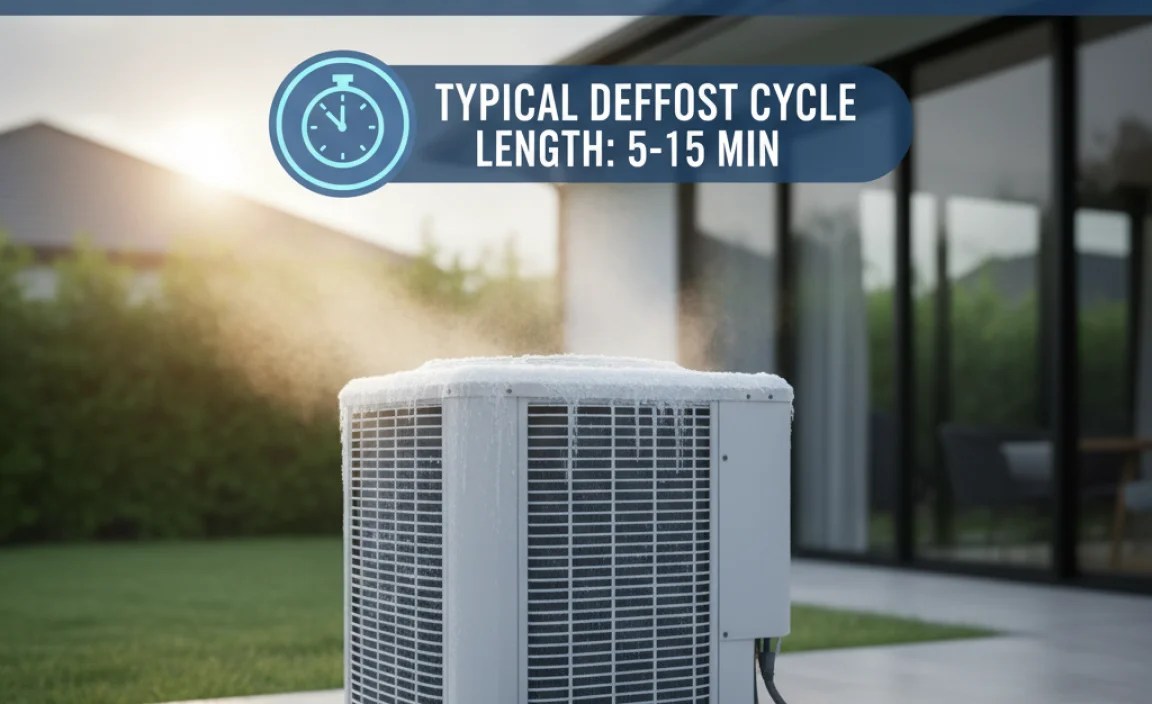
As mentioned earlier, a typical defrost cycle lasts between 5 and 15 minutes. However, this can vary. Some high-efficiency models might complete the cycle in as little as 3 minutes, while older or less efficient units could take up to 20 minutes. The frequency of these cycles can also vary, ranging from every 30 minutes to every few hours, depending on the conditions.
To better understand how these factors interact, consider these scenarios:
- Mildly Cold and Humid Day (35°F, 80% Humidity): The heat pump might defrost every 45-60 minutes, with each cycle lasting about 8-12 minutes.
- Very Cold and Dry Day (15°F, 30% Humidity): The heat pump might defrost less frequently, perhaps every 2-3 hours, with each cycle lasting 5-10 minutes.
- Cold and Very Humid Day (25°F, 90% Humidity): The heat pump might defrost every 30-40 minutes, with each cycle lasting 10-15 minutes.
Signs of a Problematic Defrost Cycle

While defrost cycles are a normal part of heat pump operation, certain signs can indicate a problem. Recognizing these issues early can prevent more significant damage and ensure your system runs efficiently.
- Excessive Defrosting: If your heat pump is defrosting more frequently than usual (e.g., every 20-30 minutes), there might be an underlying issue.
- Prolonged Defrosting: Cycles that consistently last longer than 15-20 minutes could indicate a problem with the defrost system.
- Ice Buildup: Excessive ice buildup on the outdoor coil, even after a defrost cycle, suggests the system isn’t functioning correctly.
- Indoor Temperature Drops: A significant drop in indoor temperature during the defrost cycle could mean the auxiliary heat isn’t kicking in or the cycle is too long.
- Unusual Noises: Loud or unusual noises during the defrost cycle, such as banging or grinding, could indicate a mechanical issue.
- Increased Energy Bills: A sudden spike in your energy bills without a corresponding change in usage habits could be a sign of an inefficient defrost cycle.
If you notice any of these signs, it’s best to investigate further.
Troubleshooting Defrost Cycle Issues
When you suspect there’s an issue with your heat pump’s defrost cycle, here are some troubleshooting steps you can take:
- Check the Air Filter: A dirty air filter restricts airflow, causing the heat pump to work harder and ice up more quickly. Replace the filter regularly (every 1-3 months) to ensure proper airflow.
- Clear Debris Around the Outdoor Unit: Make sure there’s no debris (leaves, snow, ice) blocking the outdoor unit. Clear away any obstructions to allow for proper airflow.
- Inspect the Coil: Visually inspect the outdoor coil for excessive ice buildup. If the coil is heavily iced over, try manually defrosting it by gently spraying it with warm water (avoid using hot water, which can damage the coil).
- Check for Leaks: Look for signs of refrigerant leaks, such as oily residue or hissing sounds near the unit. If you suspect a leak, contact a professional HVAC technician.
- Monitor the Auxiliary Heat: Ensure the auxiliary heat (usually electric resistance heat) is kicking in during the defrost cycle to maintain indoor temperature. If it’s not, check the circuit breaker or contact a technician.
- Reset the Heat Pump: Try resetting the heat pump by turning it off at the thermostat and then switching off the breaker that powers the outside unit for about 30 minutes. After that, turn the breaker back on and reset the thermostat.
If these steps don’t resolve the issue, it’s time to call a professional.
When to Call a Professional
While some issues can be resolved with simple troubleshooting, others require the expertise of a qualified HVAC technician. Here are situations when you should call a professional:
- Refrigerant Leaks: Handling refrigerant requires specialized equipment and training. If you suspect a leak, don’t attempt to fix it yourself.
- Electrical Issues: Problems with the defrost control board, sensors, or wiring should be handled by a qualified electrician or HVAC technician.
- Compressor Problems: The compressor is the heart of the heat pump. If it’s malfunctioning, it’s best to have it inspected and repaired by a professional.
- Persistent Icing: If your heat pump continues to ice up despite your troubleshooting efforts, there might be a more complex issue that requires professional diagnosis and repair.
- Lack of Auxiliary Heat: If the auxiliary heat isn’t working, a technician can diagnose and repair the problem, ensuring your home stays warm during defrost cycles.
Ignoring these issues can lead to further damage and more costly repairs down the road. Regular maintenance can prevent many of these problems from occurring in the first place.
Preventative Maintenance Tips
Regular maintenance is key to keeping your heat pump running efficiently and preventing defrost cycle issues. Here are some preventative maintenance tips:
- Regular Filter Changes: Change the air filter every 1-3 months, depending on usage and air quality. A clean filter ensures proper airflow and prevents the system from overworking.
- Coil Cleaning: Clean the outdoor coil at least once a year, preferably in the spring. Use a garden hose with a gentle spray nozzle to remove dirt and debris. Avoid using high-pressure washers, which can damage the coil fins.
- Inspect and Clean the Fan: Check the fan blades for dirt and debris. Clean them gently with a brush or cloth to ensure they’re spinning freely.
- Clear Surrounding Vegetation: Keep the area around the outdoor unit clear of vegetation. Trim bushes and shrubs to allow for proper airflow.
- Professional Inspection: Schedule a professional inspection and tune-up at least once a year. A technician can identify and address potential issues before they become major problems.
- Check Refrigerant Levels: Have a technician check the refrigerant levels periodically. Low refrigerant can cause the system to operate inefficiently and increase the likelihood of icing.
- Monitor Performance: Pay attention to how your heat pump is performing. Note any unusual noises, frequent defrost cycles, or changes in energy bills.
By following these maintenance tips, you can extend the life of your heat pump and ensure it operates efficiently for years to come. Here’s a quick reference table for maintenance tasks:
| Maintenance Task | Frequency | Benefits |
|---|---|---|
| Air Filter Change | Every 1-3 Months | Ensures proper airflow, prevents overheating. |
| Coil Cleaning | Annually (Spring) | Removes dirt and debris, improves efficiency. |
| Fan Inspection and Cleaning | Annually | Ensures free spinning, prevents motor strain. |
| Vegetation Clearing | As Needed | Maintains proper airflow around the unit. |
| Professional Inspection | Annually | Identifies and addresses potential issues. |
| Refrigerant Level Check | Periodically (by technician) | Ensures optimal performance and efficiency. |
| Performance Monitoring | Ongoing | Detects unusual noises or changes in efficiency. |
Heat Pump Defrost Cycle FAQs
Here are some frequently asked questions about heat pump defrost cycles:
1. Is it normal for my heat pump to make noise during the defrost cycle?
Yes, it’s normal. You might hear hissing or gurgling sounds as the refrigerant flows and ice melts. Some units may also make a whooshing sound as the fan reverses.
2. Why does my heat pump blow cold air during the defrost cycle?
When the heat pump switches to cooling mode to defrost the outdoor coil, it can briefly blow cold air. Most systems have auxiliary heat that kicks in to compensate, but you might still notice a slight temperature drop.
3. How can I tell if my heat pump is stuck in defrost mode?
If your heat pump runs continuously in defrost mode, you’ll notice a constant stream of cold air and excessive ice buildup. The outdoor fan may not be running, and the unit may be louder than usual. Contact a technician if this happens.
4. Can I manually defrost my heat pump?
Yes, you can manually defrost your heat pump by gently spraying the outdoor coil with warm water. Avoid using hot water, which can damage the coil. However, if the icing is persistent, there may be an underlying issue that needs professional attention.
5. Will covering my heat pump in winter prevent icing?
No, covering your heat pump can actually worsen icing. It restricts airflow, trapping moisture and promoting ice buildup. It’s best to keep the unit clear of obstructions.
6. How often should my heat pump defrost?
The frequency depends on outdoor conditions. It can range from every 30 minutes on cold, humid days to every few hours on cold, dry days. If it’s defrosting much more frequently than that, there might be an issue.
7. Does the defrost cycle affect my energy bill?
Yes, the defrost cycle can increase your energy bill, especially if it’s happening frequently or if the auxiliary heat is running excessively. Regular maintenance and prompt repairs can help minimize this impact.
Conclusion
Understanding how long a heat pump defrost cycle should last, and what factors influence it, empowers you to keep your system running efficiently. While a typical cycle lasts between 5 and 15 minutes, variations are normal depending on weather conditions and system age. By monitoring your heat pump’s performance, performing regular maintenance, and addressing issues promptly, you can ensure your home stays comfortable and your energy bills stay manageable. Don’t hesitate to call a professional when needed – they can diagnose and resolve complex issues, ensuring your heat pump operates at its best for years to come.
“`


