How Many Gallons Does a Swimming Pool Pump Cycle?

A swimming pool pump typically cycles a volume of water equal to your pool’s total capacity at least once a day, ideally more. This means if you have a 20,000-gallon pool, your pump should cycle at least 20,000 gallons every 24 hours. The exact flow rate depends on the pump’s size and the pool’s specific needs to maintain cleanliness and proper chemical balance.
Keeping your swimming pool clean and healthy requires a pump that can move the water effectively. Many pool owners find themselves wondering, “How many gallons does my pool pump *really* need to cycle?” It’s a crucial question, because an undersized pump won’t clean the water properly, leading to algae and cloudy water. On the other hand, an oversized pump wastes energy and can damage your filtration system. Figuring out the right balance can feel overwhelming, but don’t worry! We’ll break it down step-by-step.
In this guide, we’ll cover how to calculate your pool’s volume, determine the ideal turnover rate, and select the right size pump to keep your pool sparkling clean. We’ll also discuss factors that can affect your pump’s performance and how to troubleshoot common issues. Let’s dive in!
Understanding Pool Volume and Turnover Rate

Before figuring out how many gallons your pool pump needs to cycle, you first need to know your pool’s volume and the ideal turnover rate.
Calculating Your Pool’s Volume
The volume of your pool is the total amount of water it holds, usually measured in gallons. Here’s how to calculate it for different pool shapes:
- Rectangular Pools: Length x Width x Average Depth x 7.5
- Round Pools: π (3.14) x Radius² x Average Depth x 7.5
- Oval Pools: Length x Width x Average Depth x 5.9
- Kidney-Shaped Pools: (Length x Width) x Average Depth x 6.7
Note: The “7.5” in these formulas is a conversion factor that represents the number of gallons per cubic foot.
To find the average depth, measure the depth at the shallow end and the deep end, then add them together and divide by two. For example, if your pool is 3 feet deep at the shallow end and 8 feet deep at the deep end, the average depth is (3 + 8) / 2 = 5.5 feet.
Let’s look at an example. Suppose you have a rectangular pool that is 20 feet long, 10 feet wide, and has an average depth of 5 feet. The volume would be:
20 ft x 10 ft x 5 ft x 7.5 = 7,500 gallons
Determining the Ideal Turnover Rate
The turnover rate is how long it takes for your pool pump to circulate all the water in your pool once. The generally accepted standard is to turn over all the water at least once every 24 hours. However, many experts recommend a faster turnover rate for optimal cleanliness. A turnover rate of once every 8 to 12 hours is often considered ideal, especially during peak swimming season or in warmer climates.
To calculate the required flow rate (gallons per minute, or GPM), use the following formula:
Required Flow Rate (GPM) = Pool Volume (Gallons) / Turnover Time (Minutes)
For example, if you have a 10,000-gallon pool and want a turnover rate of 8 hours (480 minutes), the required flow rate would be:
10,000 gallons / 480 minutes = 20.83 GPM
This means your pump needs to be able to circulate at least 20.83 gallons of water per minute to achieve an 8-hour turnover rate.
Selecting the Right Size Pump
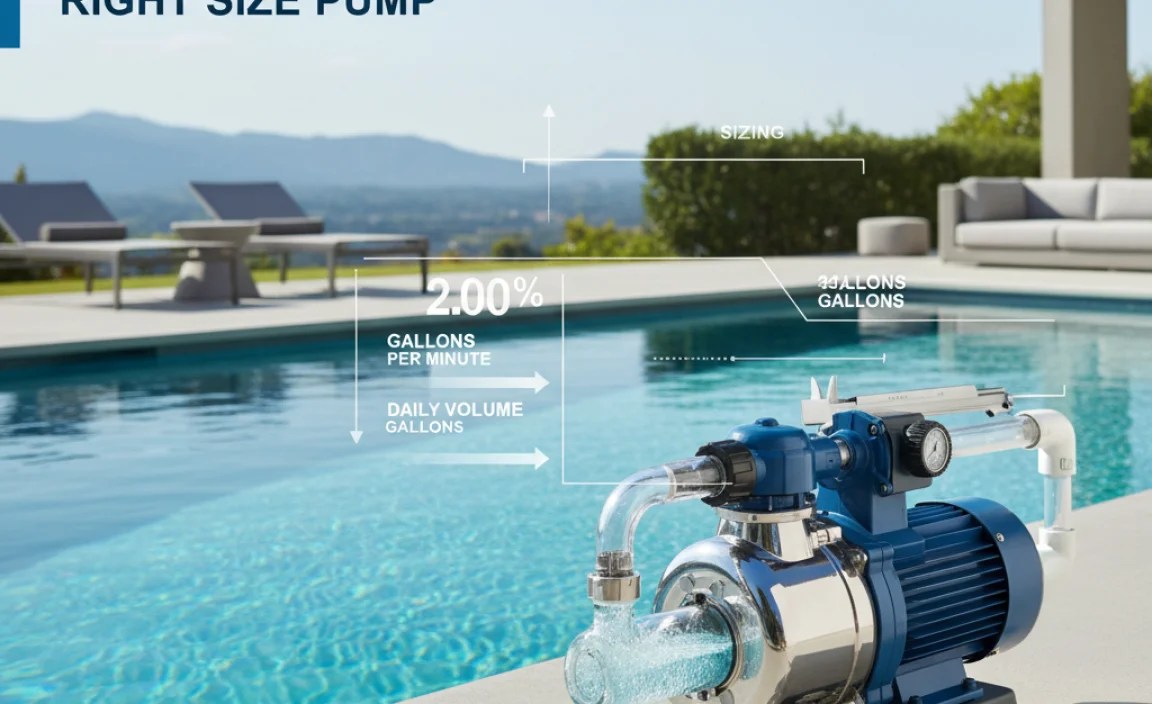
Now that you know your pool’s volume and the required flow rate, you can choose the right size pump. Here’s what to consider:
Understanding Pump Flow Rates
Pool pumps are rated by their flow rate, usually measured in gallons per minute (GPM). However, the flow rate listed on the pump is often the maximum flow rate under ideal conditions. In reality, the actual flow rate will be lower due to factors like pipe friction, filter resistance, and the height the water needs to be pumped (head).
To account for these factors, it’s essential to choose a pump with a flow rate that is higher than the minimum required flow rate you calculated earlier. A good rule of thumb is to add a safety factor of 10-20% to your required flow rate.
For example, if your required flow rate is 20.83 GPM, adding a 10% safety factor would give you:
20.83 GPM + (0.10 x 20.83 GPM) = 22.91 GPM
This means you should look for a pump that can deliver at least 22.91 GPM under normal operating conditions.
Considering Total Dynamic Head (TDH)
Total Dynamic Head (TDH) is the total resistance that a pump has to work against, expressed in feet of water. It includes the vertical distance the water is lifted (static head) plus the friction losses in the pipes and fittings. Calculating TDH accurately is crucial for selecting the right size pump.
Here’s how to estimate TDH:
- Static Head: Measure the vertical distance from the water level in the pool to the pump.
- Friction Losses: Estimate the friction losses in the pipes, fittings, and equipment (like filters and heaters). You can use friction loss charts (available online or from pump manufacturers) to estimate these losses based on the type and length of your pipes and fittings.
- Total Dynamic Head: Add the static head and the friction losses together.
Once you have the TDH, you can use a pump performance curve (provided by the pump manufacturer) to determine the actual flow rate of the pump at that TDH. Make sure the pump can deliver your required flow rate at your calculated TDH.
Types of Pool Pumps
There are three main types of pool pumps:
- Single-Speed Pumps: These pumps operate at a constant speed and are the least expensive option. However, they are also the least energy-efficient.
- Two-Speed Pumps: These pumps have two speed settings: high and low. The low speed is more energy-efficient and can be used for routine filtration, while the high speed can be used for vacuuming or backwashing.
- Variable-Speed Pumps: These pumps allow you to adjust the speed to match the specific needs of your pool. They are the most energy-efficient option and can save you a significant amount of money on your electricity bill over time. Variable-speed pumps are often required by law in many areas due to their energy efficiency ( U.S. Department of Energy).
Here’s a quick comparison of the different pump types:
| Pump Type | Cost | Energy Efficiency | Features |
|---|---|---|---|
| Single-Speed | Low | Low | Simple, basic operation |
| Two-Speed | Medium | Medium | Two speed settings for different tasks |
| Variable-Speed | High | High | Adjustable speed for optimal efficiency |
Factors Affecting Pump Performance
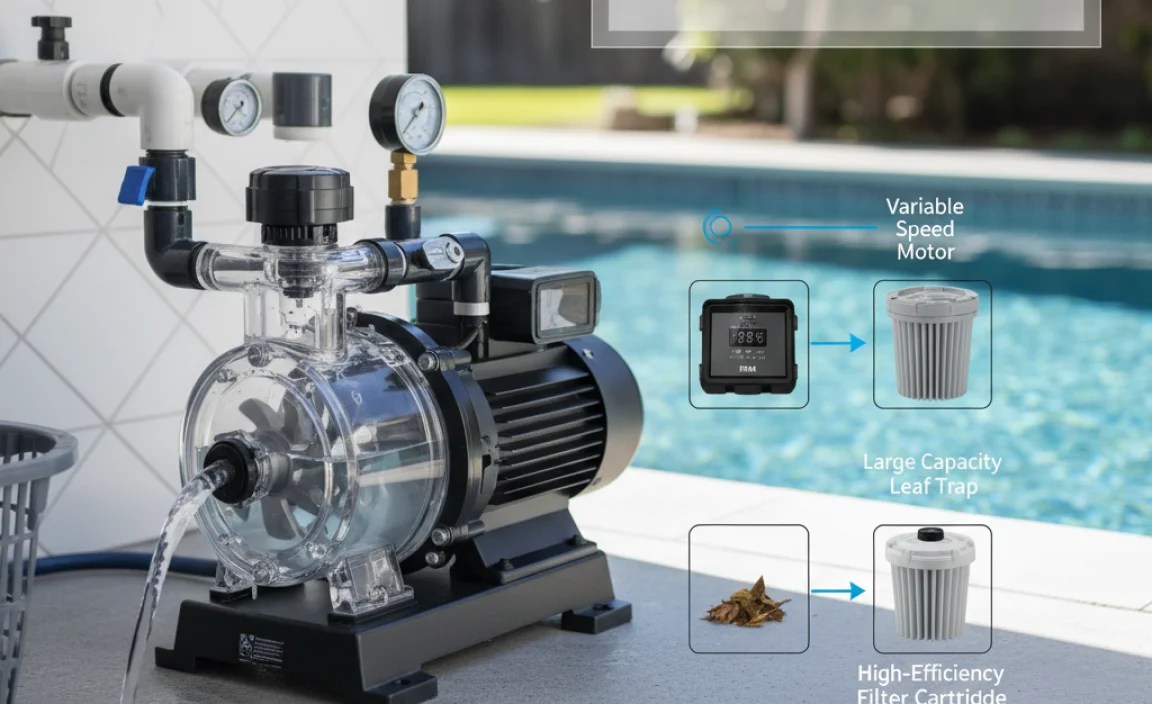
Several factors can affect your pool pump’s performance, including:
- Clogged Filter: A dirty or clogged filter restricts water flow and reduces the pump’s efficiency. Clean or backwash your filter regularly to maintain optimal performance.
- Air Leaks: Air leaks in the suction line can cause the pump to lose prime and reduce its flow rate. Check all fittings and connections for leaks and repair them promptly.
- Pipe Restrictions: Kinks or obstructions in the pipes can restrict water flow and reduce the pump’s efficiency. Make sure your pipes are clear and free of obstructions.
- Voltage Issues: Low voltage can reduce the pump’s motor speed and decrease its flow rate. Have an electrician check your wiring and voltage if you suspect a problem.
Troubleshooting Common Pump Issues
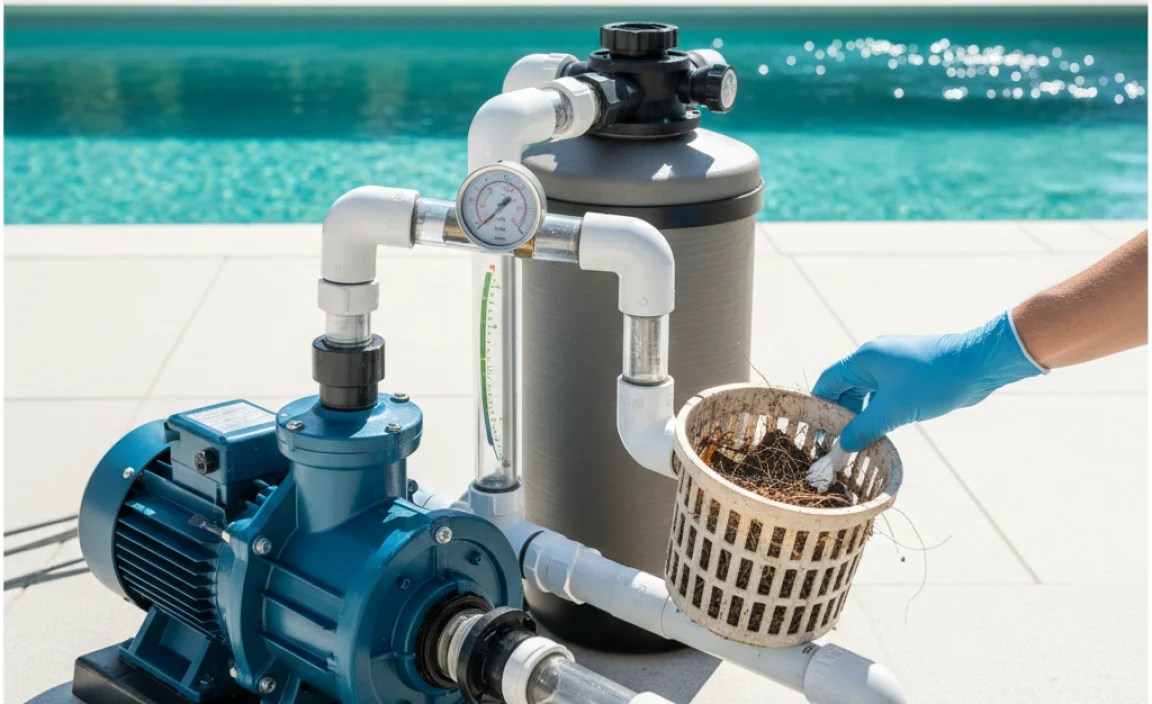
Here are some common pool pump issues and how to troubleshoot them:
- Pump Won’t Start: Check the power supply, circuit breaker, and motor for any issues. Make sure the pump is properly wired and that the motor is not overheated.
- Pump Loses Prime: Check for air leaks in the suction line, a clogged skimmer, or a low water level in the pool. Clean the skimmer, check for leaks, and add water to the pool if necessary.
- Pump is Noisy: Check for cavitation (caused by restricted water flow), worn bearings, or debris in the pump impeller. Clean the impeller, lubricate the bearings, or replace them if necessary.
- Low Water Flow: Check for a clogged filter, air leaks, or pipe restrictions. Clean or backwash the filter, check for leaks, and clear any obstructions in the pipes.
Maintaining Your Pool Pump
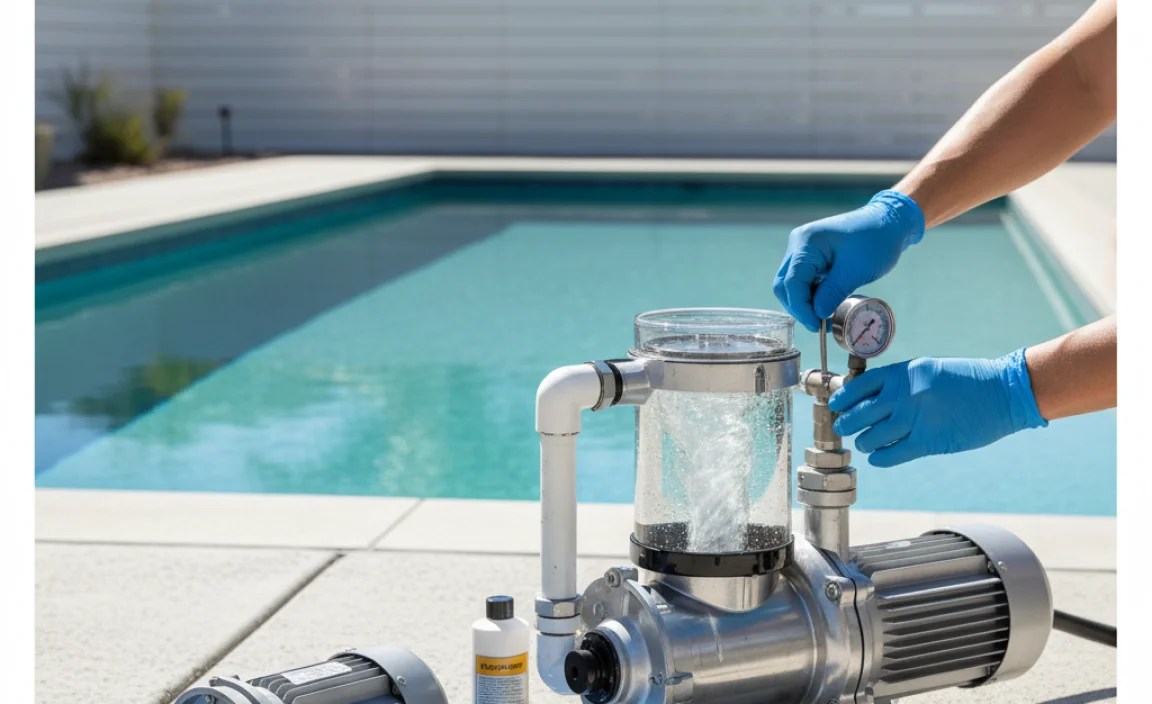
Regular maintenance is crucial for keeping your pool pump running efficiently and prolonging its lifespan. Here are some tips:
- Clean the Pump Basket Regularly: Remove leaves, debris, and other obstructions from the pump basket to maintain proper water flow.
- Lubricate the Motor Bearings: Lubricate the motor bearings according to the manufacturer’s instructions to prevent wear and tear.
- Inspect the Seals and O-Rings: Check the seals and O-rings for cracks or leaks and replace them as needed.
- Protect the Pump from the Elements: Shield the pump from direct sunlight, rain, and other harsh weather conditions to prevent damage.
- Monitor the Pump’s Performance: Keep an eye on the pump’s flow rate, pressure, and noise level to detect any potential problems early on.
Estimating Your Pool’s Gallons Per Hour (GPH)
To estimate your pool’s Gallons Per Hour (GPH), you can multiply the Gallons Per Minute (GPM) by 60. Understanding this can help you monitor the efficiency of your pool pump and filtration system.
Formula: GPH = GPM x 60
For example, if your pool pump operates at 30 GPM, the GPH would be:
30 GPM x 60 = 1800 GPH
This means your pump is circulating 1800 gallons of water every hour.
The Importance of a Properly Sized Pump
Having the right size pump is crucial for maintaining a clean and healthy pool. An undersized pump won’t circulate the water effectively, leading to poor filtration and chemical distribution. This can result in algae growth, cloudy water, and increased chemical usage. On the other hand, an oversized pump can waste energy, damage your filtration system, and cause excessive wear and tear on your equipment.
Here’s a comparison of the pros and cons of undersized and oversized pumps:
| Pump Size | Pros | Cons |
|---|---|---|
| Undersized | Lower initial cost, lower energy consumption (in theory) | Poor filtration, inadequate chemical distribution, algae growth, cloudy water, increased chemical usage |
| Oversized | Faster turnover rate (potentially), more powerful vacuuming | Higher initial cost, increased energy consumption, damage to filtration system, excessive wear and tear on equipment |
Variable Speed Pumps: A Modern Solution
Variable speed pumps are becoming increasingly popular due to their energy efficiency and versatility. These pumps allow you to adjust the speed to match the specific needs of your pool, saving you money on your electricity bill and reducing wear and tear on your equipment. In many regions, they are now mandated for new pool construction and pump replacements due to their energy-saving benefits. Check local regulations to see if variable speed pumps are required in your area.
Here are some of the benefits of variable speed pumps:
- Energy Efficiency: Variable speed pumps can save you up to 90% on your energy costs compared to single-speed pumps.
- Quiet Operation: These pumps operate much quieter than single-speed pumps, making your pool area more peaceful.
- Longer Equipment Life: By running at lower speeds, variable speed pumps reduce wear and tear on your equipment, prolonging its lifespan.
- Improved Filtration: Slower water flow allows for more effective filtration, resulting in cleaner and clearer water.
Common Mistakes to Avoid
When selecting and maintaining a pool pump, there are several common mistakes to avoid:
- Ignoring the Pool’s Volume: Failing to accurately calculate your pool’s volume can lead to selecting the wrong size pump.
- Underestimating TDH: Underestimating the Total Dynamic Head can result in a pump that doesn’t deliver the required flow rate.
- Neglecting Maintenance: Neglecting regular maintenance can shorten the lifespan of your pump and reduce its efficiency.
- Using the Wrong Size Pipes: Using pipes that are too small can restrict water flow and increase friction losses.
- Overlooking Air Leaks: Ignoring air leaks can cause the pump to lose prime and reduce its flow rate.
FAQ About Pool Pump Cycling
Here are some frequently asked questions about pool pump cycling:
- How often should my pool water be cycled?
- Ideally, your pool water should be cycled at least once every 24 hours, but a turnover rate of every 8 to 12 hours is recommended for optimal cleanliness.
- Can I run my pool pump 24/7?
- While you *can* run your pool pump 24/7, it’s generally not necessary and can waste energy. Running it for 8-12 hours a day is usually sufficient, especially with a variable-speed pump.
- How do I know if my pool pump is working correctly?
- Check the water flow, pressure, and noise level. If the flow is weak, the pressure is low, or the pump is making unusual noises, there may be an issue.
- What happens if my pool pump is too small?
- An undersized pump won’t circulate the water effectively, leading to poor filtration, algae growth, and cloudy water.
- What happens if my pool pump is too big?
- An oversized pump can waste energy, damage your filtration system, and cause excessive wear and tear on your equipment.
- How often should I clean my pool filter?
- Clean your pool filter every 1-3 months, or more often if you notice a decrease in water flow or pressure.
- Are variable speed pumps worth the investment?
- Yes, variable speed pumps are generally worth the investment due to their energy efficiency, quiet operation, and longer equipment life. They often pay for themselves in energy savings over time.
Conclusion
Determining how many gallons your swimming pool pump needs to cycle is a critical step in maintaining a clean, healthy, and enjoyable pool. By accurately calculating your pool’s volume, understanding the ideal turnover rate, and selecting the right size pump, you can ensure optimal filtration and chemical distribution. Remember to consider factors like Total Dynamic Head and choose the right type of pump for your needs. Regular maintenance and troubleshooting can help keep your pump running efficiently and prolong its lifespan. With the right knowledge and a little effort, you can keep your pool sparkling clean all season long!
“`