
Understanding Heat Pumps: How the Carnot Cycle Makes It Work

Quick Summary: Heat pumps use a thermodynamic cycle, similar to the Carnot cycle, to move heat from one place to another. They don’t create heat; they transfer it. By using a refrigerant that changes between liquid and gas, heat pumps can either warm or cool an area efficiently, making them versatile for home climate control.
Ever wondered how a single device can both heat and cool your home? Heat pumps are the answer, and they’re more than just fancy gadgets. They rely on a clever application of physics, specifically a cycle that’s very similar to the Carnot cycle. This cycle allows them to move heat, rather than generate it, making them incredibly efficient. It might sound complicated, but we’ll break it down.
In this guide, we’ll walk you through the basics of how a heat pump operates using principles similar to the Carnot cycle. We’ll cover the key components, the refrigeration process, and how it all comes together to keep you comfortable year-round. Ready to dive in? Let’s get started!
What is the Carnot Cycle?

The Carnot cycle is a theoretical thermodynamic cycle that establishes the maximum possible efficiency for converting heat into work, or vice versa. It’s named after Nicolas Léonard Sadi Carnot, a French military engineer who described it in 1824. Although a true Carnot cycle is impossible to achieve in practice due to its reversible processes, it serves as a benchmark for understanding the efficiency limits of heat engines and heat pumps.
The Carnot cycle consists of four reversible processes:
- Isothermal Expansion: The system absorbs heat from a high-temperature reservoir while expanding at a constant temperature.
- Adiabatic Expansion: The system continues to expand, but without any heat exchange with the surroundings, causing its temperature to drop.
- Isothermal Compression: The system releases heat to a low-temperature reservoir while being compressed at a constant temperature.
- Adiabatic Compression: The system is further compressed without any heat exchange, causing its temperature to rise back to the initial state.
While real-world heat pumps don’t perfectly replicate the Carnot cycle, understanding it helps to grasp the fundamental principles of how heat pumps work. Real heat pumps operate on a vapor-compression cycle, which approximates the Carnot cycle but includes some practical modifications.
Key Components of a Heat Pump

To understand how a heat pump works, let’s look at its main parts:
- Refrigerant: This is the working fluid that absorbs and releases heat as it cycles through the system. Common refrigerants include R-410A and R-32.
- Compressor: This component increases the pressure and temperature of the refrigerant, which is essential for moving heat.
- Condenser: Here, the high-pressure, high-temperature refrigerant releases heat to the surroundings (either indoors or outdoors), turning it into a liquid.
- Expansion Valve (or Metering Device): This reduces the pressure of the liquid refrigerant, causing it to cool down rapidly.
- Evaporator: In this component, the low-pressure, low-temperature refrigerant absorbs heat from the surroundings, turning it into a gas.
- Reversing Valve: This valve allows the heat pump to switch between heating and cooling modes by changing the direction of refrigerant flow.
These components work together in a closed-loop system to transfer heat from one place to another.
The Heat Pump Cycle: Step-by-Step

Now, let’s break down the heat pump cycle into a series of steps:
- Evaporation: The cycle begins with the refrigerant in a low-pressure, low-temperature state. It flows through the evaporator coil, where it absorbs heat from the surroundings (either the outdoor air in heating mode or the indoor air in cooling mode). As it absorbs heat, the refrigerant turns into a gas.
- Compression: The gaseous refrigerant then enters the compressor, which increases its pressure and temperature. This high-pressure, high-temperature gas is now ready to release its heat.
- Condensation: The compressed refrigerant flows into the condenser coil. Here, it releases heat to the cooler surroundings (either the indoor air in heating mode or the outdoor air in cooling mode). As it releases heat, the refrigerant condenses back into a liquid.
- Expansion: The high-pressure liquid refrigerant then passes through an expansion valve or metering device. This reduces its pressure, causing it to cool down significantly. The low-pressure, low-temperature liquid refrigerant is now ready to repeat the cycle.
This cycle continues as long as the heat pump is operating, constantly moving heat from one place to another.
Heating Mode vs. Cooling Mode
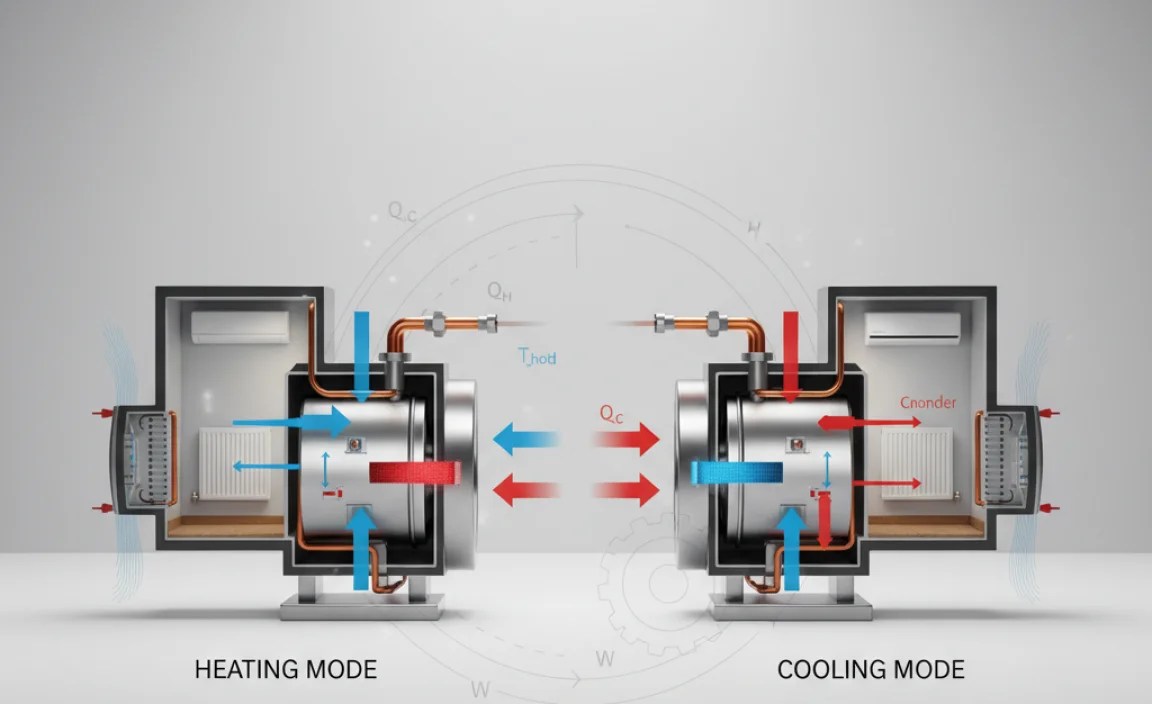
One of the great things about heat pumps is their ability to switch between heating and cooling modes. This is achieved using a reversing valve, which changes the direction of refrigerant flow.
Heating Mode
In heating mode, the heat pump extracts heat from the outdoor air (even in cold temperatures) and transfers it indoors. Here’s how it works:
- The outdoor coil acts as the evaporator, absorbing heat from the outside air.
- The refrigerant is compressed, increasing its temperature.
- The indoor coil acts as the condenser, releasing heat into the house.
- The refrigerant expands, reducing its temperature, and the cycle repeats.
Cooling Mode
In cooling mode, the heat pump works in reverse, extracting heat from the indoor air and transferring it outdoors:
- The indoor coil acts as the evaporator, absorbing heat from the inside air.
- The refrigerant is compressed, increasing its temperature.
- The outdoor coil acts as the condenser, releasing heat outside.
- The refrigerant expands, reducing its temperature, and the cycle repeats.
The reversing valve makes this switch possible, allowing the heat pump to function as both a heater and an air conditioner.
Efficiency and the Coefficient of Performance (COP)

The efficiency of a heat pump is measured by its Coefficient of Performance (COP). The COP is the ratio of the heat output (in heating mode) or heat removed (in cooling mode) to the electrical energy consumed.
The formula for COP is:
COP = (Heat Output or Heat Removed) / Electrical Energy Consumed
A higher COP indicates greater efficiency. For example, a heat pump with a COP of 3 can deliver 3 units of heat for every 1 unit of electricity it consumes. This makes heat pumps significantly more efficient than traditional electric resistance heaters, which have a COP close to 1.
Several factors can affect the COP of a heat pump, including:
- Temperature Difference: The smaller the temperature difference between the heat source and the heat sink, the higher the COP.
- Refrigerant Type: Different refrigerants have different thermodynamic properties, which can affect efficiency.
- System Design: The design and quality of the components, such as the compressor and heat exchangers, can impact performance.
- Maintenance: Regular maintenance, such as cleaning coils and replacing filters, can help maintain optimal efficiency.
Here’s a simple table comparing the efficiency of different heating systems:
| Heating System | Typical COP or Efficiency |
|---|---|
| Electric Resistance Heater | 1 |
| Natural Gas Furnace | 0.8 – 0.95 (AFUE) |
| Heat Pump | 2.5 – 4.5 |
Types of Heat Pumps
There are several types of heat pumps, each designed for different applications and climates:
- Air-Source Heat Pumps: These are the most common type and extract heat from the outside air. They are relatively inexpensive to install but can be less efficient in extremely cold weather.
- Geothermal Heat Pumps: Also known as ground-source heat pumps, these use the stable temperature of the earth to provide heating and cooling. They are more expensive to install but offer higher efficiency and consistent performance year-round.
- Water-Source Heat Pumps: These use a nearby body of water (such as a lake or well) as a heat source and sink. They are similar to geothermal heat pumps in terms of efficiency and performance.
- Mini-Split Heat Pumps: These are ductless systems that consist of an outdoor unit and one or more indoor units. They are ideal for heating and cooling individual rooms or zones.
Each type has its own advantages and disadvantages, depending on the specific application and climate.
Advantages of Heat Pumps
Heat pumps offer several advantages over traditional heating and cooling systems:
- Energy Efficiency: Heat pumps are more energy-efficient than electric resistance heaters and can be more efficient than natural gas furnaces.
- Dual Functionality: They can provide both heating and cooling, eliminating the need for separate systems.
- Reduced Emissions: By using electricity instead of fossil fuels, heat pumps can reduce greenhouse gas emissions, especially when powered by renewable energy sources.
- Improved Comfort: Heat pumps provide consistent and even heating and cooling, improving indoor comfort.
- Long Lifespan: With proper maintenance, heat pumps can last for 15 years or more.
These advantages make heat pumps an attractive option for homeowners and businesses looking to reduce energy consumption and environmental impact. For example, the U.S. Department of Energy promotes heat pumps as a key technology for decarbonizing the building sector.
Disadvantages of Heat Pumps
Despite their advantages, heat pumps also have some drawbacks:
- Higher Upfront Cost: Heat pumps typically have a higher initial cost compared to traditional heating and cooling systems.
- Performance in Cold Weather: Air-source heat pumps can lose efficiency in extremely cold temperatures, requiring supplemental heating.
- Installation Complexity: Proper installation is crucial for optimal performance, which may require professional expertise.
- Noise: Some heat pumps can be noisy, especially older models or those with poorly maintained components.
It’s essential to weigh these disadvantages against the advantages when considering a heat pump for your home or business. For example, in regions with mild winters, the cold-weather performance issue may not be a significant concern.
Maintenance Tips for Heat Pumps
To ensure your heat pump operates efficiently and reliably, regular maintenance is essential. Here are some tips:
- Clean or Replace Air Filters: Dirty air filters can restrict airflow and reduce efficiency. Check and clean or replace filters every 1-3 months.
- Clean Outdoor Coils: Debris such as leaves, dirt, and snow can accumulate on the outdoor coils, reducing their ability to transfer heat. Clean the coils regularly, especially in the spring and fall.
- Check Refrigerant Levels: Low refrigerant levels can reduce efficiency and damage the compressor. Have a qualified technician check and recharge the refrigerant as needed.
- Inspect and Clean Ductwork: Leaky or dirty ductwork can reduce airflow and waste energy. Inspect and seal any leaks, and clean the ducts every few years.
- Schedule Professional Maintenance: Have a qualified HVAC technician inspect and service your heat pump annually. This can help identify and address potential problems before they become major issues.
Regular maintenance can extend the life of your heat pump and ensure it operates at peak performance. For example, the Environmental Protection Agency (EPA) recommends regular maintenance to maximize energy savings and reduce environmental impact.
Troubleshooting Common Heat Pump Problems
Even with regular maintenance, heat pumps can sometimes experience problems. Here are some common issues and how to troubleshoot them:
| Problem | Possible Cause | Solution |
|---|---|---|
| Heat pump not heating or cooling | Thermostat settings, power supply, tripped circuit breaker | Check thermostat settings, ensure power is on, reset circuit breaker |
| Reduced airflow | Dirty air filter, blocked vents, ductwork issues | Replace air filter, clear blocked vents, inspect and repair ductwork |
| Unusual noises | Loose components, fan motor issues, compressor problems | Inspect for loose parts, lubricate fan motor, call a technician for compressor issues |
| Ice buildup on outdoor unit | Defrost cycle malfunction, low refrigerant, poor airflow | Check defrost settings, call a technician to check refrigerant, clear debris around unit |
If you encounter a problem that you can’t resolve yourself, it’s best to call a qualified HVAC technician. Attempting to repair complex components without the proper training and tools can be dangerous and may void your warranty.
Heat Pumps and the Future of Home Heating and Cooling
Heat pumps are poised to play a significant role in the future of home heating and cooling. As energy efficiency and sustainability become increasingly important, heat pumps offer a viable alternative to traditional systems. With advancements in technology, such as improved cold-weather performance and smart controls, heat pumps are becoming more versatile and user-friendly.
Government incentives and rebates are also driving the adoption of heat pumps. Many countries and regions offer financial incentives to homeowners and businesses who install energy-efficient heating and cooling systems, including heat pumps. These incentives can help offset the higher upfront cost and make heat pumps more accessible.
As the demand for heat pumps grows, manufacturers are investing in research and development to improve their performance and reduce their environmental impact. This includes developing new refrigerants with lower global warming potential and designing more efficient and reliable components.
FAQ About Heat Pumps
1. What exactly is a heat pump?
A heat pump is a device that transfers heat from one place to another. It can both heat and cool your home by moving heat either in or out, depending on the season.
2. How is a heat pump different from a furnace?
A furnace generates heat by burning fuel like natural gas or propane. A heat pump, on the other hand, moves existing heat from one location to another, making it more efficient.
3. Are heat pumps noisy?
Newer models are designed to operate quietly. However, older or poorly maintained units can produce some noise, especially during startup or defrost cycles.
4. Can heat pumps work in cold climates?
Yes, but their efficiency may decrease in very cold temperatures. Some heat pumps are specifically designed for cold climates and can maintain high efficiency even in sub-freezing conditions. Check for “cold climate” models if you live where it gets very cold.
5. How long do heat pumps last?
With proper maintenance, a heat pump can last 15 years or more. Regular servicing and timely repairs can extend its lifespan.
6. Are heat pumps expensive to run?
Heat pumps are generally more energy-efficient than electric resistance heaters and can be comparable to or more efficient than natural gas furnaces, resulting in lower operating costs.
7. Do heat pumps require special maintenance?
Yes, regular maintenance is essential for optimal performance. This includes cleaning or replacing air filters, cleaning outdoor coils, and scheduling professional inspections.
Conclusion
Understanding how a heat pump operates, particularly its connection to the principles similar to the Carnot cycle, can help you appreciate its efficiency and versatility. By moving heat rather than generating it, heat pumps offer an energy-efficient way to heat and cool your home. With regular maintenance and proper installation, a heat pump can provide reliable and cost-effective comfort for years to come.
Whether you’re considering installing a new heat pump or maintaining an existing one, understanding the basics of its operation can empower you to make informed decisions and maximize its benefits. As technology continues to advance and energy efficiency becomes increasingly important, heat pumps are likely to play an even greater role in the future of home heating and cooling. So, keep those coils clean, filters fresh, and enjoy the efficient comfort a heat pump provides!
“`


