
How Long is a Heat Pump Defrost Cycle?

Quick Summary: A typical heat pump defrost cycle lasts between 5 to 15 minutes. The duration depends on factors like outdoor temperature, humidity, and the heat pump’s age and efficiency. Regular defrosting is essential to keep your heat pump running smoothly and efficiently during cold weather.
Is your heat pump making strange noises and blowing cool air in the winter? Don’t panic! It’s probably just going through its defrost cycle. This is a normal process, but many homeowners wonder how long it should take and what to do if it seems excessive. Understanding the defrost cycle helps you ensure your heat pump works efficiently and keeps your home comfortable. Let’s dive into the details so you can keep your system running smoothly.
Understanding the Heat Pump Defrost Cycle

Heat pumps are incredibly efficient heating and cooling systems. In winter, they extract heat from the outside air to warm your home. However, when temperatures drop, moisture in the air can freeze on the outdoor coil. This frost buildup reduces the heat pump’s ability to absorb heat, making it less efficient. That’s where the defrost cycle comes in.
Why Defrosting is Necessary
Frost accumulation on the outdoor coil acts as an insulator, hindering heat transfer. A layer of frost as thin as 1/8 inch can reduce heating capacity by as much as 25% according to the U.S. Department of Energy. The defrost cycle melts this frost, restoring the heat pump’s efficiency and preventing damage to the unit.
How the Defrost Cycle Works
During the defrost cycle, the heat pump temporarily reverses its operation. Here’s a simplified breakdown:
- The reversing valve switches the flow of refrigerant.
- Hot refrigerant is directed to the outdoor coil, melting the frost.
- The outdoor fan shuts off to keep from blowing cold air into the surrounding area.
- Auxiliary heat (electric resistance heat) is activated to keep your home warm while the outdoor coil defrosts.
- Once the frost is melted, the system returns to normal heating operation.
Typical Defrost Cycle Duration
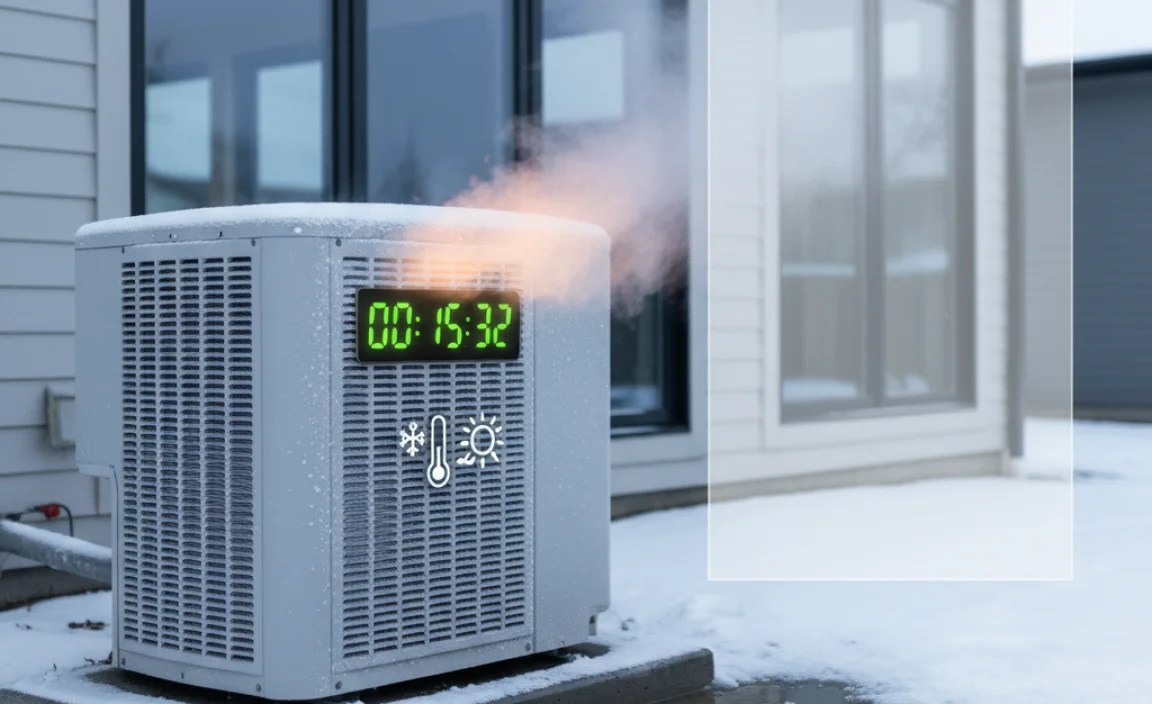
As mentioned earlier, a typical defrost cycle lasts between 5 and 15 minutes. However, several factors can influence this duration.
Factors Affecting Defrost Cycle Length
- Outdoor Temperature: Lower temperatures generally mean more frost buildup, leading to longer defrost cycles.
- Humidity Levels: High humidity increases the rate of frost accumulation, extending the defrost time.
- Heat Pump Age and Condition: Older or poorly maintained heat pumps may have less efficient defrost cycles.
- Type of Defrost Control: Heat pumps use different methods to initiate defrost cycles, which can affect the duration.
Types of Defrost Control Systems
Heat pumps use various methods to determine when to initiate a defrost cycle. Here are the most common types:
- Time-Based Defrost: These systems defrost at set intervals, regardless of actual frost buildup. They are less efficient because they might defrost when not needed.
- Temperature-Based Defrost: These systems use a temperature sensor on the outdoor coil to detect frost. When the coil temperature drops below a certain threshold, the defrost cycle begins.
- Demand Defrost: This is the most efficient type. It uses a combination of temperature and pressure sensors to determine when defrosting is necessary. It only defrosts when frost is actually present, saving energy.
Troubleshooting Defrost Cycle Issues
While the defrost cycle is a normal part of heat pump operation, some issues can arise. Here’s how to troubleshoot common problems.
Signs of a Problem
- Excessively Long Defrost Cycles: If your heat pump defrosts for more than 20 minutes, it could indicate a problem.
- Frequent Defrost Cycles: Defrosting too often (more than every hour) can also signal an issue.
- Ice Buildup on the Coil: Excessive ice accumulation despite regular defrost cycles suggests a malfunction.
- Cool Air Blowing Inside During Defrost: While some cool air is normal, excessively cold air could mean the auxiliary heat isn’t working correctly.
Common Causes and Solutions
Here’s a table outlining common defrost cycle problems, their potential causes, and possible solutions:
| Problem | Possible Cause | Solution |
|---|---|---|
| Excessively Long Defrost Cycles | Dirty outdoor coil | Clean the outdoor coil with a garden hose (gentle setting) or coil cleaner. |
| Excessively Long Defrost Cycles | Faulty defrost sensor | Have a technician check and replace the defrost sensor if needed. |
| Frequent Defrost Cycles | Refrigerant leak | Call a qualified HVAC technician to locate and repair the leak, then recharge the refrigerant. |
| Frequent Defrost Cycles | Faulty defrost timer or control board | Have a technician inspect and replace the timer or control board. |
| Ice Buildup on Coil | Restricted airflow | Clear any obstructions around the outdoor unit (leaves, snow, debris). |
| Ice Buildup on Coil | Damaged fan motor | Have a technician replace the fan motor. |
| Cool Air Blowing Inside During Defrost | Faulty auxiliary heat | Check the circuit breaker for the auxiliary heat. If it’s tripped, reset it. If it continues to trip, call an electrician. |
| Cool Air Blowing Inside During Defrost | Burned out heating elements | Have a technician replace the heating elements in the auxiliary heat unit. |
DIY Checks Before Calling a Professional
Before calling an HVAC technician, perform these simple checks:
- Check the Thermostat: Ensure it’s set to “Heat” and the temperature is set correctly.
- Inspect the Outdoor Unit: Look for any visible obstructions like leaves, snow, or debris. Clear them away.
- Check the Air Filter: A dirty air filter can restrict airflow and affect heat pump performance. Replace it if needed.
- Reset the Heat Pump: Turn off the heat pump at the breaker for 30 minutes, then turn it back on. This can sometimes reset the system and resolve minor issues.
Tips for Maintaining Heat Pump Efficiency
Proper maintenance is crucial for keeping your heat pump running efficiently and minimizing defrost cycle issues.
Regular Maintenance Tasks
- Clean the Outdoor Coil: At least twice a year, clean the outdoor coil with a garden hose or coil cleaner.
- Replace Air Filters: Change the air filter every 1-3 months, depending on usage and air quality.
- Trim Vegetation: Keep vegetation trimmed back around the outdoor unit to ensure proper airflow.
- Inspect Ductwork: Check for any leaks or damage to the ductwork and seal them as needed.
Professional Servicing
Schedule professional servicing at least once a year. An HVAC technician can:
- Inspect and clean the entire system.
- Check refrigerant levels and pressure.
- Lubricate moving parts.
- Test electrical components.
- Identify and address any potential issues before they become major problems.
The Impact of Climate on Defrost Cycles

The frequency and duration of defrost cycles are heavily influenced by your local climate.
Cold Climates
In regions with consistently cold temperatures and high humidity, heat pumps will defrost more frequently and for longer durations. Proper insulation and sealing of your home are crucial in these climates to reduce the load on the heat pump.
Moderate Climates
In milder climates, defrost cycles will be less frequent and shorter. Heat pumps are generally very efficient in these areas, providing reliable heating and cooling with minimal issues.
Coastal Climates
Coastal areas often experience high humidity and salt air, which can accelerate corrosion and frost buildup. Regular maintenance and cleaning are especially important in these climates to keep the heat pump running efficiently.
Upgrading to a More Efficient Heat Pump
If you have an older heat pump, consider upgrading to a more efficient model. Modern heat pumps have advanced defrost control systems and improved energy efficiency.
Benefits of Newer Models
- Demand Defrost: More efficient defrost cycles that only activate when needed.
- Variable-Speed Compressors: Provide more consistent heating and cooling while using less energy.
- Improved Energy Efficiency: Higher SEER (Seasonal Energy Efficiency Ratio) and HSPF (Heating Seasonal Performance Factor) ratings mean lower energy bills.
- Smart Home Integration: Some models can be controlled remotely via smartphone apps.
Choosing the Right Heat Pump
When selecting a new heat pump, consider the following factors:
- Size: Choose a unit that is appropriately sized for your home’s square footage and insulation levels.
- Efficiency Ratings: Look for high SEER and HSPF ratings to maximize energy savings.
- Features: Consider features like demand defrost, variable-speed compressors, and smart home integration.
- Warranty: Choose a unit with a comprehensive warranty to protect your investment.
Frequently Asked Questions (FAQs)
Here are some common questions about heat pump defrost cycles:
- Why is my heat pump blowing cold air?
- It’s likely in defrost mode. This is normal and should only last a few minutes. If it blows cold air for longer, check your auxiliary heat or call a technician.
- How often should my heat pump defrost?
- It depends on the weather, but typically every 30 to 90 minutes when temperatures are near freezing.
- Can I manually defrost my heat pump?
- Some thermostats have an emergency heat setting which can trigger a manual defrost. However, it’s best to let the system defrost automatically.
- Is it normal to see steam coming from my heat pump during defrost?
- Yes, this is normal. The steam is simply water vapor from the melting frost.
- What happens if my heat pump doesn’t defrost?
- Ice buildup can damage the unit and reduce its efficiency. It’s important to address defrosting issues promptly.
- How can I tell if my heat pump is defrosting too often?
- If it’s defrosting more than once an hour, there may be a problem. Check for other symptoms like ice buildup or call a technician.
- Does the defrost cycle use a lot of energy?
- The defrost cycle itself doesn’t use much energy, but the auxiliary heat that kicks in during defrost can increase energy consumption. Efficient heat pumps minimize the need for auxiliary heat.
Conclusion
Understanding the heat pump defrost cycle is key to keeping your system running efficiently and your home comfortable. While a typical defrost cycle lasts 5 to 15 minutes, factors like temperature and humidity can affect this duration. Regular maintenance, prompt troubleshooting, and considering an upgrade to a more efficient model can all contribute to optimal heat pump performance. By following these tips, you can ensure your heat pump provides reliable heating for years to come, saving you money and keeping you cozy all winter long.
“`


