
How Long to Cycle Your Pool Pump: A Simple Guide

Quick Summary: The general rule of thumb is to cycle your pool pump for at least once a day, or roughly 8 to 12 hours daily. This ensures your entire pool water gets filtered, preventing algae and keeping your water clean and clear. However, factors like pool size, pump strength, and usage can affect the ideal run time. Adjust accordingly to maintain optimal water quality.
Maintaining a sparkling clean pool involves more than just skimming leaves. Cycling your pool pump is crucial, but figuring out the right run time can be tricky. Too little, and you risk algae and cloudy water. Too much, and you’re wasting energy and money. Don’t worry! This guide breaks down everything you need to know to optimize your pool pump cycle. Let’s dive in and make pool care a breeze!
Understanding Pool Pump Cycling
Pool pump cycling refers to the process of running your pool pump for a specific duration each day to filter and circulate the water. Proper cycling is essential for distributing chemicals evenly, preventing algae growth, and removing debris. Think of it as the heart of your pool’s circulation system, keeping everything healthy and balanced.
Why is Cycling Important?
Without proper cycling, your pool water can become a breeding ground for bacteria and algae. Stagnant water also makes it harder to maintain chemical balance, leading to cloudy or discolored water. Effective cycling ensures:
- Water Clarity: Removes dirt, debris, and microscopic particles.
- Chemical Distribution: Evenly disperses chlorine, algaecide, and other chemicals.
- Algae Prevention: Prevents the growth of algae and other microorganisms.
- Overall Hygiene: Keeps your pool safe and healthy for swimming.
Factors Affecting Pump Run Time
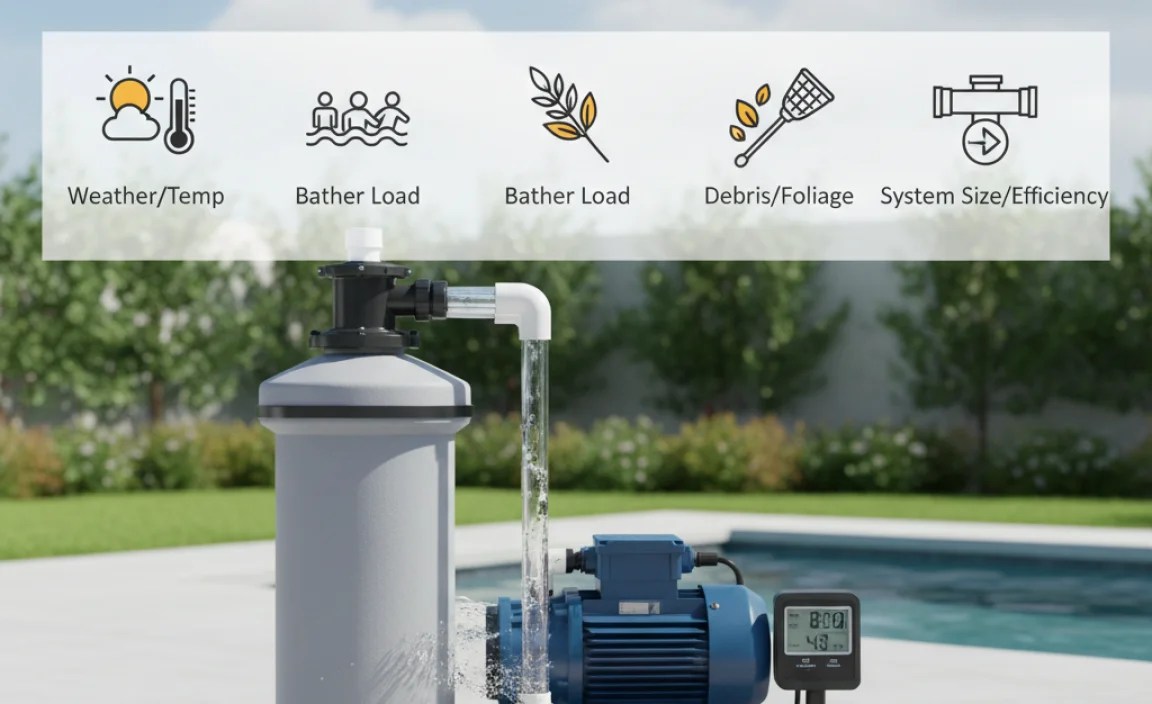
Determining the ideal run time for your pool pump isn’t a one-size-fits-all answer. Several factors come into play. Let’s explore each one:
1. Pool Size
The volume of water in your pool is a primary factor. Larger pools require longer run times to ensure all the water is filtered. Here’s a general guideline:
- Small Pools (under 10,000 gallons): 6-8 hours
- Medium Pools (10,000 – 20,000 gallons): 8-10 hours
- Large Pools (over 20,000 gallons): 10-12 hours
2. Pump Size and Flow Rate
The pump’s horsepower and flow rate (gallons per minute or GPM) dictate how quickly it can circulate the water. A more powerful pump can filter the entire pool volume in less time.
To calculate the turnover rate (how long it takes to filter all the water once), use this formula:
Turnover Rate (hours) = Pool Volume (gallons) / Pump Flow Rate (GPM) / 60
Ideally, you want to turn over your pool water at least once per day. For optimal clarity, aim for 1.5 to 2 turnovers.
3. Seasonal Changes
Pool usage and environmental conditions vary throughout the year. During peak swimming season (summer), you’ll likely need to run the pump longer due to increased bather load and warmer temperatures, which promote algae growth. In cooler months, you can reduce the run time.
- Summer: 10-12 hours
- Spring/Fall: 8-10 hours
- Winter (if pool is open): 4-6 hours (or less, depending on your climate)
4. Pool Usage
A heavily used pool requires more filtration. More swimmers mean more dirt, oils, and contaminants entering the water. If you host frequent pool parties or have a large family, increase the pump run time accordingly.
5. Filter Type
Different filter types have varying levels of efficiency. DE (Diatomaceous Earth) filters generally provide the best filtration, followed by cartridge filters and sand filters. If you have a less efficient filter, you may need to run the pump longer to achieve the same level of water clarity.
6. Environmental Factors
Pools located near trees or in dusty environments may require longer run times to combat the increased debris. Similarly, pools exposed to direct sunlight are more prone to algae growth, necessitating more frequent filtration.
Step-by-Step Guide to Determining Your Ideal Pump Run Time

Now that you understand the influencing factors, let’s walk through the process of determining the optimal run time for your pool pump:
Step 1: Calculate Your Pool Volume
First, you need to know how many gallons of water your pool holds. Here’s how to calculate it for different pool shapes:
- Rectangular Pools: Length (ft) x Width (ft) x Average Depth (ft) x 7.5
- Round Pools: π (3.14) x Radius (ft)² x Average Depth (ft) x 7.5
- Oval Pools: Length (ft) x Width (ft) x Average Depth (ft) x 5.9
Note: For average depth, measure the shallowest and deepest points, add them together, and divide by two.
Step 2: Determine Your Pump’s Flow Rate
Check your pump’s manual or the label on the pump itself. The flow rate is usually listed in gallons per minute (GPM). If you can’t find the GPM, you can estimate it based on the pump’s horsepower (HP). A 1 HP pump typically has a flow rate of around 50-60 GPM.
Step 3: Calculate the Turnover Rate
Use the formula we discussed earlier:
Turnover Rate (hours) = Pool Volume (gallons) / Pump Flow Rate (GPM) / 60
Aim for a turnover rate of at least once per day, or 1.5 to 2 times for optimal clarity.
Step 4: Adjust for Other Factors
Consider the seasonal changes, pool usage, filter type, and environmental factors we discussed earlier. Increase the run time during peak season or heavy usage, and decrease it during cooler months or periods of low activity.
Step 5: Monitor and Adjust
After setting your initial run time, monitor your pool water closely. Check for clarity, algae growth, and chemical balance. If you notice any issues, adjust the run time accordingly. It may take a few weeks to fine-tune the settings to achieve the best results.
Scheduling Your Pump Cycle
Deciding when to run your pool pump is just as important as determining how long to run it. Here are some scheduling tips:
- Run During Off-Peak Hours: To save on energy costs, run your pump during off-peak hours when electricity rates are lower. Contact your local utility company to find out when these hours are.
- Split the Run Time: Instead of running the pump continuously for 8-12 hours, consider splitting the run time into two or three shorter cycles. This can improve filtration efficiency and reduce wear and tear on the pump.
- Run at Night: Running the pump at night can help prevent algae growth, as algae thrive in sunlight.
Variable Speed Pumps
If you’re looking to save energy and improve filtration, consider investing in a variable speed pump. These pumps allow you to adjust the motor speed, reducing energy consumption and noise levels. Here’s why they’re a great option:
- Energy Savings: Variable speed pumps can save you up to 80% on energy costs compared to single-speed pumps.
- Quieter Operation: They operate much quieter, making them ideal for residential areas.
- Improved Filtration: Running the pump at a lower speed allows for more efficient filtration.
- Longer Lifespan: Reduced wear and tear can extend the pump’s lifespan.
With a variable speed pump, you can set different speeds for different tasks. For example, you can run the pump at a low speed for most of the day for regular filtration, and then increase the speed for vacuuming or backwashing.
Troubleshooting Common Issues
Even with proper cycling, you may encounter some common pool problems. Here’s how to troubleshoot them:
1. Cloudy Water
Possible Causes: Insufficient filtration, improper chemical balance, high bather load.
Solutions: Increase pump run time, test and adjust chemical levels, shock the pool, clean or backwash the filter.
2. Algae Growth
Possible Causes: Insufficient chlorine, inadequate filtration, poor circulation.
Solutions: Shock the pool, add algaecide, increase pump run time, clean the filter, brush the pool walls and floor.
3. High Energy Bills
Possible Causes: Excessive pump run time, inefficient pump, dirty filter.
Solutions: Reduce pump run time, switch to a variable speed pump, clean or replace the filter, run the pump during off-peak hours.
Tips for Efficient Pool Pump Cycling
Here are some additional tips to maximize the efficiency of your pool pump cycling:
- Regularly Clean the Filter: A clean filter allows for better water flow and reduces strain on the pump.
- Maintain Proper Chemical Balance: Balanced water chemistry helps prevent algae growth and reduces the need for excessive filtration.
- Use a Pool Cover: A pool cover helps prevent debris from entering the pool and reduces water evaporation, lowering the demand on the pump.
- Inspect Equipment Regularly: Check for leaks, cracks, or other damage to the pump, filter, and plumbing.
- Consider a Smart Pool Controller: These devices allow you to automate and optimize your pool system, including pump cycling, for maximum efficiency.
Pool Pump Cycling Checklist
Use this checklist to ensure you’re on track with your pool pump cycling:
- Calculate your pool volume.
- Determine your pump’s flow rate.
- Calculate the turnover rate.
- Adjust for seasonal changes, pool usage, and other factors.
- Set your initial pump run time.
- Monitor your pool water closely.
- Adjust the run time as needed.
- Schedule your pump cycle during off-peak hours.
- Clean the filter regularly.
- Maintain proper chemical balance.
- Inspect equipment regularly.
Pool Pump Information Tables
Here are some tables to give you a quick reference for pool pump sizes and turnover rates.
Table 1: Recommended Pump Size Based on Pool Volume
| Pool Volume (Gallons) | Recommended Pump HP |
|---|---|
| Up to 10,000 | 0.75 HP |
| 10,000 – 20,000 | 1.0 HP |
| 20,000 – 30,000 | 1.5 HP |
| 30,000+ | 2.0 HP or higher |
Table 2: Ideal Turnover Rates
| Pool Usage | Ideal Turnover Rate (Hours) |
|---|---|
| Residential (Light Use) | 8-12 |
| Residential (Heavy Use) | 6-8 |
| Commercial | 4-6 |
Pool Pump Brands
Here are some of the top pool pump brands on the market. Always check with your local pool supply store for the best pump for your needs.
- Hayward (https://www.hayward-pool.com/shop/en/hayward)
- Pentair (https://www.pentair.com/en-us/products/pool-spa.html)
- Intex (https://intexcorp.com/above-ground-pools/)
- Waterway (https://www.waterwayplastics.com/)
FAQ: Cycling Your Pool Pump
Here are some frequently asked questions about cycling your pool pump:
Q1: How often should I clean my pool filter?
A: Clean your filter every 4-6 weeks, or more often if you notice reduced water flow or cloudy water. Backwash sand and DE filters, and clean or replace cartridge filters.
Q2: Can I run my pool pump 24/7?
A: While you can, it’s generally not necessary or cost-effective. Running the pump 24/7 consumes a lot of energy and can wear out the pump faster. Aim for a turnover rate of 1-2 times per day.
Q3: What happens if I don’t run my pool pump long enough?
A: Insufficient pump run time can lead to cloudy water, algae growth, and chemical imbalances. This can make your pool unsafe and unpleasant to swim in.
Q4: How do I know if my pool pump is working correctly?
A: Check for proper water flow, unusual noises, or leaks. If you suspect a problem, consult a pool professional.
Q5: Can I use a timer for my pool pump?
A: Yes, a timer is a convenient way to automate your pump cycle and ensure it runs at the desired times. Digital timers offer more precise control and can be programmed for different schedules.
Q6: Is it better to run my pool pump during the day or at night?
A: Running the pump at night can help prevent algae growth, as algae thrive in sunlight. Additionally, running during off-peak hours can save on energy costs.
Q7: What is the difference between a single-speed and a variable-speed pool pump?
A: A single-speed pump operates at one constant speed, while a variable-speed pump allows you to adjust the motor speed. Variable-speed pumps are more energy-efficient, quieter, and offer better filtration.
Conclusion
Determining the ideal run time for your pool pump might seem like a chore, but it’s a crucial part of maintaining a clean, safe, and enjoyable pool. By understanding the factors that influence pump cycling and following the steps outlined in this guide, you can optimize your pool system for maximum efficiency and water quality. Remember to monitor your pool water closely and adjust the run time as needed. With a little effort, you’ll be swimming in crystal-clear water all season long!
“`


