
How Does a Heat Pump Defrost Cycle Work? A Simple Guide

Quick Summary: Heat pumps move heat instead of generating it, but in cold weather, frost can build up on the outdoor unit’s coil. The defrost cycle temporarily reverses the heat pump, turning it into an AC to melt the ice. It uses a timer or sensors to detect ice buildup, ensuring efficient heating performance even in freezing temperatures.
Is your heat pump struggling in the winter? One common issue is frost buildup on the outdoor unit. Don’t worry; it’s normal! Heat pumps use a clever “defrost cycle” to get rid of the ice and keep your home warm. Understanding how this works can save you from unnecessary worry and help you maintain your system. In this guide, we’ll break down the defrost cycle in simple terms, so you can keep your heat pump running smoothly all winter long.
What is a Heat Pump and How Does it Work?

Before we dive into the defrost cycle, let’s quickly cover the basics of a heat pump. Unlike furnaces that burn fuel to create heat, heat pumps move existing heat from one place to another. In the winter, it extracts heat from the outside air (even when it’s cold!) and transfers it inside your home.
Think of it like a refrigerator working in reverse. A fridge pulls heat from inside the box and expels it into your kitchen. A heat pump pulls heat from the outside and pushes it into your house.
The main components of a heat pump include:
- Refrigerant: A special fluid that absorbs and releases heat as it changes between liquid and gas.
- Compressor: A pump that circulates the refrigerant and increases its pressure and temperature.
- Evaporator Coil: Located outside, this coil absorbs heat from the outside air, turning the liquid refrigerant into a gas.
- Condenser Coil: Located inside, this coil releases the heat into your home as the gaseous refrigerant turns back into a liquid.
- Reversing Valve: This valve switches the direction of refrigerant flow, allowing the heat pump to both heat and cool.
The Problem: Frost Buildup

When the outdoor temperature drops below freezing (32°F or 0°C), moisture in the air can freeze on the outdoor coil. This frost acts like an insulator, reducing the coil’s ability to absorb heat from the air. The more frost, the less efficient your heat pump becomes.
Imagine trying to breathe through a thick scarf – it’s much harder to get air! Similarly, frost buildup makes it harder for the heat pump to draw in heat, forcing it to work harder and use more energy.
The Solution: The Defrost Cycle
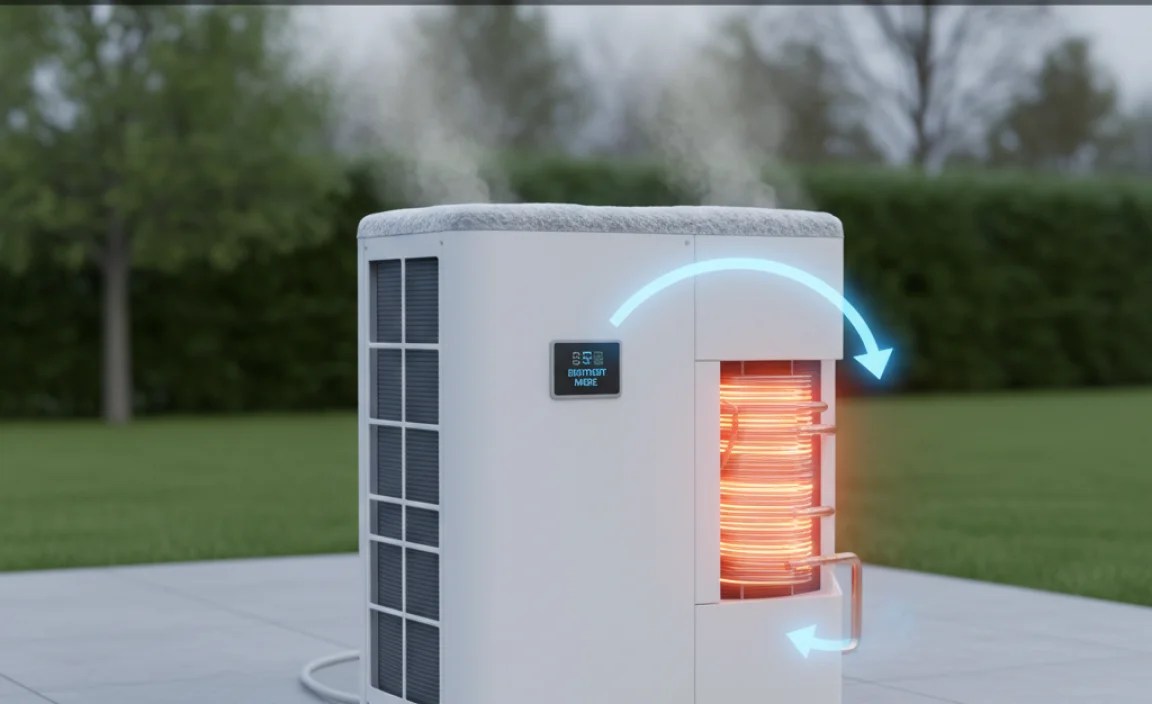
The defrost cycle is a built-in function that melts the frost on the outdoor coil, restoring the heat pump’s efficiency. It essentially reverses the heating process, temporarily turning the heat pump into an air conditioner.
Here’s a step-by-step breakdown of how it works:
- Frost Detection: The heat pump monitors frost buildup using either a timer or a sensor.
- Timer-based Defrost: The defrost cycle activates at regular intervals, regardless of whether frost is present. This is a simpler, but less efficient, method.
- Sensor-based Defrost: Sensors monitor the coil temperature and air pressure. When they detect conditions that indicate frost buildup, the defrost cycle is triggered. This is more efficient because it only defrosts when necessary.
- Reversing Valve Activation: The reversing valve switches the flow of refrigerant, redirecting hot refrigerant to the outdoor coil.
- Outdoor Fan Shut-Off: The outdoor fan stops running to prevent blowing cold air across the coil and slowing down the defrosting process.
- Hot Refrigerant Flow: The hot refrigerant flows through the outdoor coil, melting the frost.
- Indoor Unit Operation: Since the heat pump is temporarily cooling, the auxiliary heat (electric resistance heat) is activated to keep your home warm. You might notice warm air coming from your vents, but it’s from the auxiliary heat, not the heat pump itself.
- Defrost Termination: Once the frost is melted, the system switches back to normal heating mode. This is usually determined by a timer or a temperature sensor on the coil.
What to Expect During a Defrost Cycle

During the defrost cycle, you might notice the following:
- Cold Air: A brief blast of cool air from your vents as the system switches over.
- Outdoor Fan Off: The outdoor fan will stop running.
- Steam or Water: You might see steam or water dripping from the outdoor unit as the frost melts. This is normal.
- Increased Noise: The heat pump might sound louder than usual as the compressor works harder to melt the ice.
- Auxiliary Heat Activation: Your auxiliary heat will turn on, which may result in a higher energy bill.
The defrost cycle typically lasts between 5 and 15 minutes. After the cycle is complete, the heat pump will return to normal heating mode.
Factors Affecting Defrost Cycle Frequency

Several factors can influence how often your heat pump goes into defrost mode:
- Outdoor Temperature: The colder it is, the more frequently the defrost cycle will activate.
- Humidity: High humidity increases the amount of moisture in the air, leading to more frost buildup.
- Heat Pump Model: Different models have different defrost strategies and efficiency levels.
- Airflow: Restricted airflow around the outdoor unit can worsen frost buildup.
Troubleshooting Defrost Cycle Issues
While the defrost cycle is a normal part of heat pump operation, certain issues can indicate a problem:
- Excessive Defrost Cycles: If your heat pump is defrosting too frequently (more than a few times a day), there might be an underlying issue.
- Ice Buildup Not Melting: If you notice thick ice buildup on the coil that isn’t melting during the defrost cycle, there could be a problem with the reversing valve, refrigerant levels, or other components.
- Lack of Warm Air: If your auxiliary heat isn’t kicking in during the defrost cycle, your home might get uncomfortably cold.
If you experience any of these issues, it’s best to consult a qualified HVAC technician. They can diagnose the problem and recommend the appropriate repairs.
Tips to Optimize Heat Pump Performance in Winter
Here are some tips to help your heat pump run efficiently during the winter months:
- Keep the Outdoor Unit Clear: Remove any snow, ice, leaves, or debris that might block airflow around the outdoor unit.
- Maintain Air Filters: Regularly replace or clean your air filters to ensure proper airflow.
- Don’t Block Vents: Make sure furniture and other objects aren’t blocking your indoor vents.
- Consider a Programmable Thermostat: A programmable thermostat can help you optimize your heating schedule and save energy.
- Seal Air Leaks: Seal any air leaks around windows, doors, and other openings to prevent heat loss.
- Regular Maintenance: Schedule regular maintenance with a qualified HVAC technician to keep your heat pump in top condition.
The Science Behind the Defrost Cycle
The defrost cycle relies on basic thermodynamic principles. Heat always flows from a warmer object to a cooler object. By reversing the flow of refrigerant, the heat pump forces the hot refrigerant to flow through the cold, frosted coil, melting the ice. This process utilizes the latent heat of fusion, which is the energy required to change a substance from a solid (ice) to a liquid (water) without changing its temperature.
Pros and Cons of Different Defrost Methods
Heat pumps use different methods to initiate the defrost cycle. Each has its own advantages and disadvantages.
| Defrost Method | Pros | Cons |
|---|---|---|
| Timer-Based | Simple and inexpensive. | Can initiate defrost cycles unnecessarily, wasting energy. |
| Temperature Sensor-Based | More efficient as it only defrosts when needed. | More complex and potentially more expensive to repair. |
| Pressure Sensor-Based | Accurately detects frost buildup by monitoring pressure changes. | Can be sensitive and require precise calibration. |
| Demand Defrost Control | Combines temperature and pressure sensors for optimal efficiency and accuracy. | Most complex and expensive option. |
How to Tell if Your Heat Pump is Defrosting Correctly
Here’s a checklist to help you determine if your heat pump’s defrost cycle is functioning as it should:
- Observe the Outdoor Unit: Check for ice buildup on the coil. A small amount is normal, but excessive buildup indicates a problem.
- Listen for Changes: Pay attention to the sounds your heat pump makes. The fan should stop during defrost, and the unit might sound louder.
- Feel the Airflow: Notice if there’s a brief period of cooler air coming from your vents, followed by warmer air from the auxiliary heat.
- Check for Water Runoff: Look for water or steam coming from the outdoor unit as the ice melts.
- Monitor Cycle Frequency: Keep track of how often the defrost cycle occurs. If it seems excessive, consult a professional.
Understanding Auxiliary Heat
Auxiliary heat, also known as emergency or supplemental heat, is a backup heating system that kicks in when the heat pump can’t provide enough heat on its own. This usually happens during extremely cold weather or during the defrost cycle.
Auxiliary heat is typically electric resistance heating, similar to a space heater. It’s effective at quickly raising the temperature, but it’s also more expensive to operate than the heat pump itself. That’s why it’s important to make sure your heat pump is functioning efficiently so you don’t rely on auxiliary heat too much.
Cost Savings and Efficiency
A properly functioning defrost cycle is crucial for maintaining the efficiency of your heat pump. When frost buildup is minimized, the heat pump can operate more effectively, using less energy to heat your home. This translates to lower energy bills and a reduced carbon footprint.
Regular maintenance, including cleaning the outdoor unit and replacing air filters, can further improve efficiency and extend the lifespan of your heat pump.
Heat Pump vs. Air Conditioner: Key Differences
While heat pumps and air conditioners look similar, they operate differently. Here’s a table summarizing the key differences:
| Feature | Heat Pump | Air Conditioner |
|---|---|---|
| Function | Heats and cools | Only cools |
| Reversing Valve | Yes, to change refrigerant flow | No |
| Defrost Cycle | Yes, to remove frost in winter | No |
| Energy Efficiency | Generally more efficient for heating in moderate climates | Efficient for cooling |
FAQ About Heat Pump Defrost Cycles
Here are some frequently asked questions about heat pump defrost cycles:
- Why does my heat pump make a hissing sound during the defrost cycle?
- The hissing sound is usually the reversing valve switching the flow of refrigerant. It’s a normal part of the defrost cycle.
- Is it normal to see steam coming from my heat pump during the defrost cycle?
- Yes, the steam is created when the hot refrigerant melts the frost on the coil. It’s a sign that the defrost cycle is working properly.
- How long should the defrost cycle last?
- The defrost cycle typically lasts between 5 and 15 minutes.
- Should I be concerned if my heat pump goes into defrost mode frequently?
- If your heat pump is defrosting excessively (more than a few times a day), it’s best to have it checked by an HVAC technician.
- Can I manually trigger the defrost cycle?
- Some thermostats have a manual defrost option. However, it’s generally best to let the heat pump defrost automatically as needed.
- Will the defrost cycle run if my heat pump is set to “emergency heat”?
- No, when your heat pump is in “emergency heat” mode, it relies solely on the auxiliary heat source, and the defrost cycle won’t run.
- How can I tell if my heat pump’s defrost cycle is not working?
- Signs of a malfunctioning defrost cycle include excessive ice buildup on the outdoor coil, a lack of warm air during the cycle, and unusually high energy bills.
Conclusion
Understanding how your heat pump’s defrost cycle works can help you maintain your system and ensure efficient heating throughout the winter. By knowing what to expect during the defrost cycle and how to troubleshoot common issues, you can keep your home comfortable and save money on energy bills. Remember to keep the outdoor unit clear, maintain your air filters, and schedule regular maintenance with a qualified HVAC technician. With a little knowledge and care, your heat pump will keep you warm all winter long!
“`


