
Best Pump for Wheelchair Tires: Ride Easy!

Quick Summary:
Need to inflate your wheelchair tires? You’ll need a reliable pump that can reach the required pressure. A hand pump with a gauge is a great portable option. Floor pumps offer more power and stability. Consider a pump with a dual-head for both Schrader and Presta valves. Check the pressure regularly to ensure smooth rolling and prevent flats!
Keeping your wheelchair tires properly inflated is essential for smooth movement and comfortable rides. But finding the right pump and knowing how to use it can be confusing. Many pumps are designed for bikes, leaving wheelchair users wondering about compatibility and pressure needs.
Don’t worry! Pumping up your wheelchair tires is easier than you think. In this guide, I’ll walk you through the steps, explain the different types of pumps, and give you tips for maintaining optimal tire pressure. Get ready to roll with confidence!
Choosing the Right Pump for Your Wheelchair Tires

Selecting the right pump is the first step toward maintaining your wheelchair tires. Here’s what you should consider:
Types of Pumps
There are several types of pumps available, each with its own advantages:
- Hand Pumps: Compact and portable, perfect for on-the-go inflation. Look for models with a built-in pressure gauge.
- Floor Pumps: Offer more leverage and stability, making it easier to reach higher pressures. Ideal for home use.
- Electric Pumps: Provide effortless inflation with the push of a button. Great for those with limited hand strength or mobility.
- CO2 Inflators: Use compressed CO2 cartridges for rapid inflation, suitable for quick fixes on the road.
Valve Compatibility
Wheelchair tires typically use two types of valves:
- Schrader Valves: Similar to those found on car tires, wider and with a spring-loaded pin in the center.
- Presta Valves: Narrower and often found on high-performance bicycle tires, with a lock nut at the tip.
Make sure the pump you choose is compatible with the valve type on your wheelchair tires. Some pumps have a dual head that works with both Schrader and Presta valves.
Pressure Gauge
A pressure gauge is crucial for accurate inflation. It allows you to monitor the pressure in your tires and avoid over- or under-inflation. Look for a pump with an easy-to-read gauge that displays pressure in both PSI (pounds per square inch) and bar.
Pressure Requirements
Wheelchair tires generally require higher pressures than bicycle tires. Check the sidewall of your tires for the recommended pressure range. Most wheelchair tires need to be inflated to between 60 and 100 PSI.
Recommended Pumps for Wheelchair Tires

Here are some of my top picks for wheelchair tire pumps:
- Topeak Pocket Rocket: A reliable and compact hand pump with a built-in gauge.
- Lezyne Floor Drive: A high-quality floor pump with excellent stability and accuracy.
- Pro Bike Tool Mini Bike Pump: A super compact and lightweight hand pump with both Presta and Schrader compatibility.
- Airshot Tubeless Inflator: A great option for quickly seating tubeless tires, offering high-volume inflation.
Step-by-Step Guide to Pumping Your Wheelchair Tires

Now that you’ve chosen the right pump, let’s get your tires inflated:
1. Prepare Your Wheelchair and Pump
- Position Your Wheelchair: Place your wheelchair on a stable surface.
- Prepare the Pump: Make sure the pump head is compatible with your tire valve. If it’s a dual-head pump, select the correct side.
- Locate the Valve: Find the valve stem on your tire. Remove the valve cap and set it aside in a safe place.
2. Connect the Pump to the Valve
- Schrader Valve: Simply press the pump head onto the valve stem, ensuring a tight seal. You may hear a slight hiss of air as you connect it.
- Presta Valve: Unscrew the valve nut at the tip of the valve stem. Press the pump head onto the valve, ensuring a tight seal.
3. Inflate the Tire
- Hand Pump: Hold the pump firmly and begin pumping in a steady, even motion. Watch the pressure gauge as you pump.
- Floor Pump: Place your feet on the base of the pump for stability. Use your hands to pump the handle up and down. Watch the pressure gauge as you pump.
- Electric Pump: Attach the pump head to the valve and turn on the pump. Monitor the pressure gauge and turn off the pump when the desired pressure is reached.
4. Check the Pressure
- Use the Gauge: Regularly check the pressure gauge as you inflate the tire. Stop pumping when you reach the recommended pressure range printed on the tire sidewall.
- Avoid Over-Inflation: Over-inflating your tires can lead to a blowout. Never exceed the maximum pressure listed on the tire.
- Avoid Under-Inflation: Under-inflating your tires can cause increased rolling resistance, making it harder to push your wheelchair. It can also lead to pinch flats.
5. Disconnect the Pump and Secure the Valve
- Schrader Valve: Simply pull the pump head straight off the valve stem.
- Presta Valve: Loosen the pump head from the valve stem. Screw the valve nut back down to the top of the valve stem.
- Replace the Valve Cap: Screw the valve cap back onto the valve stem to protect it from dirt and debris.
Tips for Maintaining Your Wheelchair Tires

Proper tire maintenance will extend the life of your tires and ensure a smooth, comfortable ride:
- Check Pressure Regularly: Check your tire pressure at least once a week, or before each use if you use your wheelchair frequently.
- Inspect for Wear and Tear: Regularly inspect your tires for cuts, cracks, or bulges. Replace worn tires promptly.
- Keep Tires Clean: Clean your tires regularly with a damp cloth to remove dirt and debris.
- Store Your Wheelchair Properly: Store your wheelchair in a cool, dry place away from direct sunlight and extreme temperatures.
Troubleshooting Common Pumping Problems
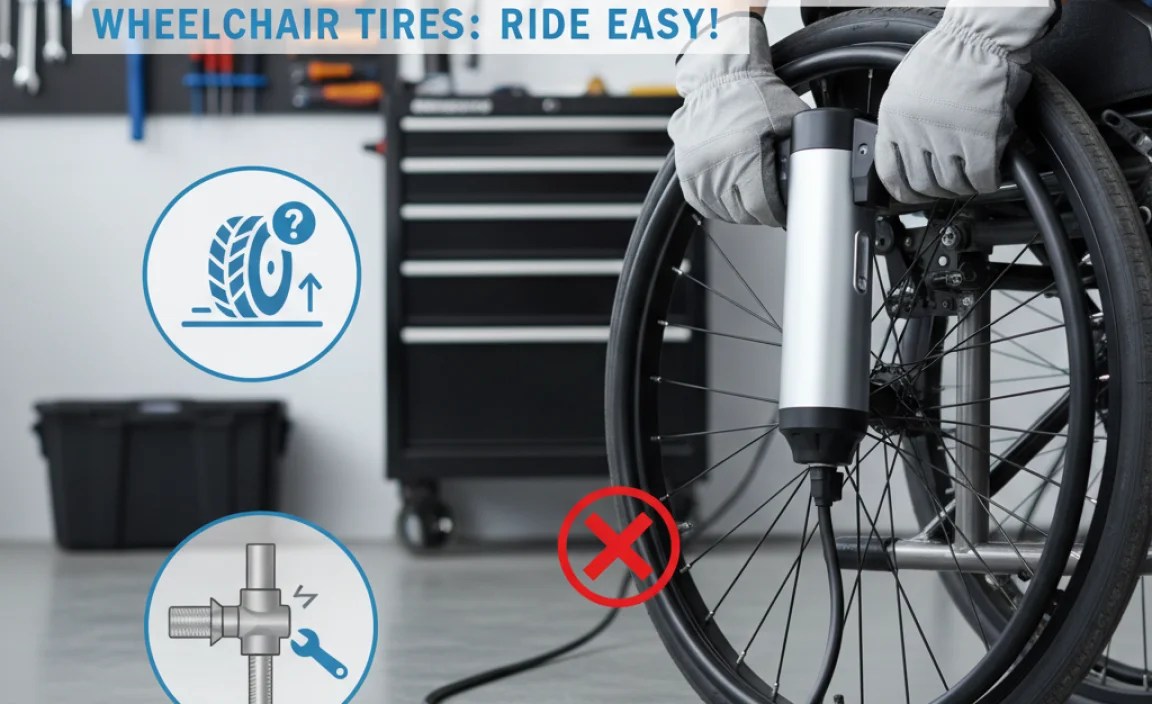
Even with the best equipment, you might encounter some issues while pumping your tires. Here’s how to troubleshoot them:
- Pump Not Sealing:
- Problem: Air leaks around the valve stem.
- Solution: Ensure the pump head is properly seated on the valve. Try adjusting the position of the pump head or replacing the rubber seal inside the pump head.
- Tire Not Inflating:
- Problem: The valve core might be stuck or clogged.
- Solution: For Presta valves, try gently pressing the valve core to ensure it’s not stuck. For Schrader valves, check for any debris blocking the valve.
- Gauge Not Working:
- Problem: The gauge might be faulty.
- Solution: Try a different pump with a known working gauge to verify the pressure. If the gauge is faulty, replace the pump or the gauge if possible.
Understanding Tire Pressure and Its Impact
Maintaining the correct tire pressure is crucial for performance and safety. Here’s why:
Optimal Rolling Resistance
Properly inflated tires roll more efficiently, requiring less effort to propel your wheelchair. Under-inflated tires create more friction with the ground, increasing rolling resistance and making it harder to move.
Comfort and Ride Quality
Correct tire pressure improves ride quality by absorbing bumps and vibrations. Over-inflated tires can make the ride harsh and uncomfortable, while under-inflated tires can feel sluggish and unresponsive.
Preventing Flats
Maintaining the correct tire pressure helps prevent pinch flats, which occur when the tire is compressed against the rim, pinching the inner tube. Proper inflation provides enough cushioning to protect the tube.
Extending Tire Life
Properly inflated tires wear more evenly and last longer. Under-inflated tires can wear excessively on the sidewalls, while over-inflated tires can wear in the center.
Choosing the Right Tire for Your Needs
Different tires offer different characteristics. Consider these factors when selecting tires for your wheelchair:
Tire Width
Wider tires provide more cushioning and stability, while narrower tires offer lower rolling resistance. Choose a width that suits your needs and preferences.
Tire Tread
Smooth tires are best for smooth surfaces, while tires with tread provide better grip on rough or uneven terrain. Consider the types of surfaces you’ll be using your wheelchair on.
Tire Material
Tires are typically made of rubber, but some may have Kevlar or other materials for added durability and puncture resistance. Consider your budget and the level of protection you need.
Table: Comparing Wheelchair Tire Types
| Tire Type | Pros | Cons | Ideal Use |
|---|---|---|---|
| Solid Tires | Puncture-proof, low maintenance | Harsh ride, higher rolling resistance | Indoor use, smooth surfaces |
| Pneumatic Tires | Comfortable ride, lower rolling resistance | Prone to punctures, requires maintenance | Outdoor use, varied terrains |
| Puncture-Resistant Tires | Good balance of comfort and durability | Slightly higher rolling resistance | Everyday use, moderate terrains |
Table: Recommended Tire Pressures for Wheelchairs
| Tire Width | Recommended Pressure (PSI) |
|---|---|
| 1 inch | 90-100 |
| 1.25 inches | 80-90 |
| 1.5 inches | 70-80 |
| 1.75 inches | 60-70 |
FAQ: Pumping Wheelchair Tires
1. How often should I pump my wheelchair tires?
You should check and, if necessary, pump your wheelchair tires at least once a week. If you use your wheelchair very frequently, check them before each use.
2. What PSI should my wheelchair tires be?
Check the sidewall of your tire. Most wheelchair tires require between 60 and 100 PSI. Don’t exceed the maximum pressure listed on the tire.
3. Can I use a regular bike pump for my wheelchair tires?
Yes, as long as the pump is compatible with your tire valves (Schrader or Presta) and can reach the required pressure. A pump with a gauge is highly recommended.
4. What’s the difference between Schrader and Presta valves?
Schrader valves are wider and similar to car tire valves, with a spring-loaded pin. Presta valves are narrower, often found on high-performance bikes, and have a lock nut at the tip.
5. What if my pump isn’t sealing properly on the valve?
Make sure the pump head is securely attached to the valve. Adjust the position of the pump head. If the seal is worn, consider replacing the rubber seal inside the pump head.
6. How do I prevent flat tires on my wheelchair?
Maintain proper tire pressure, inspect your tires regularly for wear, and avoid riding over sharp objects. Consider using puncture-resistant tires or tire liners for added protection.
7. Can I use an electric pump to inflate my wheelchair tires?
Yes, electric pumps are a great option, especially if you have limited hand strength. Just make sure the pump is compatible with your tire valves and has a pressure gauge to avoid over-inflation.
Conclusion
Pumping your wheelchair tires doesn’t have to be a chore. With the right pump and a little know-how, you can keep your tires properly inflated and enjoy a smooth, comfortable ride. Remember to check your tire pressure regularly, inspect your tires for wear, and choose tires that suit your needs. With these tips, you’ll be rolling with confidence in no time! Now, go enjoy the ride!


