
Pump for Fixed Gear Bikes: The Ultimate Guide

Quick Summary: To properly inflate tires on a fixed gear bike, you’ll need a pump that can reach high pressures (100-160 PSI). A floor pump with a gauge is ideal for home use, while a mini-pump or CO2 inflator is better for on-the-go repairs. Ensure the pump head is compatible with your valve type (Presta or Schrader) and inflate to the recommended pressure for optimal performance and safety.
Fixed gear bikes, also known as fixies, are simple, fun, and efficient. But keeping those tires properly inflated is crucial for a smooth and safe ride. Underinflated tires can lead to pinch flats, poor handling, and wasted energy. Overinflated tires can be dangerous and uncomfortable. Choosing the right pump and using it correctly can seem tricky, but don’t worry! We’ll walk you through everything you need to know. This guide will help you select the best pump and master the art of inflation, so you can enjoy every ride to the fullest.
Choosing the Right Pump for Your Fixed Gear Bike

Selecting the right pump is the first step in maintaining your fixed gear bike’s tires. Different pumps offer varying levels of convenience and performance. Here’s a breakdown to help you choose:
Floor Pumps: The Home Mechanic’s Essential
Floor pumps are the most common type of pump for home use. They offer stability, efficiency, and often come with a built-in pressure gauge. Here’s why they’re a great choice:
- High Pressure Capability: Fixed gear bikes often require high tire pressures (100-160 PSI), and floor pumps are designed to reach these levels with ease.
- Accuracy: The built-in gauge allows you to inflate your tires to the precise pressure recommended by the tire manufacturer.
- Ease of Use: The stable base and ergonomic handle make inflation quick and comfortable.
When choosing a floor pump, consider the following:
- Gauge Quality: Look for a large, easy-to-read gauge. Digital gauges offer the highest accuracy.
- Pump Head: Ensure the pump head is compatible with both Presta and Schrader valves, or choose one specifically designed for your valve type. Some pumps have auto-adjusting heads, while others require manual adjustment.
- Build Quality: A sturdy steel or aluminum construction will ensure durability and longevity.
Mini-Pumps: Portable Inflation for On-the-Go
Mini-pumps are compact and lightweight, making them ideal for carrying on your rides. While they may not be as efficient as floor pumps, they’re essential for fixing flats on the road.
- Portability: Easily fits in a saddlebag or jersey pocket.
- Versatility: Many mini-pumps are compatible with both Presta and Schrader valves.
- Affordability: Generally less expensive than floor pumps.
Consider these factors when selecting a mini-pump:
- Inflation Efficiency: Look for a pump with a high volume output per stroke. Some mini-pumps have telescoping designs to improve efficiency.
- Pressure Gauge: While not all mini-pumps have gauges, models with gauges offer more accurate inflation.
- Mounting Options: Check if the pump comes with a bracket for mounting to your bike frame.
CO2 Inflators: The Quick Fix Solution
CO2 inflators use compressed carbon dioxide cartridges to quickly inflate tires. They’re lightweight and efficient, but require purchasing replacement cartridges.
- Speed: Inflates tires in seconds.
- Compactness: Extremely small and easy to carry.
- Lightweight: Adds minimal weight to your gear.
Here’s what to look for in a CO2 inflator:
- Control: Choose an inflator with a control valve to regulate the flow of CO2. This helps prevent over-inflation.
- Compatibility: Ensure the inflator is compatible with your valve type.
- Insulation: CO2 cartridges can get very cold during inflation. Look for an inflator with an insulated sleeve to protect your hands.
Valve Types: Presta vs. Schrader
Understanding the difference between Presta and Schrader valves is crucial for choosing the right pump head.
- Presta Valves: These are commonly found on high-performance bikes, including many fixed gear bikes. They are narrower than Schrader valves and have a valve core that needs to be unscrewed before inflation.
- Schrader Valves: These are the same type of valves found on car tires. They are wider and more robust than Presta valves.
Many pumps come with adapters or dual-head designs that can accommodate both valve types. Make sure your pump is compatible with your bike’s valves.
Step-by-Step Guide to Inflating Your Fixed Gear Tires

Now that you’ve chosen the right pump, let’s go through the process of inflating your tires. Follow these steps for safe and effective inflation:
Step 1: Check the Recommended Tire Pressure
The recommended tire pressure is usually printed on the sidewall of your tire. It’s typically given as a range (e.g., 100-120 PSI). Adhering to this range will ensure optimal performance and prevent flats.
Step 2: Prepare the Valve
For Presta valves:
- Remove the valve cap.
- Unscrew the valve core by turning the small nut counter-clockwise.
- Tap the valve core to release a small amount of air. This ensures the valve isn’t stuck.
For Schrader valves:
- Remove the valve cap.
Step 3: Attach the Pump Head
For floor pumps:
- Place the pump head firmly onto the valve.
- Engage the locking lever (if applicable) to create a tight seal.
For mini-pumps:
- Press the pump head onto the valve, ensuring a secure fit.
For CO2 inflators:
- Screw the CO2 cartridge into the inflator head (if it’s not already installed).
- Carefully press the inflator head onto the valve.
Step 4: Inflate the Tire
For floor pumps:
- Place both hands on the pump handle and your feet on the base for stability.
- Pump in a smooth, consistent motion, watching the pressure gauge.
- Inflate to the desired pressure.
For mini-pumps:
- Hold the pump firmly against the valve with one hand and pump with the other.
- Use short, quick strokes to inflate the tire.
- If your pump has a gauge, monitor the pressure. If not, use your best judgment, erring on the side of slightly under-inflating.
For CO2 inflators:
- Slowly release the CO2 by pressing the control valve (if equipped).
- Inflate the tire to a usable pressure. Be careful not to over-inflate, as CO2 inflators can fill tires very quickly.
Step 5: Detach the Pump Head
For floor pumps:
- Disengage the locking lever (if applicable).
- Carefully remove the pump head from the valve.
For mini-pumps:
- Pull the pump head straight off the valve.
For CO2 inflators:
- Remove the inflator head from the valve.
Step 6: Secure the Valve
For Presta valves:
- Tighten the valve core by turning the small nut clockwise.
- Replace the valve cap.
For Schrader valves:
- Replace the valve cap.
Step 7: Check the Tire Pressure
Use a separate tire pressure gauge to verify the pressure is accurate, especially if you used a mini-pump without a gauge or a CO2 inflator. Accurate tire pressure ensures optimal performance and safety. A digital tire pressure gauge like this one from Accutire can help you get precise readings.
Maintaining Your Pump for Longevity
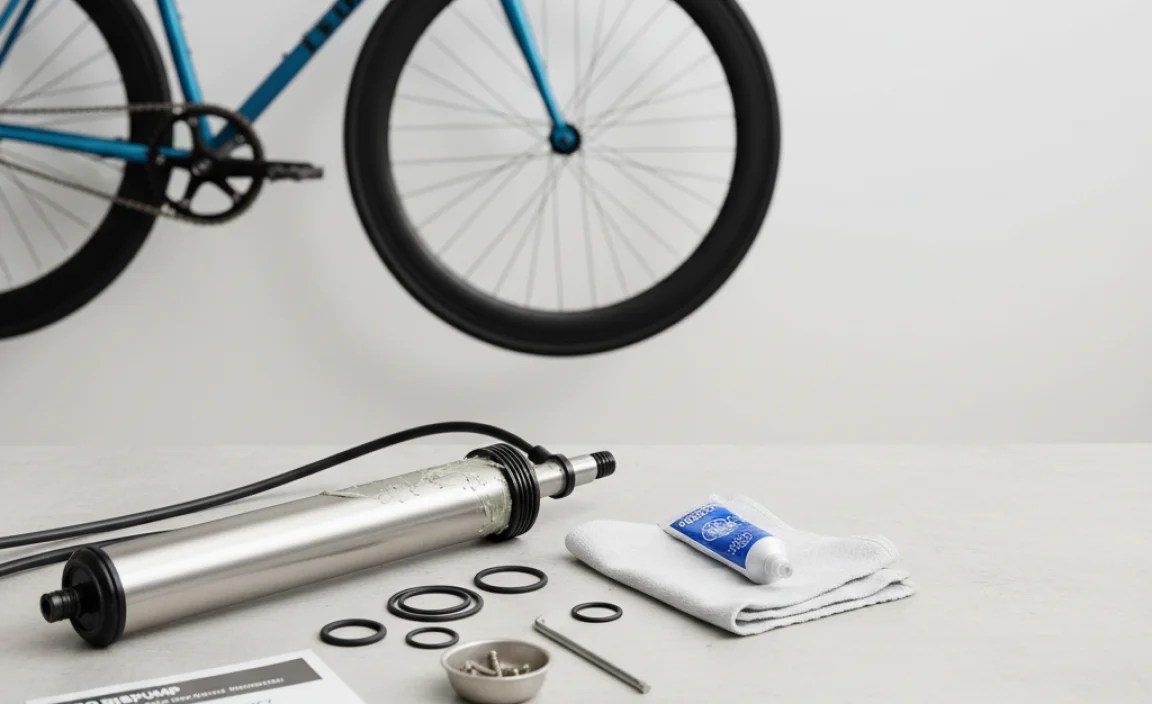
Proper maintenance will keep your pump working efficiently for years. Here are some tips:
- Clean the Pump Head: Regularly clean the pump head to remove dirt and debris that can interfere with the seal.
- Lubricate the Piston: Apply a small amount of silicone-based lubricant to the piston or shaft of the pump to keep it moving smoothly.
- Inspect the Hose: Check the hose for cracks or leaks and replace it if necessary.
- Store Properly: Store your pump in a dry place to prevent rust and corrosion.
Troubleshooting Common Pumping Problems
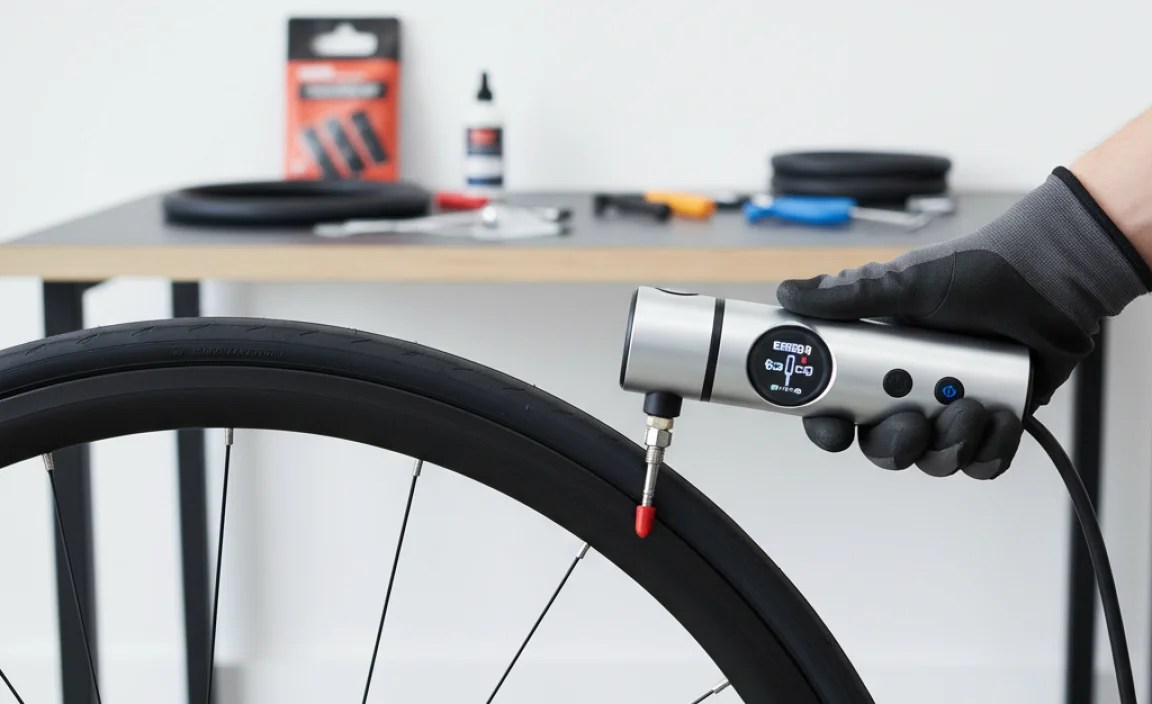
Even with the best equipment, you might encounter issues. Here’s how to troubleshoot common problems:
- Air Leaking Around the Valve: This usually indicates a poor seal between the pump head and the valve. Make sure the pump head is securely attached and the locking lever (if applicable) is engaged. If the problem persists, the pump head may need to be replaced.
- Difficulty Pumping: This could be due to a dry or damaged piston. Lubricate the piston or replace it if necessary.
- Gauge Not Working: If the gauge is not registering pressure, it may be damaged and need to be replaced.
- CO2 Inflator Freezing: CO2 cartridges get extremely cold when discharged. Use an insulated sleeve to protect your hands.
Table: Pump Types and Their Features
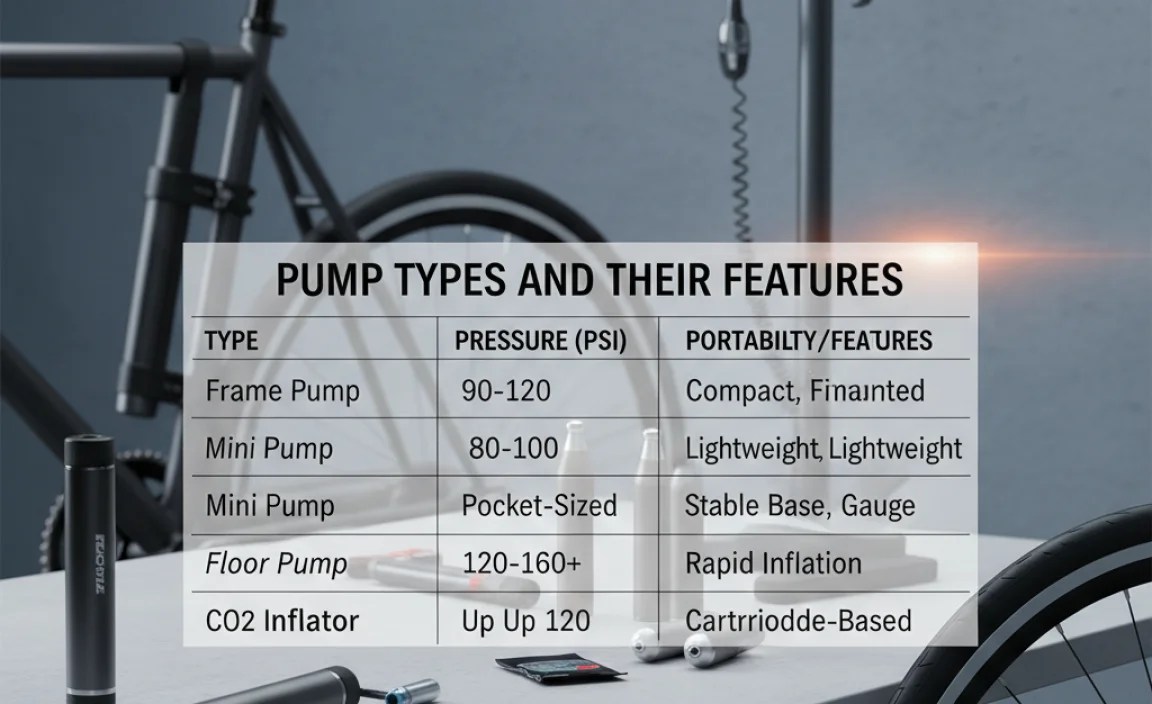
| Pump Type | Pros | Cons | Best Use |
|---|---|---|---|
| Floor Pump | High pressure, accurate gauge, easy to use | Not portable | Home maintenance |
| Mini-Pump | Portable, affordable | Less efficient, may lack gauge | On-the-go repairs |
| CO2 Inflator | Fast inflation, compact, lightweight | Requires cartridges, can be wasteful | Emergency inflation |
Table: Recommended Tire Pressure for Fixed Gear Bikes
| Tire Width | Recommended Pressure (PSI) |
|---|---|
| 23mm | 110-130 |
| 25mm | 100-120 |
| 28mm | 90-110 |
Note: Always refer to the tire manufacturer’s recommendations for the most accurate pressure range.
FAQ: Pumping Fixed Gear Bike Tires
Q: How often should I inflate my fixed gear tires?
A: Check your tire pressure before every ride. Tires lose pressure over time, so regular inflation is essential for optimal performance and safety.
Q: Can I use a car tire pump for my bike?
A: While you can use a car tire pump with a Schrader valve, it’s not recommended. Car pumps are designed for lower pressures and may not be accurate enough for bike tires. Additionally, using a car pump on a Presta valve requires an adapter, which can be inconvenient.
Q: What happens if I over-inflate my tires?
A: Over-inflating your tires can lead to a harsh ride, reduced grip, and an increased risk of blowouts. Always stay within the recommended pressure range.
Q: What happens if I under-inflate my tires?
A: Under-inflating your tires can cause pinch flats (where the tire pinches the tube against the rim), poor handling, and increased rolling resistance. This makes it harder to pedal and reduces efficiency.
Q: How do I know if my pump is compatible with my valve type?
A: Check the pump head for compatibility markings. Many pumps have dual-head designs that can accommodate both Presta and Schrader valves. If your pump only works with one type, you may need to purchase an adapter.
Q: What is the ideal tire pressure for a fixed gear bike?
A: The ideal tire pressure depends on your tire width and riding preferences. Generally, narrower tires (23mm) require higher pressures (110-130 PSI), while wider tires (28mm) can be run at lower pressures (90-110 PSI). Always refer to the tire manufacturer’s recommendations.
Q: Why is it hard to pump my tires with a mini-pump?
A: Mini-pumps are designed for portability, not efficiency. They often require more strokes to inflate a tire compared to a floor pump. Choose a mini-pump with a high volume output per stroke and use short, quick strokes for best results.
Conclusion
Choosing the right pump and maintaining proper tire pressure are essential for enjoying your fixed gear bike to the fullest. Whether you opt for a reliable floor pump for home use, a portable mini-pump for on-the-go repairs, or a quick CO2 inflator for emergencies, understanding the basics of inflation will keep you rolling smoothly and safely. Remember to check your tire pressure regularly, maintain your pump, and troubleshoot any issues that arise. With a little practice and the right tools, you’ll be able to confidently handle your tire maintenance and focus on the joy of riding.


