
CO2 Inflator For Bike Shop Owners: Stocking Guide

Did you ever get a flat tire far from home? It is not fun. CO2 inflators can help. They fill tires fast. Bike shop owners, listen up! This CO2 inflator for bike shop owners – stocking guide will help you. You can keep riders safe. You can also help them get back on the road quickly.
Do you want to help your customers? Stocking the right CO2 inflators is key. This guide will show you how. It will cover what to look for. It will also tell you how to display them. Let’s get started!
Key Takeaways
- CO2 inflators offer quick and easy tire inflation for cyclists on the go.
- Stock a variety of CO2 inflator types to meet different customer needs.
- Consider ease of use and reliability when selecting CO2 inflators.
- Offer CO2 cartridges in multiple sizes for different tire volumes.
- Provide clear instructions and safety tips for using CO2 inflators. This CO2 inflator for bike shop owners – stocking guide helps you achieve this.
Understanding CO2 Inflators: A Stocking Guide
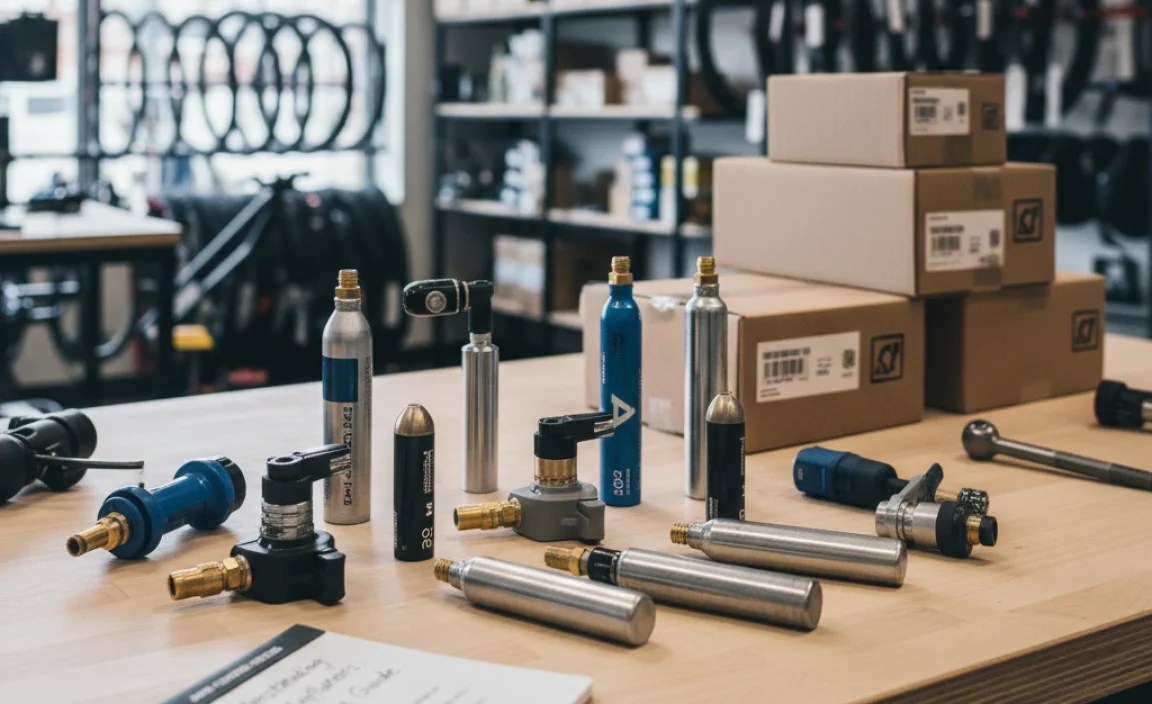
CO2 inflators are small devices. They use compressed carbon dioxide to fill bike tires. They are popular with cyclists for fast inflation. This is very useful during a ride. They are much faster than hand pumps. Riders can quickly fix flats. They can get back to riding sooner. CO2 inflators are also lightweight. This makes them easy to carry. Many cyclists keep one in their seat bag. They are ready for any flat tire. For bike shop owners, stocking CO2 inflators is smart. It meets a real need for cyclists. It can also bring more customers to your shop. You need to understand the different types. You also need to know which ones are the most reliable. You should also offer a range of CO2 cartridges. This will help you meet the needs of all riders.
- CO2 inflators use compressed carbon dioxide to inflate tires.
- They are much faster than hand pumps.
- They are small and easy to carry on rides.
- Many cyclists carry them for quick flat fixes.
- Offering different types can attract more customers.
When you stock CO2 inflators, think about your customers. What kind of bikes do they ride? What type of riding do they do? Road cyclists might want lightweight inflators. Mountain bikers might need larger cartridges. Make sure you have a good selection. You should also show customers how to use them. This will help them feel confident. Happy customers will come back to your shop. They will also tell their friends. Stocking the right CO2 inflators can boost your business. It can also make you the go-to shop for cyclists in your area.
Fun Fact or Stat: The first CO2 inflators were developed in the late 1980s for professional cyclists during races!
Types of CO2 Inflators Available
Have you ever wondered about all the different kinds of CO2 inflators? There are many types. Some are simple and basic. Others have more features. Some have a control valve. This lets you control how much air goes into the tire. This can be helpful to avoid over-inflation. Some CO2 inflators have a built-in pressure gauge. This helps you see how much pressure is in the tire. This can help you get the right pressure. Some are designed for specific types of valves. Make sure to stock different types. This will meet the needs of all your customers. You can also get combo tools. These include a CO2 inflator and other tools. These are great for cyclists who want to carry less.
CO2 Cartridge Sizes and Compatibility
Choosing the right CO2 cartridge size is important. Different tires need different amounts of air. Road bike tires are usually thinner. They need less CO2. Mountain bike tires are wider. They need more CO2. Cartridges come in different sizes. Common sizes are 12g, 16g, and 20g. Some inflators only work with certain sizes. Make sure your customers know which cartridges to use. You should also stock a variety of sizes. This will help you meet the needs of all riders. Some riders might want to carry extra cartridges. This is a good idea for long rides. Always check the compatibility. This will prevent problems on the road. Remember, safety is always first!
Inflator Materials and Durability
CO2 inflators are made from different materials. Some are made from plastic. These are usually cheaper. They might not last as long. Others are made from metal. These are usually more durable. They can handle more use. Aluminum is a popular choice. It is lightweight and strong. Some inflators have rubber grips. These make them easier to hold. This is helpful when your hands are wet. Consider the materials when you stock inflators. Think about how long you want them to last. More durable inflators might cost more. But they can be a better value in the long run. Your customers will appreciate quality products.
Choosing the Right CO2 Inflators for Your Shop

Picking the right CO2 inflators for your shop is key. You want to offer products that are reliable. You also want products that are easy to use. Think about your customers. What are their needs? What is their budget? Some cyclists want the cheapest option. Others want the best quality. Offer a range of choices. Look for inflators with good reviews. This can help you find reliable products. Check for warranties. This can protect you and your customers. Make sure the inflators are easy to use. This will make your customers happy. Happy customers will come back to your shop. They will also recommend you to others. This is a great way to grow your business.
- Read reviews to find reliable CO2 inflators.
- Look for products with good warranties.
- Choose inflators that are easy for customers to use.
- Offer a range of prices to meet different budgets.
- Consider the types of bikes your customers ride.
- Ask your suppliers about the latest models.
When you are choosing CO2 inflators, think about safety. Make sure the inflators have safety features. Some have a shield to protect your hands. CO2 cartridges can get very cold when used. This can burn your skin. A shield can prevent this. Read the instructions carefully. Make sure you understand how to use the inflator. Show your staff how to use them. This will help them answer customer questions. Always follow safety guidelines. This will help prevent accidents. Remember, safety is the most important thing. A safe shop is a successful shop.
Fun Fact or Stat: Some professional cycling teams use CO2 inflators that can fill a tire in under 5 seconds!
Evaluating Inflator Head Design
Have you ever struggled to attach an inflator to your tire valve? The design of the inflator head matters. Some heads are easier to use than others. Look for heads that fit both Presta and Schrader valves. These are the two main types of bike valves. Some heads have a simple push-on design. Others have a threaded design. Threaded designs can be more secure. But they can also be harder to use. Consider the size and shape of the head. A smaller head might be easier to carry. A larger head might be easier to grip. Test different heads to see what works best. Your customers will appreciate a well-designed inflator head. It can make fixing a flat much easier.
Assessing Cartridge Threading and Seals
The threading on a CO2 cartridge is important. It needs to be strong and secure. This will prevent leaks. Leaks can waste CO2. They can also be dangerous. Check the quality of the threading. Make sure it is not damaged. The seals on the cartridge are also important. They need to be airtight. This will keep the CO2 inside. Look for cartridges with good seals. Some cartridges have a rubber seal. Others have a metal seal. Metal seals are usually more durable. Store cartridges in a cool, dry place. This will help them last longer. Your customers will appreciate reliable cartridges. They want to be able to fix their tires quickly and easily.
Considering Nozzle and Control Mechanisms
The nozzle is the part of the inflator that goes onto the tire valve. It needs to be the right size and shape. This will ensure a good fit. Some nozzles have a control mechanism. This lets you control the flow of CO2. This can help you avoid over-inflating the tire. Some control mechanisms are simple. Others are more complex. A simple mechanism is easier to use. But a complex mechanism might offer more control. Consider the needs of your customers. Some might want a simple inflator. Others might want more features. Stock a variety of inflators to meet different needs. Your customers will appreciate the choices.
Displaying CO2 Inflators in Your Bike Shop

How you show off your CO2 inflators matters. A good display can catch customers’ eyes. It can also help them learn about the products. Put the inflators in a high-traffic area. This will make sure more people see them. Use clear signs to explain the benefits. Tell customers how easy they are to use. Show them how much faster they are than hand pumps. Group the inflators with other related products. This could include tire levers, patch kits, and spare tubes. This makes it easy for customers to find everything they need. Keep the display neat and organized. This will make it more appealing. A well-designed display can boost sales. It can also make your shop look more professional.
- Place CO2 inflators in a high-traffic area.
- Use clear signs to explain the benefits.
- Group them with related products like tire levers.
- Keep the display neat and organized.
- Use eye-catching colors and graphics.
- Rotate the display regularly to keep it fresh.
Think about using a demo station. This is a place where customers can try out the inflators. This can help them see how easy they are to use. You can also create a video. Show how to use a CO2 inflator. Post it on your website and social media. This will help customers learn about the products. It will also show that you are an expert. Offer special deals on CO2 inflators. This can encourage customers to buy them. For example, offer a discount when they buy a new tire. Or give them a free cartridge with every inflator purchase. A good display can make a big difference. It can help you sell more CO2 inflators and other products.
Fun Fact or Stat: Bike shops that have well-organized displays see an average increase of 20% in accessory sales!
Creating Attractive Product Bundles
Do you want to sell more CO2 inflators? Try bundling them with other products. A bundle is a group of products sold together. This can make them more appealing to customers. For example, bundle a CO2 inflator with a tire lever set. You could also add a patch kit. This gives customers everything they need to fix a flat. Offer the bundle at a discount. This will make it even more attractive. Bundles can also help you move slow-selling items. Add a slow-selling item to a bundle with popular items. This can help you clear out your inventory. Make sure the items in the bundle make sense together. Customers should see the value in buying them together. A well-designed bundle can boost your sales.
Using Signage to Highlight Benefits
Signs are a great way to tell customers about CO2 inflators. Use signs to highlight the benefits. Tell them how fast they are. Explain how easy they are to use. Compare them to hand pumps. Show how much time they can save. Use clear and simple language. Avoid technical terms that customers might not understand. Use eye-catching colors and graphics. This will make the signs more noticeable. Place the signs near the CO2 inflators. This will help customers see them when they are looking at the products. Update the signs regularly. This will keep them fresh and relevant. Good signage can help customers make informed decisions. It can also boost your sales.
Implementing a Demo Station
A demo station is a great way to show off CO2 inflators. Set up a station where customers can try them out. Provide a sample tire and valve. Show them how to attach the inflator. Let them try inflating the tire. This will help them see how easy it is. Have a staff member available to answer questions. This will help customers feel more comfortable. Keep the demo station clean and organized. This will make it more appealing. Place the demo station in a high-traffic area. This will make sure more people see it. Promote the demo station on social media. This will encourage customers to come in and try it out. A demo station can be a great way to increase sales.
Pricing CO2 Inflators for Profitability

Setting the right price for CO2 inflators is important. You need to make a profit. But you also need to be competitive. Look at what other shops are charging. This will give you an idea of the market price. Consider your costs. How much did you pay for the inflators? Add a markup to cover your expenses. Also, add a profit margin. Think about the value you are offering. Are you providing good customer service? Are you offering a warranty? These things can justify a higher price. Offer different price points. This will appeal to different customers. Some customers are looking for the cheapest option. Others are willing to pay more for quality. Price your CO2 inflators carefully. This will help you make a profit and stay competitive.
- Research the market price for CO2 inflators.
- Calculate your costs, including expenses and profit.
- Consider the value you are offering to customers.
- Offer different price points for different customers.
- Monitor your sales and adjust prices as needed.
Think about offering discounts on bulk purchases. This can encourage customers to buy more. You can also offer discounts to club members. This can help you build loyalty. Run promotions to attract new customers. For example, offer a discount on their first purchase. Track your sales data. This will help you see which prices are working. It will also help you identify trends. Are certain inflators selling better than others? Are certain times of year better for sales? Use this information to adjust your pricing strategy. Pricing is an ongoing process. You need to keep adjusting to stay profitable.
Fun Fact or Stat: Bike shops that regularly review their pricing strategy see an average increase of 15% in profit margins!
Analyzing Competitor Pricing Strategies
What are other bike shops charging for CO2 inflators? Visit their shops or websites to find out. Compare their prices to yours. Are they higher or lower? Why might that be? Do they offer better service? Do they have a better location? Do they have a wider selection? Consider their pricing strategies. Are they trying to be the cheapest? Are they focusing on quality? Are they offering discounts? Use this information to inform your own pricing strategy. You don’t necessarily need to match their prices. But you should understand why they are priced the way they are. This will help you make smart decisions about your own pricing.
Calculating Markup and Profit Margin
Markup is the difference between your cost and your selling price. Profit margin is the percentage of revenue that is profit. To calculate markup, subtract your cost from your selling price. Then divide by your cost. To calculate profit margin, subtract your cost from your revenue. Then divide by your revenue. It is important to understand these concepts. They will help you price your CO2 inflators effectively. Aim for a markup that covers your expenses. Also, aim for a profit margin that is acceptable to you. There are many online calculators that can help you. Use them to make sure you are pricing your products correctly.
Implementing Dynamic Pricing Strategies
Dynamic pricing means changing your prices based on market conditions. For example, you might raise prices when demand is high. You might lower prices when demand is low. You can also adjust prices based on competitor pricing. If a competitor lowers their price, you might lower yours. This can help you stay competitive. Dynamic pricing can be complex. It requires you to track market conditions closely. You also need to be able to change your prices quickly. But it can also be very effective. It can help you maximize your profits. Consider using dynamic pricing for your CO2 inflators. This can help you stay ahead of the competition.
Training Your Staff on CO2 Inflator Usage

Your staff needs to know how to use CO2 inflators. They also need to know how to explain them to customers. This will help them sell more inflators. It will also build trust with customers. Train your staff on the different types of inflators. Show them how to attach them to valves. Teach them how to control the flow of CO2. Explain the safety precautions. Tell them how to handle cold cartridges. Have them practice using the inflators. This will help them feel more confident. Encourage them to ask questions. Make sure they understand everything. A well-trained staff can be a valuable asset. They can help you sell more CO2 inflators and other products.
| Training Topic | Description | Importance |
|---|---|---|
| Types of Inflators | Understanding different CO2 inflator models and their features. | Helps staff recommend the right inflator for each customer. |
| Usage Instructions | Step-by-step guide on how to attach and use a CO2 inflator. | Ensures staff can demonstrate proper usage to customers. |
| Safety Precautions | Highlighting potential hazards and safety measures. | Protects staff and customers from injury. |
| Troubleshooting | Addressing common issues like leaks and compatibility problems. | Enables staff to solve customer problems quickly. |
- Train staff on different types of CO2 inflators.
- Show them how to attach inflators to valves.
- Teach them how to control the flow of CO2.
- Explain safety precautions for handling cold cartridges.
- Have them practice using the inflators.
Consider creating a training manual. This will provide a reference for your staff. Include pictures and diagrams. This will make it easier to understand. Update the manual regularly. This will keep it current. You can also create a quiz. This will test your staff’s knowledge. Reward them for completing the training. This will motivate them to learn. A well-trained staff can provide excellent customer service. This will help you build a loyal customer base.
Fun Fact or Stat: Bike shops with comprehensive staff training programs see a 25% increase in customer satisfaction!
Conducting Hands-On Training Sessions
Reading about CO2 inflators is one thing. Using them is another. Hands-on training is essential. It lets your staff practice using the inflators. Set up a training station. Provide different types of inflators. Also provide different types of valves. Have your staff practice attaching the inflators. Have them practice inflating tires. Observe them carefully. Give them feedback. Correct any mistakes. Answer their questions. Repeat the training regularly. This will help them stay sharp. Hands-on training will build their confidence. It will also improve their skills.
Developing a Training Manual
A training manual is a valuable resource. It provides a reference for your staff. Include detailed instructions on how to use CO2 inflators. Add pictures and diagrams. This will make it easier to understand. Explain the different types of inflators. Describe their features and benefits. Include safety precautions. Explain how to handle cold cartridges. Update the manual regularly. This will keep it current. Make the manual available to all staff. Encourage them to review it regularly. A well-written training manual can improve staff performance.
Creating a Certification Program
Do you want to motivate your staff to learn about CO2 inflators? Create a certification program. This will recognize their knowledge and skills. Develop a test. This will assess their understanding of CO2 inflators. Include questions about different types of inflators. Also, include questions about safety precautions. Offer a reward for passing the test. This could be a bonus or a promotion. Publicly recognize those who become certified. This will encourage others to participate. A certification program can improve staff morale. It can also improve customer service.
Addressing Safety Concerns with CO2 Inflators
Safety is very important when using CO2 inflators. CO2 cartridges can get very cold. This can cause frostbite. Always wear gloves when handling them. Never touch the cartridge with your bare skin. Do not over-inflate the tire. This can cause it to explode. Use a gauge to check the pressure. Point the inflator away from your face and body. This will prevent injury if something goes wrong. Store cartridges in a safe place. Keep them away from heat and sunlight. Follow all safety instructions. This will help prevent accidents. Make sure your customers know about these safety concerns. This will help them use CO2 inflators safely.
- Always wear gloves when handling CO2 cartridges.
- Do not over-inflate tires to avoid explosions.
- Use a gauge to check tire pressure.
- Point the inflator away from your face and body.
- Store cartridges in a cool, dry place.
- Follow all safety instructions carefully.
Consider posting safety signs in your shop. This will remind customers about the risks. You can also include safety information on your website. This will help customers learn about safety before they buy. Offer safety gear for sale. This could include gloves and eye protection. This will make it easy for customers to protect themselves. By addressing safety concerns, you can build trust with your customers. They will appreciate your commitment to their safety. This will help you build a loyal customer base.
Fun Fact or Stat: Shops that prioritize safety see a 40% reduction in customer complaints related to product misuse!
Highlighting Risks of Over-Inflation
Over-inflating a tire can be dangerous. It can cause the tire to explode. This can cause serious injury. Always use a gauge to check the pressure. Follow the manufacturer’s recommendations. Do not exceed the maximum pressure. Be especially careful with CO2 inflators. They can fill tires very quickly. It is easy to over-inflate a tire by accident. Check the pressure frequently while inflating. Stop when you reach the recommended pressure. Educate your customers about the risks of over-inflation. This will help them stay safe.
Providing Proper Usage Instructions
Clear and easy-to-understand instructions are important. They will help customers use CO2 inflators safely. Include step-by-step instructions. Use pictures and diagrams. Explain the different parts of the inflator. Describe how to attach it to the valve. Explain how to control the flow of CO2. Include safety precautions. Tell customers how to handle cold cartridges. Warn them about the risks of over-inflation. Make the instructions available in multiple languages. This will help customers from different backgrounds. Proper usage instructions can prevent accidents.
Offering Protective Gear
Protective gear can help prevent injuries. Offer gloves for sale. This will protect customers’ hands from the cold. Also, offer eye protection. This will protect their eyes from debris. Make sure the gear is comfortable and easy to use. Explain the benefits of using protective gear. Encourage customers to use it. This will show that you care about their safety. This will help you build trust with your customers.
Summary
This CO2 inflator for bike shop owners – stocking guide helps you make smart choices. We discussed the different types of CO2 inflators. We also covered cartridge sizes and materials. Choosing the right inflators for your shop is key. Display them well to attract customers. Price them right to make a profit. Train your staff to use them and explain them. Always address safety concerns. By following these tips, you can succeed. You can also help your customers stay safe on the road. A well-stocked shop with knowledgeable staff will thrive. This guide is your first step towards success.
Conclusion
Stocking the right CO2 inflators can really help your bike shop. It can bring in more customers. It can also make you a trusted shop. Remember to choose reliable products. Display them well. Train your staff. Focus on safety. By following this CO2 inflator for bike shop owners – stocking guide, you’ll be ready. You will meet your customers’ needs. You will also grow your business. Good luck!
Frequently Asked Questions
Question No 1: What are the benefits of stocking CO2 inflators in my bike shop?
Answer: Stocking CO2 inflators can attract more customers. They offer a quick and easy way to inflate tires. This is very helpful for cyclists on the go. They are also lightweight and easy to carry. This makes them a popular choice. Offering CO2 inflators can also increase your sales. Customers often buy cartridges and other accessories. You can also build a reputation as a reliable shop. This will bring in more repeat business. Stocking CO2 inflators is a smart business decision. It can benefit both your shop and your customers. It shows that you care about their needs.
Question No 2: What types of CO2 inflators should I stock in my shop?
Answer: You should stock a variety of CO2 inflators. This will meet the needs of different customers. Some inflators have a control valve. This lets you control the flow of CO2. Others have a built-in pressure gauge. This helps you get the right pressure. Some are designed for specific types of valves. Make sure to offer inflators that fit both Presta and Schrader valves. You should also stock different sizes of CO2 cartridges. This will help you meet the needs of all riders. Offering a good selection of CO2 inflators will attract more customers. It will also show that you are knowledgeable about cycling.
Question No 3: How should I display CO2 inflators in my bike shop?
Answer: Display CO2 inflators in a high-traffic area. This will make sure more people see them. Use clear signs to explain the benefits. Tell customers how easy they are to use. Show them how much faster they are than hand pumps. Group the inflators with other related products. This could include tire levers, patch kits, and spare tubes. This makes it easy for customers to find everything they need. Keep the display neat and organized. This will make it more appealing. A well-designed display can boost sales.
Question No 4: How should I price CO2 inflators in my bike shop?
Answer: Setting the right price for CO2 inflators is important. You need to make a profit. But you also need to be competitive. Look at what other shops are charging. This will give you an idea of the market price. Consider your costs. How much did you pay for the inflators? Add a markup to cover your expenses. Also, add a profit margin. Think about the value you are offering. Are you providing good customer service? Are you offering a warranty? These things can justify a higher price. Offer different price points. This will appeal to different customers. Some customers are looking for the cheapest option. Others are willing to pay more for quality.
Question No 5: What safety precautions should I teach my staff about CO2 inflators?
Answer: Your staff needs to know about safety. CO2 cartridges can get very cold. This can cause frostbite. Always wear gloves when handling them. Never touch the cartridge with your bare skin. Do not over-inflate the tire. This can cause it to explode. Use a gauge to check the pressure. Point the inflator away from your face and body. This will prevent injury if something goes wrong. Store cartridges in a safe place. Keep them away from heat and sunlight. Following these safety measures helps prevent accidents related to CO2 inflators.
Question No 6: How can I ensure customer satisfaction with CO2 inflators?
Answer: To ensure customer satisfaction, provide clear instructions and safety tips. Offer a variety of CO2 inflators to meet different needs. Stock different sizes of CO2 cartridges. Train your staff to answer customer questions. Handle complaints quickly and professionally. Offer a warranty on your products. By taking these steps, you can build trust with your customers. They will appreciate your commitment to their needs. This will help you build a loyal customer base. Happy customers are more likely to recommend your shop to others.


