
Why Some CO2 Inflator Kits Include 16g & 25g Cartridges?

Have you ever seen a tiny can fill a bike tire? It’s like magic! These cans are CO2 cartridges. They help you fix a flat tire fast. But why some CO2 inflator kits include 16g & 25g cartridges? It can seem a bit confusing. Let’s find out the reasons behind this.
Different tires need different amounts of air. That’s why there are different sizes of CO2 cartridges. It is important to pick the right size for your bike. This way, you will always be ready to ride.
One day, Lily was riding her bike. Suddenly, her tire went flat! Luckily, she had her CO2 inflator kit. It had both 16g and 25g cartridges. She picked the right one and was back on her way in minutes. Isn’t that neat?
Key Takeaways
- CO2 inflator kits offer quick and easy flat tire repair on the go.
- 16g cartridges are best for smaller tires, like those on road bikes.
- 25g cartridges work well for bigger tires, like mountain bike tires.
- Choosing the right size ensures proper tire inflation for safe riding.
- Understanding why some CO2 inflator kits include 16g & 25g cartridges is key.
Why CO2 Cartridge Size Matters
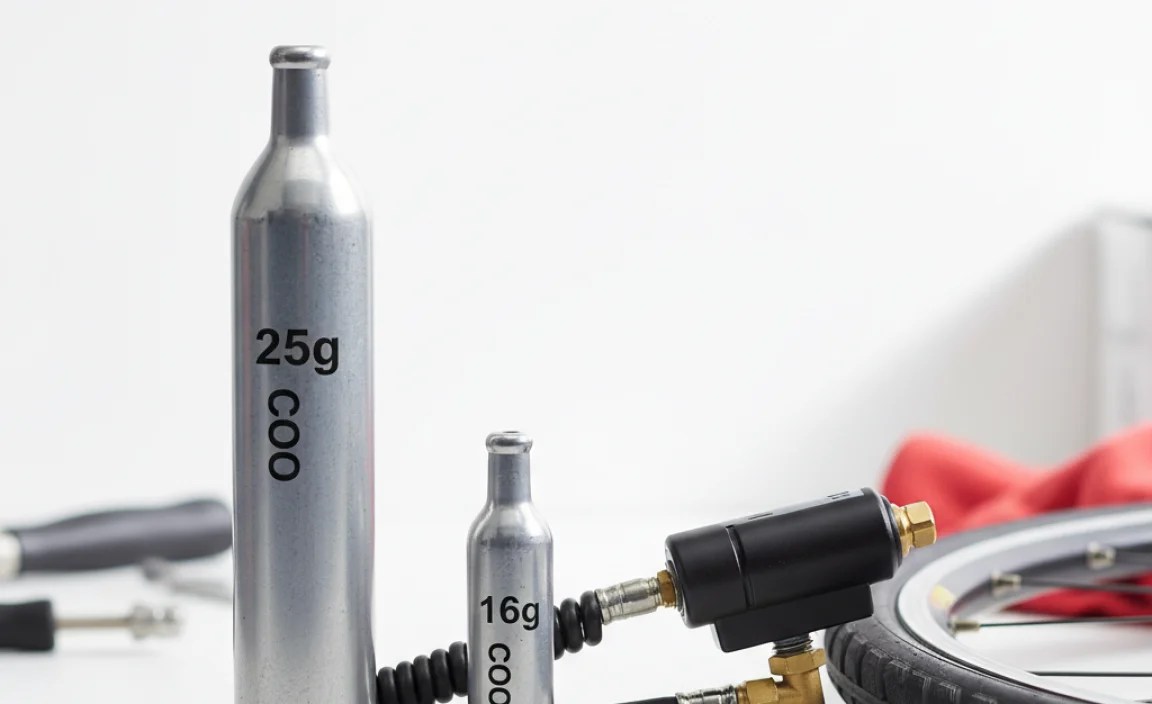
Have you ever tried to blow up a balloon that was too big for your breath? It’s the same idea with bike tires and CO2 cartridges. The size of the cartridge matters a lot! A 16g cartridge is smaller. It’s good for tires that don’t need much air. Road bikes often have these kinds of tires. A 25g cartridge is bigger. It can fill larger tires, like those on mountain bikes. If you use a small cartridge on a big tire, it won’t fill it enough. If you use a big cartridge on a small tire, it might overfill and burst! That’s why some CO2 inflator kits include 16g & 25g cartridges. They give you options. It lets you pick the right size for your tire. This helps you get back to riding safely and quickly.
- Smaller cartridges suit road bike tires best.
- Larger cartridges are better for mountain bike tires.
- Right size means proper inflation, which is safer.
- Wrong size might lead to under or over inflation.
- Choose wisely based on your tire size needs.
Imagine you are Goldilocks trying to find the perfect porridge. One bowl is too hot, and one is too cold. You need the one that is just right. CO2 cartridges are similar. You need the right size to fill your tire perfectly. If you use a 16g cartridge on a mountain bike tire, it will be like the too-cold porridge. It won’t give you enough air. If you use a 25g cartridge on a road bike tire, it will be like the too-hot porridge. It might cause the tire to burst. Getting the size right is not just about convenience. It is also about safety. It makes sure your tires are inflated just right for a smooth and safe ride. Always check your tire’s recommended pressure before using a CO2 inflator.
Fun Fact or Stat: The first CO2 cartridges for bikes were developed in the late 1980s to help racers fix flats quickly during competitions!
How Tire Size Affects Cartridge Choice
Do you know why big trucks have bigger tires than small cars? It is because they need to carry more weight. Similarly, bigger bike tires need more air than smaller ones. A mountain bike tire is wide and needs a lot of air to fill it up. A 16g cartridge might not be enough. It’s like trying to fill a big swimming pool with a small bucket. You would be there all day! A 25g cartridge is like using a bigger bucket. It will fill the tire much faster. Road bike tires are thinner. They don’t need as much air. A 16g cartridge is often perfect for them. It’s like using a small watering can for a small plant. You give it just the right amount of water. Choosing the right CO2 cartridge is all about matching the size to your tire.
Understanding Tire Pressure Ratings
Have you ever seen numbers on the side of your bike tire? These numbers tell you how much air to put in your tire. It’s like a recipe telling you how much of each ingredient to use. These numbers are called tire pressure ratings. They are usually shown as PSI (pounds per square inch). A mountain bike tire might say “30-50 PSI”. This means you should fill it with air until it has between 30 and 50 PSI. A road bike tire might say “80-120 PSI”. This means it needs more air. These numbers help you know why some CO2 inflator kits include 16g & 25g cartridges. The cartridge size helps you reach the right PSI. Always check your tire pressure before and after using a CO2 inflator.
Why Over-Inflation Is Dangerous
Imagine blowing up a balloon until it pops. That’s what can happen if you put too much air in your bike tire. Over-inflation can be very dangerous. It can cause the tire to burst while you are riding. This could make you fall and get hurt. It can also damage the tire itself. The tire might get weak and wear out faster. That’s why some CO2 inflator kits include 16g & 25g cartridges. Using the correct size helps prevent over-inflation. A smaller cartridge is less likely to over-inflate a small tire. Always be careful when using a CO2 inflator. Check the tire pressure often. It is better to add a little air at a time than to add too much all at once.
Matching Cartridge to Bike Type

Think about your favorite sport. Do you use the same equipment for basketball as you do for swimming? No way! Just like sports equipment, different bikes need different things. Road bikes are made for speed on smooth roads. Mountain bikes are built for rough trails. Because they are different, their tires are different too. Road bike tires are usually thinner and need less air. A 16g CO2 cartridge is often perfect for them. Mountain bike tires are wider and need more air. A 25g CO2 cartridge is usually a better choice. That’s why some CO2 inflator kits include 16g & 25g cartridges. They give you the right tool for the job, no matter what kind of bike you ride. Using the right cartridge helps you get the most out of your bike.
- Road bikes use thinner tires needing less air.
- Mountain bikes use wider tires needing more air.
- 16g cartridges are good for road bikes.
- 25g cartridges are good for mountain bikes.
- Matching is key for best performance.
- Hybrid bikes often use 16g or 25g depending on tire width.
Imagine you are a chef making two different dishes. One dish is a light salad, and the other is a hearty stew. You would not use the same ingredients for both, would you? You would pick the right ingredients to match the dish. Choosing the right CO2 cartridge is like picking the right ingredients for your bike. If you have a road bike, a 16g cartridge is like using fresh lettuce for your salad. It’s light and perfect for the job. If you have a mountain bike, a 25g cartridge is like using hearty beef for your stew. It’s strong and gives you what you need. Always think about your bike type when picking a CO2 cartridge. It will help you have a better and safer ride.
Fun Fact or Stat: Professional cyclists often carry multiple CO2 cartridges during races. This ensures they can fix several flats without losing too much time!
Road Bike Tire Inflation Needs
Have you ever watched a road bike race? The bikes are so fast and sleek! Road bikes are designed for speed. Their tires are thin and smooth to help them roll quickly. These tires need high pressure to work well. High pressure makes the tires firm and reduces rolling resistance. That means you can go faster with less effort. 16g CO2 cartridges are often enough to fill road bike tires to the right pressure. It’s like giving the tires a good, strong push of air. Always check the pressure gauge to make sure you have enough air. Too little air can make the bike slow and hard to handle. Too much air can be dangerous. Road bike tires usually need between 80 and 120 PSI.
Mountain Bike Tire Inflation Needs
Think about riding your bike on a bumpy trail. Mountain bikes need strong tires to handle the rough terrain. Mountain bike tires are wider and have more tread than road bike tires. This helps them grip the ground and absorb shocks. These tires need more air to fill them up. That’s why some CO2 inflator kits include 16g & 25g cartridges. A 25g CO2 cartridge is usually needed for mountain bike tires. It’s like giving the tires a big, powerful breath of air. Mountain bike tires don’t need as much pressure as road bike tires. They usually need between 30 and 50 PSI. This lower pressure helps them grip better on loose surfaces. Always check the pressure before you ride to make sure your tires are ready for the trail.
Hybrid Bike Considerations
Have you ever seen a bike that looks like a mix between a road bike and a mountain bike? These are called hybrid bikes. They are made for riding on both roads and trails. Hybrid bike tires are usually wider than road bike tires but not as wide as mountain bike tires. This means they need a medium amount of air. Both 16g and 25g CO2 cartridges can work for hybrid bikes. It depends on the tire size. If the tires are closer to road bike size, a 16g cartridge might be enough. If the tires are closer to mountain bike size, a 25g cartridge might be better. Check your tire pressure rating and experiment to see what works best. That’s why some CO2 inflator kits include 16g & 25g cartridges. They offer flexibility for different types of tires.
CO2 Cartridge Size and PSI Levels

Imagine your bike tire is like a balloon. You want to fill it with just the right amount of air. Too little air, and it will be floppy. Too much air, and it might pop! PSI stands for pounds per square inch. It measures how much air is in your tire. CO2 cartridges come in different sizes. These sizes help you reach the right PSI level. A 16g cartridge can usually fill a road bike tire to around 100 PSI. A 25g cartridge can fill a mountain bike tire to around 35 PSI. This is a general guide. Always check your tire’s recommended PSI. Using the right size cartridge helps you get the pressure just right. This makes your ride safer and more comfortable. That’s why some CO2 inflator kits include 16g & 25g cartridges.
- PSI measures air pressure in tires.
- 16g cartridges often reach 100 PSI in road tires.
- 25g cartridges often reach 35 PSI in mountain tires.
- Check your tire’s recommended PSI before inflating.
- Using the right size ensures correct inflation.
Think about baking a cake. You need to measure the ingredients carefully. Too much flour, and the cake will be dry. Too little sugar, and it won’t be sweet enough. PSI is like the recipe for your bike tire. It tells you how much air to put in. A 16g CO2 cartridge is like using a small measuring cup. It gives you a precise amount of air for a road bike tire. A 25g CO2 cartridge is like using a larger measuring cup. It gives you the right amount of air for a mountain bike tire. Always pay attention to the PSI level when inflating your tires. It will help you have a smooth and enjoyable ride. Remember, safety first!
Fun Fact or Stat: Some high-end CO2 inflators have built-in pressure gauges. This allows you to see the exact PSI as you inflate your tire!
Estimating PSI from Cartridge Size
Have you ever tried to guess how many candies are in a jar? It can be tricky! Estimating PSI from a CO2 cartridge is similar. You can make a good guess, but it’s not always exact. A 16g cartridge is usually enough to fill a road bike tire. It will often get you close to the recommended PSI. A 25g cartridge is usually enough for a mountain bike tire. It will also get you close to the right pressure. However, factors like tire size and temperature can affect the final PSI. It is always best to use a pressure gauge to check the PSI. That way, you can be sure your tires are inflated correctly. Remember, a little extra checking can go a long way.
Using a Pressure Gauge for Accuracy
Imagine you are building a tower out of blocks. You want to make sure it is straight and sturdy. You would use a level to check if it is even. A pressure gauge is like a level for your bike tires. It tells you exactly how much air is inside. This helps you make sure your tires are inflated to the right PSI. A pressure gauge is a small tool that you attach to your tire valve. It shows you the PSI reading on a dial or a digital screen. Using a pressure gauge is the best way to make sure your tires are safe and perform well. It takes the guesswork out of inflating your tires. That’s why some CO2 inflator kits include 16g & 25g cartridges. They get you close, but a gauge makes it perfect.
Adjusting Pressure Based on Riding Conditions
Have you ever noticed how race car drivers change their tires for different weather conditions? They do this to get the best grip on the road. You can also adjust your tire pressure based on riding conditions. If you are riding on a smooth road, you might want to increase the PSI. This will make your bike faster. If you are riding on a rough trail, you might want to decrease the PSI. This will give you more grip and comfort. Experiment with different pressures to see what works best for you. Always stay within the tire’s recommended PSI range. That’s why some CO2 inflator kits include 16g & 25g cartridges. They let you adjust the pressure to suit your ride.
Pros and Cons of Different Sizes

Think about choosing between a small snack and a big meal. Both have their good and bad points. CO2 cartridges are the same. A 16g cartridge is like a small snack. It’s light and easy to carry. But it might not be enough for a big job. A 25g cartridge is like a big meal. It can handle bigger jobs. But it’s heavier and takes up more space. The best choice depends on what you need. That’s why some CO2 inflator kits include 16g & 25g cartridges. They let you pick the one that fits your needs best. Consider the pros and cons before you choose.
- 16g cartridges are light and compact.
- 16g cartridges might not fill larger tires.
- 25g cartridges can fill larger tires easily.
- 25g cartridges are heavier and bulkier.
- Choose based on tire size and weight needs.
Imagine you are packing for a trip. You want to bring everything you need. But you don’t want to carry too much weight. A 16g CO2 cartridge is like packing a small first-aid kit. It’s light and takes up little space. It’s perfect for short trips and emergencies. A 25g CO2 cartridge is like packing a full medical bag. It has everything you might need. But it’s heavier and takes up more room. It’s better for long trips and when you might face bigger problems. Think about your ride. Then, pack the right CO2 cartridge for the job.
Fun Fact or Stat: Some cyclists use two 16g cartridges instead of one 25g. This gives them a backup in case the first one fails!
| Cartridge Size | Pros | Cons | Best For |
|---|---|---|---|
| 16g | Lightweight, compact, easy to carry | May not fully inflate large tires | Road bikes, smaller tires, short rides |
| 25g | Can fully inflate larger tires, more powerful | Heavier, bulkier, takes up more space | Mountain bikes, larger tires, long rides |
| Both | Versatile, covers a range of tire sizes | Requires knowing your tire size needs | Hybrid bikes, riders with multiple bikes |
| None | No extra weight, environmentally friendly (if using a pump) | Requires manual effort, slower inflation | Casual riders, short distances, those preferring manual pumps |
Weight and Size Considerations
Have you ever tried to ride your bike with a heavy backpack? It can be tiring! Weight matters when you are cycling. CO2 cartridges add weight to your bike. A 16g cartridge is lighter than a 25g cartridge. This might not seem like much. But every little bit counts, especially on long rides. Size also matters. You need to carry the cartridge somewhere. A smaller cartridge takes up less space in your bag or pocket. If you are racing or trying to go fast, weight and size are very important. Choose the smallest cartridge that will do the job. That’s why some CO2 inflator kits include 16g & 25g cartridges. They give you options for different priorities.
Inflation Capacity Compared
Imagine you have two water bottles. One is small, and one is big. The big bottle can hold more water. CO2 cartridges are similar. A 25g cartridge can inflate a bigger tire than a 16g cartridge. This is because it has more CO2 inside. If you have a large mountain bike tire, you will need the extra capacity of a 25g cartridge. A 16g cartridge might not be enough to fill it completely. If you have a small road bike tire, a 16g cartridge will probably be perfect. It’s all about matching the cartridge size to the tire size. That’s why some CO2 inflator kits include 16g & 25g cartridges. They give you the right amount of inflation power for different tires.
Cost-Effectiveness of Each Size
Have you ever compared the prices of different snacks at the store? Some snacks are cheaper than others. But they might not be as filling. CO2 cartridges also have different prices. A 16g cartridge is usually cheaper than a 25g cartridge. But you might need more of them to fill a large tire. A 25g cartridge is more expensive. But you only need one to fill a large tire. Think about how often you get flat tires. If you get them often, buying cheaper 16g cartridges might be better. If you rarely get flats, buying a few 25g cartridges might be more convenient. Consider the cost per inflation when making your choice. That’s why some CO2 inflator kits include 16g & 25g cartridges. They let you choose the most cost-effective option.
Environmental Impact of CO2 Cartridges

Have you ever thought about where your trash goes after you throw it away? Some of it ends up in landfills. CO2 cartridges can also create waste. They are usually made of steel or aluminum. These materials can be recycled. But many people don’t recycle them. This can have a negative impact on the environment. CO2 itself is a greenhouse gas. Releasing it into the atmosphere contributes to climate change. Some people choose to use hand pumps instead of CO2 cartridges. Hand pumps don’t create any waste. They are a more environmentally friendly option. That’s why some CO2 inflator kits include 16g & 25g cartridges. They offer a quick fix. But it’s important to think about the environmental impact.
- CO2 cartridges create waste.
- They are made of steel or aluminum.
- Recycling helps reduce environmental impact.
- CO2 is a greenhouse gas.
- Hand pumps are a more eco-friendly option.
- Consider the environmental cost.
Imagine you are cleaning up a park. You want to leave it better than you found it. Recycling CO2 cartridges is like picking up litter. It helps keep our planet clean. When you recycle a cartridge, the metal can be used to make new products. This saves energy and resources. It also reduces the amount of waste that goes to landfills. If you choose to use CO2 cartridges, make sure to recycle them properly. Look for recycling bins that accept metal. You can also contact your local recycling center for more information. Every little bit helps to protect our environment.
Fun Fact or Stat: Some companies are developing biodegradable CO2 cartridges. These cartridges would break down naturally over time, reducing waste!
Recycling Options and Practices
Have you ever sorted your trash into different bins? Recycling is important for protecting our planet. CO2 cartridges can be recycled, but it’s important to do it right. First, make sure the cartridge is completely empty. Then, check what type of metal it is made of. Steel cartridges can usually be recycled with other steel items. Aluminum cartridges can be recycled with other aluminum items. Look for recycling symbols on the cartridge. These symbols tell you what type of metal it is. Contact your local recycling center for specific instructions. They can tell you where to drop off your cartridges. Recycling helps save energy and resources. It also reduces pollution. That’s why some CO2 inflator kits include 16g & 25g cartridges. If you use them, recycle them responsibly.
Comparing CO2 to Manual Pumps
Think about choosing between a fast car and a bicycle. A fast car gets you there quickly. But it uses a lot of gas. A bicycle is slower. But it doesn’t use any gas. CO2 cartridges and manual pumps are similar. CO2 cartridges inflate your tires quickly. But they create waste. Manual pumps take longer. But they don’t create any waste. If you are in a race, a CO2 cartridge might be the best choice. If you are just going for a casual ride, a manual pump might be better. Consider the pros and cons of each option. That’s why some CO2 inflator kits include 16g & 25g cartridges. They offer a fast solution. But manual pumps are more eco-friendly.
Alternatives to CO2 Usage
Have you ever tried to find a new way to do something? There are often many different ways to solve a problem. If you are worried about the environmental impact of CO2 cartridges, there are alternatives. One option is to use a hand pump. Hand pumps are small and portable. They don’t require any cartridges. Another option is to use a rechargeable electric pump. These pumps are powered by batteries. They can inflate your tires quickly and easily. You can also try using tubeless tires. Tubeless tires are less likely to get flat tires. This reduces the need for CO2 cartridges. That’s why some CO2 inflator kits include 16g & 25g cartridges. They are convenient. But exploring other options can be better for the planet.
Using CO2 Inflators Safely
Imagine you are playing with fireworks. Fireworks can be fun. But they can also be dangerous if you don’t use them safely. CO2 inflators are similar. They are useful for fixing flat tires. But they can be dangerous if you don’t use them correctly. Always read the instructions before using a CO2 inflator. Wear gloves to protect your hands from the cold. The cartridge can get very cold when the CO2 is released. Point the inflator away from your face and body. Never puncture a cartridge that is not attached to an inflator. Store cartridges in a safe place. Keep them away from heat and direct sunlight. That’s why some CO2 inflator kits include 16g & 25g cartridges. They are a tool. Use them with caution.
- Read instructions before using.
- Wear gloves to protect hands.
- Point away from face and body.
- Never puncture unattached cartridges.
- Store in a safe place away from heat.
Think about riding your bike down a hill. You need to be careful and pay attention. You don’t want to crash! Using a CO2 inflator requires the same kind of focus. Before you start, make sure you have everything you need. This includes the inflator, the cartridge, and your gloves. Check that the inflator is properly attached to the tire valve. Point the inflator away from yourself and others. Release the CO2 slowly and steadily. Check the tire pressure as you go. Don’t over-inflate the tire. If you follow these steps, you can use a CO2 inflator safely and effectively.
Fun Fact or Stat: The rapid release of CO2 can freeze the inflator head and even cause frostbite if you touch it directly. Always wear gloves!
Handling Cold Cartridges
Have you ever touched ice cream that was too cold? It can hurt your fingers! CO2 cartridges get very cold when the CO2 is released. This can cause frostbite if you touch them directly. Always wear gloves when using a CO2 inflator. The gloves will protect your hands from the cold. If you don’t have gloves, try wrapping the cartridge in a cloth. Avoid touching the metal part of the inflator. It can also get very cold. If your hands start to feel numb, stop using the inflator. Warm your hands up before continuing. That’s why some CO2 inflator kits include 16g & 25g cartridges. They are convenient. But you need to protect yourself from the cold.
Preventing Over-Inflation
Imagine you are filling a water balloon. You want to fill it up. But you don’t want it to burst. Over-inflation is a common problem with CO2 inflators. The CO2 is released very quickly. This can make it hard to control the pressure. To prevent over-inflation, release the CO2 slowly and steadily. Check the tire pressure frequently. Use a pressure gauge to get an accurate reading. If you accidentally over-inflate the tire, release some air. Press the valve stem to let air out. Always stay within the tire’s recommended PSI range. That’s why some CO2 inflator kits include 16g & 25g cartridges. Use the right size. And be careful not to over-inflate.
Safe Storage Practices
Have you ever seen a warning label on a product? Warning labels tell you how to use the product safely. CO2 cartridges also need to be stored safely. Keep them away from heat and direct sunlight. Heat can cause the pressure inside the cartridge to increase. This can make the cartridge explode. Store cartridges in a cool, dry place. Keep them out of reach of children. Never puncture a cartridge that is not attached to an inflator. This can be very dangerous. That’s why some CO2 inflator kits include 16g & 25g cartridges. Store them properly to prevent accidents.
Summary
Choosing the right CO2 cartridge size is key for safe and efficient tire inflation. 16g cartridges are best for smaller road bike tires. They provide enough pressure without over-inflation. 25g cartridges are better for larger mountain bike tires. They offer the extra volume needed for proper inflation. Why some CO2 inflator kits include 16g & 25g cartridges is to give cyclists options. They can match the cartridge to their specific tire needs. Remember to always check your tire’s recommended PSI. Also, use a pressure gauge for accurate inflation. Safety and performance go hand in hand. Always follow safety guidelines when using CO2 inflators. This ensures a smooth and enjoyable ride.
Conclusion
Understanding why some CO2 inflator kits include 16g & 25g cartridges helps cyclists make informed choices. Selecting the correct cartridge size for your tire type is crucial. It ensures optimal performance and safety. Whether you are a road cyclist or a mountain biker, having the right CO2 cartridge can quickly get you back on the road or trail. Always prioritize safety and environmental considerations when using CO2 inflators. Safe riding!
Frequently Asked Questions
Question No 1: What is a CO2 inflator kit?
Answer: A CO2 inflator kit is a tool that helps you quickly inflate your bike tires when you get a flat. It uses a cartridge filled with compressed carbon dioxide (CO2) gas. You attach the inflator to your tire valve, puncture the cartridge, and the CO2 fills your tire. These kits are small and easy to carry. They are perfect for emergencies on the road or trail. You can fix a flat tire in minutes and get back to riding quickly. This is much faster than using a hand pump. But you need to know why some CO2 inflator kits include 16g & 25g cartridges to use them correctly.
Question No 2: Can I reuse CO2 cartridges?
Answer: No, CO2 cartridges are designed for single use only. Once you puncture the cartridge, the CO2 gas is released. You cannot refill it. After using a CO2 cartridge, it is important to dispose of it properly. Many cartridges are made of recyclable materials like steel or aluminum. Check with your local recycling center to see if they accept used CO2 cartridges. Reusing a cartridge is not possible. Trying to do so could be dangerous. Always use a new cartridge each time you need to inflate your tire. Understanding why some CO2 inflator kits include 16g & 25g cartridges helps you choose the right one for each use.
Question No 3: How do I know which size CO2 cartridge to use?
Answer: The best CO2 cartridge size depends on your bike tire size and the recommended pressure. Road bikes with narrow tires often work well with 16g cartridges. Mountain bikes with wider tires usually need 25g cartridges. Check your tire’s sidewall for the recommended PSI (pounds per square inch). A 16g cartridge can typically inflate a road bike tire to around 100 PSI. A 25g cartridge can inflate a mountain bike tire to around 35 PSI. Knowing why some CO2 inflator kits include 16g & 25g cartridges helps you pick the right one. Always use a pressure gauge to ensure proper inflation.
Question No 4: Are CO2 inflators better than hand pumps?
Answer: CO2 inflators and hand pumps both have their pros and cons. CO2 inflators are much faster and easier to use. They can inflate a tire in seconds. This is great for races or emergencies. However, they create waste since the cartridges are single-use. Hand pumps are more environmentally friendly and don’t require cartridges. But they take more time and effort to inflate a tire. The best choice depends on your needs and preferences. Consider how often you get flats and how important speed is to you. That’s why some CO2 inflator kits include 16g & 25g cartridges. They offer a quick solution. But hand pumps are a sustainable alternative.
Question No 5: What safety precautions should I take when using a CO2 inflator?
Answer: Using a CO2 inflator is generally safe, but some precautions are necessary. Always wear gloves to protect your hands from the cold. The CO2 cartridge gets very cold when the gas is released. Point the inflator away from your face and body. Never puncture a cartridge that is not attached to an inflator. This could be dangerous. Check the tire pressure frequently to avoid over-inflation. Store CO2 cartridges in a cool, dry place away from heat. By following these tips, you can use a CO2 inflator safely and effectively. Remember why some CO2 inflator kits include 16g & 25g cartridges and choose the right one.
Question No 6: What should I do with the empty CO2 cartridge after use?
Answer: After using a CO2 cartridge, it is important to dispose of it properly. CO2 cartridges are typically made of steel or aluminum, which are recyclable materials. First, make sure the cartridge is completely empty. Then, check with your local recycling center to see if they accept used CO2 cartridges. Some centers may have specific instructions for recycling small metal objects. If recycling is not an option, dispose of the cartridge in your regular trash. Avoid littering or throwing cartridges into the environment. Why some CO2 inflator kits include 16g & 25g cartridges doesn’t change the need to dispose of them properly. Recycling helps reduce waste and protect our planet.


