
Why Isn’t My Heat Pump Defrosting? Troubleshooting Guide

Quick Summary: A heat pump not defrosting usually means there’s a problem with the defrost cycle components, like the defrost timer, thermostat, or reversing valve. Ice buildup can damage the unit, so it’s important to diagnose and fix the issue quickly. Check the outdoor unit for ice, listen for unusual noises, and consider calling a qualified HVAC technician for help.
Is your heat pump covered in ice, even though it’s supposed to defrost automatically? It’s a common and frustrating problem! When your heat pump doesn’t defrost, it can lead to reduced heating efficiency, higher energy bills, and even damage to the unit. Don’t worry, you’re not alone, and there are several reasons why this might be happening.
In this guide, we’ll walk you through the most common causes of a heat pump failing to defrost. We’ll cover how to identify the problem and what steps you can take to troubleshoot it yourself. We will also help you understand when it’s time to call in a professional HVAC technician. Let’s get started and get your heat pump working efficiently again!
Understanding the Heat Pump Defrost Cycle

Before diving into troubleshooting, it’s essential to understand how the defrost cycle works. A heat pump doesn’t generate heat; instead, it moves heat from one place to another. In the winter, it extracts heat from the outside air and transfers it inside your home. This process causes the outdoor coil to become cold, and when the outdoor temperature is near freezing, moisture in the air can freeze on the coil.
To prevent excessive ice buildup, heat pumps have an automatic defrost cycle. Here’s how it typically works:
- Ice Detection: The heat pump monitors the temperature of the outdoor coil.
- Defrost Initiation: When the coil temperature drops to a certain point (usually around 28°F) and the system has been running for a set period (often 30-90 minutes), the defrost cycle is initiated.
- Reversing Valve Activation: The reversing valve switches the flow of refrigerant, essentially putting the heat pump into cooling mode.
- Hot Gas Circulation: Hot refrigerant gas is circulated through the outdoor coil, melting the ice.
- Auxiliary Heat Activation: To compensate for the temporary cooling effect, auxiliary heat (electric resistance heat) is activated in your home’s air handler.
- Defrost Termination: Once the coil temperature rises above a certain point (usually around 50°F) or after a set time (e.g., 10 minutes), the defrost cycle ends. The reversing valve switches back, and the heat pump returns to heating mode.
If any of these steps fail, your heat pump may not defrost properly.
Common Reasons Why a Heat Pump Won’t Defrost

Several factors can prevent a heat pump from entering or completing the defrost cycle. Here’s a breakdown of the most common culprits:
1. Faulty Defrost Timer or Control Board
The defrost timer or control board is the brain of the defrost system. It signals the heat pump to initiate the defrost cycle based on time and temperature inputs. If this component fails, the defrost cycle may not start at all.
Symptoms:
- Heat pump never enters defrost mode.
- Defrost cycle occurs at incorrect intervals (too frequently or not at all).
- Error codes related to defrost system on the thermostat.
Troubleshooting:
- Check the control board for visible damage (burnt components, corrosion).
- Use a multimeter to test the continuity of the defrost timer or control board according to the manufacturer’s instructions.
- Consult the heat pump’s wiring diagram to ensure proper connections.
2. Defective Defrost Thermostat
The defrost thermostat monitors the temperature of the outdoor coil and signals the control board when the coil is cold enough to initiate a defrost cycle. If the thermostat is faulty, it may not accurately sense the coil temperature, preventing the defrost cycle from starting.
Symptoms:
- Heat pump runs continuously without defrosting.
- Outdoor coil is covered in ice, even in moderate temperatures.
Troubleshooting:
- Use a multimeter to test the continuity of the defrost thermostat. It should be closed (showing continuity) when the coil is cold and open when the coil is warm.
- Ensure the thermostat is properly attached to the outdoor coil.
3. Malfunctioning Reversing Valve
The reversing valve is responsible for switching the flow of refrigerant between heating and cooling modes, including the defrost cycle. If the valve is stuck or malfunctioning, it may not be able to switch to defrost mode, preventing the ice from melting.
Symptoms:
- Heat pump blows cold air during the heating cycle.
- Heat pump fails to defrost, even when other components appear to be working.
- Unusual hissing or clicking noises from the outdoor unit.
Troubleshooting:
- Inspect the reversing valve for visible damage or leaks.
- Check the wiring connections to the reversing valve solenoid.
- Use a multimeter to test the solenoid coil for continuity.
- Listen for the valve to switch when the defrost cycle is initiated (a distinct “click” sound).
4. Low Refrigerant Charge
Low refrigerant can cause the outdoor coil to operate at lower-than-normal temperatures, leading to excessive ice buildup. It can also affect the heat pump’s ability to efficiently transfer heat during the defrost cycle.
Symptoms:
- Excessive ice buildup on the outdoor coil.
- Reduced heating capacity.
- Longer run times.
- Hissing sound from the refrigerant lines.
Troubleshooting:
- This requires professional assistance. Refrigerant levels must be checked and adjusted by a licensed HVAC technician.
5. Frozen or Blocked Outdoor Coil
A dirty or blocked outdoor coil restricts airflow, causing the coil temperature to drop and promoting ice formation. This can also prevent the defrost cycle from working effectively.
Symptoms:
- Visible dirt, debris, or obstructions on the outdoor coil.
- Excessive ice buildup.
- Reduced airflow from the outdoor unit.
Troubleshooting:
- Turn off the heat pump.
- Carefully remove any visible debris (leaves, twigs, snow, ice) from the outdoor coil.
- Use a fin comb to straighten any bent coil fins.
- Do not use a pressure washer, as it can damage the coil fins.
6. Airflow Problems
Restricted airflow inside your home can also contribute to defrost problems. If the air handler isn’t moving enough air across the indoor coil, it can affect the overall system pressure and temperature, leading to ice buildup on the outdoor coil.
Symptoms:
- Reduced airflow from the vents.
- Frozen indoor coil (in extreme cases).
- Excessive ice buildup on the outdoor coil.
Troubleshooting:
- Check and replace the air filter in your air handler.
- Ensure that all vents are open and unobstructed.
- Inspect the blower motor for proper operation.
7. External Factors: Weather Conditions
Certain weather conditions can exacerbate ice buildup on heat pumps. High humidity, freezing rain, or heavy snowfall can quickly coat the outdoor coil with ice, overwhelming the defrost system.
Symptoms:
- Rapid ice buildup during specific weather events.
- Defrost cycle runs frequently but is unable to keep up with the ice accumulation.
Troubleshooting:
- Monitor the weather conditions and manually initiate a defrost cycle if necessary (check your owner’s manual for instructions).
- Consider installing a heat pump cover or shield to protect the unit from direct exposure to snow and ice (ensure adequate airflow).
Step-by-Step Troubleshooting Guide
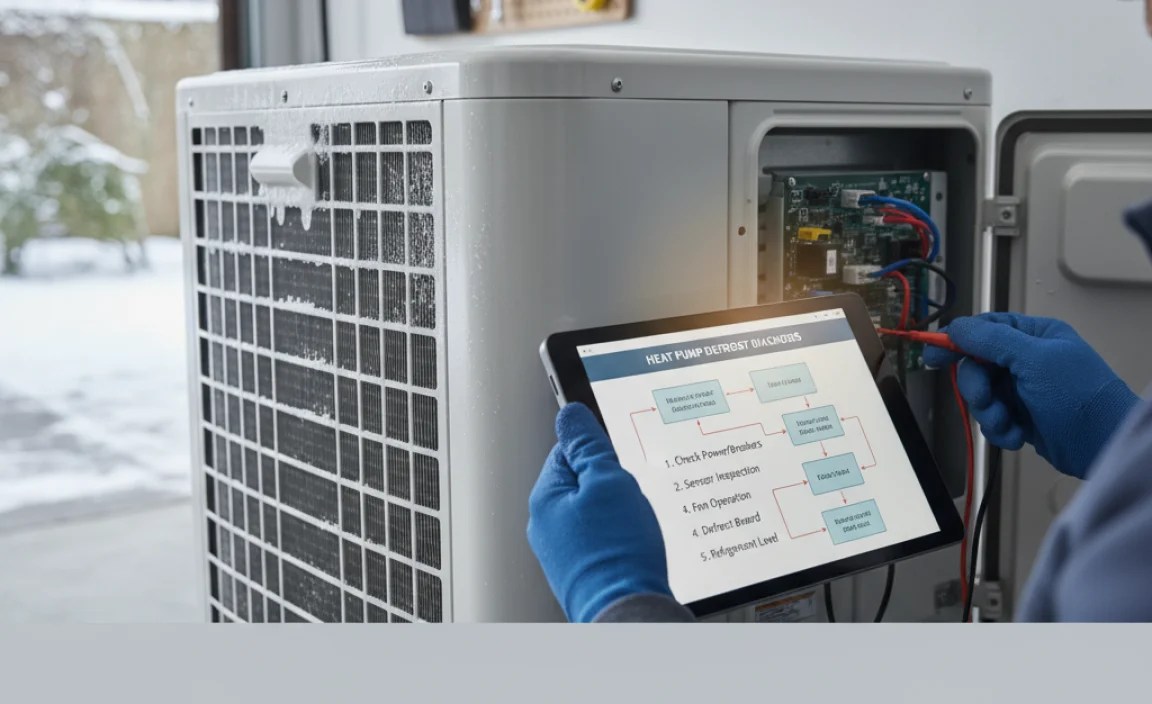
Here’s a step-by-step guide to help you diagnose and potentially fix your heat pump’s defrost problem:
- Safety First: Turn off the power to the heat pump at the breaker box before performing any inspection or maintenance.
- Visual Inspection: Examine the outdoor unit for excessive ice buildup, debris, or damage.
- Airflow Check: Ensure that the outdoor coil is clear of obstructions and that the air filter in your air handler is clean.
- Component Testing: Use a multimeter to test the defrost thermostat, reversing valve solenoid, and other electrical components. Refer to the manufacturer’s instructions and wiring diagram.
- Defrost Cycle Observation: Manually initiate a defrost cycle (if possible) and observe the system’s behavior. Listen for the reversing valve to switch and check if the outdoor coil heats up.
- Professional Assistance: If you’re uncomfortable performing any of these steps or if you suspect a refrigerant leak, contact a qualified HVAC technician.
Tools You Might Need

Here’s a list of tools that can be helpful for troubleshooting a heat pump defrost problem:
- Multimeter: For testing electrical components.
- Screwdrivers: For removing access panels.
- Wrench Set: For tightening or loosening fittings.
- Fin Comb: For straightening bent coil fins.
- Wire Strippers/Crimpers: For repairing wiring connections.
- Safety Glasses: To protect your eyes.
- Gloves: To protect your hands.
- HVAC Gauges (for professionals only): For measuring refrigerant pressure.
When to Call a Professional

While some troubleshooting steps can be performed by homeowners, certain issues require the expertise of a qualified HVAC technician. Call a professional if:
- You suspect a refrigerant leak.
- You’re uncomfortable working with electrical components.
- You can’t identify the cause of the defrost problem.
- The heat pump is still not defrosting after performing basic troubleshooting steps.
A professional HVAC technician has the tools, training, and experience to accurately diagnose and repair complex heat pump problems.
Preventative Maintenance Tips
Regular maintenance can help prevent defrost problems and extend the life of your heat pump. Here are some tips:
- Clean the Outdoor Coil: At least twice a year, clean the outdoor coil to remove dirt and debris.
- Replace the Air Filter: Change the air filter in your air handler every 1-3 months, or as needed.
- Inspect the System: Periodically inspect the heat pump for any signs of damage or wear.
- Schedule Professional Maintenance: Have your heat pump professionally inspected and serviced at least once a year.
Heat Pump Defrost Cycle: Troubleshooting Table
Here’s a quick reference table summarizing common defrost problems, potential causes, and troubleshooting steps:
| Problem | Possible Cause | Troubleshooting Steps |
|---|---|---|
| Heat pump not defrosting | Faulty defrost timer/control board | Check for damage, test continuity |
| Heat pump not defrosting | Defective defrost thermostat | Test continuity, ensure proper placement |
| Heat pump not defrosting | Malfunctioning reversing valve | Inspect for damage, test solenoid |
| Excessive ice buildup | Low refrigerant charge | Call a professional |
| Excessive ice buildup | Frozen/blocked outdoor coil | Clean the coil |
| Excessive ice buildup | Airflow problems | Check air filter, vents |
Heat Pump Defrost Cycle: Component Checklist
Use this checklist to systematically inspect the key components of your heat pump’s defrost system:
| Component | Inspection Points | Action |
|---|---|---|
| Defrost Timer/Control Board | Visible damage, burnt components, corrosion, wiring connections | Test continuity, replace if necessary, ensure proper connections |
| Defrost Thermostat | Proper attachment to coil, continuity at different temperatures | Test continuity, reposition if needed, replace if faulty |
| Reversing Valve | Visible damage, leaks, wiring connections, solenoid operation | Inspect for damage, test solenoid, listen for valve switching |
| Outdoor Coil | Dirt, debris, ice buildup, bent fins | Clean coil, straighten fins |
| Air Filter | Cleanliness, airflow restriction | Replace if dirty |
FAQ: Heat Pump Defrost Cycle
Here are some frequently asked questions about heat pump defrost cycles:
Q: How often should my heat pump defrost?
A: The frequency of defrost cycles depends on the outdoor temperature and humidity. Typically, a heat pump will defrost every 30 to 90 minutes when the outdoor temperature is near freezing.
Q: Is it normal to see steam coming from my heat pump during the defrost cycle?
A: Yes, it’s perfectly normal. The steam is simply the melted ice turning into vapor as it comes into contact with the warm coil.
Q: Why does my heat pump blow cold air during the defrost cycle?
A: When the heat pump enters defrost mode, it temporarily switches to cooling mode to heat the outdoor coil and melt the ice. To compensate for this, auxiliary heat (electric resistance heat) is activated to keep your home warm.
Q: Can I manually defrost my heat pump?
A: Some heat pumps have a manual defrost setting. Check your owner’s manual for instructions. However, it’s best to address the underlying issue if your heat pump requires frequent manual defrosting.
Q: How do I know if my heat pump is defrosting properly?
A: You should see ice melting from the outdoor coil, and the unit should return to heating mode after a few minutes. You may also hear a hissing sound as the refrigerant flows through the reversing valve.
Q: What happens if I don’t fix a heat pump that’s not defrosting?
A: If you don’t address the issue, the ice buildup can worsen, reducing heating efficiency, increasing energy bills, and potentially damaging the compressor and other components.
Q: Can a dirty air filter cause my heat pump not to defrost?
A: Yes, a dirty air filter restricts airflow, which can affect the system’s pressure and temperature, leading to ice buildup on the outdoor coil and potentially preventing the defrost cycle from working effectively.
Conclusion
A heat pump that won’t defrost can be a real headache, but by understanding the defrost cycle and common causes of failure, you can take steps to troubleshoot the problem and potentially fix it yourself. Remember to prioritize safety and consult a qualified HVAC technician if you’re uncomfortable performing any of the troubleshooting steps or if you suspect a serious issue. Regular maintenance and prompt attention to problems will keep your heat pump running efficiently and reliably for years to come.
“`


