
Washing Pump Parts Between Sessions: The Easy Way

Quick Summary: To keep your bike pump working smoothly, clean its parts between uses. This involves disassembling the pump, washing the components with mild soap and water, rinsing thoroughly, and letting them dry completely before reassembling. Regular cleaning prevents dirt buildup, ensures efficient pumping, and extends the life of your pump.
Ever wondered why your bike pump suddenly feels stiff or doesn’t inflate your tires as quickly as it used to? The culprit is often hidden: dirt and grime accumulating inside. Just like any tool, your bike pump needs regular cleaning to perform its best. Neglecting this simple task can lead to frustratingly slow inflation and even damage your pump. Don’t worry, though! I’ll walk you through a straightforward process to keep your pump in top shape. Follow these easy steps, and you’ll be back on the road with perfectly inflated tires in no time.
Why Clean Your Bike Pump?

Cleaning your bike pump isn’t just about maintaining appearances; it’s about performance and longevity. Here’s why it’s important:
- Improved Efficiency: Dirt and debris can clog the internal components of your pump, making it harder to push air. Cleaning removes these obstructions, restoring the pump’s efficiency.
- Extended Lifespan: Regular cleaning prevents wear and tear on the pump’s seals and other moving parts. This can significantly extend the life of your pump, saving you money in the long run.
- Consistent Performance: A clean pump provides more consistent and reliable performance. You’ll get accurate pressure readings and avoid frustrating pumping sessions.
- Prevention of Damage: Accumulated dirt can scratch and damage internal components, leading to leaks and other problems. Cleaning prevents this damage.
Tools and Materials You’ll Need

Before you start, gather these essential tools and materials:
- Bike Pump: The pump you’ll be cleaning.
- Mild Soap: Dish soap or hand soap works well. Avoid harsh chemicals.
- Warm Water: For washing the pump parts.
- Small Brush: An old toothbrush or small parts cleaning brush to scrub away dirt.
- Clean Rags: For drying the pump parts. Microfiber cloths are ideal.
- Small Screwdrivers: Phillips head and flathead screwdrivers to disassemble the pump.
- Pliers: For removing stubborn parts.
- Grease or Lubricant: To lubricate the pump parts during reassembly.
- Work Area: A clean and well-lit area to work on.
- Container: To hold the parts during washing.
Step-by-Step Guide to Cleaning Your Bike Pump

Follow these steps to thoroughly clean your bike pump:
Step 1: Disassemble the Pump
Carefully disassemble the pump. This usually involves removing the base, handle, and any other external parts. Pay attention to how the parts fit together, as you’ll need to reassemble them later. Take photos as you disassemble to help with reassembly.
- Remove the Base: Most pumps have a base that can be unscrewed or detached.
- Detach the Handle: The handle is usually connected with screws or bolts. Remove these carefully.
- Separate the Cylinder: The cylinder is the main body of the pump. Separate it from the base and handle.
- Remove Internal Components: Carefully remove the piston, seals, and any other internal parts.
Step 2: Wash the Pump Parts
Wash all the pump parts with mild soap and warm water. Use a small brush to scrub away any dirt or grime. Pay special attention to the seals and piston, as these are critical for proper pump function. Ensure the removal of any stuck debris.
- Prepare the Soap Solution: Mix mild soap with warm water in a container.
- Wash Each Part: Submerge each part in the soapy water and scrub with a brush.
- Clean Seals Carefully: Seals are delicate, so clean them gently to avoid damage.
- Remove Stubborn Dirt: Use a small tool or pick to remove any stubborn dirt or grime.
Step 3: Rinse Thoroughly
Rinse all the pump parts thoroughly with clean water. Make sure to remove all traces of soap. Soap residue can attract dirt and interfere with the pump’s performance.
- Rinse Under Running Water: Rinse each part under running water until all soap is gone.
- Check for Soap Residue: Inspect each part to ensure there is no soap residue.
- Repeat if Necessary: If you find soap residue, rinse the part again.
Step 4: Dry the Parts Completely
Dry all the pump parts completely with clean rags. Moisture can cause corrosion and affect the pump’s performance. Allow the parts to air dry for a few hours to ensure they are completely dry. Avoid direct sunlight or heat, which can damage the seals.
- Wipe with Clean Rags: Wipe each part with a clean, dry rag to remove excess water.
- Air Dry: Place the parts on a clean surface and allow them to air dry completely.
- Check for Moisture: Before reassembling, check each part to ensure it is completely dry.
Step 5: Lubricate the Parts
Lubricate the pump parts with grease or lubricant. This will help the pump operate smoothly and prevent wear and tear. Apply a small amount of lubricant to the piston, seals, and any other moving parts. Use a lubricant specifically designed for bike pumps or pneumatic systems. A high-quality silicone grease is an excellent choice.
- Apply Lubricant: Apply a small amount of grease or lubricant to the piston, seals, and cylinder walls.
- Distribute Evenly: Use your fingers or a small brush to distribute the lubricant evenly.
- Avoid Over-Lubrication: Use just enough lubricant to coat the parts; avoid over-lubrication, as this can attract dirt.
Step 6: Reassemble the Pump
Reassemble the pump, following the reverse order of disassembly. Make sure all parts are properly aligned and securely fastened. Refer to the photos you took during disassembly if needed. Take your time and ensure each part is correctly positioned.
- Insert Internal Components: Carefully insert the piston, seals, and other internal components into the cylinder.
- Attach the Cylinder: Attach the cylinder to the base and handle.
- Secure with Screws/Bolts: Secure all parts with screws or bolts, ensuring they are tight but not over-tightened.
- Attach the Base: Reattach the base to the cylinder.
- Test the Pump: Test the pump to ensure it is working properly.
Step 7: Test the Pump
Test the pump to make sure it’s working properly. Attach it to a tire and inflate it to the desired pressure. Check for any leaks or other problems. If the pump isn’t working correctly, disassemble it again and check for any misaligned or missing parts.
- Attach to a Tire: Attach the pump to a tire valve.
- Inflate the Tire: Inflate the tire to the desired pressure.
- Check for Leaks: Check for any leaks around the valve or pump connections.
- Verify Pressure: Use a pressure gauge to verify the tire pressure.
Tips for Maintaining Your Bike Pump

Here are some additional tips to keep your bike pump in good condition:
- Store Properly: Store your pump in a clean, dry place to prevent dirt and moisture buildup.
- Regular Inspections: Regularly inspect your pump for signs of wear and tear, such as cracks or leaks.
- Replace Worn Parts: Replace any worn parts, such as seals or hoses, as needed.
- Use a Filter: Some pumps have a filter to prevent dirt from entering the cylinder. Clean or replace this filter regularly.
- Avoid Over-Pressurizing: Avoid over-pressurizing your tires, as this can damage the pump and the tires.
Common Bike Pump Problems and Solutions
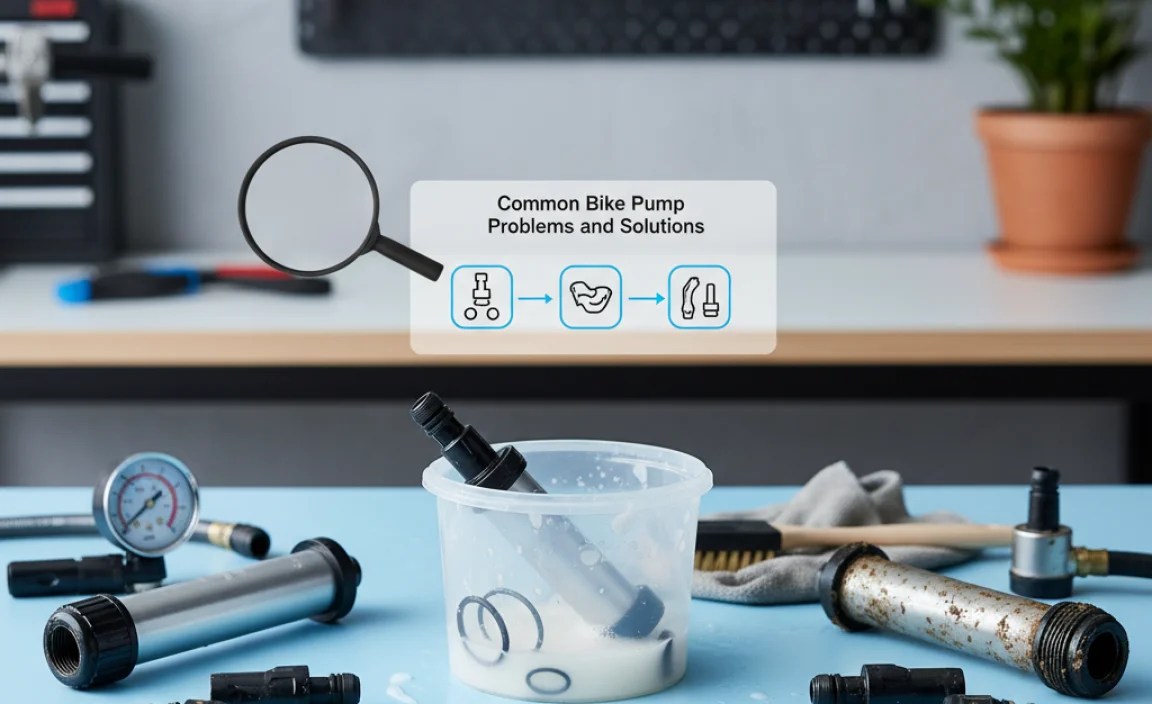
Here’s a table of common bike pump problems and how to fix them:
| Problem | Possible Cause | Solution |
|---|---|---|
| Pump is hard to push | Dirt or grime buildup | Clean and lubricate the pump |
| Pump doesn’t inflate tire | Leaky seal | Replace the seal |
| Air leaks from the valve | Damaged valve core | Tighten or replace the valve core |
| Hose is cracked or damaged | Wear and tear | Replace the hose |
| Pressure gauge is inaccurate | Faulty gauge | Replace the gauge |
Choosing the Right Cleaning Products
Selecting the right cleaning products can make a big difference in how effectively you maintain your bike pump. Here’s a breakdown of what to consider:
- Mild Soap: Gentle dish soap is usually the best choice. It cleans effectively without damaging the pump’s components.
- Avoid Harsh Chemicals: Stay away from strong detergents or solvents, as they can degrade rubber seals and plastic parts.
- Silicone Grease: This is ideal for lubricating pump parts because it’s compatible with rubber and plastic.
- Dry Lubricants: For certain parts, like the piston, a dry lubricant can help reduce friction without attracting dirt.
Here’s a table to help you choose the right products for different pump parts:
| Pump Part | Recommended Cleaning Product | Recommended Lubricant |
|---|---|---|
| Cylinder | Mild soap and water | Silicone grease |
| Piston | Mild soap and water | Dry lubricant or silicone grease |
| Seals | Mild soap and water | Silicone grease |
| Hose | Mild soap and water | None required |
| Base | Mild soap and water | None required |
When to Clean Your Bike Pump
How often should you clean your bike pump? Here are some guidelines:
- Regular Use: If you use your pump frequently (several times a week), clean it every month.
- Infrequent Use: If you use your pump less often, clean it every few months.
- After Exposure to Dirt: If your pump has been exposed to dirt or mud, clean it immediately.
- When Performance Declines: If you notice that your pump is becoming harder to use or is not inflating tires as quickly, it’s time to clean it.
FAQ: Washing Pump Parts Between Sessions
Here are some frequently asked questions about cleaning bike pump parts:
1. Can I use WD-40 to lubricate my bike pump?
No, WD-40 is not a suitable lubricant for bike pumps. It can dissolve grease and attract dirt. Use silicone grease or a lubricant specifically designed for bike pumps.
2. How do I clean a pump with a built-in pressure gauge?
Be extra careful when cleaning a pump with a built-in pressure gauge. Avoid getting water inside the gauge, as this can damage it. Disassemble the pump carefully and clean the gauge separately with a dry cloth.
3. What if I can’t disassemble my pump?
Some pumps are designed to be non-disassemblable. In this case, you can try flushing the pump with warm, soapy water. Fill the cylinder with soapy water, pump it through, and then rinse with clean water. Allow the pump to dry completely.
4. How do I know if my pump seals need to be replaced?
If your pump is not inflating tires properly or if you notice air leaking from the seals, it’s likely that the seals need to be replaced. Inspect the seals for cracks or damage. Replacement seals are usually available from the pump manufacturer or online retailers.
5. Can I use compressed air to dry the pump parts?
Yes, you can use compressed air to dry the pump parts. This can help remove moisture from hard-to-reach areas. Be careful not to use too much pressure, as this could damage the seals.
6. What type of grease is best for lubricating my bike pump?
Silicone grease is generally the best choice for lubricating bike pumps. It is compatible with rubber and plastic, and it provides excellent lubrication. Avoid using petroleum-based greases, as these can damage the seals.
7. Is it necessary to clean a brand new bike pump?
While not always necessary, it’s a good idea to inspect and lubricate a new bike pump before its first use. Manufacturing residue or storage conditions might leave slight contaminants that could affect initial performance. A quick wipe-down and lubrication can ensure optimal operation from the start.
Conclusion
Keeping your bike pump clean is a simple but crucial task that can significantly improve its performance and extend its lifespan. By following these step-by-step instructions, you can easily clean your pump and keep it in top condition. Regular cleaning not only ensures efficient tire inflation but also prevents damage and saves you money in the long run. So, take a few minutes to clean your bike pump, and you’ll be rewarded with reliable performance for years to come. Happy pumping!


