
How to Find Correct Tyre Pressure Range Using Gauge: Easy

Do you know what keeps your car rolling smoothly? It’s your tires! Tires need the right amount of air. Too much or too little air can cause problems. Knowing how to find correct tyre pressure range using gauge is important. It helps keep you safe on the road.
Imagine your bike tires are low. It’s harder to pedal, right? The same thing happens with car tires. Let’s learn how to check your car’s tire pressure.
Having the right tire pressure makes driving better. It also helps your tires last longer. Are you ready to learn how to do it? It’s easier than you think! Let’s get started.
Key Takeaways
- Always check your car’s door jamb or owner’s manual for the recommended tire pressure.
- Use a reliable tyre pressure gauge to get an accurate reading every time.
- Knowing how to find correct tyre pressure range using gauge improves fuel efficiency.
- Regularly check your tires to ensure even wear and safer driving conditions.
- Adjust tire pressure as needed based on the season and load you’re carrying.
Why Correct Tyre Pressure Matters

Keeping your tires properly inflated is super important. It affects how your car drives and how long your tires last. When your tires have the right amount of air, your car handles better. You can steer and brake more easily. Under-inflated tires can make it harder to control your car. This is especially true in wet conditions. Over-inflated tires can cause a bumpy ride. They can also wear out the center of the tire faster. Correct tire pressure helps your car use less gas. This saves you money at the pump. It also reduces your car’s impact on the environment. Checking your tire pressure regularly is a simple way to stay safe and save money. It helps you avoid accidents and costly repairs. So, take a few minutes each month to check your tires. Your car and your wallet will thank you!
- Proper tire pressure improves car handling.
- It helps tires wear evenly.
- Correct pressure saves on fuel costs.
- It increases overall safety.
- Regular checks prevent accidents.
- It makes your tires last longer.
Knowing the right tire pressure for your car is crucial. You can usually find this information on a sticker inside your driver’s side door. It might also be in your car’s owner’s manual. The number you see is the recommended pressure when your tires are cold. “Cold” means the car hasn’t been driven for a few hours. This ensures an accurate reading. If you can’t find the sticker or manual, ask a mechanic. They can help you find the right tire pressure for your car. Remember, maintaining the correct tire pressure is a key part of car care. It keeps you safe and saves you money in the long run. So, make it a regular part of your car maintenance routine.
Fun Fact or Stat: Did you know that under-inflated tires can decrease your gas mileage by up to 3%?
What Happens with Low Tyre Pressure?
Have you ever tried riding a bike with flat tires? It’s really hard, right? The same thing happens with cars. When your tires are low on air, they have to work harder. This makes your engine work harder too. When your engine works harder, it uses more gas. That means you’ll have to fill up your gas tank more often. Low tire pressure can also make your tires wear out faster. The edges of the tire will wear down more quickly than the middle. This means you’ll need to buy new tires sooner. It’s not just about spending more money. Low tire pressure can also be dangerous. It can make your car harder to control, especially when you need to stop quickly. So, keeping your tires properly inflated is important for your safety and your wallet.
Dangers of Over-Inflated Tyres
Imagine blowing up a balloon too much. It gets really tight and could pop! Over-inflating your tires is similar. When you put too much air in, the tire becomes stiff. This makes the ride bumpy and uncomfortable. Over-inflated tires don’t grip the road as well. This can make it harder to stop quickly, especially on wet roads. The center of the tire wears out faster when it’s over-inflated. This means you’ll need to replace your tires sooner. It’s always best to stick to the recommended tire pressure. You can find this information on the sticker inside your car door. Checking your tire pressure regularly can help you avoid these problems. It keeps you safe and saves you money in the long run.
Tyre Pressure and Fuel Efficiency
Have you ever wondered how tire pressure affects your gas mileage? It’s pretty simple. When your tires are properly inflated, your car rolls more easily. This means your engine doesn’t have to work as hard. When your engine works less, it uses less gas. That’s why keeping your tires at the right pressure can save you money at the gas pump. Think of it like this: riding a bike with flat tires is hard work. But with properly inflated tires, it’s much easier. The same is true for your car. Correct tire pressure improves fuel efficiency. So, checking your tire pressure regularly is a great way to save money. It also helps reduce your car’s impact on the environment. It’s a win-win!
Finding the Recommended Tyre Pressure

Finding the right tire pressure for your car is easier than you think. The information is usually in two places. First, check the sticker on the inside of your driver’s side door. It lists the recommended pressure for your tires. This is the pressure you should aim for when your tires are cold. Second, look in your car’s owner’s manual. The manual also has this information. It may include additional details about tire care. The number you’re looking for is usually listed in PSI (pounds per square inch). It’s important to use the recommended pressure from these sources. Don’t use the number on the tire itself. That number is the maximum pressure, not the recommended pressure. Knowing where to find this information helps you keep your tires properly inflated. It also keeps you safe on the road.
- Check the sticker on the driver’s side door.
- Look in your car’s owner’s manual.
- Find the PSI (pounds per square inch) number.
- Don’t use the number on the tire sidewall.
- Ensure tires are “cold” when checking.
- Ask a mechanic if you can’t find it.
Once you find the recommended tire pressure, write it down. Keep it in your car or on your phone. This way, you can easily check your tires whenever you need to. Tire pressure can change with the weather. It goes down in cold weather and up in hot weather. Checking your tires regularly is important to make sure they’re always at the right pressure. You can buy a tire pressure gauge at any auto parts store. They’re easy to use and relatively inexpensive. You can also use the air pumps at most gas stations. These usually have a built-in pressure gauge. Keeping your tires properly inflated is a simple way to improve your car’s performance. It also helps keep you and your passengers safe.
Fun Fact or Stat: Tire pressure decreases about 1 PSI for every 10 degrees Fahrenheit drop in temperature.
Where to Find the Sticker?
Have you ever looked for a hidden treasure? Finding the tire pressure sticker can feel a bit like that! The sticker is usually on the inside of your driver’s side door. Open the door and look along the edge of the door frame. The sticker is often white or yellow. It has important information about your car. This includes the recommended tire pressure. Sometimes, the sticker might be on the door itself, near the latch. If you can’t find it there, check the glove compartment. The owner’s manual might have a copy of the sticker. Once you find it, you’ll have all the information you need to keep your tires properly inflated. It’s like finding a secret map to better gas mileage and safer driving!
Understanding the Owner’s Manual
Imagine you get a new video game. You’d probably read the instructions to learn how to play, right? Your car’s owner’s manual is like that instruction book. It has lots of important information about your car. This includes how to find correct tyre pressure range using gauge. The manual will tell you the recommended tire pressure for both the front and rear tires. It might also have information about different types of tires. This can be helpful if you ever need to replace your tires. The owner’s manual can seem long and complicated. But it’s worth taking the time to read it. It can help you understand your car better and keep it running smoothly. Plus, it can help you stay safe on the road.
Why Not Use the Tyre Sidewall Number?
Have you ever noticed the numbers on the side of your tires? These numbers can be confusing. One of those numbers is the maximum pressure. This is the most air the tire can safely hold. But it’s not the pressure you should actually use. The recommended tire pressure for your car is usually lower. Using the maximum pressure can make your tires over-inflated. This can cause a bumpy ride and uneven wear. It can also make it harder to control your car. Always use the pressure listed on the sticker inside your car door. Or check your owner’s manual. These sources give you the correct tire pressure for your specific car. Following these recommendations will help you stay safe and get the most out of your tires.
Choosing the Right Tyre Pressure Gauge

A tyre pressure gauge is a small tool that tells you how much air is in your tires. There are two main types of gauges: digital and analog. Digital gauges show the pressure on a screen. They’re easy to read and usually very accurate. Analog gauges have a dial with a needle. The needle points to the pressure. They’re often less expensive than digital gauges. But they can be a little harder to read. When choosing a gauge, look for one that’s easy to use. Make sure the numbers are clear and easy to see. It’s also important to choose a gauge that’s accurate. You can test the accuracy by comparing it to another gauge. A good tire pressure gauge is an essential tool for any car owner. It helps you keep your tires properly inflated and stay safe on the road.
- Choose between digital and analog gauges.
- Digital gauges are easier to read.
- Analog gauges are often cheaper.
- Look for a gauge that’s easy to use.
- Ensure the gauge is accurate.
- Keep the gauge in your car.
Once you have a tire pressure gauge, keep it in your car. This way, you can check your tires anytime, anywhere. Checking your tires regularly is important for safety and fuel efficiency. It also helps your tires last longer. Most gas stations have air pumps with built-in gauges. But it’s always a good idea to have your own gauge. This way, you can be sure the reading is accurate. Using a tyre pressure gauge is simple. Remove the cap from the tire valve. Press the gauge onto the valve stem. The gauge will show the pressure in PSI. Compare this number to the recommended pressure for your car. Add or release air as needed to reach the correct pressure. Regular tire maintenance is a key part of car ownership.
Fun Fact or Stat: Digital tire pressure gauges are generally more accurate than analog gauges, with an accuracy range of +/- 1 PSI.
Digital vs. Analog Gauges
Imagine you’re choosing between a regular watch and a digital watch. A regular watch has hands that point to the time. A digital watch shows the time in numbers. Tire pressure gauges are similar. Analog gauges have a needle that points to the pressure. Digital gauges show the pressure on a screen. Digital gauges are usually easier to read. They give you an exact number. Analog gauges can be a little harder to read. You have to look closely at the needle. But analog gauges don’t need batteries. Digital gauges do. Both types of gauges can be accurate. It just depends on what you prefer. Choose the type that’s easiest for you to use.
Ensuring Accuracy of Your Gauge
Have you ever played a game where you have to guess something? Sometimes, your guess is right. Other times, it’s way off! It’s important to make sure your tire pressure gauge is accurate. An inaccurate gauge can give you the wrong reading. This can lead to over-inflated or under-inflated tires. To check the accuracy of your gauge, compare it to another gauge. You can ask a mechanic to check your gauge for you. Some auto parts stores also offer this service. If your gauge is consistently off, it’s time to replace it. A small investment in an accurate gauge can save you money and keep you safe on the road.
Maintaining Your Tyre Pressure Gauge
Think of your tire pressure gauge like a tool in a toolbox. You need to take care of it so it works properly. Keep your gauge clean and dry. Store it in a safe place where it won’t get damaged. Avoid dropping it or banging it around. This can affect its accuracy. If you have a digital gauge, check the batteries regularly. Replace them when they get low. If you have an analog gauge, make sure the needle moves smoothly. If it sticks or doesn’t return to zero, it might be time for a new gauge. A little bit of care can help your tire pressure gauge last longer. It will also ensure it gives you accurate readings every time.
Step-by-Step Guide to Checking Pressure
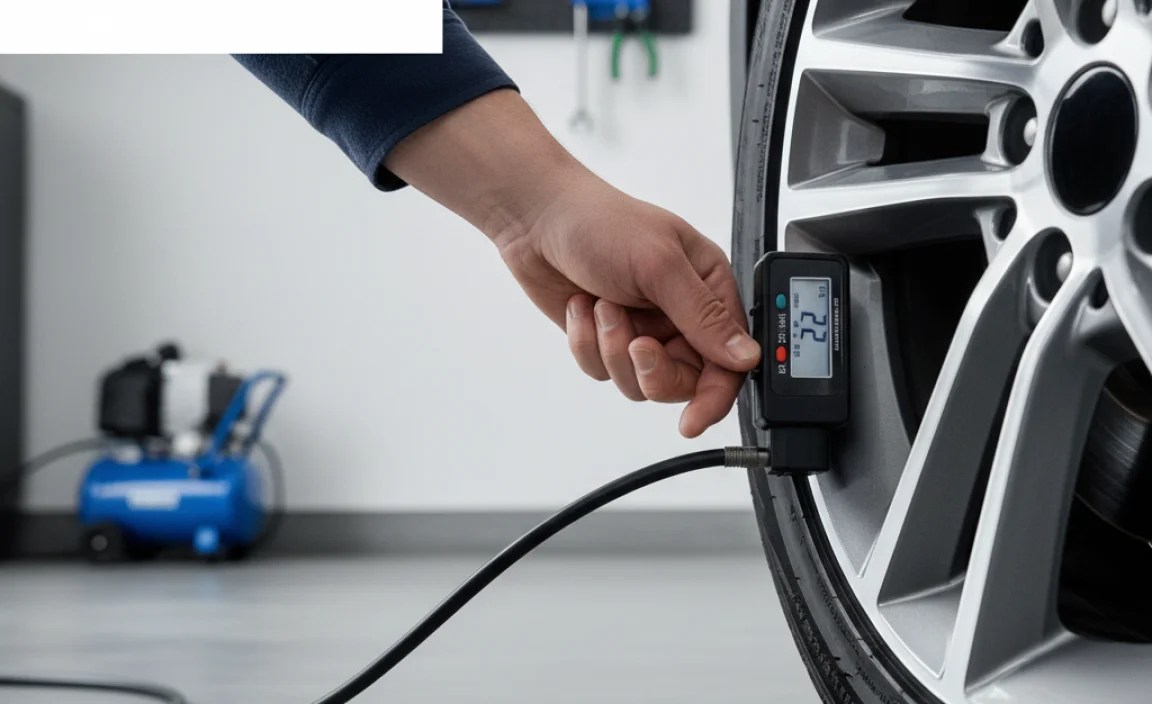
Checking your tire pressure is a simple task. It only takes a few minutes. First, find the recommended tire pressure for your car. This is on the sticker inside your driver’s side door. Or in your owner’s manual. Next, remove the cap from the valve stem on one of your tires. Press the tyre pressure gauge onto the valve stem. Make sure it’s on tight so no air escapes. The gauge will show the current pressure in your tire. Compare this number to the recommended pressure. If the pressure is too low, add air using an air pump. If it’s too high, release some air by pressing the valve stem. Repeat this process for all four tires. Don’t forget to check the spare tire too! Replace the valve caps when you’re done. Checking your tire pressure regularly is a great way to stay safe and save money.
- Find the recommended tire pressure.
- Remove the valve cap.
- Press the gauge onto the valve.
- Read the pressure on the gauge.
- Add or release air as needed.
- Repeat for all tires, including the spare.
- Replace the valve caps.
Remember to check your tires when they’re cold. This means the car hasn’t been driven for a few hours. Or only driven a short distance. Driving heats up the tires and increases the pressure. This can give you an inaccurate reading. If you have to check your tires when they’re warm, add 4 PSI to the recommended pressure. Then, adjust the pressure as needed. It’s also a good idea to check your tires before a long trip. This ensures they’re properly inflated for the journey. Pack your tire pressure gauge in your car. This way, you can check your tires anytime, anywhere. Regular tire maintenance is a key part of car ownership.
Fun Fact or Stat: Properly inflated tires can improve your car’s braking distance by up to 25% in wet conditions.
Locating the Tyre Valve Stem
Imagine your tire is like a balloon. The valve stem is like the little opening where you blow air into the balloon. On your car’s tires, the valve stem is usually a small, metal tube. It sticks out from the wheel. It has a cap on it to keep dirt and moisture out. The valve stem is where you attach the tire pressure gauge. It’s also where you add or release air. Finding the valve stem is easy. Just look around the wheel until you see the small tube with the cap. Remove the cap before you check the tire pressure. Be careful not to lose the cap. You’ll need to put it back on when you’re done.
Reading the Pressure Gauge Correctly
Have you ever tried to read a clock for the first time? It can be a little tricky! Reading a tire pressure gauge is similar. With a digital gauge, the pressure is shown in numbers on a screen. It’s easy to read. Just look at the number and compare it to the recommended pressure. With an analog gauge, you have to look at a needle. The needle points to a number on a dial. The number tells you the pressure. Make sure you’re looking at the correct scale on the dial. The pressure is usually measured in PSI (pounds per square inch). Read the gauge carefully to get an accurate reading. An accurate reading helps you keep your tires properly inflated.
Adding or Releasing Air Properly
Think of adding air to your tires like filling a glass of water. You want to fill it just right, not too much or too little. To add air, use an air pump at a gas station or auto parts store. Remove the cap from the valve stem. Attach the air pump hose to the valve stem. Add air in short bursts. Check the pressure with your gauge after each burst. Stop when you reach the recommended pressure. To release air, press the small metal pin in the center of the valve stem. You can use the back of your tire pressure gauge or a small tool. Press gently to release a small amount of air. Check the pressure with your gauge. Repeat until you reach the recommended pressure. Be patient and take your time to get the pressure just right.
Adjusting Tyre Pressure for Different Conditions

Tire pressure isn’t a one-size-fits-all thing. It can change depending on the weather and how much weight you’re carrying. In cold weather, tire pressure decreases. This is because the air inside the tire contracts. You might need to add air to keep your tires properly inflated. In hot weather, tire pressure increases. This is because the air inside the tire expands. You might need to release some air to prevent over-inflation. If you’re carrying a heavy load, such as luggage or passengers, you might need to increase your tire pressure. This helps the tires support the extra weight. Check your owner’s manual for recommendations on adjusting tire pressure for different conditions. Adjusting tire pressure helps keep you safe and ensures your tires perform well.
- Adjust pressure for cold weather.
- Adjust pressure for hot weather.
- Increase pressure for heavy loads.
- Check the owner’s manual for advice.
- Consider seasonal changes.
- Monitor pressure regularly.
When adjusting tire pressure, it’s important to use a reliable tyre pressure gauge. Check the pressure after making any adjustments. This ensures you’ve reached the correct level. Over-inflating or under-inflating your tires can be dangerous. It can affect your car’s handling and braking. It can also cause uneven tire wear. Make it a habit to check your tire pressure regularly. Especially when the weather changes or when you’re carrying a heavy load. This will help you stay safe on the road and get the most out of your tires. Proper tire maintenance is a key part of responsible car ownership.
Fun Fact or Stat: Many newer cars have a Tire Pressure Monitoring System (TPMS) that alerts you when your tire pressure is too low.
Effects of Cold Weather on Tyres
Imagine you have a balloon filled with air. What happens when you put it in the freezer? The balloon shrinks, right? The same thing happens to the air in your tires when it gets cold. The air pressure inside the tire goes down. This means your tires might be under-inflated in the winter. Under-inflated tires can make your car harder to control. They can also wear out faster. It’s important to check your tire pressure regularly in cold weather. Add air as needed to keep them properly inflated. This will help you stay safe on the road. It will also help your tires last longer.
Effects of Hot Weather on Tyres
Think about riding your bike on a hot summer day. The tires might feel a little softer, right? Hot weather can cause the air pressure in your tires to increase. This is because the air inside expands when it gets warm. If your tires are already at the recommended pressure, they could become over-inflated in hot weather. Over-inflated tires can make your ride bumpy and uncomfortable. They can also wear out the center of the tire faster. It’s important to check your tire pressure in hot weather. Release some air if needed to keep them at the recommended level. This will help you have a smooth and safe ride.
Adjusting for Heavy Loads
Imagine you’re carrying a heavy backpack. It’s harder to walk, right? Your car’s tires have to work harder when you’re carrying a heavy load. This could be luggage, passengers, or anything else that adds weight to the car. When you’re carrying a heavy load, you might need to increase your tire pressure. This helps the tires support the extra weight. Check your car’s owner’s manual for recommendations on adjusting tire pressure for heavy loads. Adding a few extra PSI can make a big difference. It can improve your car’s handling and prevent tire damage. It’s always better to be safe than sorry. So, check your tire pressure before hitting the road with a heavy load.
Recognizing Signs of Uneven Tyre Wear
Uneven tire wear can tell you a lot about your car and your driving habits. If the edges of your tires are wearing out faster than the center, your tires might be under-inflated. If the center of your tires is wearing out faster than the edges, your tires might be over-inflated. If one side of your tire is wearing out faster than the other, you might have a problem with your car’s alignment. Uneven tire wear can also be caused by worn suspension parts. Or by driving habits like hard braking or cornering. Regularly inspect your tires for signs of uneven wear. If you notice anything unusual, take your car to a mechanic. They can diagnose the problem and recommend the necessary repairs. Addressing uneven tire wear early can save you money and prevent accidents.
- Check for wear on tire edges.
- Check for wear in the tire center.
- Look for wear on one side.
- Inspect for cupping or scalloping.
- Feel for bumps or bulges.
- Rotate tires regularly.
Rotating your tires regularly can help prevent uneven wear. Tire rotation involves moving the tires from one position to another. This helps them wear more evenly over time. Check your owner’s manual for recommendations on tire rotation patterns. Most cars require tire rotation every 5,000 to 8,000 miles. If you’re not comfortable rotating your tires yourself, take your car to a mechanic. They can perform the rotation for you. Proper tire maintenance includes regular inspections and rotations. This helps extend the life of your tires and keep you safe on the road. A little bit of attention to your tires can go a long way.
Fun Fact or Stat: Regular tire rotations can extend the life of your tires by as much as 20%.
Outer Edge Wear: Causes & Solutions
Imagine you’re drawing a picture and you press too hard on the edges. The edges wear down faster, right? That’s similar to what happens when the outer edges of your tires wear down quickly. This usually means your tires are under-inflated. When tires are low on air, the edges have to carry more weight. This causes them to wear out faster. Under-inflation can also make your car harder to control. It can also reduce your gas mileage. The solution is simple: check your tire pressure regularly. Add air as needed to keep them properly inflated. This will help your tires wear evenly. It will also improve your car’s performance.
Center Wear: Is Over-Inflation the Culprit?
Think about blowing up a balloon too much. The middle gets really stretched out, right? Over-inflated tires are similar. When you put too much air in your tires, the center bulges out. This means the center of the tire carries most of the weight. This causes it to wear out faster than the edges. Over-inflation can also make your ride bumpy and uncomfortable. It can also reduce your car’s grip on the road. If you notice that the center of your tires is wearing out quickly, check your tire pressure. Release some air if needed to bring them down to the recommended level. This will help your tires wear evenly and improve your car’s handling.
One-Sided Wear: Alignment Issues?
Imagine you’re walking and one of your shoes is crooked. You’d probably wear down that side of the shoe faster, right? When one side of your tire wears out faster than the other, it could be a sign of an alignment problem. Your car’s alignment is the angle at which the tires meet the road. If the alignment is off, the tires can scrub against the road. This causes them to wear unevenly. An alignment problem can also make your car pull to one side. If you notice one-sided tire wear, take your car to a mechanic. They can check your alignment and make any necessary adjustments. This will help your tires wear evenly and improve your car’s handling.
Using a Tyre Pressure Chart for Reference
A tyre pressure chart is a helpful tool. It can show you the recommended tire pressure for different types of vehicles. It can also show you how tire pressure changes with different loads. Some charts even include information on adjusting tire pressure for different weather conditions. You can find tire pressure charts online. Or in some auto parts stores. Keep in mind that these charts are general guidelines. Always refer to the sticker inside your car door or your owner’s manual for the most accurate information. A tire pressure chart can be a useful reference tool. It helps you understand the importance of proper tire inflation. It also helps you make informed decisions about your tire care.
Here is a sample tire pressure chart:
| Vehicle Type | Recommended PSI (Front) | Recommended PSI (Rear) | Notes |
|---|---|---|---|
| Compact Car | 32 PSI | 30 PSI | For normal driving conditions. |
| Mid-Size Sedan | 35 PSI | 33 PSI | Check door jamb for specific PSI. |
| SUV | 38 PSI | 36 PSI | Increase by 2 PSI when carrying heavy loads. |
| Truck | 40 PSI | 38 PSI | Consult owner’s manual for towing recommendations. |
- Use a chart as a general guide.
- Always check the car’s sticker.
- Compare chart values to car’s specs.
- Note load and weather adjustments.
- Keep the chart handy for reference.
- Understand chart limitations.
When using a tyre pressure chart, remember that the numbers are just starting points. Your car’s specific needs may be different. Always prioritize the information on the sticker inside your car door or in your owner’s manual. These sources are tailored to your specific vehicle. A tire pressure chart can be helpful for understanding general trends. For example, you can see how tire pressure changes with different vehicle types or loads. But don’t rely on it as the sole source of information. Use it as a supplement to your car’s recommended tire pressure. This will help you make the best decisions for your tire care.
Fun Fact or Stat: Approximately 75% of vehicles on the road have at least one tire that is improperly inflated.
Understanding Chart Basics
Imagine you’re looking at a map. The map has symbols and labels that help you understand where to go. A tire pressure chart is similar. It has information organized in a way that’s easy to understand. The chart usually has columns for different vehicle types. Such as cars, trucks, and SUVs. It also has columns for the recommended tire pressure for the front and rear tires. The pressure is usually listed in PSI (pounds per square inch). Some charts also include notes or warnings. These might tell you how to adjust the pressure for heavy loads or different weather conditions. Understanding the basics of a tire pressure chart can help you make informed decisions about your tire care.
Comparing Chart Values to Car Specs
Think of a tire pressure chart as a general guide. It can give you a rough idea of the recommended tire pressure for different vehicles. But it’s not a substitute for your car’s specific information. Always compare the values on the chart to the sticker inside your car door. Or to the information in your owner’s manual. Your car’s specifications are the most accurate source of information. They’re tailored to your specific vehicle and tires. If there’s a difference between the chart and your car’s specs, always follow your car’s recommendations. This will help you keep your tires properly inflated. It will also help you stay safe on the road.
When to Deviate from the Chart
Imagine you’re following a recipe, but you need to make a few changes because you’re missing an ingredient. Sometimes, you might need to deviate from a tire pressure chart. For example, if you’re carrying a very heavy load, you might need to increase your tire pressure slightly. Or if you’re driving in extreme weather conditions, you might need to adjust the pressure accordingly. Always check your car’s owner’s manual for recommendations on adjusting tire pressure for different situations. Use your best judgment and prioritize safety. If you’re not sure what to do, consult a mechanic. They can give you personalized advice based on your specific needs.
Summary
Knowing how to find correct tyre pressure range using gauge is key for car safety and efficiency. You can find the recommended pressure on your car’s door jamb or in the owner’s manual. Always use a reliable tyre pressure gauge to check your tires regularly. Adjust the pressure based on weather and load. Properly inflated tires improve handling. They also increase fuel efficiency and extend tire life. Remember to check your tires when they are cold. This gives you the most accurate reading. Regular maintenance keeps you safe on the road.
Conclusion
Correct tyre pressure is important for car safety. It also impacts fuel efficiency and tire lifespan. Learning how to find correct tyre pressure range using gauge is simple. Check your car’s door or manual for the right numbers. Use a good gauge to check your tires often. Adjust pressure for weather and loads. By following these steps, you can ensure a safer, smoother ride. Regular checks will also save you money in the long run.
Frequently Asked Questions
Question No 1: Where can I find the correct tire pressure for my car?
Answer: The recommended tire pressure for your car is usually found in two places. First, check the sticker on the inside of your driver’s side door. It lists the recommended pressure for both the front and rear tires. Second, look in your car’s owner’s manual. The manual also has this information. The number you’re looking for is usually listed in PSI (pounds per square inch). Always use the recommended pressure from these sources. This helps ensure your tires are properly inflated. It also helps keep you safe on the road. Knowing how to find correct tyre pressure range using gauge starts with finding this information.
Question No 2: How often should I check my tire pressure?
Answer: You should check your tire pressure at least once a month. It’s also a good idea to check it before a long trip. Tire pressure can change with the weather. It goes down in cold weather and up in hot weather. Checking your tires regularly helps ensure they’re always at the right pressure. This improves your car’s handling and fuel efficiency. It also helps your tires last longer. Make it a habit to check your tire pressure regularly. This will help you stay safe on the road. Also, remember that learning how to find correct tyre pressure range using gauge is a simple task.
Question No 3: What kind of tire pressure gauge should I use?
Answer: There are two main types of tire pressure gauges: digital and analog. Digital gauges show the pressure on a screen. They’re easy to read and usually very accurate. Analog gauges have a dial with a needle. The needle points to the pressure. They’re often less expensive than digital gauges. But they can be a little harder to read. When choosing a gauge, look for one that’s easy to use. Make sure the numbers are clear and easy to see. It’s also important to choose a gauge that’s accurate. A good tire pressure gauge is an essential tool for any car owner. It helps you with how to find correct tyre pressure range using gauge.
Question No 4: What happens if my tire pressure is too low?
Answer: When your tire pressure is too low, your tires are under-inflated. Under-inflated tires can make your car harder to control. This is especially true when you need to stop quickly. They can also make your tires wear out faster. The edges of the tire will wear down more quickly than the middle. This means you’ll need to buy new tires sooner. Low tire pressure can also decrease your gas mileage. This means you’ll have to fill up your gas tank more often. It’s essential to know how to find correct tyre pressure range using gauge to avoid these problems.
Question No 5: What happens if my tire pressure is too high?
Answer: When your tire pressure is too high, your tires are over-inflated. Over-inflated tires can make your ride bumpy and uncomfortable. They can also make your car harder to control. This is especially true on wet roads. The center of the tire wears out faster when it’s over-inflated. This means you’ll need to replace your tires sooner. Over-inflation can also make your tires more susceptible to damage from potholes and other road hazards. Knowing how to find correct tyre pressure range using gauge prevents over-inflation.


