
Explain How a Bicycle Pump Works: The Easy Guide

Quick Summary: A bicycle pump works by using a piston to force air into your tire. When you push the handle, the piston compresses the air inside the pump’s chamber. This pressurized air then flows through a valve and into your tire, inflating it. Pulling the handle back refills the chamber, ready for the next push.
Ever struggled with a flat tire, wrestling with your bike pump, and wondering exactly how this simple device manages to inflate your tires? You’re not alone! Many cyclists, from beginners to seasoned riders, find themselves puzzled by the inner workings of their trusty pump. It might seem like magic, but it’s pure physics. This guide will break down the mechanics of a bicycle pump, explaining each part and its function in plain language. Get ready to understand your pump like never before, making those roadside repairs a whole lot easier.
Understanding the Basics of a Bicycle Pump

At its core, a bicycle pump is a simple machine designed to move air from one place (the atmosphere) to another (your tire). It achieves this through a combination of mechanical parts working together. Let’s explore these key components:
- Handle: The part you push and pull to operate the pump.
- Cylinder: The main body of the pump, where air is compressed.
- Piston: A movable part inside the cylinder that compresses the air.
- Valve: A one-way gate that allows air to flow into the tire but prevents it from escaping.
- Hose: Connects the pump to the tire valve.
- Pump Head: The end of the hose that attaches to the tire valve (Presta or Schrader).
- Base: Provides stability for the pump, especially in floor pumps.
The Physics Behind the Pumping Action
The bicycle pump operates based on fundamental principles of physics, primarily involving pressure and volume. Here’s a simple explanation:
- Boyle’s Law: This law states that the pressure and volume of a gas have an inverse relationship when temperature is held constant. In simpler terms, if you decrease the volume of a gas (like air inside the pump cylinder), its pressure increases.
- Pressure Differential: Air flows from areas of high pressure to areas of low pressure. The pump creates a pressure difference, forcing air into the lower-pressure tire.
When you push the pump handle, you reduce the volume inside the cylinder, increasing the pressure. This higher-pressure air is then forced through the valve and into the tire, which has lower pressure. This process continues until the pressure inside the tire equals the desired pressure.
Step-by-Step: How a Bicycle Pump Works

Let’s break down the pumping action into a series of steps:
- Intake Stroke: When you pull the pump handle up, the piston moves upwards inside the cylinder. This increases the volume inside the cylinder, creating a partial vacuum.
- Air Intake: The vacuum inside the cylinder causes the intake valve to open, allowing air from the atmosphere to rush in and fill the cylinder.
- Compression Stroke: When you push the handle down, the piston moves downwards, decreasing the volume of the cylinder.
- Valve Closure: As the piston moves down, the intake valve closes, preventing the air from escaping back into the atmosphere.
- Air Compression: The continued downward movement of the piston compresses the air inside the cylinder, increasing its pressure.
- Inflation: When the pressure inside the cylinder exceeds the pressure inside the tire, the valve connecting the pump to the tire opens.
- Air Transfer: The compressed air flows through the hose and into the tire, increasing the tire’s pressure.
- Repeat: You repeat these steps continuously to gradually increase the tire pressure to the desired level.
Types of Bicycle Pumps and Their Mechanisms
While the basic principle remains the same, different types of bicycle pumps use slightly different mechanisms. Here’s a comparison:
Floor Pumps
Floor pumps are designed for home use and offer greater efficiency due to their larger cylinder volume and stable base. They typically include a built-in pressure gauge for accurate inflation.
- Mechanism: A long cylinder and piston allow for a larger volume of air to be pumped with each stroke. The user stands and uses their body weight to push the handle down.
- Pros: Efficient, stable, and often includes a pressure gauge.
- Cons: Less portable, designed for stationary use.
Hand Pumps
Hand pumps are compact and portable, making them ideal for roadside repairs. However, they require more effort to inflate tires due to their smaller cylinder volume.
- Mechanism: A smaller cylinder and piston require more strokes to inflate the tire. The user uses their arms to push the handle.
- Pros: Portable, lightweight, and easy to carry on rides.
- Cons: Less efficient, requires more effort, and may not include a pressure gauge.
CO2 Inflators
CO2 inflators offer a quick and easy way to inflate tires using a single-use CO2 cartridge. They are popular among racers and cyclists who prioritize speed and convenience.
- Mechanism: A CO2 cartridge is punctured, releasing pressurized CO2 gas into the tire.
- Pros: Very fast inflation, lightweight and compact.
- Cons: Requires purchasing CO2 cartridges, can be wasteful, and offers less control over tire pressure.
Mini Pumps
Mini pumps are designed to strike a balance between portability and efficiency, incorporating features like telescoping barrels and fold-out handles to maximize air volume and pumping power in a compact package.
- Mechanism: A smaller cylinder and piston require more strokes to inflate the tire.
- Pros: Portable, and lighter than standard hand pumps.
- Cons: Can be hard to grip while pumping, requires more effort, and may not include a pressure gauge.
Valve Types: Presta vs. Schrader
Understanding the different types of valves is crucial for using your bicycle pump effectively. The two most common types are Presta and Schrader.
- Presta: Found primarily on road bikes and high-performance bicycles. They are narrower and have a valve core that needs to be opened before inflation.
- Schrader: Similar to car tire valves. They are wider and have a spring-loaded valve core.
Most bicycle pumps come with a dual-head that can accommodate both Presta and Schrader valves. Some pumps may require you to disassemble and reassemble the head to switch between valve types.
| Feature | Presta Valve | Schrader Valve |
|---|---|---|
| Appearance | Narrow, with a valve core that unscrews | Wider, similar to car tire valves |
| Common Usage | Road bikes, high-performance bicycles | Mountain bikes, hybrid bikes, car tires |
| Inflation | Requires unscrewing the valve core before inflation | No need to unscrew anything before inflation |
| Pressure Retention | Better pressure retention | Slightly lower pressure retention |
Troubleshooting Common Pump Problems
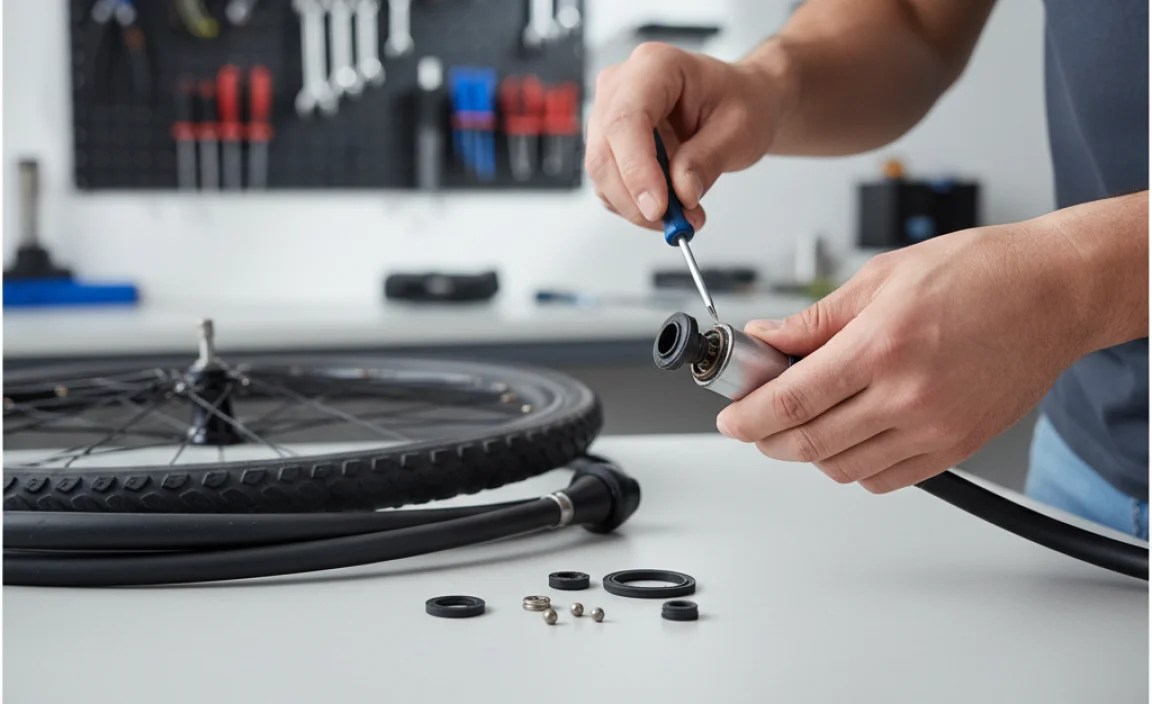
Even with a good understanding of how a bicycle pump works, you may encounter some common issues. Here are some troubleshooting tips:
- Pump Not Inflating:
- Check if the pump head is securely attached to the valve.
- Ensure the valve core is open (for Presta valves).
- Inspect the pump head for damage or wear.
- Air Leaking:
- Check the hose for cracks or leaks.
- Ensure the valve core is properly tightened.
- Replace the pump head if necessary.
- Difficulty Pumping:
- Lubricate the piston with a silicone-based lubricant.
- Check for obstructions in the cylinder.
- Ensure the pump is properly assembled.
Maintaining Your Bicycle Pump
Regular maintenance can extend the life of your bicycle pump and ensure it operates efficiently. Here are some maintenance tips:
- Clean the Pump: Wipe down the pump regularly with a damp cloth to remove dirt and grime.
- Lubricate the Piston: Apply a few drops of silicone-based lubricant to the piston every few months to keep it moving smoothly.
- Inspect the Hose: Check the hose for cracks or wear and replace it if necessary.
- Replace Worn Parts: Replace worn pump heads, valves, or seals to maintain optimal performance.
Choosing the Right Bicycle Pump

Selecting the right bicycle pump depends on your riding style, budget, and needs. Here are some factors to consider:
- Type of Riding:
- Road cyclists may prefer a lightweight hand pump or CO2 inflator for quick roadside repairs.
- Mountain bikers may opt for a durable floor pump for home use and a compact hand pump for trailside emergencies.
- Commuters may choose a versatile floor pump with a pressure gauge for accurate inflation.
- Budget: Bicycle pumps range in price from affordable hand pumps to high-end floor pumps. Consider your budget and choose a pump that offers the best value for your needs.
- Features: Look for features such as a pressure gauge, dual-head compatibility (Presta and Schrader), and a comfortable handle.
Recommended Bicycle Pump Brands
Several reputable brands offer high-quality bicycle pumps. Here are a few recommendations:
- Lezyne: Known for their durable and innovative designs.
- Topeak: Offers a wide range of pumps for various cycling disciplines.
- SKS Germany: Renowned for their reliable and high-performance pumps.
- Park Tool: Offers professional-grade pumps for bike shops and serious cyclists.
FAQ About Bicycle Pumps
Why is my bike pump not working?
First, make sure the pump head is securely attached to your tire valve. Check that the valve core is open on Presta valves. If air is leaking, inspect the hose and pump head for damage.
How do I know if my tire is properly inflated?
Check the recommended pressure range printed on the sidewall of your tire. Use a pump with a pressure gauge to inflate the tire to the correct PSI (pounds per square inch) or BAR (metric unit of pressure).
What’s the difference between Presta and Schrader valves?
Presta valves are narrow and typically found on road bikes, requiring you to unscrew the valve core before inflating. Schrader valves are wider, similar to car tires, and don’t need unscrewing.
Can I use a car tire pump on my bicycle?
Yes, if your bike has Schrader valves. However, car tire pumps often deliver too much air at once, so be careful not to overinflate your tires. A bicycle-specific pump is generally recommended for better control.
How often should I maintain my bicycle pump?
Clean your pump regularly and lubricate the piston every few months. Inspect the hose and pump head for wear and replace parts as needed to keep your pump in top condition.
What type of pump is best for me?
If you’re at home, use floor pump for the most efficient fill. If you want to carry it on the road, then use a mini or hand pump.
Why is it so hard to pump my tires?
It can be hard to pump tires for many reasons: the pump is old, the pressure is already high, or the pump head is not attached correctly.
Conclusion
Understanding how a bicycle pump works empowers you to maintain your bike, fix flats on the go, and enjoy a smoother, safer ride. By knowing the components, the pumping action, and how to troubleshoot common issues, you can keep your tires properly inflated and your pump in good working order. Whether you’re a casual rider or a serious cyclist, mastering the art of inflation is a valuable skill that will enhance your cycling experience. So, grab your pump, get familiar with its parts, and hit the road with confidence, knowing you’re prepared for whatever comes your way!


