
How to Check Chuck Pressure Rating? Easy Guide

Quick Summary: Checking the chuck pressure rating on your bike pump is easy! Look for the PSI or BAR number printed on the chuck itself. If it’s not there, check your pump’s manual or the manufacturer’s website. Make sure your tire pressure is always lower than the chuck’s maximum rating to avoid accidents or damage.
Ever felt unsure about how much air your bike pump can handle? It’s a common worry! Pumping your tires to the right pressure is super important for a smooth, safe ride. But using a pump with a chuck that can’t handle the pressure is a recipe for disaster. Don’t stress – it’s simpler than you think to check your chuck’s pressure rating. We’ll walk you through the easy steps to find the rating and make sure you’re always in the safe zone. Let’s get started!
Understanding Chuck Pressure Ratings
Before we dive into checking the rating, let’s understand what it means. The pressure rating on your bike pump chuck tells you the maximum pressure (in PSI or BAR) the chuck is designed to handle safely. Exceeding this limit can cause the chuck to fail, potentially leading to injury or damage to your pump and tire.
Think of it like this: your chuck is like a bridge. It’s built to withstand a certain amount of weight (pressure). If you try to put too much weight on it, the bridge could collapse. Same with your chuck – exceed the pressure rating, and it could break.
Why is knowing the chuck pressure rating important?
- Safety: Exceeding the pressure rating can cause the chuck to explode or fail, potentially causing injury.
- Accuracy: Using a chuck within its rated pressure range ensures more accurate pressure readings.
- Longevity: Operating within the recommended limits extends the life of your pump and chuck.
- Tire Protection: Over-inflating tires can lead to blowouts, damaging your tires and rims.
Where to Find the Chuck Pressure Rating
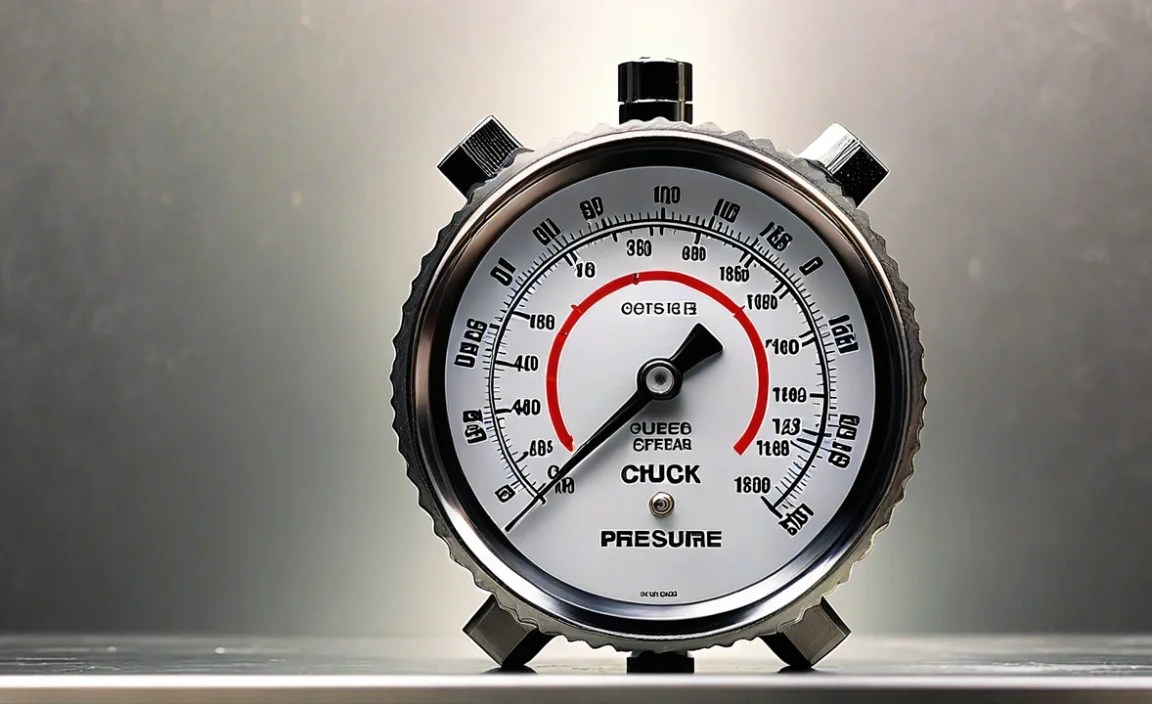
The pressure rating is usually marked on the chuck itself or in the pump’s documentation. Here are the most common places to look:
1. On the Chuck Itself
Many chucks have the pressure rating printed directly on the body. Look closely for a number followed by “PSI” or “BAR.” You might need a magnifying glass for this, as the print can be quite small.
Example: You might see “MAX 160 PSI” or “11 BAR” etched into the metal or plastic.
2. In the Pump’s Manual
The pump’s instruction manual should list the specifications, including the maximum pressure rating of the chuck. Check the “Technical Specifications” or “Features” section.
3. On the Pump Body
Some pumps have the maximum pressure rating printed on the pump body itself, near the gauge or handle.
4. Manufacturer’s Website
If you can’t find the rating on the chuck or in the manual, check the manufacturer’s website. Search for your pump model and look for the specifications or product details.
5. Contacting the Manufacturer
As a last resort, contact the manufacturer directly. They should be able to provide you with the pressure rating for your specific chuck model.
Step-by-Step Guide: How to Check Chuck Pressure Rating

Here’s a detailed guide to help you find your chuck’s pressure rating:
Step 1: Gather Your Tools
- Your bike pump
- A magnifying glass (optional, but helpful)
- The pump’s manual (if you have it)
- A computer or smartphone with internet access
Step 2: Inspect the Chuck
Carefully examine the chuck for any markings. Look for numbers followed by “PSI” or “BAR.” Rotate the chuck and check all sides. Use a magnifying glass if needed.
Tip: Clean the chuck with a cloth to remove any dirt or grime that might be obscuring the markings.
Step 3: Consult the Pump’s Manual
If you can’t find the rating on the chuck, grab the pump’s manual. Flip through the pages and look for the “Specifications” or “Technical Data” section. The maximum pressure rating should be listed there.
Example: The manual might say, “Maximum Pressure: 120 PSI / 8.3 BAR.”
Step 4: Check the Pump Body
Sometimes, the pressure rating is printed on the pump body itself. Look near the gauge or handle for any markings.
Step 5: Visit the Manufacturer’s Website
If you still haven’t found the rating, head to the manufacturer’s website. Search for your pump model and look for the product specifications. You should find the maximum pressure rating listed there.
Tip: If you don’t know the exact model number, try searching for the pump by its appearance or features.
Step 6: Contact the Manufacturer (If Necessary)
If all else fails, reach out to the manufacturer’s customer support. They should be able to provide you with the pressure rating for your chuck. Have the pump’s model number ready when you contact them.
Understanding PSI and BAR
You’ll often see pressure ratings in both PSI (pounds per square inch) and BAR (a metric unit of pressure). Here’s a quick conversion:
- 1 BAR = 14.5 PSI
- 1 PSI = 0.069 BAR
Most bike pumps will display pressure in both units, so you can easily compare the rating to your desired tire pressure.
What to Do If You Can’t Find the Pressure Rating
Sometimes, the pressure rating is simply not available. In this case, it’s best to err on the side of caution. Here are some guidelines:
- Assume a conservative rating: If you’re unsure, assume a maximum pressure rating of 100 PSI / 6.9 BAR. This is a safe limit for most standard bike tires.
- Replace the chuck: If you’re concerned about the chuck’s ability to handle higher pressures, consider replacing it with a new one that has a clearly marked rating.
- Upgrade your pump: If you frequently need to inflate tires to high pressures (e.g., for road bikes), consider upgrading to a pump with a higher pressure rating.
Choosing the Right Chuck for Your Needs
Not all chucks are created equal. Here are some factors to consider when choosing a chuck:
- Pressure Rating: Make sure the chuck’s pressure rating is high enough for your needs. If you primarily ride road bikes, you’ll need a chuck with a higher rating than if you only ride mountain bikes.
- Valve Compatibility: Ensure the chuck is compatible with the type of valves on your tires (Presta or Schrader). Some chucks are dual-headed and can accommodate both types.
- Build Quality: Look for a chuck made from durable materials, such as metal or high-quality plastic. Avoid cheap, flimsy chucks that are likely to break.
- Ease of Use: Choose a chuck that is easy to attach and detach from the valve. Some chucks have levers or clamps that make the process easier.
Maintaining Your Bike Pump Chuck
Proper maintenance can extend the life of your bike pump chuck and ensure accurate pressure readings. Here are some tips:
- Keep it clean: Regularly clean the chuck with a cloth to remove dirt and grime.
- Lubricate the valve: Apply a small amount of lubricant (such as silicone grease) to the valve stem to ensure a smooth connection.
- Inspect for damage: Check the chuck for cracks, leaks, or other damage. Replace it if necessary.
- Store it properly: Store your pump in a dry, protected location to prevent damage to the chuck.
Troubleshooting Common Chuck Problems
Even with proper maintenance, you might encounter some common chuck problems. Here are some troubleshooting tips:
- Air leaks: If you hear air leaking from the chuck when inflating your tire, make sure the chuck is properly seated on the valve. You might need to adjust the position or tighten the connection.
- Difficulty attaching: If you’re having trouble attaching the chuck to the valve, make sure the valve stem is clean and free of debris. You might also need to try a different chuck.
- Broken chuck: If the chuck is cracked or broken, replace it immediately. Do not attempt to use a damaged chuck.
Pressure Rating Table for Common Chuck Types
This table shows the typical pressure ratings for common bike pump chuck types. Note that these are general guidelines, and the actual rating may vary depending on the specific model.
| Chuck Type | Typical Pressure Rating (PSI) | Typical Pressure Rating (BAR) |
|---|---|---|
| Standard Schrader Chuck | 100-160 PSI | 6.9-11 BAR |
| Standard Presta Chuck | 120-220 PSI | 8.3-15.2 BAR |
| Dual-Head Chuck (Presta/Schrader) | 120-200 PSI | 8.3-13.8 BAR |
| Thread-On Chuck | 100-250 PSI | 6.9-17.2 BAR |
Different Types of Bike Pump Chucks
Bike pumps come with different types of chucks, each designed for specific valve types and pressure ranges. Here’s a breakdown of the most common types:
- Schrader Chucks: These are designed for Schrader valves, which are commonly found on car tires and some mountain bikes. They typically have a lower pressure rating than Presta chucks.
- Presta Chucks: These are designed for Presta valves, which are commonly found on road bikes and high-performance bikes. They can handle higher pressures than Schrader chucks.
- Dual-Head Chucks: These chucks have two openings, one for Schrader valves and one for Presta valves. They’re a versatile option for cyclists who own bikes with both valve types.
- Thread-On Chucks: These chucks screw onto the valve stem, providing a secure and airtight connection. They’re often used for high-pressure applications, such as inflating tubeless tires.
- Lever-Lock Chucks: These chucks have a lever that locks the chuck onto the valve stem. They’re easy to use and provide a secure connection.
Why Tire Pressure Matters
Maintaining the correct tire pressure is crucial for optimal performance, comfort, and safety. Here’s why:
- Rolling Resistance: Properly inflated tires roll faster and require less effort to pedal.
- Traction: The correct tire pressure provides optimal traction for cornering and braking.
- Comfort: Adjusting tire pressure can improve ride comfort, especially on rough roads or trails.
- Puncture Resistance: Properly inflated tires are less likely to get pinch flats (snake bites).
- Tire Wear: Maintaining the correct pressure can extend the life of your tires.
Consult your tire’s sidewall for the recommended pressure range. Use a reliable gauge to ensure accurate inflation.
Resources for Further Learning
Want to learn more about bike maintenance and repair? Here are some helpful resources:
- Park Tool: Park Tool Repair Help – Offers detailed guides and videos on a wide range of bike maintenance topics.
- REI: REI Expert Advice – Provides articles and tips on bike maintenance, gear selection, and riding techniques.
- Sheldon Brown: Sheldon Brown’s Website – A comprehensive resource for all things cycling, with detailed information on bike mechanics, history, and culture.
FAQ: Checking Chuck Pressure Rating
1. What does PSI mean?
PSI stands for pounds per square inch. It’s a unit of pressure commonly used in the United States and other countries.
2. What does BAR mean?
BAR is a metric unit of pressure. It’s commonly used in Europe and other parts of the world.
3. Can I use a pump with a higher pressure rating than my tires require?
Yes, you can. The pump’s pressure rating is the maximum pressure it can handle, not the pressure you must inflate your tires to. Just be careful not to over-inflate your tires.
4. What happens if I exceed the chuck’s pressure rating?
Exceeding the chuck’s pressure rating can cause it to fail, potentially leading to injury or damage to your pump and tire. It’s important to stay within the recommended limits.
5. How often should I check my tire pressure?
You should check your tire pressure before every ride. This ensures optimal performance, comfort, and safety.
6. What’s the difference between a Schrader and Presta valve?
Schrader valves are similar to those found on car tires and are wider. Presta valves are narrower and often found on road bikes. They require different chucks.
7. Can I use an adapter to use a Presta chuck on a Schrader valve (or vice versa)?
Yes, adapters are available that allow you to use a Presta chuck on a Schrader valve, or a Schrader chuck on a Presta valve. However, it’s best to use the correct chuck for the valve type whenever possible.
Conclusion
Knowing how to check your bike pump chuck’s pressure rating is a simple yet crucial skill for any cyclist. By following these steps, you can ensure your safety, maintain accurate pressure readings, and extend the life of your pump and tires. Don’t take pressure ratings lightly – a little bit of knowledge can go a long way in keeping you rolling smoothly and safely on every ride. Now that you’re armed with this information, go forth and pump with confidence!


