
How Long is a Heat Pump Defrost Cycle? A Simple Guide

Quick Summary: A heat pump defrost cycle typically lasts between 3 to 15 minutes. The frequency and duration depend on factors like outdoor temperature, humidity, and the heat pump’s make and model. Understanding these cycles helps you ensure efficient heating and cooling and troubleshoot any potential issues with your system.
Is your heat pump making strange noises or emitting steam in the winter? Don’t worry; it’s probably just defrosting! Heat pumps are fantastic for year-round comfort, but when temperatures drop, they can ice up. This icing reduces efficiency, so your heat pump runs a defrost cycle to melt it away. Wondering how long this cycle lasts and what affects it? You’re in the right place. This guide will break down everything you need to know about heat pump defrost cycles, helping you keep your system running smoothly all winter long.
Understanding Heat Pump Defrost Cycles

Heat pumps are designed to provide both heating and cooling for your home. In the winter, they extract heat from the outside air and transfer it inside. However, when the outdoor temperature drops to around 32 to 45 degrees Fahrenheit (0 to 7 degrees Celsius) and humidity is high, frost can form on the outdoor coil. This frost acts as an insulator, reducing the heat pump’s ability to extract heat from the air. That’s where the defrost cycle comes in.
The defrost cycle is a process where the heat pump temporarily reverses its operation. Instead of extracting heat from the outside, it briefly switches to cooling mode. This sends warm refrigerant through the outdoor coil, melting the frost. The cycle usually lasts only a few minutes, and then the heat pump returns to its normal heating operation.
Factors Affecting Defrost Cycle Duration

Several factors can influence how long a heat pump’s defrost cycle lasts. Understanding these factors can help you troubleshoot issues and optimize your system’s performance.
Outdoor Temperature
The colder it is outside, the more likely your heat pump is to ice up. At temperatures around freezing, the defrost cycle will run more frequently and may last longer. Warmer temperatures mean less frequent and shorter cycles.
Humidity Levels
High humidity contributes significantly to frost formation. When the air is moist, the water vapor freezes quickly on the cold outdoor coil, increasing the need for defrosting. Drier air means less frost and shorter defrost cycles.
Heat Pump Model and Age
Different heat pump models have varying defrost cycle settings and efficiencies. Newer models often have advanced sensors and algorithms that optimize defrost cycles for maximum efficiency. Older units may have less sophisticated controls, leading to longer or more frequent cycles.
Coil Condition
A dirty or damaged outdoor coil can exacerbate frost buildup. Dirt and debris act as insulators, trapping moisture and accelerating the formation of ice. Regular cleaning and maintenance of the coil can help reduce the need for frequent defrost cycles.
Refrigerant Levels
Low refrigerant levels can cause the heat pump to work harder and ice up more quickly. If your system is constantly running long defrost cycles, it may be a sign of a refrigerant leak. A professional HVAC technician can check and recharge the refrigerant levels to ensure optimal performance.
Typical Defrost Cycle Duration

So, how long does a defrost cycle usually last? As mentioned earlier, most cycles run for about 3 to 15 minutes. However, there are variations based on the factors discussed above.
Here’s a general guideline:
- Short Cycle (3-5 minutes): Common in milder temperatures or with newer, efficient heat pumps.
- Medium Cycle (6-10 minutes): Typical for temperatures around freezing with moderate humidity.
- Long Cycle (11-15 minutes): Occurs in very cold, humid conditions or with older, less efficient units.
Signs Your Heat Pump is in Defrost Mode

Recognizing the signs of a defrost cycle can help you understand what’s happening with your heat pump and whether it’s functioning correctly.
Steam or Fog
One of the most noticeable signs is steam or fog rising from the outdoor unit. This is simply the melting frost turning into water vapor as the coil heats up.
Reversing Valve Noise
You may hear a distinct “whooshing” or “hissing” sound as the reversing valve switches the heat pump into cooling mode for the defrost cycle. This is a normal operational sound.
Indoor Air Feels Cooler
Because the heat pump is temporarily running in cooling mode, the air coming from your vents might feel cooler than usual. This is temporary and should only last a few minutes.
Outdoor Fan Stops
During the defrost cycle, the outdoor fan usually shuts off to help the coil heat up more quickly and efficiently melt the frost.
Troubleshooting Defrost Cycle Issues
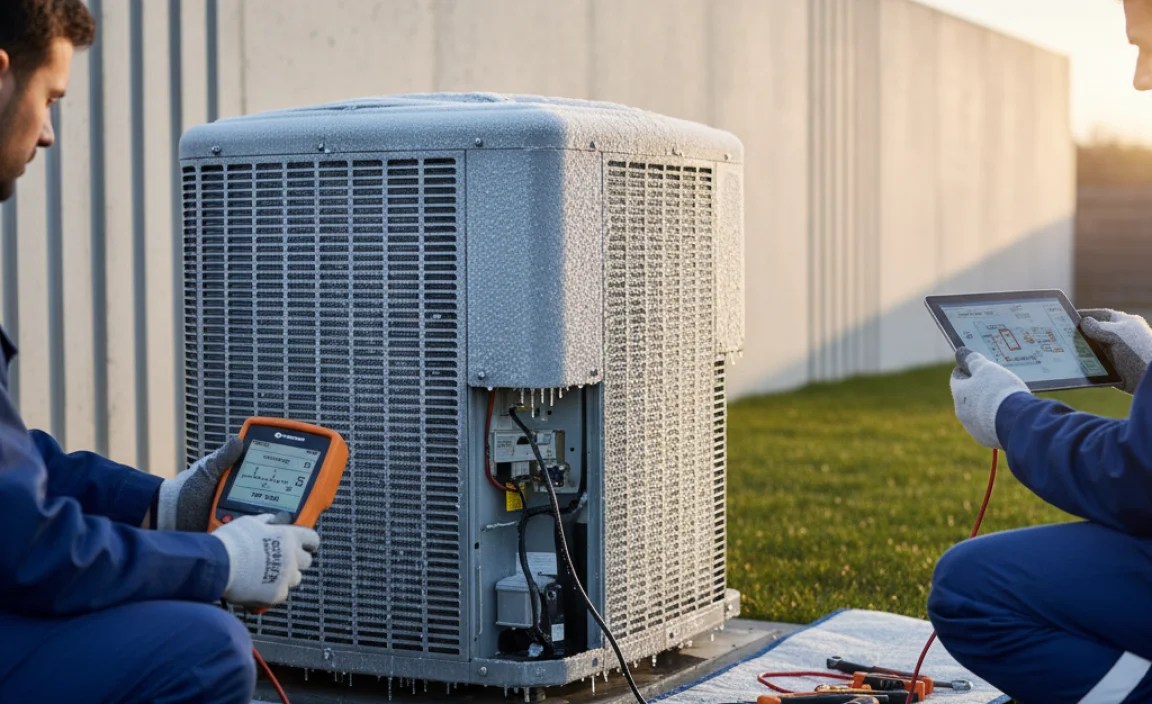
While defrost cycles are normal, certain issues can indicate a problem with your heat pump. Here are some common issues and how to address them.
Excessive Defrost Cycles
If your heat pump is defrosting too frequently (e.g., every 20-30 minutes), it could indicate a problem. Check the following:
- Dirty Coil: Clean the outdoor coil with a garden hose and a soft brush.
- Airflow Obstruction: Ensure there are no obstructions blocking airflow to the outdoor unit, such as leaves, snow, or debris.
- Refrigerant Leak: Contact a professional to check for refrigerant leaks and recharge the system.
Long Defrost Cycles
If the defrost cycle lasts longer than 15 minutes, it could also be a sign of an issue:
- Faulty Defrost Sensor: The defrost sensor may be malfunctioning, causing the system to run the defrost cycle longer than necessary. A technician can test and replace the sensor.
- Reversing Valve Problem: The reversing valve may not be functioning correctly, preventing the heat pump from switching efficiently between heating and cooling modes.
No Defrost Cycle
If your heat pump never goes into defrost mode, frost can build up excessively, leading to reduced efficiency and potential damage. Check these:
- Defrost Timer: A faulty defrost timer can prevent the system from initiating the defrost cycle.
- Defrost Control Board: The control board may be malfunctioning and not sending the signal to start the defrost cycle.
Maintaining Your Heat Pump for Efficient Defrosting
Regular maintenance can help ensure your heat pump operates efficiently and minimizes defrost cycle issues.
Regular Cleaning
Clean the outdoor coil at least twice a year—in the spring and fall—to remove dirt, debris, and leaves. Use a garden hose with a gentle spray nozzle and a soft brush to avoid damaging the coil fins.
Check Airflow
Ensure there is adequate airflow around the outdoor unit. Trim back any vegetation that may be blocking the unit and remove any snow or debris that accumulates around it.
Filter Replacement
Replace your indoor air filters regularly (usually every 1-3 months) to maintain good airflow and prevent dust and debris from accumulating on the indoor coil.
Professional Inspection
Schedule an annual inspection with a qualified HVAC technician. They can check refrigerant levels, inspect the reversing valve, test the defrost components, and identify any potential issues before they become major problems.
Optimizing Heat Pump Performance in Cold Weather
In addition to maintenance, there are several steps you can take to optimize your heat pump’s performance in cold weather and minimize the need for frequent defrost cycles.
Auxiliary Heat
Most heat pumps have an auxiliary or emergency heat setting, which uses electric resistance heat to supplement the heat pump when temperatures are very low. Using auxiliary heat can reduce the strain on the heat pump and minimize the need for defrost cycles.
Smart Thermostats
Install a smart thermostat that can automatically adjust the temperature based on outdoor conditions. Some smart thermostats can also monitor the heat pump’s performance and alert you to potential issues.
Seal Air Leaks
Seal any air leaks around windows, doors, and other openings to prevent heat loss and reduce the load on your heat pump. This will help maintain a consistent indoor temperature and minimize the need for the heat pump to work harder.
Consider a Windbreak
If your heat pump is exposed to strong winds, consider installing a windbreak to reduce the impact of the wind on the unit. This can help prevent excessive frost buildup and minimize the need for defrost cycles.
Defrost Cycle Duration by Heat Pump Type
The type of heat pump you have can also influence the defrost cycle duration. Here’s a quick look at some common types:
Air-Source Heat Pumps: These are the most common type and typically have defrost cycles lasting 3-15 minutes, depending on the factors discussed earlier.
Geothermal Heat Pumps: Geothermal systems are less prone to frosting because they draw heat from the ground, which maintains a more consistent temperature. Defrost cycles are rare and usually very short, if needed at all.
Ductless Mini-Split Heat Pumps: These systems often have advanced defrost features and may use shorter, more frequent cycles to prevent significant frost buildup. Cycle durations can range from 2-10 minutes.
Defrost Cycle vs. Emergency Heat
It’s important to understand the difference between a defrost cycle and emergency heat. During a defrost cycle, the heat pump briefly switches to cooling mode to melt frost on the outdoor coil. This is a normal operation and usually lasts only a few minutes.
Emergency heat, on the other hand, is a supplemental heating system that uses electric resistance heat to provide warmth when the heat pump cannot keep up with the heating demand. Emergency heat is typically used when temperatures are extremely low or when the heat pump is malfunctioning. Unlike the defrost cycle, which is a brief and automatic process, emergency heat is usually engaged manually and can result in higher energy bills.
Cost of Defrost Cycles
While defrost cycles are necessary for maintaining the efficiency of your heat pump, they do consume energy. The cost of defrost cycles depends on factors such as the frequency and duration of the cycles, the efficiency of your heat pump, and the cost of electricity in your area.
However, the energy used during defrost cycles is generally minimal compared to the overall energy consumption of the heat pump. By maintaining your heat pump and optimizing its performance, you can minimize the cost of defrost cycles and ensure efficient heating and cooling.
Table: Troubleshooting Common Defrost Cycle Issues
| Issue | Possible Cause | Solution |
|---|---|---|
| Excessive Defrost Cycles | Dirty coil, airflow obstruction, refrigerant leak | Clean coil, remove obstructions, call a professional for refrigerant check |
| Long Defrost Cycles | Faulty defrost sensor, reversing valve problem | Call a professional to test/replace sensor or repair valve |
| No Defrost Cycle | Defrost timer or control board issue | Call a professional to diagnose and repair timer/board |
Table: Defrost Cycle Duration Guidelines
| Cycle Type | Duration | Conditions |
|---|---|---|
| Short | 3-5 minutes | Milder temperatures, efficient heat pumps |
| Medium | 6-10 minutes | Temperatures around freezing, moderate humidity |
| Long | 11-15 minutes | Very cold, humid conditions, older units |
FAQ: Heat Pump Defrost Cycles
1. Why does my heat pump go into defrost mode?
Your heat pump goes into defrost mode to melt frost that forms on the outdoor coil when the outdoor temperature is near freezing and humidity is high. Frost buildup reduces the heat pump’s efficiency.
2. How often should my heat pump defrost?
The frequency of defrost cycles depends on the outdoor temperature and humidity. It can range from every 30 minutes to every few hours. More frequent cycles may indicate an issue.
3. Is it normal for the air inside to feel cool during a defrost cycle?
Yes, it’s normal. The heat pump briefly switches to cooling mode to melt the frost, so the air coming from the vents might feel cooler for a few minutes.
4. Can I manually start a defrost cycle?
Some heat pumps have a manual defrost setting, but it’s generally best to let the system defrost automatically. If you suspect a problem, consult a professional.
5. What should I do if my heat pump is defrosting too often?
First, check for a dirty outdoor coil or airflow obstructions. If the problem persists, contact an HVAC technician to check for refrigerant leaks or other issues.
6. How can I reduce the frequency of defrost cycles?
Regularly clean the outdoor coil, ensure good airflow around the unit, and seal any air leaks in your home to reduce the load on the heat pump.
7. Is a long defrost cycle a sign of a problem?
A defrost cycle lasting longer than 15 minutes could indicate a problem, such as a faulty defrost sensor or reversing valve issue. Contact a professional for inspection and repair.
Conclusion
Understanding the defrost cycle of your heat pump is essential for maintaining its efficiency and ensuring reliable heating during the colder months. Knowing how long a defrost cycle should last, what factors affect it, and how to troubleshoot common issues can help you keep your system running smoothly. Regular maintenance, such as cleaning the outdoor coil and replacing air filters, can also minimize defrost cycle problems. If you encounter any persistent or unusual issues, don’t hesitate to consult a qualified HVAC technician. With proper care and maintenance, your heat pump will continue to provide comfortable and efficient heating for years to come.
“`


