
Pump Gauge Interchangeable Display: Easy Guide

Quick Summary: Yes, on many modern bike pumps, you can interchange the gauge display. Before swapping, ensure the new gauge is compatible with your pump’s pressure range, connection type (analog or digital), and hose fitting. You might need tools like wrenches or screwdrivers. Always release any pressure in the pump before starting. If unsure, consult your pump’s manual or a bike mechanic.
Ever stared at your bike pump’s gauge, wishing it showed pressure in a different unit or was simply easier to read? Maybe your old gauge is busted, and you’re wondering if you can just swap it out. It’s a common question for cyclists, and the good news is, often, you can! Swapping a pump gauge display can seem daunting, but with a little know-how, it’s a manageable DIY task. This guide will walk you through everything you need to know.
We’ll cover identifying the right replacement, the tools you might need, and a step-by-step process to get your pump back in top shape. Let’s get pumping!
Can You Interchange Your Bike Pump Gauge Display?

The short answer is: often, yes! Many bike pumps, especially modern ones, are designed with modular components, making gauge replacement possible. However, it’s not a universal guarantee. Several factors determine whether you can successfully swap your pump gauge display.
Factors Determining Interchangeability
- Compatibility: The new gauge must be compatible with your pump’s pressure range (e.g., 0-160 PSI). Using a gauge with an incorrect range will give inaccurate readings.
- Connection Type: Most pumps use either analog or digital gauges. Ensure the replacement matches.
- Hose Fitting: The fitting that connects the gauge to the pump hose must be the same size and thread.
- Brand and Model: Gauges are more likely to be interchangeable within the same brand or product line.
When to Consider a Gauge Replacement
- Damage: Cracked, broken, or unreadable display.
- Inaccuracy: Readings are consistently off, even after calibration (if possible).
- Preference: Switching from analog to digital or vice-versa.
- Unit Display: Changing from PSI to Bar, or adding a kPa reading.
Tools and Materials You’ll Need

Before diving in, gather the necessary tools and materials. Having everything on hand will make the process smoother and prevent frustration.
- Replacement Gauge: Make sure it’s compatible with your pump.
- Wrenches: Possibly adjustable, or specific sizes to fit hose fittings.
- Screwdrivers: Phillips head or flathead, depending on your pump model.
- Pliers: For gripping and gently loosening tight connections.
- Teflon Tape (Plumber’s Tape): For sealing threaded connections.
- Soft Cloth or Rag: To protect surfaces from scratches.
- Safety Glasses: To protect your eyes.
- Pump Manual: For reference, if available.
Step-by-Step Guide to Swapping Your Pump Gauge

Follow these steps carefully to safely and effectively replace your bike pump gauge display.
Step 1: Prepare Your Workspace
Choose a clean, well-lit area. Lay down a cloth or mat to protect your pump and work surface from scratches.
Step 2: Depressurize the Pump
Crucially important! Before doing anything, completely release all air pressure from the pump. Operate the pump lever several times until the gauge reads zero. This prevents accidents and damage.
Step 3: Disconnect the Hose
Detach the pump hose from the pump body. This is usually done by unscrewing a threaded fitting. Use a wrench if necessary, but be gentle to avoid stripping the threads. Place the hose aside.
Step 4: Access the Gauge
Depending on your pump design, the gauge might be directly mounted to the pump body or housed within a plastic casing. If cased, you’ll need to open the casing by removing screws. Observe how the gauge is connected before fully removing it.
Step 5: Disconnect the Old Gauge
Carefully disconnect the old gauge from its fitting. This usually involves unscrewing it. Use a wrench to hold the fitting steady while you unscrew the gauge. Note the orientation of the gauge for correct installation of the new one.
Step 6: Prepare the New Gauge
If the new gauge has threaded connections, wrap the threads with Teflon tape (plumber’s tape). Wrap it clockwise when looking at the open end of the thread. This creates a tight seal and prevents leaks. Check thread direction, a common type is a National Pipe Thread Taper (NPT).
Step 7: Install the New Gauge
Screw the new gauge into the fitting. Tighten it snugly with a wrench, but avoid over-tightening, which can damage the threads or the gauge. Ensure the gauge is oriented correctly so you can read it easily.
Step 8: Reassemble the Pump
Reattach the pump hose to the pump body. Tighten the fitting securely. If you removed any casing, reassemble it now, tightening the screws.
Step 9: Test the Pump
Slowly operate the pump lever to build up pressure. Check for leaks around the gauge and hose connections. If you find leaks, tighten the fittings further. Compare the reading to another pump to ensure accuracy. You may need to calibrate the gauge if possible.
Troubleshooting Common Issues
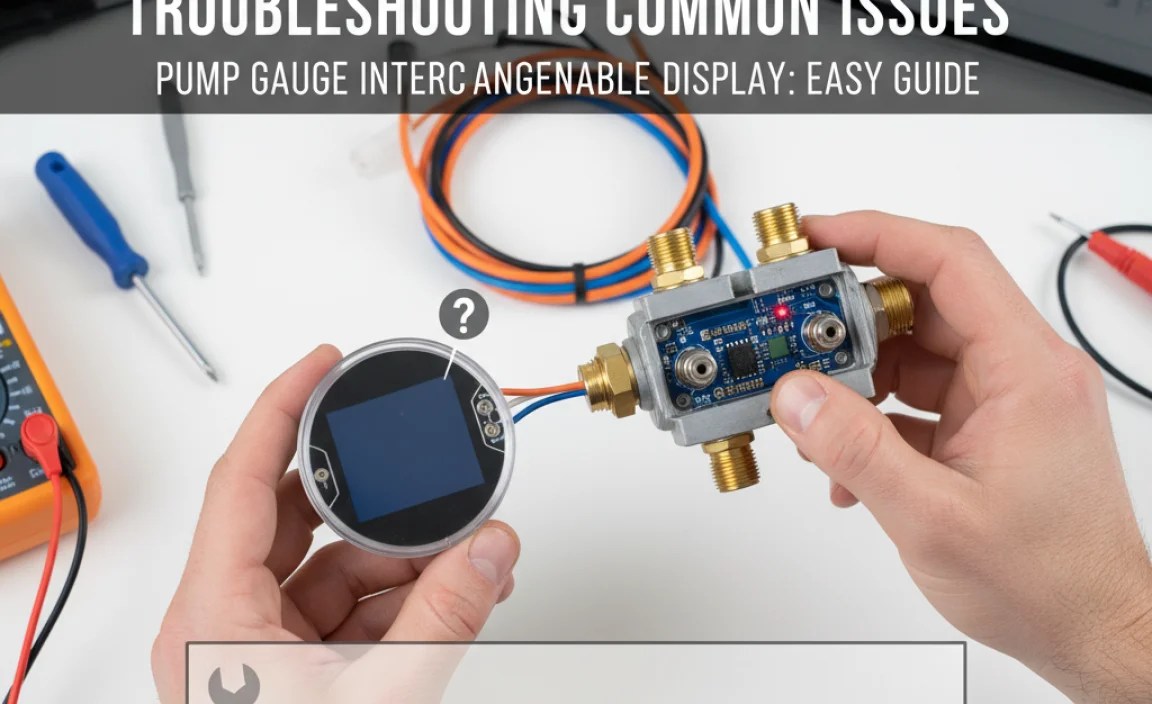
Sometimes, things don’t go as planned. Here’s how to handle common problems.
- Leaks:
- Problem: Air leaks around the gauge or hose connections.
- Solution: Tighten the fittings. If the leak persists, reapply Teflon tape to the threads.
- Inaccurate Readings:
- Problem: The new gauge gives consistently inaccurate readings.
- Solution: Ensure the gauge is compatible with your pump’s pressure range. Check for kinks or damage in the hose. If the gauge is adjustable, calibrate it.
- Stripped Threads:
- Problem: Threads are damaged, making it impossible to tighten fittings.
- Solution: If the threads are only slightly damaged, try using Teflon tape to fill the gaps. If severely damaged, you may need to replace the fitting or the entire pump.
- Incompatible Fittings:
- Problem: The new gauge doesn’t fit the existing hose or pump body.
- Solution: Double-check the fitting sizes and thread types. You may need to purchase an adapter or a different gauge.
Choosing the Right Replacement Gauge

Selecting the correct replacement gauge is crucial for accurate readings and safe pump operation. Here’s what to consider:
Gauge Type: Analog vs. Digital
Analog Gauges: These use a needle to indicate pressure on a dial. They are generally more affordable and don’t require batteries.
Digital Gauges: These display the pressure digitally, often with more precise readings and additional features like backlighting or multiple units. They require batteries.
Pressure Range
Ensure the gauge’s pressure range matches your typical tire pressures. A gauge with a range of 0-200 PSI is suitable for both high-pressure road tires and lower-pressure mountain bike tires. If you only use high-pressure tires, a 0-300 PSI gauge may be preferable.
Unit Display
Most gauges display pressure in PSI (pounds per square inch) and Bar (metric unit). Some also include kPa (kilopascals). Choose a gauge that displays the units you prefer.
Fitting Type
The gauge must have the correct fitting to connect to your pump hose. Common fitting types include threaded and quick-connect. Ensure the thread size and type match your pump.
Accuracy
Look for gauges with a stated accuracy of +/- 1-2%. More accurate gauges are more expensive but provide more reliable readings.
Features
Some gauges have additional features like backlighting, pressure release buttons, or calibration adjustments. Consider which features are important to you.
Here’s a table to help you compare analog and digital gauges:
| Feature | Analog Gauge | Digital Gauge |
|---|---|---|
| Cost | Lower | Higher |
| Accuracy | Generally less accurate | Generally more accurate |
| Power | None required | Battery required |
| Readability | Can be harder to read precisely | Easy to read |
| Features | Fewer features | More features (backlight, multiple units) |
| Durability | More durable | Less durable (electronics) |
Maintaining Your Bike Pump Gauge
Proper maintenance will extend the life of your bike pump gauge and ensure accurate readings.
- Store the Pump Properly: Avoid storing the pump in direct sunlight or extreme temperatures, which can damage the gauge.
- Check for Leaks Regularly: Inspect the gauge and hose connections for leaks. Tighten fittings as needed.
- Clean the Gauge: Wipe the gauge with a soft cloth to remove dirt and grime. Avoid using harsh chemicals or solvents.
- Calibrate Periodically: If your gauge is adjustable, calibrate it periodically to ensure accuracy. Compare the readings to a known accurate gauge.
- Replace the Hose if Damaged: A damaged or kinked hose can affect gauge readings. Replace the hose if necessary.
Alternative Solutions
If you’re unable to replace the gauge or prefer not to, consider these alternative solutions:
- Use a Separate Gauge: Purchase a standalone digital pressure gauge to check your tire pressure. These are portable and can be more accurate than pump gauges.
- Take it to a Bike Shop: A professional bike mechanic can replace the gauge for you. This is a good option if you’re not comfortable doing it yourself.
- Buy a New Pump: If your pump is old or heavily damaged, it may be more cost-effective to simply buy a new pump with a reliable gauge.
FAQ: Swapping Your Pump Gauge Display
Here are some frequently asked questions about swapping your bike pump gauge display:
Q: Can I use any gauge as a replacement?
A: No, you must use a gauge that is compatible with your pump’s pressure range, connection type (analog or digital), and hose fitting. Otherwise, it won’t work correctly or may damage your pump.
Q: How do I know what pressure range my gauge should have?
A: Choose a gauge with a pressure range that covers the typical tire pressures you use. A 0-200 PSI gauge is suitable for most bikes.
Q: What is Teflon tape, and why do I need it?
A: Teflon tape (also known as plumber’s tape) is a thin, white tape used to seal threaded connections. It creates a tight seal and prevents air leaks.
Q: Do I need special tools to replace the gauge?
A: You may need wrenches, screwdrivers, and pliers, depending on your pump model. Having the right tools will make the job easier and prevent damage.
Q: What if I can’t find a compatible replacement gauge?
A: Contact the pump manufacturer or a bike shop for assistance. They may be able to source a compatible gauge or offer alternative solutions.
Q: How often should I calibrate my pump gauge?
A: Calibrate your gauge every few months, or whenever you suspect it’s giving inaccurate readings. Compare the readings to a known accurate gauge.
Q: Is it worth replacing the gauge, or should I just buy a new pump?
A: If your pump is otherwise in good condition, replacing the gauge can be a cost-effective solution. However, if your pump is old or heavily damaged, it may be better to buy a new one.
Conclusion
Swapping your bike pump gauge display is a manageable task that can save you money and extend the life of your pump. By following the steps outlined in this guide, you can confidently replace your gauge and ensure accurate tire pressure readings. Remember to choose a compatible gauge, use the right tools, and take your time. With a little patience, you’ll be back on the road in no time. Happy cycling!


