
Good Bicycle Floor Pump: Your Easy Inflation Secret

Have you ever tried to ride a bike with flat tires? It is no fun! The tires feel soft. The bike is hard to pedal. A good bicycle floor pump can fix that. It fills your tires with air. Then you can have a smooth, fast ride.
Do you know what a bicycle floor pump is? It’s a tall pump you stand on the floor. It has a long hose. The hose connects to your tire. You push down on the handle. Air goes into the tire. It makes the tire hard and ready to ride!
Imagine you are going on a bike ride with your friends. You get your bike out. But oh no, the tires are flat! What do you do? A good bicycle floor pump is your answer. It will get you back on the road in no time. Let’s learn more about these helpful tools.
Key Takeaways
- A good bicycle floor pump makes inflating tires quick and easy.
- Look for a pump with a gauge to check your tire pressure.
- A stable base and comfortable handle make pumping easier.
- Consider a pump with multiple valve attachments for different bikes.
- Regularly check your tire pressure for better rides and safety.
Choosing a Good Bicycle Floor Pump

Choosing the right good bicycle floor pump can feel tricky. There are so many choices! You want one that works well. You also want it to last a long time. Think about what kind of bike you have. Some pumps work better with certain types of tires. Look for a pump with a gauge. This tells you how much air is in your tire. A good bicycle floor pump should be easy to use. The handle should feel good in your hands. The base should be strong, so it does not tip over when you pump. Also, check what kind of valves your tires have. Most bikes use Schrader or Presta valves. Make sure the pump works with both. Some pumps have two different sides for each valve. Others have a head that adjusts.
- Check the type of valves your bike uses.
- Look for a pump with a clear pressure gauge.
- Consider the pump’s base for stability.
- Make sure the handle is comfortable to grip.
- Think about the pump’s overall build quality.
When you get a new good bicycle floor pump, try it out. Read the instructions first. Connect the pump to your tire. Make sure it is on tight. Start pumping slowly. Watch the gauge. Stop when it reaches the right pressure. The pressure is measured in PSI. This number is on the side of your tire. If you put too much air in, let some out. If you do not put enough air in, add more. A good bicycle floor pump will make this process simple. It will also make your bike rides much more fun.
Fun Fact or Stat: The first bicycle pump was invented in the late 1800s. It was much simpler than the pumps we use today!
What is a Schrader Valve?
Have you ever seen a car tire valve? A Schrader valve looks like that. It is short and has a pin in the middle. You push the pin to let air in or out. Many kids’ bikes and mountain bikes use Schrader valves. To use a good bicycle floor pump with a Schrader valve, push the pump head straight onto the valve. Make sure it is snug. Then, lock the lever on the pump head. This makes a tight seal. Now you can pump air into the tire. Keep an eye on the gauge. Stop when you reach the right PSI. It is that easy!
What is a Presta Valve?
Presta valves are different. They are longer and thinner than Schrader valves. You see them on many road bikes. To use a good bicycle floor pump with a Presta valve, you first need to unscrew the top of the valve. Then, push it in a little to loosen it. This lets the air flow. Put the pump head on the valve. Lock the lever. Now pump air into the tire. Remember to screw the valve closed when you are done. This keeps the air from leaking out. A good bicycle floor pump will work well with both types of valves.
Why is Tire Pressure Important?
Keeping the right tire pressure is super important. If your tires do not have enough air, it is hard to pedal. You might even damage the tire or wheel. If your tires have too much air, the ride can be bumpy. The tire could even burst! Check your tire pressure before each ride. Use a good bicycle floor pump with a gauge. The right pressure makes riding safer and more fun. It also helps your tires last longer. So, take a few minutes to check your tires. Your bike will thank you!
Understanding Bicycle Pump Features
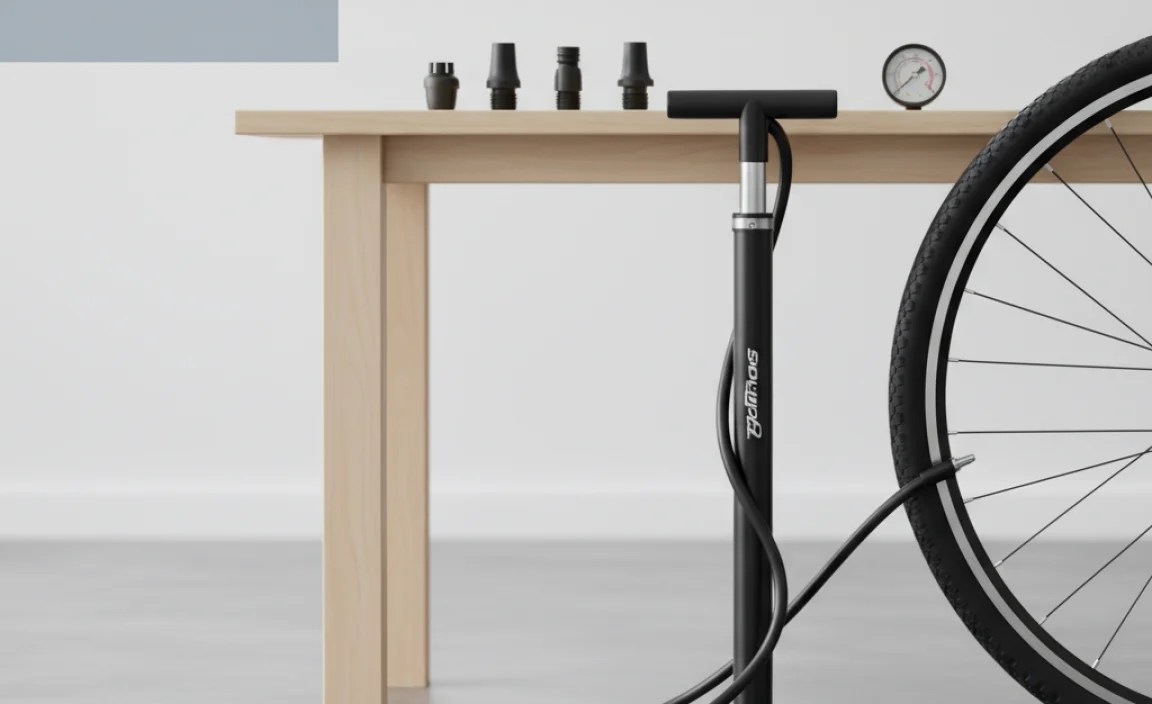
A good bicycle floor pump comes with many features. These features can make pumping easier. Look for a pump with a wide base. This keeps it from tipping over. A comfortable handle is also important. You do not want your hands to hurt when you pump. The length of the hose matters too. A longer hose lets you reach the tire valve easily. Some pumps have a built-in gauge. This is very helpful. It tells you how much air is in your tire. Some gauges are digital. They show the pressure in numbers. Other gauges are analog. They have a needle that points to the pressure. A good bicycle floor pump will have features that make it easy and comfortable to use.
- A wide base prevents the pump from tipping.
- Comfortable handles reduce hand fatigue.
- Long hoses make it easier to reach the tire valve.
- Built-in gauges show the tire pressure.
- Dual pump heads work with Presta and Schrader valves.
Think about the materials the pump is made from. Some pumps are made of plastic. Others are made of metal. Metal pumps are usually more durable. They will last longer. Plastic pumps can be lighter. They might be easier to carry. Consider where you will store the pump. Some pumps are tall and skinny. They do not take up much space. Others are wider and bulkier. Choose a pump that fits your needs. A good bicycle floor pump is an investment. It will help you keep your tires properly inflated. This makes your rides safer and more enjoyable.
Fun Fact or Stat: Some high-end bicycle pumps can inflate tires up to 220 PSI (pounds per square inch)!
What is a Dual Head Pump?
A dual head pump has two different openings. One opening is for Schrader valves. The other is for Presta valves. This means you do not have to change any parts. You can use the same pump for different bikes. A good bicycle floor pump with a dual head is very convenient. It saves you time and effort. Just choose the right opening. Put it on the valve. Lock the lever. Then, start pumping. It is that simple! A dual head pump is a great choice for families with different types of bikes.
How Accurate Are Gauges?
The accuracy of the gauge is important. You want to know the right tire pressure. Some gauges are more accurate than others. Digital gauges are often more precise. They show the exact number. Analog gauges can be a little less accurate. But they are still useful. To check the accuracy of your gauge, compare it to another gauge. You can also go to a bike shop. They can check your tire pressure for you. A good bicycle floor pump will have a gauge that is reliable. This helps you keep your tires properly inflated.
How Long Should a Pump Last?
A good bicycle floor pump should last for many years. The lifespan of a pump depends on how often you use it. It also depends on how well you take care of it. If you use the pump every day, it might wear out faster. If you only use it once in a while, it will last longer. Store the pump in a dry place. This prevents rust and damage. Clean the pump regularly. This keeps it working smoothly. With proper care, a good bicycle floor pump can be a long-term investment. It will keep your tires inflated for many rides to come.
Different Types of Bicycle Floor Pumps

There are different types of bicycle floor pumps. Some are made for home use. Others are made for travel. Home pumps are usually bigger and stronger. They are designed to sit on the floor. Travel pumps are smaller and lighter. They are easy to carry with you. Some pumps are made for specific types of bikes. For example, there are pumps for mountain bikes. There are also pumps for road bikes. Mountain bike pumps often have a lower pressure range. Road bike pumps often have a higher pressure range. A good bicycle floor pump will fit your specific needs. Consider what kind of riding you do. Then, choose the right pump for you.
- Home pumps are larger and more powerful.
- Travel pumps are compact and lightweight.
- Mountain bike pumps suit lower pressure tires.
- Road bike pumps handle higher pressure tires.
- Some pumps are designed for specific valve types.
- Consider your riding style when choosing a pump.
Think about where you will use the pump most often. If you only use it at home, a bigger pump is fine. If you want to take it with you on rides, choose a smaller pump. Some pumps come with extra features. For example, some have a built-in storage compartment. You can use this to store extra valve adapters. Others have a pressure release button. This lets you let out air if you put too much in. A good bicycle floor pump will make inflating your tires easy. It will also have features that make your life easier.
Fun Fact or Stat: Some professional cyclists use electric pumps to inflate their tires for maximum precision!
What are Mini Floor Pumps?
Mini floor pumps are smaller versions of regular floor pumps. They are designed to be portable. You can take them with you on rides. They are not as powerful as full-sized pumps. But they are good for emergencies. A good bicycle floor pump that is mini will still have a gauge. It will also have a stable base. This makes it easier to use on the go. If you ride your bike a lot, a mini floor pump is a good investment. It can save you from being stranded with a flat tire.
What are CO2 Inflators?
CO2 inflators are another way to inflate your tires. They use a cartridge of compressed CO2 gas. You attach the inflator to the valve. Then, you release the gas into the tire. This inflates the tire very quickly. CO2 inflators are good for racing. They are also good for emergencies. But they are not as good for everyday use. CO2 cartridges are single-use. You have to buy new ones when they run out. A good bicycle floor pump is a better choice for regular inflation. CO2 inflators are best for quick fixes.
How Do I Choose?
Choosing the right pump depends on your needs. If you want a pump for home use, get a full-sized floor pump. If you want a pump for travel, get a mini floor pump. If you want a pump for emergencies, get a CO2 inflator. Consider your budget too. Floor pumps can range in price from cheap to expensive. A good bicycle floor pump does not have to be the most expensive. But it should be reliable and easy to use. Read reviews before you buy. This will help you choose the best pump for you.
Maintaining Your Bicycle Floor Pump

Taking care of your good bicycle floor pump will help it last longer. Clean it regularly with a damp cloth. This removes dirt and grime. Check the hose for cracks or leaks. If you see any, replace the hose. Lubricate the moving parts with a little oil. This keeps them working smoothly. Store the pump in a dry place. This prevents rust. If the pump stops working, check the valve head. Make sure it is clean and free of debris. A little maintenance goes a long way. It will keep your good bicycle floor pump working like new.
- Clean the pump regularly with a damp cloth.
- Check the hose for cracks and leaks.
- Lubricate moving parts with oil.
- Store the pump in a dry place.
- Check the valve head for debris.
- Replace worn parts as needed.
If you notice the pump is not working as well as it used to, troubleshoot it. Check the connection between the pump head and the valve. Make sure it is tight. If it is loose, the air will leak out. Check the gauge. Make sure it is reading correctly. If it is not, you may need to replace the gauge. If you are not sure how to fix the pump, take it to a bike shop. They can help you diagnose the problem. A good bicycle floor pump is a valuable tool. It is worth taking care of.
Fun Fact or Stat: Some bicycle pumps have been known to last for over 20 years with proper maintenance!
How Often Should I Clean It?
You should clean your pump every few months. If you use it a lot, clean it more often. Dirt and grime can build up over time. This can make the pump work less efficiently. Cleaning the pump is easy. Just wipe it down with a damp cloth. Pay attention to the hose and valve head. These parts can get dirty quickly. A good bicycle floor pump that is clean will work better. It will also last longer. So, take a few minutes to clean your pump regularly.
How Do I Lubricate the Pump?
Lubricating the pump is important. It keeps the moving parts working smoothly. Use a light oil, like bicycle chain oil. Put a few drops of oil on the piston rod. This is the part that moves up and down. Also, put a few drops of oil on the joints. Work the pump a few times to distribute the oil. Do not use too much oil. This can attract dirt. A good bicycle floor pump that is lubricated will be easier to use. It will also last longer.
What If the Hose Breaks?
If the hose breaks, you will need to replace it. You can buy a new hose at a bike shop. Make sure you get the right size hose for your pump. Replacing the hose is usually easy. Just unscrew the old hose. Then, screw on the new hose. Make sure it is tight. If you are not sure how to replace the hose, ask a bike shop for help. A good bicycle floor pump with a new hose will work like new.
How to Inflate Your Bike Tires Correctly

Inflating your bike tires correctly is important for safety. It also makes your rides more comfortable. First, find the recommended tire pressure. This is printed on the side of the tire. The pressure is measured in PSI. Next, connect your good bicycle floor pump to the valve. Make sure it is on tight. Start pumping slowly. Watch the gauge. Stop when it reaches the recommended pressure. Do not overinflate the tires. This can cause them to burst. Do not underinflate the tires. This can make it hard to pedal. Check your tire pressure before each ride. This will keep you safe and comfortable.
- Find the recommended tire pressure on the tire sidewall.
- Connect the pump securely to the tire valve.
- Pump slowly and watch the pressure gauge.
- Stop when the gauge reaches the recommended PSI.
- Avoid overinflating or underinflating the tires.
- Check tire pressure before each ride.
If you are not sure what the right tire pressure is, ask a bike shop. They can help you determine the correct pressure for your tires. They can also show you how to use a good bicycle floor pump properly. Remember, the right tire pressure makes a big difference. It can improve your bike’s performance. It can also make your rides more enjoyable. So, take the time to inflate your tires correctly. Your bike will thank you for it.
Fun Fact or Stat: Proper tire inflation can improve your cycling speed by up to 10%!
What is PSI?
PSI stands for pounds per square inch. It is a measure of pressure. Tire pressure is measured in PSI. The higher the PSI, the more air is in the tire. The lower the PSI, the less air is in the tire. The right PSI depends on the type of tire. It also depends on your weight. A good bicycle floor pump will have a gauge that shows PSI. This makes it easy to inflate your tires to the right pressure.
How Do I Read the Gauge?
Reading the gauge is simple. Look at the needle. It will point to a number. This number is the PSI. Some gauges have two scales. One scale is for PSI. The other scale is for BAR. BAR is another measure of pressure. Most bike tires use PSI. A good bicycle floor pump will have a clear and easy-to-read gauge. This makes it easy to inflate your tires to the right pressure.
What If I Overinflate?
If you overinflate your tires, let some air out. Use the pressure release button on the pump. If your pump does not have a pressure release button, use a small tool to press the valve core. This will let air out of the tire. Be careful not to let out too much air. Check the pressure with the gauge. A good bicycle floor pump will make it easy to adjust the tire pressure.
Bicycle Pump Comparison Table
Choosing the right bicycle pump can be tough. Here is a table to help you compare different types of pumps. This table shows the pros and cons of each type. It will help you decide which pump is best for you.
| Type of Pump | Pros | Cons | Best For |
|---|---|---|---|
| Floor Pump | Easy to use, accurate gauge, high pressure | Bulky, not portable | Home use, frequent inflation |
| Mini Pump | Portable, lightweight | Less accurate, lower pressure | Emergency repairs, travel |
| CO2 Inflator | Fast inflation, very portable | Requires cartridges, can be expensive | Racing, quick repairs |
| Electric Pump | Effortless, precise pressure control | Requires power, can be expensive | Home use, convenience |
This table provides a quick overview. Consider your needs and budget. Then, choose the pump that best fits your riding style. A good bicycle floor pump is an investment. It will keep your tires properly inflated. This makes your rides safer and more enjoyable.
Fun Fact or Stat: The world record for the fastest bicycle tire inflation using a floor pump is under 10 seconds!
How Often Should I Inflate?
How often you should inflate your tires depends on several factors. These include the type of tires you have. It also depends on how often you ride. As a general rule, you should check your tire pressure before each ride. If the pressure is low, inflate the tires. Some tires lose air more quickly than others. High-performance tires often lose air faster. A good bicycle floor pump makes it easy to check and adjust your tire pressure.
What About Tubeless Tires?
Tubeless tires are different from regular tires. They do not have an inner tube. Instead, they use sealant to prevent air leaks. Tubeless tires often require higher pressure to seat properly. You may need a special pump to inflate them. A good bicycle floor pump for tubeless tires will have a high-volume chamber. This allows you to inflate the tire quickly. It will also have a gauge that is accurate at higher pressures.
Can I Use a Car Tire Pump?
You can use a car tire pump to inflate your bike tires. But it is not ideal. Car tire pumps often deliver too much air too quickly. This can make it hard to control the pressure. They may also not fit the valve properly. A good bicycle floor pump is designed specifically for bike tires. It provides the right amount of air at the right pressure. It also has a valve head that fits bike tires perfectly.
Troubleshooting Common Pump Problems
Even a good bicycle floor pump can sometimes have problems. One common problem is air leaking around the valve. This can be caused by a loose connection. Make sure the pump head is securely attached to the valve. Another problem is the pump not building pressure. This can be caused by a worn-out piston seal. You may need to replace the seal. Sometimes, the gauge stops working. This can be caused by damage to the gauge. You may need to replace the gauge. If you are having trouble with your pump, try these troubleshooting tips. If you still cannot fix it, take it to a bike shop.
- Check for air leaks around the valve.
- Inspect the piston seal for wear.
- Examine the gauge for damage.
- Make sure the hose is not cracked or blocked.
- Lubricate the moving parts of the pump.
Prevention is key. Regular maintenance can prevent many pump problems. Clean the pump regularly. Lubricate the moving parts. Store the pump in a dry place. These simple steps will help your good bicycle floor pump last longer. They will also keep it working properly. A well-maintained pump is a reliable tool. It will help you keep your tires properly inflated.
Fun Fact or Stat: Some advanced bicycle pumps come with built-in diagnostic tools to help troubleshoot issues!
Why is Air Leaking?
If air is leaking, check the connection between the pump head and the valve. Make sure it is tight. If it is still leaking, the valve core may be loose. Use a valve core tool to tighten the valve core. If the valve core is damaged, replace it. A good bicycle floor pump should have a tight seal. This prevents air leaks.
Why Won’t It Pump?
If the pump will not pump, the piston seal may be worn out. The piston seal is a rubber ring inside the pump. It creates a seal that allows the pump to build pressure. Over time, the seal can wear out. This can cause the pump to lose pressure. Replace the piston seal. A good bicycle floor pump will have replacement parts available.
How Do I Fix the Gauge?
If the gauge is not working, it may be damaged. Check the gauge for cracks or breaks. If the gauge is damaged, replace it. You can buy a new gauge at a bike shop. Installing a new gauge is usually easy. Just remove the old gauge. Then, install the new gauge. A good bicycle floor pump with a working gauge is essential. It allows you to inflate your tires to the correct pressure.
Summary
A good bicycle floor pump is a must-have tool for any cyclist. It makes inflating your tires quick and easy. Look for a pump with a gauge, a stable base, and a comfortable handle. Choose a pump that works with your bike’s valves. Regular maintenance will help your pump last longer. Proper tire inflation is important for safety and performance.
Consider the different types of pumps available. Home pumps are larger and more powerful. Travel pumps are compact and lightweight. CO2 inflators are good for emergencies. With the right pump, you can keep your tires properly inflated. This will make your rides safer and more enjoyable. Remember to check your tire pressure before each ride. A good bicycle floor pump will help you keep your tires in top condition.
Conclusion
Choosing the right good bicycle floor pump is an important decision. A quality pump will make inflating your tires easier. It will also ensure your tires are properly inflated for safe and enjoyable rides. Consider the features, types, and maintenance tips discussed. With the right pump, you can confidently hit the road or trail. Happy cycling!
Frequently Asked Questions
Question No 1: What is the difference between a Schrader and a Presta valve?
Answer: Schrader valves are like the ones on car tires. They are wider and have a spring-loaded pin in the center. Presta valves are narrower and have a lock nut at the tip. You need to unscrew the lock nut before inflating a Presta valve. A good bicycle floor pump will work with both types of valves. Some pumps have a dual head that fits both. Others have adapters that you can switch out. Knowing the difference helps you choose the right pump head or adapter. This ensures a secure connection and proper inflation.
Question No 2: How do I know what PSI to inflate my tires to?
Answer: The recommended PSI is usually printed on the sidewall of your tire. Look for a range, like “40-65 PSI.” This means you can inflate your tire anywhere within that range. The ideal PSI depends on your weight and riding conditions. If you are heavier, you may want to inflate to the higher end of the range. If you are riding on rough roads, you may want to inflate to the lower end of the range. A good bicycle floor pump with an accurate gauge will help you get the right pressure.
Question No 3: Can I use a car tire inflator on my bike tires?
Answer: It is not recommended to use a car tire inflator on your bike tires. Car tire inflators often deliver air too quickly and at too high a pressure. This can make it difficult to control the pressure and can even damage your bike tires. A good bicycle floor pump is designed specifically for bike tires. It provides the right amount of air at the right pressure. It also has a valve head that fits bike tires properly.
Question No 4: How often should I inflate my bike tires?
Answer: You should check your tire pressure before each ride. Bike tires lose air over time, so it is important to make sure they are properly inflated. How often you need to inflate them depends on the type of tires you have. It also depends on how often you ride. Some tires lose air more quickly than others. As a general rule, inflate your tires at least once a week. A good bicycle floor pump makes it easy to check and adjust your tire pressure regularly.
Question No 5: What should I do if my pump is not working properly?
Answer: If your pump is not working properly, first check the connection between the pump head and the valve. Make sure it is tight. If it is still not working, check the piston seal. The piston seal is a rubber ring inside the pump that creates a seal. If the seal is worn out, the pump will not build pressure. You may need to replace the seal. If you are not sure how to fix the pump, take it to a bike shop. A good bicycle floor pump should last for many years with proper care.
Question No 6: Are digital gauges more accurate than analog gauges?
Answer: Digital gauges are generally considered to be more accurate than analog gauges. They provide a precise numerical reading of the tire pressure. Analog gauges can be a little less accurate, but they are still useful. The accuracy of the gauge is important. You want to be able to inflate your tires to the correct pressure. A good bicycle floor pump will have a gauge that is reliable. Whether it is digital or analog, ensure it’s easy to read and provides consistent measurements for optimal tire inflation.


