
How to Calibrate Bicycle Pressure Gauge: Easy Guide

Have you ever wondered if your bike tires have enough air? Do you know how to calibrate bicycle pressure gauge? It is important to check your tire pressure. This helps you ride safely and smoothly. Let’s learn how to do it right!
Tire pressure gauges can sometimes be wrong. This means your tires might not be as full as you think. Calibrating your gauge helps make sure it shows the right pressure. We’ll show you how to keep your tires in great shape!
Why should you care about tire pressure? Correct tire pressure makes biking easier. It also helps prevent flats. So, let’s dive in and learn how to keep your gauge accurate!
Key Takeaways
- Knowing how to calibrate bicycle pressure gauge ensures accurate tire pressure readings.
- Use a reliable reference gauge for comparison during calibration.
- Regular calibration prevents flats and improves ride quality.
- Check your bicycle tire pressure before each ride for safety.
- A properly calibrated gauge enhances overall cycling performance.
Why Calibrate Your Bicycle Pressure Gauge?

Have you ever thought about how to calibrate bicycle pressure gauge? It’s a really important skill for bike owners. A pressure gauge tells you how much air is in your tires. But what if the gauge is wrong? If it’s off, your tires could be too full or not full enough. This can make biking harder and even dangerous. Overinflated tires can burst. Underinflated tires can cause flats. Calibrating your gauge makes sure it’s accurate. Accurate tire pressure improves your ride. It also makes your tires last longer. Plus, it keeps you safe while you’re riding your bike. So, taking the time to calibrate your gauge is a smart idea!
- Accuracy improves ride quality.
- Calibration prevents tire damage.
- Safety is increased with correct pressure.
- Maintenance becomes more effective.
- Performance is optimized by correct inflation.
Keeping your bike in good shape is important. Just like you need to tune up your brakes and chain, you should also check your tire pressure gauge. When your gauge is calibrated, you can trust the numbers it shows. This helps you fill your tires to the right level every time. It also helps you avoid problems like flats and blowouts. Think of it like this: your pressure gauge is like a ruler for your tires. If the ruler is wrong, you can’t measure things correctly. Calibrating your gauge is like making sure your ruler is accurate. It’s a small step that makes a big difference in how well your bike works and how safe you are on the road.
Why Accuracy Matters
Why does the accuracy of your bicycle pressure gauge matter? Imagine you’re baking a cake. You need to measure the ingredients correctly. If you use too much or too little of something, the cake won’t turn out right. The same is true for your bike tires. If you put too much air in them, they can burst. If you don’t put enough air in them, they can get flat easily. An accurate gauge helps you get the tire pressure just right. This makes your ride smoother and safer. It also helps your tires last longer. So, taking the time to make sure your gauge is accurate is a really good idea!
What Happens If It’s Off?
What happens if your bicycle pressure gauge is not accurate? Well, it’s like guessing how much sugar to put in your lemonade. If you guess wrong, the lemonade might be too sweet or not sweet enough. With bike tires, if your gauge is off, you might put too much air or not enough air in your tires. Too much air can make your tires explode, especially on a hot day. Not enough air can make it harder to pedal and increase the chance of getting a flat tire. Keeping your gauge accurate helps you avoid these problems and have a better ride.
Simple Checks for Accuracy
How can you do simple checks for accuracy on your bicycle pressure gauge? One easy way is to compare it to another gauge. Ask a friend or family member if you can borrow their gauge. Then, check your tire pressure with both gauges. If they show different numbers, one of them might be wrong. You can also visit a local bike shop. Many shops have accurate gauges that you can use to check yours. Doing these simple checks can help you keep your tires in great shape and have a safer, more enjoyable ride.
Fun Fact or Stat: A study showed that 60% of cyclists ride with improperly inflated tires, leading to increased flats and reduced efficiency!
Gathering the Right Tools to Calibrate

Before you learn how to calibrate bicycle pressure gauge, you need the right tools. First, you’ll need a reliable reference gauge. This is a gauge that you know is accurate. You can buy one at a bike shop or online. Next, you’ll need your current bicycle pressure gauge. This is the one you want to check. You might also need a pump to add air to your tires. Make sure the pump fits your tire valves. It’s also helpful to have a notepad and pen. You can use these to write down the readings from each gauge. This will help you compare them. Having all your tools ready makes the calibration process easier and more accurate.
- Reference gauge ensures accuracy.
- Bike pump helps adjust tire pressure.
- Notepad and pen record readings.
- Proper valve adapters are essential.
- Clean work area prevents errors.
- Good lighting improves visibility.
Choosing the right tools is key to getting accurate results. The reference gauge is the most important tool. Look for one that is known for its accuracy. It should also be easy to read. A digital gauge can be a good choice. It shows the pressure clearly. When you’re picking a pump, make sure it works with your tires. Some pumps work with both Schrader and Presta valves. Schrader valves are like the ones on car tires. Presta valves are thinner and often found on road bikes. Having the right tools makes the calibration process go smoothly. It also helps you get the most accurate readings possible.
Choosing a Reference Gauge
How do you go about choosing a good reference gauge? Think of it like picking the right measuring cup for baking. You want one that’s easy to read and known to be accurate. Look for gauges that have good reviews from other cyclists. Digital gauges often give very precise readings. Make sure the gauge can measure the range of pressures you use in your bike tires. Some gauges are better for high-pressure road tires, while others are better for lower-pressure mountain bike tires. A good reference gauge is an investment in your cycling safety and performance.
Types of Bike Pumps
What are the different types of bike pumps you can use? There are mainly two types: floor pumps and hand pumps. Floor pumps are bigger and sit on the ground. They have a handle you push down to pump air. Floor pumps are great for home use because they can pump a lot of air quickly. Hand pumps are smaller and easier to carry with you on rides. They are useful for fixing a flat tire on the road. Some pumps work with both types of valves, while others only work with one. Choose the type of pump that best fits your needs and riding style.
Essential Accessories
What are some essential accessories you might need for calibrating? Valve adapters can be very helpful. Sometimes, your pump might not fit your tire valve. Adapters let you use different types of pumps with different valves. Also, a small tool to remove your valve core can be useful. The valve core is the part of the valve that lets air in and out. Sometimes, it can get stuck or damaged. Having the right accessories makes it easier to maintain your tires and keep them properly inflated.
Fun Fact or Stat: Digital pressure gauges are generally more accurate than analog gauges, with an accuracy range of +/- 1 PSI!
Step-by-Step Guide to Calibrating

Now, let’s learn how to calibrate bicycle pressure gauge step by step. First, find a clean and quiet place to work. This will help you focus. Start by checking the pressure in your tire with your current gauge. Write down the reading. Next, use the reference gauge to check the same tire. Write down that reading too. Compare the two readings. If they are the same, your gauge is accurate! If they are different, you need to adjust your gauge. Some gauges have a small screw that you can turn to adjust the reading. If your gauge doesn’t have an adjustment screw, you might need to replace it. Always double-check after adjusting to ensure accuracy.
- Record initial readings carefully.
- Compare readings from both gauges.
- Adjust gauge using calibration screw.
- Recheck after each adjustment.
- Repeat until both gauges match.
When you are calibrating, pay close attention to the numbers. Small differences can matter. For example, if your gauge reads 35 PSI and the reference gauge reads 33 PSI, that’s a difference of 2 PSI. This might not seem like much, but it can affect your ride. Also, make sure your reference gauge is accurate. If you don’t trust your reference gauge, the calibration won’t be helpful. If you’re not sure about your reference gauge, you can have it checked at a bike shop. Taking your time and being careful will help you get the most accurate results.
Preparing Your Work Area
Why is preparing your work area important for calibrating? Think of it like setting up a science experiment. You want everything to be clean and organized so you don’t make mistakes. Find a flat surface where you can easily see both gauges. Make sure there’s good lighting so you can read the numbers clearly. Keep your tools within reach so you don’t have to search for them. A well-prepared work area helps you stay focused and get accurate results.
Taking Initial Readings
How should you take initial readings from both gauges? Start by attaching your current gauge to the tire valve. Make sure it’s on tight so no air leaks out. Read the number on the gauge and write it down. Then, remove your gauge and attach the reference gauge to the same tire. Again, make sure it’s on tight. Read the number on the reference gauge and write it down. Taking accurate initial readings is the first step in knowing how far off your gauge might be.
Adjusting the Gauge
What’s the best way to adjust the gauge after taking the readings? If your gauge has an adjustment screw, use a small screwdriver to turn it. Compare the reading on your gauge to the reading on the reference gauge. Turn the screw a little bit at a time until your gauge matches the reference gauge. After each adjustment, recheck the pressure to make sure it’s accurate. If your gauge doesn’t have an adjustment screw, it might be time to get a new one. Accurate gauges are important for safe and enjoyable riding.
Fun Fact or Stat: Many professional bike mechanics calibrate their pressure gauges at least once a month to ensure accuracy!
Understanding PSI and Bar Measurements

When you learn how to calibrate bicycle pressure gauge, you’ll see PSI and Bar. PSI means “pounds per square inch.” It’s a common way to measure air pressure in the United States. Bar is another unit of measurement. It is used in many other countries. One Bar is about 14.5 PSI. Most bike pumps and gauges show both PSI and Bar. Knowing both helps you understand the pressure in your tires, no matter where you are. Some tires will even list the recommended pressure in both PSI and Bar. So, understanding these measurements is important for keeping your tires properly inflated.
| Measurement | Description | Common Use |
|---|---|---|
| PSI | Pounds per square inch | United States |
| Bar | A metric unit of pressure | Europe and other regions |
| 1 Bar | Approximately 14.5 PSI | Conversion value |
| Recommended Tire Pressure | Listed in both PSI and Bar | On tire sidewalls |
- PSI is common in the USA.
- Bar is common in Europe.
- One Bar equals about 14.5 PSI.
- Tires list recommended pressure.
- Knowing both helps everywhere.
Understanding PSI and Bar is like knowing how to convert between inches and centimeters. Both measure length, but they use different units. Similarly, PSI and Bar both measure pressure, but they use different units. When you see a tire that says “35-65 PSI” or “2.4-4.5 Bar,” it’s telling you the range of pressure that’s safe for that tire. Staying within this range helps prevent flats and blowouts. It also makes your ride more comfortable. So, take a moment to understand these measurements. It will help you take better care of your bike.
What is PSI?
What exactly does PSI mean when we talk about tire pressure? It stands for pounds per square inch. This means it measures how much force is pushing on each square inch of the inside of your tire. Think of it like this: if you have a balloon, the air inside is pushing outwards. PSI tells you how strong that push is. Higher PSI means more air is pushing, and the tire is firmer. Lower PSI means less air is pushing, and the tire is softer. Knowing the right PSI for your tires helps you have a safe and comfortable ride.
What is Bar?
What is Bar and how does it relate to tire pressure? Bar is another way to measure pressure, just like PSI. One Bar is equal to about 14.5 PSI. So, if your tire says it needs 3 Bar of pressure, that’s about 43.5 PSI. Bar is commonly used in Europe and other parts of the world. Many bike pumps and gauges show both PSI and Bar so you can easily see the pressure in either unit. Knowing both measurements helps you communicate with other cyclists, no matter where they are from.
Converting Between PSI and Bar
How can you easily convert between PSI and Bar? A simple way is to remember that 1 Bar is about 14.5 PSI. So, to convert Bar to PSI, you multiply the Bar number by 14.5. For example, 3 Bar is about 3 x 14.5 = 43.5 PSI. To convert PSI to Bar, you divide the PSI number by 14.5. For example, 50 PSI is about 50 / 14.5 = 3.4 Bar. You can also use a conversion calculator online. These tools make it easy to switch between PSI and Bar and ensure you have the right tire pressure.
Fun Fact or Stat: The unit “Bar” originates from the Greek word “baros,” meaning weight or pressure!
Common Issues and Solutions
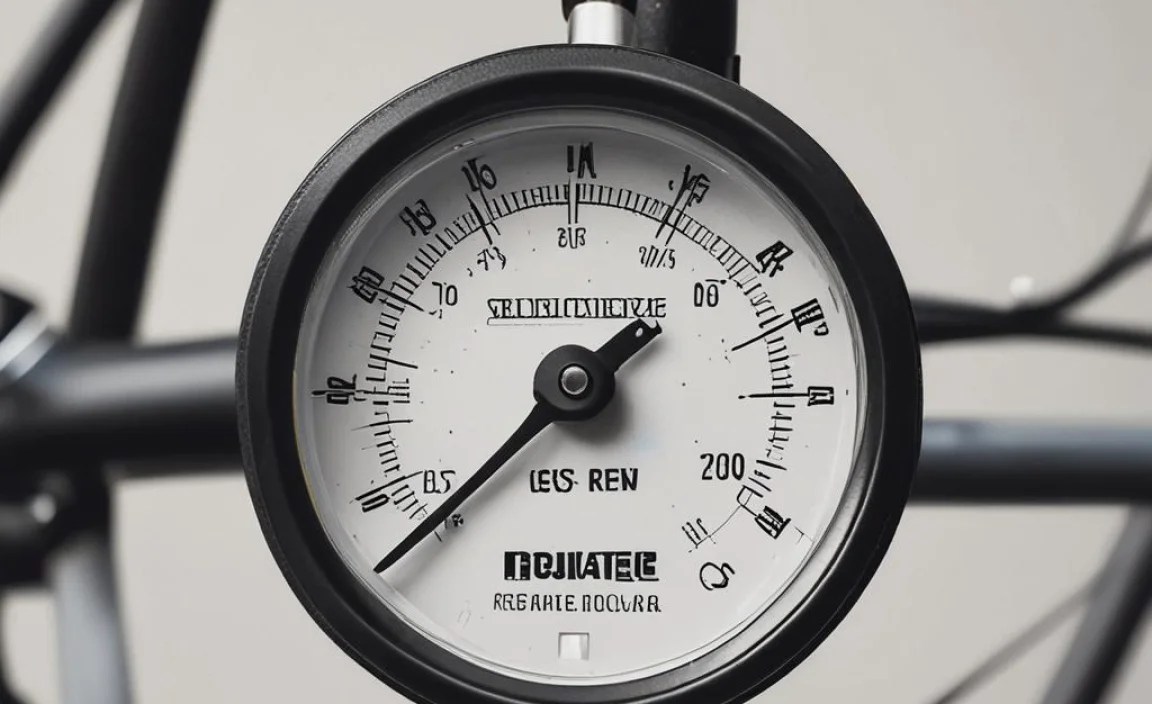
Sometimes, when learning how to calibrate bicycle pressure gauge, you might face problems. One common issue is that the gauge doesn’t read anything. This could mean the gauge is broken. It could also mean the valve on your tire is blocked. Another problem is that the gauge gives different readings each time. This could be because the gauge is old or damaged. It could also be because you’re not attaching it correctly. A third issue is that the gauge is hard to read. The numbers might be faded, or the needle might be stuck. If you have these problems, try cleaning the gauge. If that doesn’t work, you might need to buy a new one. Always make sure the gauge is easy to read and gives accurate readings.
- Gauge shows no reading.
- Readings are inconsistent.
- Gauge is difficult to read.
- Valve is blocked or damaged.
- Gauge is old or broken.
When you’re troubleshooting gauge problems, start with the simplest solutions first. Check the tire valve to make sure it’s not blocked. Sometimes, a small piece of dirt can get stuck in the valve. This prevents the gauge from reading the pressure. Also, make sure you’re attaching the gauge correctly. Press it firmly onto the valve and make sure there are no air leaks. If the gauge is still not working, try using a different gauge to check the tire pressure. This will help you figure out if the problem is with the gauge or the tire. If all else fails, it might be time to invest in a new, reliable pressure gauge.
Gauge Not Reading Anything
What should you do if your gauge isn’t reading anything? First, check the tire valve. Sometimes, the valve core can be loose or blocked. Use a valve core tool to tighten it or remove any dirt. Next, make sure you are pressing the gauge firmly onto the valve. If you don’t press hard enough, the gauge won’t get a reading. If these steps don’t work, try a different gauge to see if the problem is with the gauge itself. If the second gauge works, it’s likely your original gauge needs to be replaced.
Inconsistent Readings
Why might you get inconsistent readings from your bicycle pressure gauge? One reason could be that the gauge is old or damaged. Over time, the internal parts of the gauge can wear out, causing it to give different readings each time. Another reason could be that you are not attaching the gauge the same way each time. Make sure you press the gauge firmly onto the valve and hold it steady while taking the reading. If the readings are still inconsistent, it’s probably time to get a new gauge.
Difficult to Read Gauge
What can you do if your bicycle pressure gauge is difficult to read? Sometimes, the numbers on the gauge can fade over time, making them hard to see. Other times, the needle might be stuck or moving slowly. Try cleaning the gauge with a soft cloth to remove any dirt or dust. Make sure you have good lighting so you can see the numbers clearly. If the gauge is still hard to read, consider buying a new one with a clear, easy-to-read display. Digital gauges often have large, bright displays that are easier to see.
Fun Fact or Stat: About 30% of pressure gauges become inaccurate within two years of regular use!
Maintaining Your Calibrated Gauge
After you learn how to calibrate bicycle pressure gauge, you need to take care of it. Proper care will make it last longer. Store your gauge in a safe place. Keep it away from dirt and moisture. These things can damage the gauge. Clean your gauge regularly with a soft cloth. This will keep the numbers easy to read. Also, avoid dropping your gauge. Dropping it can knock it out of calibration. Check your gauge regularly to make sure it’s still accurate. Compare it to your reference gauge. If it’s no longer accurate, calibrate it again. Taking good care of your gauge will help you keep your tires properly inflated for years to come.
- Store gauge in a safe place.
- Clean it regularly with a cloth.
- Avoid dropping the gauge.
- Check calibration periodically.
- Replace if damaged or worn.
Think of your pressure gauge like a tool in a toolbox. If you take care of it, it will work well for a long time. If you leave it lying around, it might get damaged. Storing your gauge in a case or drawer can protect it from dust and bumps. Cleaning it regularly can prevent dirt from building up and making it hard to read. Checking the calibration every few months can make sure it’s still accurate. Small steps like these can help your gauge stay in good shape and give you accurate readings for years to come. This means you can always keep your tires properly inflated and enjoy a safe, smooth ride.
Proper Storage Techniques
What are some proper storage techniques for your bicycle pressure gauge? Just like you store your bike indoors to protect it from the weather, you should store your gauge in a safe place. A drawer, toolbox, or storage case can keep it clean and dry. Avoid leaving it in direct sunlight or extreme temperatures, as this can damage the internal parts. Proper storage helps prevent dust, dirt, and moisture from affecting the gauge’s accuracy.
Cleaning and Maintenance
How should you clean and maintain your bicycle pressure gauge? Regular cleaning helps keep the gauge accurate and easy to read. Use a soft, dry cloth to wipe away any dust or dirt. Avoid using water or cleaning solutions, as these can damage the gauge. Check the gauge regularly for any signs of wear or damage. If you notice any problems, such as a cracked lens or a bent needle, it’s time to replace the gauge.
Regular Calibration Checks
Why is it important to perform regular calibration checks? Over time, even the best pressure gauges can become less accurate. Factors like temperature changes, drops, and general wear can affect their performance. Checking the calibration regularly ensures that your gauge is still giving you accurate readings. Compare your gauge to a reliable reference gauge every few months. If you notice a difference, recalibrate your gauge or replace it if necessary. Regular checks help you maintain accurate tire pressure for a safer, more efficient ride.
Fun Fact or Stat: Gauges stored properly last up to 50% longer than those left exposed to the elements!
Summary
Keeping your bike tires properly inflated is very important. It makes your ride safer and more fun. Learning how to calibrate bicycle pressure gauge is a key part of bike maintenance. An accurate gauge helps you know exactly how much air is in your tires. This prevents flats and ensures your tires last longer. Using a reliable reference gauge, you can check and adjust your current gauge. This simple process keeps your tires at the right pressure. Regular checks and proper care of your gauge will keep it working well for years. So, take the time to calibrate your gauge and enjoy a smoother, safer ride.
Conclusion
Knowing how to calibrate bicycle pressure gauge is a great skill. It keeps your tires in top shape. It also makes your rides safer and more enjoyable. Use a good reference gauge to check your current one. Clean and store your gauge properly. Check the calibration every few months. By following these steps, you can keep your tires inflated just right. This ensures a smooth and safe biking experience every time!
Frequently Asked Questions
Question No 1: How often should I calibrate my bicycle pressure gauge?
Answer: You should calibrate your bicycle pressure gauge every few months. If you use your gauge very often, calibrate it more frequently. Temperature changes and frequent use can affect its accuracy. Calibrating regularly helps ensure your tires are always properly inflated. Check it before any long bike rides. This will help you avoid flats and have a smoother ride. It’s a small step that can make a big difference in your cycling experience.
Question No 2: What is a reference gauge, and why do I need one?
Answer: A reference gauge is a gauge that you know is accurate. You use it to check the accuracy of your regular gauge. It is important because your regular gauge can become inaccurate over time. Comparing your gauge to a reference gauge helps you see if it needs calibration. Choose a reference gauge that is known for its accuracy. Digital gauges are often a good choice. They provide precise readings. Using a reference gauge is the best way to keep your tires properly inflated.
Question No 3: Can I use a car tire pressure gauge on my bicycle?
Answer: You can use a car tire pressure gauge on your bicycle if it fits the valve. Most car gauges use Schrader valves. Some bikes use Presta valves. If your bike has Presta valves, you will need an adapter. Also, car gauges are often designed for higher pressures. They may not be as accurate at the lower pressures used in bicycle tires. It is best to use a gauge designed for bicycles. This will give you more accurate readings and help you keep your tires properly inflated.
Question No 4: What happens if I overinflate my bicycle tires?
Answer: Overinflating your bicycle tires can be dangerous. It can cause the tire to burst. This can lead to a crash. Overinflating also makes the ride less comfortable. The tire becomes too stiff. This means it doesn’t absorb bumps as well. Always check the recommended pressure on the tire sidewall. Use an accurate gauge to inflate your tires to the correct pressure. Knowing how to calibrate bicycle pressure gauge helps prevent overinflation.
Question No 5: How does temperature affect tire pressure?
Answer: Temperature can affect tire pressure. When the temperature rises, the air inside the tire expands. This increases the pressure. When the temperature drops, the air contracts. This decreases the pressure. It is important to check your tire pressure regularly, especially when the temperature changes. Adjust the pressure as needed to keep your tires properly inflated. Understanding how to calibrate bicycle pressure gauge is important, but you must also consider temperature for optimal performance and safety.
Question No 6: What are some signs that my tire pressure gauge is inaccurate?
Answer: There are several signs that your tire pressure gauge might be inaccurate. One sign is inconsistent readings. If the gauge shows different pressures each time you check the same tire, it might be off. Another sign is if your tires feel too hard or too soft, even though the gauge shows the correct pressure. You can also compare your gauge to a known accurate gauge. If the readings are different, your gauge needs calibration or replacement. Knowing how to calibrate bicycle pressure gauge helps you verify and maintain its accuracy.


