
Best Quick Release Fittings for Chucks: Powerful Guide

Quick Summary: The best quick-release fittings for chucks are those that offer secure connections, easy operation, and compatibility with your existing air compressor and tools. Look for fittings made from durable materials like hardened steel or brass, and consider features like one-handed operation and anti-kink designs for optimal performance. Common types include industrial (Type D), Automotive (Type M), and ARO (Type A) – choose the one that matches your existing setup.
Ever get frustrated switching between your bike pump, tire inflator, and other air tools? Changing chucks can be a real time-waster, especially when you just want to get back on the road or trail. The good news is that quick-release fittings make swapping tools a breeze. They let you connect and disconnect your air tools in seconds, saving you time and hassle.
In this guide, I’ll walk you through the best quick-release fittings for chucks. I’ll explain the different types, materials, and features to look for, so you can choose the right ones for your needs. We’ll also cover how to install and maintain them to keep your setup running smoothly. Let’s get started!
Understanding Quick Release Fittings for Chucks

Quick-release fittings (also called quick couplers or quick connects) are small but mighty components that revolutionize how you use air tools. They replace the tedious process of threading and unthreading connections, allowing you to switch between tools with a simple push or pull.
Why Use Quick Release Fittings?
- Time Savings: Quickly swap between tools without the need for wrenches or multiple rotations.
- Convenience: Simplifies tool changes, especially when working on multiple tasks.
- Versatility: Allows you to use different tools with the same air compressor.
- Reduced Wear and Tear: Minimizes stress on hoses and fittings, extending their lifespan.
Components of a Quick Release Fitting
A quick-release fitting typically consists of two main parts:
- Coupler (Female): This part is usually attached to the air hose or compressor. It has a spring-loaded collar that locks the plug in place.
- Plug (Male): This part is attached to the air tool or chuck. It has a stem that inserts into the coupler and is held securely by the locking mechanism.
Types of Quick Release Fittings

Several types of quick-release fittings are available, each with its own specific dimensions and compatibility standards. It’s essential to choose a type that matches your existing tools and air compressor to ensure a secure and leak-free connection.
Industrial (Type D)
Industrial or Type D fittings are among the most common types. They are known for their high flow rate and durability, making them suitable for a wide range of applications.
- Pros: High flow rate, durable, widely available.
- Cons: Can be larger than other types, may not be compatible with all tools.
- Best For: General-purpose use, high-demand air tools.
Automotive (Type M)
Automotive or Type M fittings are another popular choice, often used in automotive shops and home garages. They offer a good balance of flow rate and compact size.
- Pros: Good flow rate, compact size, readily available.
- Cons: Slightly lower flow rate than industrial types.
- Best For: Tire inflation, impact wrenches, automotive tools.
ARO (Type A)
ARO or Type A fittings are designed for specific applications where a smaller size and lighter weight are important. They are commonly used in pneumatic tools and airbrushes.
- Pros: Compact size, lightweight.
- Cons: Lower flow rate, less durable than other types.
- Best For: Pneumatic tools, airbrushes, low-demand applications.
Other Types
While Industrial, Automotive, and ARO fittings are the most common, other types are available for specialized applications.
- Milton (Type T): Similar to Automotive fittings, but with a slightly different design.
- Tru-Flate: Another variation of Automotive fittings.
- European Standard: Fittings that comply with European standards, such as DIN or ISO.
Compatibility Chart
Use this table as a quick reference guide for compatibility between fitting types:
| Fitting Type | Compatible With | Notes |
|---|---|---|
| Industrial (Type D) | Industrial (Type D) | Most common type; high flow |
| Automotive (Type M) | Automotive (Type M), Milton (Type T), Tru-Flate | Good balance of flow and size |
| ARO (Type A) | ARO (Type A) | Compact and lightweight |
| Milton (Type T) | Automotive (Type M), Milton (Type T) | Similar to Automotive |
Materials and Construction
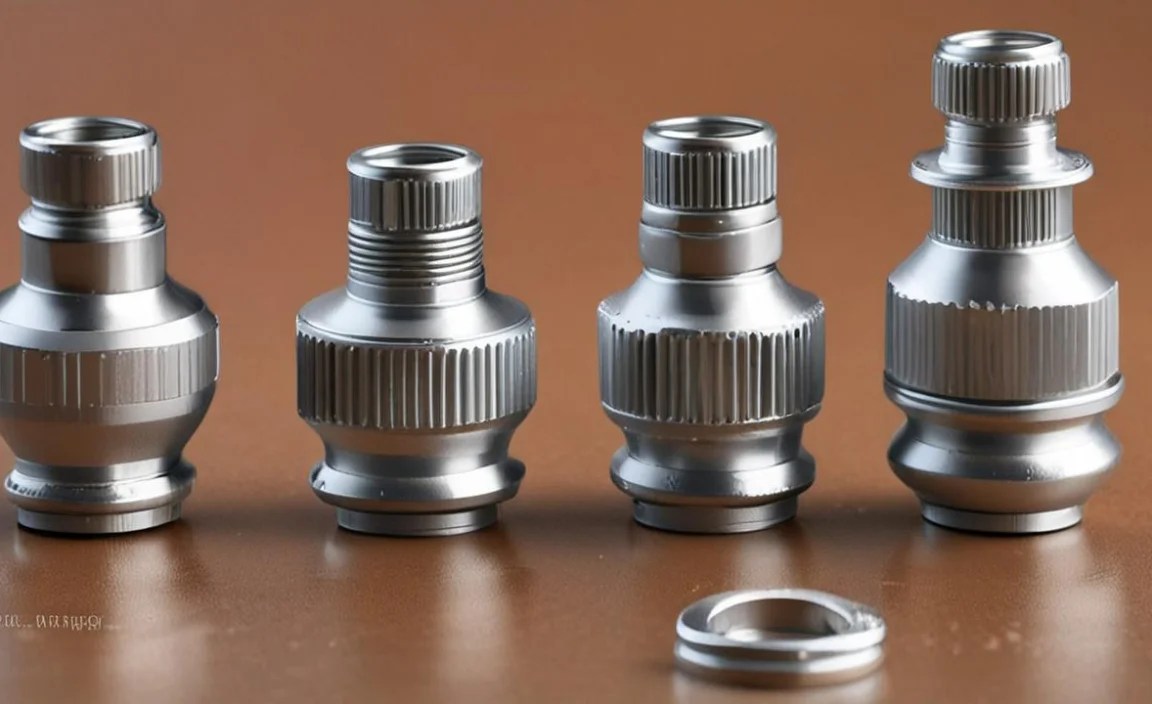
The materials used in quick-release fittings play a significant role in their durability, performance, and resistance to corrosion. Choosing the right material can extend the lifespan of your fittings and ensure a reliable connection.
Steel
Steel fittings are known for their strength and durability. They can withstand high pressure and are resistant to wear and tear. Hardened steel fittings are even more durable and are ideal for demanding applications.
- Pros: High strength, durability, resistance to wear.
- Cons: Can be susceptible to rust if not properly coated.
- Best For: High-pressure applications, demanding environments.
Brass
Brass fittings offer good corrosion resistance and are suitable for use in environments where moisture is present. They are also relatively strong and durable.
- Pros: Good corrosion resistance, durable, suitable for wet environments.
- Cons: Not as strong as steel, can be more expensive.
- Best For: General-purpose use, environments with moisture.
Aluminum
Aluminum fittings are lightweight and offer good corrosion resistance. They are often used in applications where weight is a concern.
- Pros: Lightweight, good corrosion resistance.
- Cons: Not as strong as steel or brass, can be more expensive.
- Best For: Applications where weight is a concern, low-pressure systems.
Plastic
Plastic fittings are inexpensive and offer good corrosion resistance. However, they are not as strong or durable as metal fittings and are best suited for low-pressure applications.
- Pros: Inexpensive, good corrosion resistance.
- Cons: Not as strong or durable as metal fittings, limited pressure rating.
- Best For: Low-pressure applications, temporary connections.
Key Features to Look For

When choosing quick-release fittings, consider the following features to ensure optimal performance and ease of use:
Flow Rate
The flow rate of a fitting determines how much air can pass through it per unit of time. A higher flow rate is essential for tools that require a large volume of air, such as impact wrenches and sanders. Make sure the fitting’s flow rate matches the requirements of your tools.
Pressure Rating
The pressure rating indicates the maximum pressure the fitting can withstand without failing. Choose a fitting with a pressure rating that exceeds the maximum pressure of your air compressor to ensure safe operation.
Ease of Use
Look for fittings with a smooth and easy-to-operate locking mechanism. One-handed operation is a plus, as it allows you to quickly connect and disconnect tools while holding them.
Durability
Choose fittings made from high-quality materials that can withstand the rigors of regular use. Hardened steel or brass fittings are generally more durable than aluminum or plastic fittings.
Seal Type
The seal type affects the fitting’s ability to prevent leaks. Common seal types include:
- Nitrile (Buna-N): Offers good resistance to oil and fuel.
- Viton: Provides excellent resistance to high temperatures and chemicals.
- EPDM: Suitable for use with water and steam.
Thread Type
Ensure that the fitting’s thread type matches the threads on your air hose, compressor, and tools. Common thread types include:
- NPT (National Pipe Thread): A tapered thread commonly used in North America.
- BSPT (British Standard Pipe Thread): A tapered thread used in Europe and other parts of the world.
- SAE (Society of Automotive Engineers): A straight thread used in automotive applications.
Top Quick Release Fittings for Chucks

Here are some of the top quick-release fittings for chucks available on the market, based on their performance, durability, and ease of use:
| Fitting | Type | Material | Features | Pros | Cons |
|---|---|---|---|---|---|
| Milton Industries S-217 Industrial (Type D) | Industrial (Type D) | Steel | High flow, durable construction | High flow rate, durable | Can be bulky |
| Astro Pneumatic Tool 4908 Automotive (Type M) | Automotive (Type M) | Brass | Compact size, good flow | Compact, good flow | Slightly lower flow than Industrial |
| Amflo 25A ARO (Type A) | ARO (Type A) | Brass | Lightweight, compact | Lightweight, compact | Lower flow, less durable |
| Industrial Air IL140000AV Automotive (Type M) | Automotive (Type M) | Steel | High durability, good seal | Durable, good seal | May rust if not maintained |
How to Install Quick Release Fittings
Installing quick-release fittings is a straightforward process that can be completed in a few simple steps.
Tools You’ll Need
- Quick-release fittings (couplers and plugs)
- Thread sealant (Teflon tape or pipe dope)
- Wrench
- Air compressor
- Air hose
- Air tools/chucks
Step-by-Step Instructions
- Prepare the Threads: Clean the threads on the air hose, compressor, and tools. Apply thread sealant (Teflon tape or pipe dope) to the male threads. Wrap Teflon tape clockwise around the threads, overlapping each layer.
- Attach the Coupler to the Air Hose: Screw the coupler onto the end of the air hose. Tighten with a wrench until snug. Be careful not to overtighten, as this can damage the threads.
- Attach the Plug to the Air Tool: Screw the plug onto the air inlet of the tool or chuck. Tighten with a wrench until snug. Again, avoid overtightening.
- Connect the Fittings: Slide the plug into the coupler until it locks in place. You should hear a click or feel the locking mechanism engage.
- Test for Leaks: Turn on the air compressor and check for leaks around the fittings. If you detect any leaks, tighten the connections or reapply thread sealant.
Tips for a Leak-Free Installation
- Use high-quality thread sealant to ensure a tight seal.
- Avoid overtightening the fittings, as this can damage the threads.
- Check for leaks regularly and address them promptly.
Maintaining Your Quick Release Fittings
Proper maintenance can extend the life of your quick-release fittings and ensure reliable performance.
Cleaning
Regularly clean your quick-release fittings to remove dirt, dust, and debris. Use a clean cloth or brush to wipe the exterior of the fittings. You can also use compressed air to blow out any debris from the interior.
Lubrication
Lubricate the moving parts of the fittings with a light oil or silicone lubricant. This will help to keep the locking mechanism working smoothly and prevent corrosion.
Inspection
Inspect your quick-release fittings regularly for signs of wear and tear, such as cracks, dents, or corrosion. Replace any damaged fittings immediately to prevent leaks or failures.
Storage
When not in use, store your quick-release fittings in a clean, dry place. This will help to protect them from damage and corrosion.
Troubleshooting Common Issues
Even with proper installation and maintenance, you may encounter occasional issues with your quick-release fittings. Here are some common problems and how to fix them:
Leaks
Leaks are a common issue with quick-release fittings. They can be caused by loose connections, damaged seals, or worn threads. To fix a leak:
- Tighten the connections with a wrench.
- Replace the thread sealant.
- Replace the damaged seal or fitting.
Difficulty Connecting or Disconnecting
If you’re having trouble connecting or disconnecting the fittings, the locking mechanism may be stuck or corroded. To fix this:
- Lubricate the locking mechanism with a light oil or silicone lubricant.
- Clean the fittings to remove any dirt or debris.
- Replace the fitting if the locking mechanism is damaged.
Low Flow Rate
A low flow rate can be caused by a clogged fitting or a restriction in the air hose. To fix this:
- Clean the fitting to remove any obstructions.
- Check the air hose for kinks or damage.
- Replace the fitting if it is damaged or worn.
FAQ About Quick Release Fittings for Chucks
Here are some frequently asked questions about quick-release fittings for chucks:
What size quick release fitting do I need?
The size of the quick release fitting depends on the size of your air hose and tools. Common sizes include 1/4 inch and 3/8 inch. Check the specifications of your air hose and tools to determine the correct size.
Are all quick release fittings compatible?
No, not all quick-release fittings are compatible. Different types of fittings, such as Industrial (Type D), Automotive (Type M), and ARO (Type A), have different dimensions and locking mechanisms. Make sure to choose fittings that are compatible with your existing tools and air compressor.
Can I use Teflon tape on quick release fittings?
Yes, Teflon tape (also known as PTFE tape) is commonly used to seal the threads on quick-release fittings. Wrap the tape clockwise around the male threads, overlapping each layer. This will help to create a tight seal and prevent leaks.
How do I prevent leaks in quick release fittings?
To prevent leaks in quick-release fittings, use high-quality thread sealant, avoid overtightening the fittings, and check for leaks regularly. Also, make sure the fittings are clean and free of debris.
How often should I lubricate quick release fittings?
You should lubricate quick-release fittings every few months, or more often if they are used frequently. Use a light oil or silicone lubricant to keep the locking mechanism working smoothly and prevent corrosion.
What is the difference between Industrial and Automotive quick release fittings?
Industrial (Type D) fittings typically have a higher flow rate and are more durable, making them suitable for high-demand applications. Automotive (Type M) fittings are more compact and offer a good balance of flow rate and size, making them a popular choice for general-purpose use.
Can I use quick release fittings for water or other fluids?
While some quick-release fittings are designed for use with water or other fluids, most are intended for use with compressed air only. Check the specifications of the fitting to ensure that it is compatible with the fluid you intend to use.
Conclusion
Quick-release fittings are a game-changer for anyone who uses air tools regularly. By understanding the different types, materials, and features available, you can choose the right fittings for your needs and enjoy the benefits of faster, easier tool changes. Remember to install and maintain your fittings properly to ensure reliable performance and a long lifespan. With the right quick-release fittings, you’ll spend less time wrestling with connections and more time getting the job done. Now get out there and make your bike maintenance a breeze!


