
CO2 Inflator for Road Bikes – What to Choose? Easy Guide

Have you ever seen a bike tire go flat? It can ruin your ride. A CO2 inflator can help you fix it fast. But with so many choices, how do you know what to choose? This article will help you pick the best one.
Have you ever wondered what keeps your tires full of air? It’s important to know about your bike. Let’s learn about CO2 inflators for road bikes.
Choosing the right inflator can be tricky. We will make it easy for you. Get ready to learn all about CO2 inflators!
Key Takeaways
- A CO2 inflator quickly fills your bike tire with air when you have a flat.
- Consider the CO2 inflator size and how easy it is to carry on your bike.
- Look for inflators with control valves to manage the CO2 flow.
- Think about the type of valve your bike uses, like Presta or Schrader.
- Practice using your CO2 inflator at home before you need it on the road.
Understanding CO2 Inflators for Road Bikes

A CO2 inflator for road bikes is a small tool. It helps you fill your tire quickly. It uses a CO2 cartridge. The CO2 cartridge is a small container of compressed gas. When you have a flat tire, you attach the inflator to the valve. Then, you release the CO2. The tire fills up almost instantly. This is much faster than using a hand pump. CO2 inflators are light and easy to carry. Many cyclists keep one in their saddlebag. They are very useful for emergencies. Choosing the right one can make a big difference. You want one that is reliable and easy to use. Think about how often you ride. Think about how far you ride. This will help you decide what to choose.
- CO2 inflators fill tires very fast.
- They are small and easy to carry.
- They use CO2 cartridges.
- They are good for fixing flats on the road.
- Choose one that is easy to use.
- Make sure it works with your bike’s valves.
CO2 inflators are a great tool for any cyclist. They help you get back on the road quickly. They are much faster than using a hand pump. A hand pump can take a long time to fill a tire. A CO2 inflator does it in seconds. This can be very helpful if you are in a race. It can also be helpful if you are far from home. Make sure you know how to use it. Practice at home before you need it on the road. This will help you avoid any problems. Also, remember to carry extra CO2 cartridges. You don’t want to run out of air. With the right CO2 inflator, you can ride with confidence.
Fun Fact or Stat: The first CO2 cartridges were used in seltzer bottles in the 1800s!
Why Use a CO2 Inflator?
Have you ever been stuck with a flat tire? It can be frustrating. Especially if you are far from home. A CO2 inflator can solve this problem. It fills your tire quickly. You don’t have to pump for a long time. It saves you energy. It gets you back on the road fast. This is why many cyclists use them. They are easy to carry. They are easy to use. They are a great tool for any ride. Make sure you have one with you. It can make a big difference. It can turn a bad situation into a quick fix. So, next time you go for a ride, remember your CO2 inflator.
How Fast Can It Inflate a Tire?
Imagine you are racing. Your tire goes flat. Every second counts. A CO2 inflator can fill your tire in seconds. This is much faster than a hand pump. A hand pump might take several minutes. This can cost you the race. A CO2 inflator gives you a quick burst of air. You are back on the road in no time. This speed is very important for racers. It is also helpful for casual riders. No one wants to spend a lot of time fixing a flat. With a CO2 inflator, you can get back to enjoying your ride. It is a small tool with a big impact.
What Are the Downsides?
CO2 inflators are great, but they have some downsides. You can only use each cartridge once. This means you need to carry extra cartridges. If you have more than one flat, you will need more CO2. Also, CO2 can leak out of the tire faster than regular air. This means you might need to refill your tire sooner. Finally, using a CO2 inflator can be cold. The CO2 gets very cold when it is released. This can hurt your hands. Some inflators have a sleeve to protect your hands. Despite these downsides, CO2 inflators are still a good choice for many cyclists. Just be aware of the limitations.
Types of CO2 Inflators: What Are the Options?

When thinking about CO2 inflators for road bikes – what to choose, you’ll see there are different types. Some are very simple. They just release all the CO2 at once. Others have a control valve. This lets you control how much CO2 goes into the tire. Some have a built-in gauge. This shows you the tire pressure. Some are designed for Presta valves. Some are designed for Schrader valves. Some work with both. The best type depends on your needs. If you want something simple and cheap, a basic inflator might be good. If you want more control, choose one with a valve. If you want to know the tire pressure, get one with a gauge. Think about what is most important to you.
- Simple inflators release all CO2 at once.
- Inflators with control valves let you control the flow.
- Some have a built-in gauge for tire pressure.
- Some work with Presta valves.
- Some work with Schrader valves.
- Some work with both types of valves.
Choosing the right type of CO2 inflator can make a big difference. An inflator with a control valve lets you add air slowly. This can help you avoid overfilling the tire. Overfilling the tire can cause it to explode. An inflator with a gauge helps you get the right pressure. The right pressure makes your ride smoother. It also helps you avoid flats. Make sure you know what type of valve your bike has. Presta valves are common on road bikes. Schrader valves are common on mountain bikes. Some inflators come with adapters. These let you use them with both types of valves. No matter what type you choose, practice using it at home first. This will help you be ready for a flat on the road.
Fun Fact or Stat: Presta valves were invented in the late 1800s by a French inventor!
Simple vs. Controlled Inflators
Imagine you’re baking a cake. Would you rather dump all the ingredients in at once? Or add them slowly and carefully? Controlled CO2 inflators are like adding ingredients carefully. They let you control the airflow. This helps you avoid over-inflating your tire. Simple inflators dump all the CO2 at once. This can be risky. Especially if you are not experienced. Controlled inflators are easier to use. They give you more control. This is important for getting the right tire pressure. So, if you want more control, choose a controlled inflator. It might save you from a flat tire later.
Presta vs. Schrader Compatibility
Do you know what kind of valve your bike has? It’s either Presta or Schrader. Presta valves are thin and have a little nut on top. Schrader valves are wider and look like car tire valves. Some CO2 inflators only work with one type. Others work with both. If you have a road bike, you probably have Presta valves. If you have a mountain bike, you might have Schrader valves. Check your bike before you buy an inflator. You want to make sure it will work. Some inflators come with adapters. These let you use them with either type of valve. This can be very helpful.
Inflators with Pressure Gauges
Have you ever tried to guess how much air is in your tire? It can be hard. You don’t want to put too much air in. You don’t want to put too little air in. An inflator with a pressure gauge can help. It shows you exactly how much air is in the tire. This helps you get the perfect pressure. The right pressure makes your ride smoother. It also helps you avoid flats. Inflators with gauges are more expensive. But they are worth it if you want accurate pressure. They take the guesswork out of inflating your tires. This can give you more confidence on the road.
How to Choose the Right Size CO2 Cartridge

The size of the CO2 cartridge matters when you choose a CO2 inflator for road bikes. Cartridges come in different sizes. The most common sizes are 16g and 20g. A 16g cartridge is usually enough for a road bike tire. A 20g cartridge is good for larger tires. Mountain bike tires need more air. Some cyclists like to carry larger cartridges. This gives them more air in case they need it. The right size depends on your tires. It also depends on how much air you like to use. Check your tire’s recommended pressure. This will help you decide what to choose. Remember to practice with your inflator. This will help you know how much CO2 to use.
- 16g cartridges are common for road bikes.
- 20g cartridges are good for larger tires.
- Mountain bike tires need more air.
- Check your tire’s recommended pressure.
- Practice using your inflator at home.
- Carry extra cartridges just in case.
Choosing the right size CO2 cartridge can save you trouble. If you choose a cartridge that is too small, you might not fill your tire enough. If you choose a cartridge that is too big, you might waste CO2. It is better to have a little extra than not enough. Consider the size of your tires. Consider the pressure you like to use. Also, think about how many flats you might get. If you are going on a long ride, carry extra cartridges. This will give you peace of mind. With the right size cartridge, you can fix a flat quickly and get back on the road. Remember to recycle your used cartridges.
Fun Fact or Stat: CO2 cartridges are made of steel or aluminum and can be recycled!
16g vs. 20g Cartridges
Imagine you’re filling a water balloon. A small balloon needs less water. A big balloon needs more water. 16g cartridges are like small balloons. They are good for road bike tires. 20g cartridges are like big balloons. They are good for larger tires. Mountain bike tires often need 20g cartridges. If you’re not sure, it’s better to go bigger. A 20g cartridge can fill any road bike tire. A 16g cartridge might not fill a large tire enough. So, think about your tire size when you choose.
How Many Cartridges to Carry
Have you ever run out of something important? Like gas in your car? Or water on a hike? Running out of CO2 on a ride can be just as bad. It’s always good to be prepared. Carry at least two cartridges with you. This way, if you get a flat, you have a backup. If you get two flats, you’re still covered. Some cyclists carry even more. Especially on long rides. It’s better to have too many than not enough. Extra cartridges don’t take up much space. They can save you from being stranded.
Cartridge Compatibility with Inflators
Not all CO2 cartridges work with all inflators. Some inflators are designed for specific sizes. Some only work with threaded cartridges. Some only work with non-threaded cartridges. Make sure your cartridges and inflator are compatible. Check the instructions on your inflator. Check the label on your cartridges. If you’re not sure, ask a bike shop. They can help you choose the right combination. Using the wrong cartridge can damage your inflator. It can also be dangerous. So, always double-check before you use them.
Using a CO2 Inflator Safely and Effectively
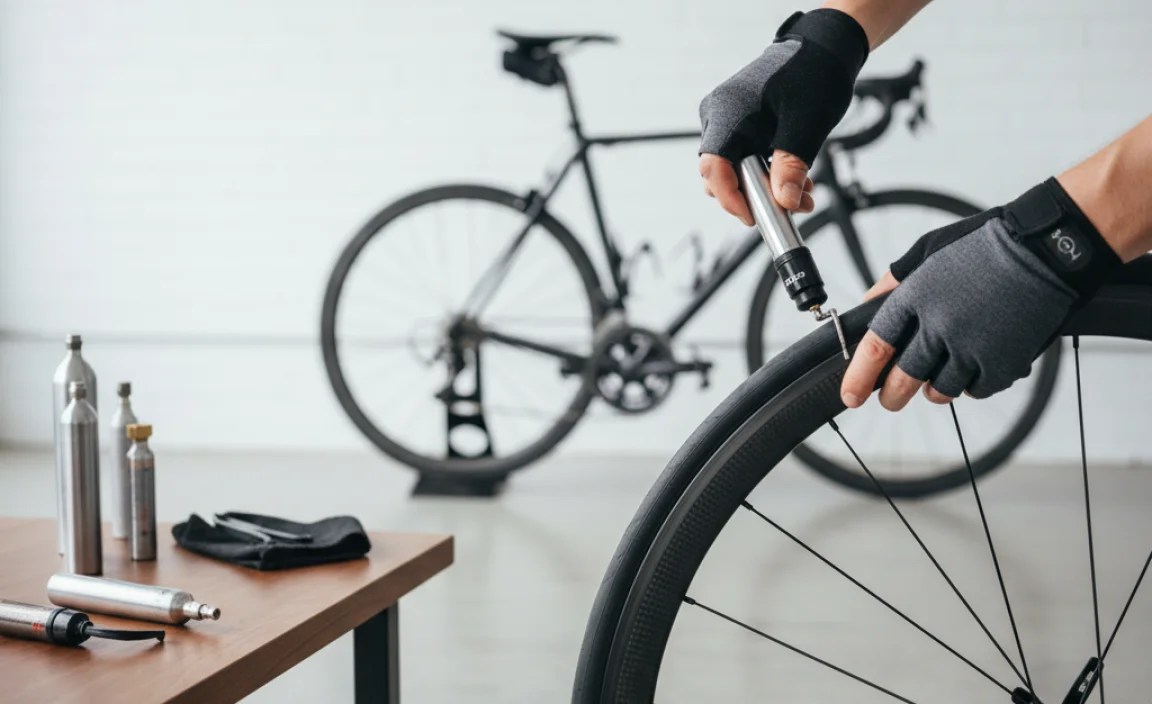
Using a CO2 inflator for road bikes is easy. But it’s important to do it safely. First, protect your hands. The CO2 gets very cold. Use gloves or a sleeve. Second, attach the inflator to the valve. Make sure it’s on tight. Third, release the CO2 slowly. If you release it too fast, you could damage the tire. Fourth, check the tire pressure. Don’t overfill the tire. Fifth, dispose of the empty cartridge properly. Don’t leave it on the road. Practice at home before you need it on the road. This will help you avoid any problems. Knowing what to choose is only half the battle. Knowing how to use it is just as important.
- Protect your hands from the cold.
- Attach the inflator tightly to the valve.
- Release the CO2 slowly.
- Check the tire pressure.
- Dispose of empty cartridges properly.
- Practice using it at home.
Safety is very important when using a CO2 inflator. The CO2 can cause frostbite if it touches your skin. Always wear gloves or use a sleeve. Make sure the inflator is securely attached to the valve. If it’s not, the CO2 can leak out. This can waste the cartridge. It can also be dangerous. When you release the CO2, do it slowly. This gives you more control. It also prevents the tire from overfilling. After you fill the tire, check the pressure. Use a gauge if you have one. If not, squeeze the tire to see if it feels right. Finally, always dispose of the empty cartridge properly. Don’t litter. Recycle it if you can.
Fun Fact or Stat: CO2 can reach temperatures as low as -109.3°F (-78.5°C) when released!
Protecting Your Hands
Have you ever touched something really cold? It can hurt. CO2 gets very cold when it is released. It can cause frostbite. Frostbite is when your skin freezes. It can be very painful. Always protect your hands when using a CO2 inflator. Wear gloves. Or use a sleeve. Some inflators come with a sleeve. If yours doesn’t, use a cloth. Anything is better than nothing. Protecting your hands will make the process much more comfortable. It will also prevent injury. So, don’t forget to protect your hands.
Attaching the Inflator Correctly
Imagine you are trying to connect two Lego bricks. If they are not lined up right, they won’t stick. Attaching a CO2 inflator is similar. You need to line it up correctly with the valve. If it’s not, the CO2 will leak out. This wastes the cartridge. It also won’t fill your tire. Make sure the inflator is securely attached. Twist it until it’s tight. If you have a Presta valve, open the valve first. Then, attach the inflator. If you have a Schrader valve, just attach the inflator. Double-check that it’s on tight before you release the CO2.
Controlling the CO2 Flow
Think of a garden hose. If you turn the water on full blast, it can spray everywhere. If you turn it on gently, you can control the flow. The same is true with a CO2 inflator. You want to control the flow of CO2. This helps you avoid overfilling the tire. Some inflators have a control valve. This lets you adjust the flow. If your inflator doesn’t have a valve, release the CO2 in short bursts. Check the tire pressure after each burst. This will help you get the right pressure. Controlling the CO2 flow is important for safety and efficiency.
Maintenance and Storage Tips for CO2 Inflators

Taking care of your CO2 inflator will make it last longer. Store it in a dry place. This prevents rust. Check it regularly for damage. Make sure the threads are clean. If they are dirty, clean them with a brush. Keep the inflator away from extreme temperatures. Extreme heat or cold can damage it. Replace the CO2 cartridges when they are empty. Don’t leave empty cartridges in the inflator. This can cause the inflator to corrode. By following these tips, you can keep your CO2 inflator in good condition. This will help you when you need it most. When you choose wisely and care for your equipment, it will be ready for your road bike adventures.
- Store the inflator in a dry place.
- Check it regularly for damage.
- Clean the threads with a brush.
- Keep it away from extreme temperatures.
- Replace empty CO2 cartridges.
- Don’t leave empty cartridges in the inflator.
Proper maintenance and storage are key. A well-maintained CO2 inflator is a reliable tool. It will be ready when you need it. Store your inflator in a saddlebag or toolbox. This protects it from the elements. Check the inflator before each ride. Make sure all the parts are working. If you notice any damage, replace the inflator. It’s better to be safe than sorry. Also, remember to keep extra CO2 cartridges with you. You don’t want to run out of air. By following these tips, you can ensure your CO2 inflator is always ready for action.
Fun Fact or Stat: Regular cleaning can extend the life of your CO2 inflator by up to 50%!
Cleaning Your Inflator
Imagine you are cleaning your bike. You wipe off the dirt and grime. This keeps it running smoothly. Cleaning your CO2 inflator is just as important. Dirt and debris can get into the threads. This can make it hard to attach the cartridge. It can also cause the inflator to malfunction. Use a small brush to clean the threads. Wipe the inflator with a clean cloth. Do this regularly to keep it in good condition. A clean inflator is a reliable inflator.
Proper Storage Conditions
Have you ever left a tool outside in the rain? It can rust and become unusable. The same is true for your CO2 inflator. Store it in a dry place. Avoid extreme temperatures. Keep it away from direct sunlight. A saddlebag or toolbox is a good place to store it. This protects it from the elements. Proper storage will help your inflator last longer. It will also ensure it’s ready when you need it.
Checking for Damage
Think of your CO2 inflator as a superhero. It’s there to save the day when you get a flat. But even superheroes need to be checked for damage. Before each ride, inspect your inflator. Look for cracks. Check the threads. Make sure everything is in good working order. If you find any damage, replace the inflator. It’s better to be safe than sorry. A damaged inflator might not work when you need it most. A quick check can prevent a lot of trouble.
Comparing CO2 Inflators: Features and Brands
When you want to choose a CO2 inflator for road bikes, there are many features to consider. Some inflators have control valves. Some have pressure gauges. Some are made of aluminum. Some are made of plastic. Different brands offer different features. Some brands are known for their quality. Some brands are known for their price. Think about what features are most important to you. Read reviews to see what other cyclists think. Comparing different inflators can help you find the best one for your needs. What to choose depends on your budget and preferences.
| Feature | Inflator A | Inflator B | Inflator C |
|---|---|---|---|
| Control Valve | Yes | No | Yes |
| Pressure Gauge | No | No | Yes |
| Material | Aluminum | Plastic | Aluminum |
| Price | $20 | $10 | $30 |
- Some inflators have control valves.
- Some have pressure gauges.
- Materials include aluminum and plastic.
- Different brands offer different features.
- Read reviews to see what others think.
- Compare prices to find the best deal.
Comparing different CO2 inflators can be overwhelming. There are so many choices. Focus on the features that are most important to you. If you want precise control, look for an inflator with a valve. If you want to know the tire pressure, get one with a gauge. Consider the material. Aluminum is more durable than plastic. But it is also more expensive. Read reviews from other cyclists. This can give you valuable insights. Don’t just focus on the price. Quality is important too. A reliable inflator is worth the investment. It can save you from being stranded on the road. Take your time and do your research. This will help you choose the best CO2 inflator for your needs.
Fun Fact or Stat: Some high-end CO2 inflators are made from titanium for extra durability!
Control Valves vs. No Control Valves
Imagine you are filling a glass of water. Would you rather have a faucet that you can control? Or one that just dumps all the water at once? Control valves on CO2 inflators are like a controllable faucet. They let you adjust the flow of CO2. This helps you avoid overfilling the tire. Inflators without control valves dump all the CO2 at once. This can be risky. Especially if you are not experienced. Control valves give you more precision. They make it easier to get the right tire pressure. So, if you want more control, choose an inflator with a valve.
Aluminum vs. Plastic Construction
Have you ever compared a metal toy to a plastic toy? The metal toy feels stronger. It is likely to last longer. Aluminum CO2 inflators are like metal toys. They are more durable than plastic inflators. Aluminum can withstand more wear and tear. Plastic can break more easily. However, plastic inflators are lighter. They are also less expensive. If you want durability, choose aluminum. If you want something lightweight and cheap, choose plastic. Consider your needs and your budget.
Popular Brands and Their Strengths
Think of your favorite brands. What makes them special? Some brands are known for their quality. Some are known for their innovation. Some are known for their price. The same is true for CO2 inflator brands. Some popular brands include Genuine Innovations, Lezyne, and Topeak. Genuine Innovations is known for its simple and reliable inflators. Lezyne is known for its high-quality and innovative designs. Topeak is known for its affordable and versatile inflators. Research different brands to find one that suits your needs. Read reviews from other cyclists. This will help you make an informed decision.
Troubleshooting Common CO2 Inflator Problems
Even the best CO2 inflators for road bikes can have problems. Sometimes the CO2 cartridge won’t puncture. Sometimes the inflator leaks. Sometimes the tire won’t inflate. Knowing how to troubleshoot these problems can save you time and frustration. First, make sure the cartridge is installed correctly. Second, check the valve on your tire. Make sure it’s open. Third, check the inflator for damage. Fourth, try a new cartridge. If you still have problems, consult a bike shop. Understanding common issues helps you choose and use your inflator effectively. When you know what to choose and how to fix problems, you are better prepared.
- Cartridge won’t puncture.
- Inflator leaks.
- Tire won’t inflate.
- Check cartridge installation.
- Check the tire valve.
- Inspect the inflator for damage.
Troubleshooting CO2 inflator problems can be tricky. But with a little knowledge, you can solve most issues. If the cartridge won’t puncture, make sure it’s screwed in tight. Sometimes the piercing mechanism gets stuck. Try tapping the inflator gently. If the inflator leaks, check the connection to the tire valve. Make sure it’s secure. If the tire won’t inflate, check the valve core. It might be clogged. Use a valve tool to remove and clean it. Always carry extra cartridges. You never know when you might need them. By being prepared and knowing how to troubleshoot, you can handle most CO2 inflator problems.
Fun Fact or Stat: Most CO2 inflator problems are caused by improper installation of the cartridge!
Cartridge Not Puncturing
Imagine you are trying to pop a balloon with a needle. If the needle is not sharp enough, it won’t work. The same is true for a CO2 inflator. If the cartridge doesn’t puncture, the CO2 won’t release. Make sure the cartridge is screwed in tight. Sometimes the piercing mechanism is dull. Try a new cartridge. If that doesn’t work, check the inflator. The piercing mechanism might be damaged. If so, you need a new inflator. A properly functioning piercing mechanism is essential.
Inflator Leaking Air
Have you ever had a leaky water bottle? It can be frustrating. Especially when you’re thirsty. A leaky CO2 inflator is just as frustrating. It wastes CO2. It doesn’t fill your tire. Check the connection to the tire valve. Make sure it’s secure. The threads might be damaged. If so, you need a new inflator. A tight seal is essential for proper inflation. So, always check for leaks.
Tire Not Inflating
Think of your tire valve as a gatekeeper. It controls the flow of air into the tire. If the gatekeeper is blocked, no air can get in. If your tire is not inflating, check the valve core. It might be clogged. Use a valve tool to remove and clean it. The valve might be damaged. If so, you need a new valve core. A clear valve is essential for proper inflation. So, always check for blockages.
Summary
Choosing a CO2 inflator for road bikes involves several factors. You need to consider the type of inflator. Do you want one with a control valve? Or a simple one? You need to think about the size of the CO2 cartridge. What size is right for your tires? You also need to think about safety. How can you protect your hands from the cold? Maintenance is important too. How can you keep your inflator in good condition? By considering these factors, you can choose the best CO2 inflator for your needs. Remember to practice using it at home before you need it on the road. This will help you be prepared for any flat tire.
Conclusion
A CO2 inflator is a great tool for any cyclist. It helps you fix a flat tire quickly. It gets you back on the road fast. What to choose depends on your needs and preferences. Consider the type of inflator. Consider the size of the cartridge. Consider the safety features. With the right CO2 inflator, you can ride with confidence. You’ll be ready for anything. So, get out there and enjoy your ride!
Frequently Asked Questions
Question No 1: What is a CO2 inflator and why do I need one for my road bike?
Answer: A CO2 inflator is a device that uses compressed CO2 gas to quickly inflate your bike tire. It’s a must-have for road bikes because it’s faster and more convenient than using a hand pump, especially during races or when you’re far from home. It helps you get back on the road quickly after a flat tire without wasting too much time and energy. CO2 inflators are lightweight and easy to carry, making them a practical addition to your cycling gear. Knowing what to choose depends on your specific needs, but having one is always beneficial.
Question No 2: How do I choose the right size CO2 cartridge for my road bike tires?
Answer: The right size CO2 cartridge depends on the size of your road bike tires and the pressure you need. A 16-gram cartridge is usually sufficient for most road bike tires, inflating them to the recommended pressure. However, if you have larger tires or prefer a higher pressure, a 20-gram cartridge might be a better choice. Always check the recommended pressure on your tire sidewall. It is always a good idea to practice at home. Then you will see how much a CO2 inflator can inflate your tires. This can help you avoid over- or under-inflating your tires on the road. Knowing what to choose in terms of size can save you from being stranded.
Question No 3: Are CO2 inflators compatible with both Presta and Schrader valves?
Answer: Some CO2 inflators are designed to work with both Presta and Schrader valves. Others are specific to one type. Presta valves are common on road bikes, while Schrader valves are more often found on mountain bikes and some hybrid bikes. Before purchasing a CO2 inflator, check whether it is compatible with your bike’s valve type. If it’s not, you might need an adapter. Many inflators come with adapters included. These allow them to work with both valve types. This makes them more versatile. Always ensure compatibility to avoid frustration during a flat repair.
Question No 4: How do I use a CO2 inflator safely to avoid injury?
Answer: Using a CO2 inflator safely is crucial. CO2 cartridges get extremely cold when the gas is released. This can cause frostbite if you touch them directly. Always wear gloves or use a protective sleeve on the cartridge and inflator to protect your hands. Also, make sure the inflator is securely attached to the tire valve before releasing the CO2. This prevents leaks and potential injury. Release the CO2 in short bursts to avoid over-inflating the tire. Always practice at home first. This ensures you are comfortable with the process before you need it on the road. Remember, safety should always be a priority.
Question No 5: What should I do with the empty CO2 cartridges after use?
Answer: Empty CO2 cartridges are single-use items and should be disposed of properly. They are made of steel or aluminum and can be recycled in many areas. Check with your local recycling center to see if they accept small metal cartridges. Never leave empty cartridges on the road or trail. This can be a hazard to other cyclists and the environment. Some bike shops also offer recycling programs for CO2 cartridges. Disposing of them responsibly helps keep our cycling routes clean and safe for everyone. Remembering to recycle is part of being a responsible cyclist.
Question No 6: Can I reuse a CO2 cartridge if I don’t use all the gas at once?
Answer: No, CO2 cartridges are designed for single use only. Once you puncture the cartridge, all the gas will be released, even if you don’t inflate the tire completely. There is no way to reseal or reuse a partially used CO2 cartridge. This is why it’s important to use the right size cartridge for your tire and release the gas in controlled bursts. Always carry extra cartridges with you on your rides. This ensures you have enough CO2 to fully inflate your tire in case of a flat. Knowing what to choose for cartridge size can minimize waste and ensure efficient use.


