
How Long Do Well Pumps Cycle Normally? A Simple Guide

Quick Summary: A well pump typically cycles for 1-3 minutes for each gallon of water drawn, with a cycle frequency between 30 minutes to 1 hour under average household use. Factors like tank size, water demand, and pump condition affect these times. Short cycling, where the pump turns on and off rapidly, indicates a problem and needs immediate attention to avoid pump failure and ensure a consistent water supply.
Is your well pump acting up? Are you hearing it turn on and off more often than usual? You’re not alone! Many homeowners rely on well pumps for their water, and understanding how they work is key to preventing headaches. Knowing the normal cycle time of your well pump can save you from unexpected repairs and ensure you always have water when you need it.
In this guide, we’ll break down everything you need to know about well pump cycling. We’ll cover what a normal cycle looks like, what causes abnormal cycling, and how to troubleshoot common issues. Plus, we’ll give you practical tips to keep your well pump running smoothly for years to come. Let’s dive in!
Understanding Well Pump Basics
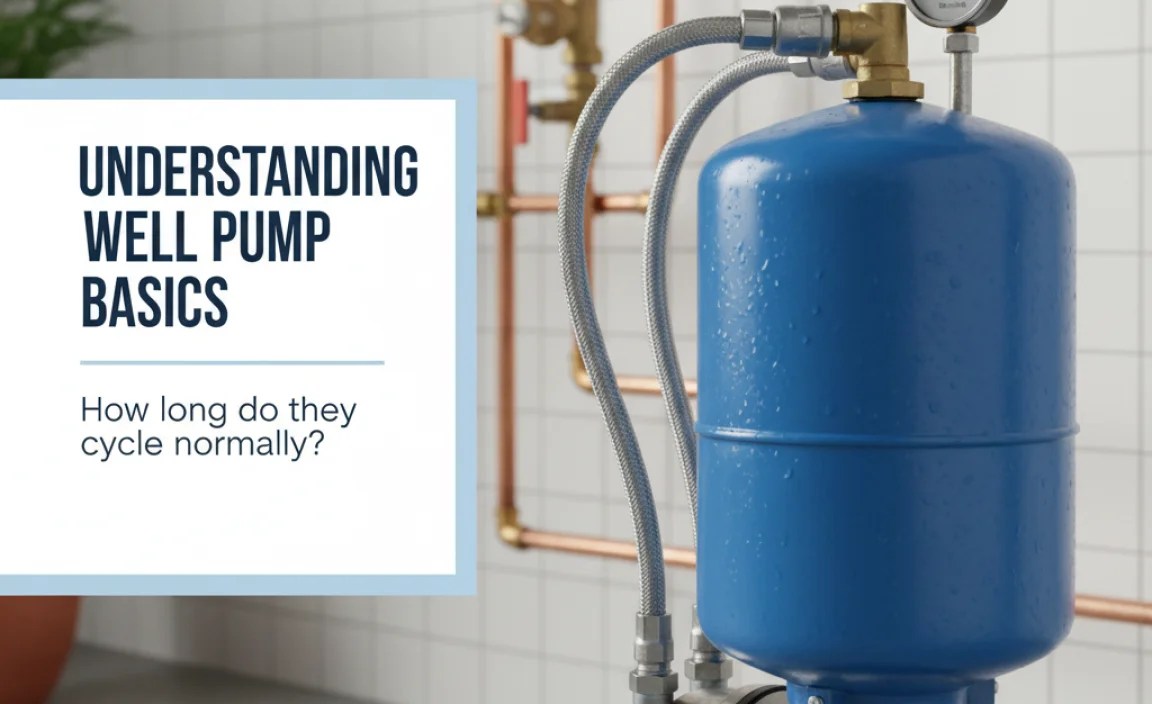
Before we get into cycle times, let’s cover the basics of how a well pump system works. A well pump pulls water from your well and delivers it to your home. The system includes several key components:
- Well Pump: The workhorse that moves water from the well to your storage tank.
- Pressure Tank: A reservoir that stores water under pressure, providing a consistent supply and reducing pump cycling.
- Pressure Switch: A sensor that monitors water pressure and tells the pump when to turn on and off.
- Piping: Connects the pump to the well and the tank to your home’s plumbing.
The pump fills the pressure tank, and when you use water in your home, the pressure in the tank drops. When the pressure reaches a certain low point (the “cut-in” pressure), the pressure switch tells the pump to turn on and refill the tank. Once the tank is full and the pressure reaches a high point (the “cut-out” pressure), the switch turns the pump off.
What is Normal Well Pump Cycling?

Normal well pump cycling involves a balance between the amount of water you use and the time it takes to refill the pressure tank. Several factors influence this cycle:
- Tank Size: Larger tanks store more water, leading to longer cycles and fewer pump starts.
- Pump Capacity: A more powerful pump can refill the tank faster, resulting in shorter cycles.
- Water Usage: Higher water demand means more frequent cycles.
- Well Recovery Rate: How quickly the well refills with water affects how often the pump needs to run.
Typically, a well pump should cycle for at least one minute. A healthy well pump and system should cycle for 1-3 minutes for each gallon of water drawn. Under average household use, a well pump might cycle every 30 minutes to an hour. This can vary depending on the factors listed above. If your pump cycles much more frequently, it’s a sign that something is wrong.
How to Measure Well Pump Cycle Time

Measuring your well pump’s cycle time is a straightforward process. Here’s how to do it:
- Turn off all water sources: Ensure no faucets, showers, or appliances are using water.
- Locate the pressure gauge: Find the pressure gauge near your pressure tank.
- Observe the pressure: Watch the gauge as you briefly use water (e.g., flush a toilet). Note the pressure at which the pump turns on (cut-in pressure) and off (cut-out pressure).
- Time the cycle: Start a timer when the pump turns on and stop it when the pump turns off.
- Repeat: Do this several times to get an average cycle time.
For example, if your pump turns on at 40 PSI and off at 60 PSI, and it takes two minutes to complete this cycle, that’s your cycle time. If the pump is cycling every few minutes without significant water use, it’s a red flag.
Common Causes of Short Cycling

Short cycling is when your well pump turns on and off rapidly, often within a few minutes or even seconds. This puts a lot of stress on the pump motor and can lead to premature failure. Here are some common causes:
Waterlogged Pressure Tank
A pressure tank contains a bladder or diaphragm that separates the water from compressed air. If the bladder fails or the air charge is lost, the tank becomes waterlogged. This means there’s little or no air cushion to maintain pressure, causing the pump to cycle on and off frequently. According to the U.S. Environmental Protection Agency, maintaining proper air pressure in your well system is crucial for efficient operation. (EPA)
Leaks in the Plumbing
Even a small leak in your plumbing can cause a drop in pressure, triggering the pump to turn on. Check faucets, toilets, and pipes for any signs of leaks.
Faulty Check Valve
The check valve prevents water from flowing back into the well. If it fails, water drains back down the well when the pump is off, causing the pressure to drop and the pump to cycle on more often.
Low Well Yield
If your well’s water level is low, the pump may struggle to fill the tank, leading to frequent cycling. This is more common during dry seasons or in areas with over-extraction of groundwater.
Incorrect Pressure Switch Settings
The pressure switch controls the cut-in and cut-out pressure settings. If these settings are incorrect, the pump may cycle too frequently. For example, if the cut-in pressure is set too high, the pump will turn on more often.
Submersible Well Pump Issues
Submersible well pumps, located inside the well, can sometimes cause short cycling. A worn impeller or a blockage in the pump can reduce its efficiency, leading to frequent starts and stops.
Here’s a table summarizing the causes of short cycling:
| Cause | Description | Solution |
|---|---|---|
| Waterlogged Pressure Tank | Loss of air charge or bladder failure in the tank. | Recharge the tank with air or replace the tank. |
| Leaks in Plumbing | Water leaks in faucets, toilets, or pipes. | Repair or replace leaking fixtures and pipes. |
| Faulty Check Valve | Check valve allows water to flow back into the well. | Replace the check valve. |
| Low Well Yield | Well’s water level is too low. | Consider well deepening or water conservation measures. |
| Incorrect Pressure Switch Settings | Cut-in and cut-out pressure settings are not properly adjusted. | Adjust the pressure switch settings. |
| Submersible Well Pump Issues | Worn impeller or blockage in the pump. | Inspect and repair or replace the pump. |
Troubleshooting Short Cycling

Now that you know the common causes, let’s look at how to troubleshoot short cycling.
Check the Pressure Tank
The first step is to check your pressure tank. Here’s how:
- Turn off the pump: Locate the circuit breaker for the well pump and switch it off.
- Drain the tank: Open a faucet in your home to relieve pressure and drain the tank completely.
- Check the air charge: Use a tire pressure gauge to check the air pressure at the Schrader valve (usually located on top of the tank, under a cap).
- Compare to cut-in pressure: The air pressure should be 2 PSI below the cut-in pressure of your pressure switch. For example, if your cut-in pressure is 40 PSI, the air pressure should be 38 PSI.
- Adjust or recharge: If the pressure is low, use an air compressor to add air. If water comes out of the Schrader valve, the bladder is likely damaged, and you’ll need to replace the tank.
Inspect for Leaks
Carefully inspect all visible plumbing for leaks. Pay close attention to:
- Faucets: Check for drips, especially around the base and spout.
- Toilets: Listen for the sound of running water when the toilet is not in use. Check for leaks around the base.
- Pipes: Look for wet spots or corrosion on pipes, especially at joints and connections.
- Pressure Relief Valve: The pressure relief valve on the pressure tank should not be leaking.
Repair any leaks you find promptly. Even small leaks can contribute to short cycling.
Test the Check Valve
To test the check valve, you’ll need to access it. The check valve is typically located either at the pump itself (for submersible pumps) or in the piping near the well. Here’s how to check it:
- Turn off the pump: Switch off the circuit breaker for the well pump.
- Access the check valve: Depending on its location, you may need to disconnect some piping.
- Inspect the valve: Look for signs of damage or corrosion.
- Test for backflow: With the pump off, water should not flow back down the well. If it does, the check valve is likely faulty and needs replacement.
Evaluate Well Yield
If you suspect a low well yield, monitor your water usage and well recovery rate. Here’s how:
- Monitor water usage: Keep track of how much water you use in a day.
- Check well recovery: After heavy water use, see how long it takes for the well to refill. You can often hear the pump running longer than usual.
- Consult a professional: If you suspect a low well yield, have a well professional assess your well’s capacity and recommend solutions, such as well deepening or hydrofracking.
Adjust Pressure Switch Settings
The pressure switch is usually located near the pressure tank. Here’s how to adjust it:
- Locate the switch: Find the pressure switch and remove the cover.
- Identify adjustment screws: You’ll see two adjustment screws: one for the cut-in pressure and one for the pressure differential (the difference between the cut-in and cut-out pressure).
- Adjust cut-in pressure: To increase the cut-in pressure, turn the appropriate screw clockwise. To decrease it, turn it counterclockwise.
- Adjust differential: Adjusting the differential changes both the cut-in and cut-out pressures. Be careful not to set the cut-out pressure too high, as this could damage your plumbing.
- Test the settings: Monitor the pump’s cycling after making adjustments to ensure it’s working correctly.
Important Note: Always follow the manufacturer’s instructions when adjusting the pressure switch. Incorrect settings can damage your pump or plumbing.
Preventative Maintenance Tips
Preventative maintenance is key to keeping your well pump system running smoothly and avoiding costly repairs. Here are some tips:
- Regularly check the pressure tank: Check the air charge in the tank at least twice a year.
- Inspect for leaks: Routinely check for leaks in your plumbing.
- Monitor well water quality: Test your well water annually for contaminants. Your local health department can provide information on testing.
- Clean sediment filter: If you have a sediment filter, clean or replace it regularly.
- Professional inspection: Have a well professional inspect your system every few years.
Here’s a table summarizing the maintenance schedule:
| Task | Frequency | Description |
|---|---|---|
| Check Pressure Tank Air Charge | Twice a year | Ensure proper air pressure in the tank. |
| Inspect for Leaks | Monthly | Check faucets, toilets, and pipes for leaks. |
| Test Well Water Quality | Annually | Test for contaminants and ensure water safety. |
| Clean Sediment Filter | Every 3-6 months | Clean or replace the sediment filter. |
| Professional Inspection | Every 2-3 years | Have a well professional inspect the system. |
When to Call a Professional
While many well pump issues can be resolved with DIY troubleshooting, some situations require a professional. Call a well service professional if:
- You’re uncomfortable working with electrical components.
- You can’t identify the cause of short cycling.
- The pump is making unusual noises.
- You suspect a problem with the well itself.
- You’re experiencing frequent or persistent water quality issues.
A qualified well technician has the expertise and equipment to diagnose and repair complex problems safely and effectively.
FAQ: Well Pump Cycling
Here are some frequently asked questions about well pump cycling:
Q: What is considered short cycling for a well pump?
A: Short cycling is when your well pump turns on and off rapidly, usually within a few minutes or even seconds. This is a sign of a problem and needs to be addressed.
Q: How long should my well pump run to fill the pressure tank?
A: A well pump should typically run for at least one minute to fill the pressure tank. The exact time depends on the tank size, pump capacity, and water usage.
Q: Can a leaking toilet cause short cycling?
A: Yes, a leaking toilet can cause a drop in water pressure, triggering the pump to turn on more frequently and leading to short cycling.
Q: How do I know if my pressure tank is waterlogged?
A: If your pressure tank is waterlogged, the pump will cycle on and off rapidly, and you may notice inconsistent water pressure. You can also check the air pressure at the Schrader valve; if water comes out, the bladder is likely damaged.
Q: What is the ideal pressure for a well pump pressure tank?
A: The ideal pressure in a well pump pressure tank should be 2 PSI below the cut-in pressure of your pressure switch. For example, if your cut-in pressure is 40 PSI, the tank pressure should be 38 PSI.
Q: How can I extend the life of my well pump?
A: Regular maintenance, such as checking the pressure tank, inspecting for leaks, and monitoring water quality, can help extend the life of your well pump. Avoid short cycling by addressing any issues promptly.
Q: Is it normal for my well pump to run constantly?
A: No, it is not normal for your well pump to run constantly. This indicates a significant issue, such as a large leak, a faulty pressure switch, or a problem with the pump itself. It should be addressed immediately to prevent pump failure.
Conclusion
Understanding how your well pump cycles is essential for maintaining a reliable water supply and preventing costly repairs. By knowing what a normal cycle looks like, recognizing the signs of short cycling, and following our troubleshooting and maintenance tips, you can keep your well pump running smoothly for years to come. Remember to address any issues promptly and don’t hesitate to call a professional when needed. With a little knowledge and care, you can ensure your well pump provides you with a steady and dependable source of water.
“`


