
Common Mistakes Using CO2 Inflator & How to Avoid Them

Have you ever seen a racer fix a flat tire super fast? They often use a CO2 inflator. It fills tires with air quickly. But what if it doesn’t work? Many people make errors. Knowing common mistakes using CO2 inflator and how to avoid them is key. Let’s learn how to use these tools right!
Did you know that CO2 inflators use compressed gas? This gas can inflate a tire in seconds. But it can also be dangerous if used wrong. Imagine being stuck on a trail with a flat. You try to use your inflator, but it fails. It’s frustrating! This guide will help you avoid that. We will show you how to use CO2 inflators safely.
Key Takeaways
- Always read the instructions before using a CO2 inflator for the first time.
- Wear gloves to protect your hands from the cold CO2 cartridge.
- Ensure the inflator head is securely attached to the tire valve.
- Control the CO2 flow to prevent over-inflation and tire damage.
- Learn about the common mistakes using CO2 inflator and how to avoid them.
Understanding CO2 Inflator Basics
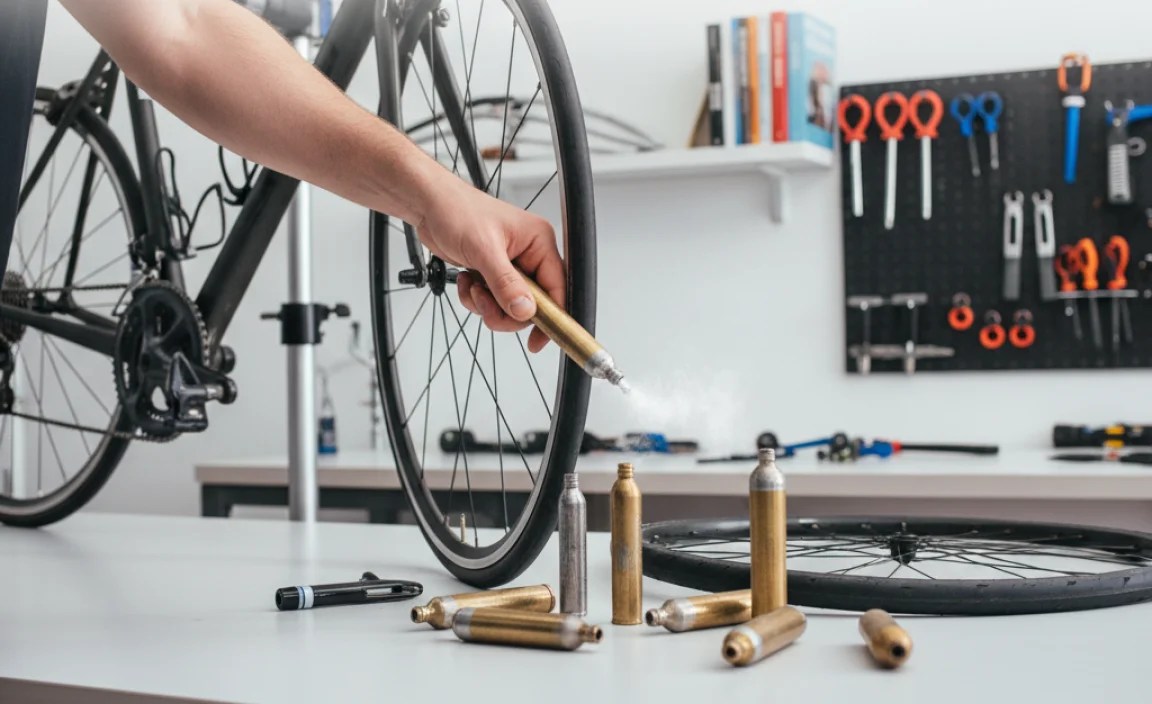
CO2 inflators are small and handy. They let you fill a tire fast. They use a cartridge filled with CO2 gas. You screw the cartridge into the inflator head. Then, you press the inflator head onto your tire valve. The CO2 rushes into the tire. It inflates it quickly so you can keep riding. But, you must know how they work. You also need to know their parts. This helps avoid problems. It is important to check the inflator head. Make sure it’s tight. Loose parts can waste CO2. Always carry extra CO2 cartridges. You do not want to run out of air. Learning the basics makes using a CO2 inflator easier. It also makes it safer for you on the road or trail.
- CO2 inflators are small and portable.
- They use compressed CO2 gas.
- Cartridges screw into the inflator head.
- Proper attachment is very important.
- Extra cartridges are always a good idea.
Understanding CO2 inflators helps you fix tires fast. It also helps prevent accidents. Always practice at home first. This way, you will not be surprised on the trail. CO2 inflators are great tools. They save time and effort. But, they need to be used right. Knowing how they work is the first step. Always double-check your setup. Make sure everything is tight. Carry spare parts if you can. This makes tire fixes easier and safer. With the right knowledge, you can fix flats quickly. You can also get back to riding without trouble.
What is a CO2 Cartridge?
Have you ever seen a small metal tube used to fill a bike tire? That’s a CO2 cartridge. It’s full of compressed carbon dioxide gas. This gas rushes out when you open the cartridge. The CO2 quickly fills your tire. But, how much gas is inside? Cartridges come in different sizes. Common sizes are 12g, 16g, and 25g. The size you need depends on your tire. Road bike tires need less CO2. Mountain bike tires need more. Using the right size is important. Too little gas and your tire won’t inflate fully. Too much gas can damage the tire. Always check your tire size before using a cartridge. This makes sure you get the right amount of air. It also keeps you safe on the road.
How Does the Inflator Head Work?
Ever wondered how the CO2 gets from the cartridge to your tire? It’s all thanks to the inflator head. This small part has a needle. The needle pierces the CO2 cartridge. This lets the gas flow out. The head also has a valve. The valve controls how fast the gas goes into your tire. Some inflator heads let you control the flow. Others release all the gas at once. Controlled flow is better. It helps avoid over-inflating your tire. The inflator head must be attached tightly to the tire valve. If it’s loose, the CO2 will leak. This wastes the cartridge and your time. Make sure it’s on tight before you use it. A good inflator head makes tire fixes easier. It also helps you avoid mistakes.
Why Choose CO2 over a Hand Pump?
Imagine you are in a race. Your tire goes flat. Do you want to spend five minutes pumping? Or fill it in seconds with CO2? CO2 inflators are much faster than hand pumps. They are also smaller and lighter. This makes them easier to carry. But hand pumps have advantages too. They don’t need cartridges. You can use them over and over. CO2 inflators need a new cartridge each time. CO2 is great for speed and convenience. Hand pumps are good for long rides. Think about what you need most. Is it speed? Or is it the ability to refill many times? Choose the one that fits your riding style.
Fun Fact or Stat: Professional cyclists often use CO2 inflators during races because they can inflate a tire in under 20 seconds!
Avoiding Common Installation Errors
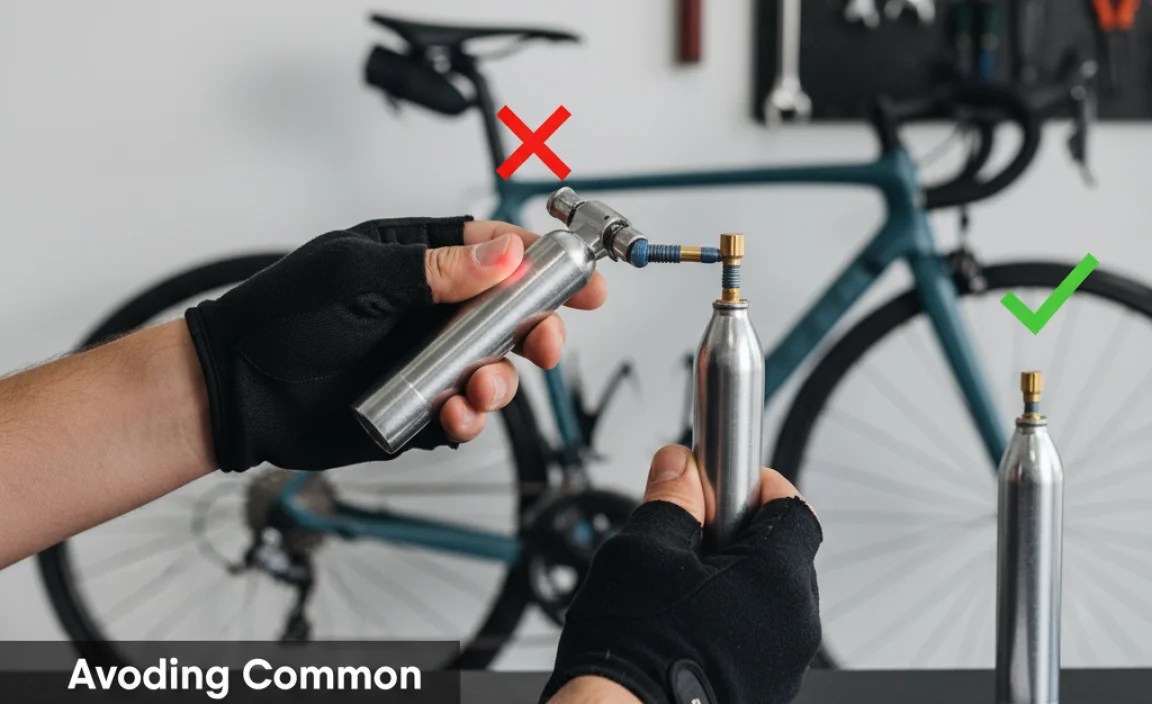
Installing a CO2 inflator seems easy. But, small mistakes can cause big problems. One common error is not threading the cartridge correctly. If it’s not tight, CO2 will leak. This wastes the cartridge. Another error is misaligning the inflator head. If it’s not straight, it won’t seal. This causes air to escape. Always double-check the threads. Make sure they are lined up right. Feel for a good seal before piercing the cartridge. Wear gloves to protect your hands. The CO2 gets very cold. Cold can burn your skin. Take your time during installation. Rushing leads to errors. Practice at home first. This way, you know what to expect. Avoiding these mistakes makes CO2 inflators work better. It also keeps you safe.
- Thread cartridges carefully to avoid leaks.
- Align the inflator head properly for a tight seal.
- Wear gloves to protect from the cold CO2.
- Do not rush; take your time with each step.
- Practice installation at home before using it outside.
- Check threads and seals before piercing the cartridge.
To avoid installation errors, always check your equipment. Make sure the inflator head is clean. Dirt can prevent a good seal. Inspect the cartridge threads for damage. Damaged threads won’t tighten properly. Before you start, plan your steps. Know what to do. This reduces the chance of mistakes. After installing, listen for leaks. If you hear hissing, something is wrong. Stop and check the connections. It’s better to catch a problem early. Fixing it saves CO2 and trouble. A little care during install makes a big difference. You will be able to fix your tire quickly. Then, you can get back to enjoying your ride.
Are You Threading Correctly?
Are you sure you are threading the CO2 cartridge right? Many people rush this step. They think, “It’s just screwing it in!” But, if the threads don’t line up, you’ll have problems. The cartridge won’t seal properly. CO2 will leak everywhere. So, how do you do it right? First, line up the threads carefully. Turn the cartridge slowly. Feel for it to catch. If it feels crooked, stop. Back it out and try again. Don’t force it. Forcing can damage the threads. Once it’s lined up, tighten it firmly. But, don’t over-tighten. Over-tightening can also damage the threads. Threading right takes a little patience. But, it saves a lot of frustration later.
Is the Inflator Head Aligned?
Imagine trying to plug in a phone charger in the dark. If it’s not aligned, it won’t charge. The same thing happens with CO2 inflators. If the head is not aligned, the CO2 will leak. To avoid this, take a moment. Make sure the inflator head is straight. It should line up perfectly with the tire valve. Push it on firmly. If it’s crooked, adjust it. Wiggle it until it fits right. A good seal is important. It keeps the CO2 from escaping. Double-check the alignment before piercing the cartridge. A little care here prevents wasted CO2 and frustration.
Why Wear Gloves?
Have you ever touched something really cold? It can burn your skin. CO2 cartridges get very cold when used. The gas inside expands quickly. This makes the metal very cold. Touching it can give you frostbite. Gloves protect your hands from this cold. They also give you a better grip. This helps you tighten the cartridge. Any gloves will work. Even simple work gloves are good. Don’t skip this step. It keeps your hands safe. It also makes the whole process easier. Gloves are a small thing. But, they make a big difference.
Fun Fact or Stat: CO2 cartridges can reach temperatures as low as -78 degrees Celsius (-109 degrees Fahrenheit) during use!
Managing CO2 Flow and Pressure

Controlling CO2 flow is important. Too much CO2 can pop your tire. Too little won’t fill it enough. Most inflators have a control valve. This valve lets you adjust the flow. Open it slowly. Watch the tire pressure. Stop when it’s firm. If your inflator lacks a valve, be careful. Pierce the cartridge gently. Release the CO2 in short bursts. Check the pressure often. Some people use special gauges. These gauges measure tire pressure. They help you get it just right. Managing CO2 flow takes practice. Don’t be afraid to experiment. But always be careful. The right pressure keeps you safe and riding smoothly.
- Use inflators with control valves for better flow.
- Release CO2 in short bursts if you lack a valve.
- Check tire pressure frequently during inflation.
- Consider using a pressure gauge for accuracy.
- Practice controlling the flow to avoid over-inflation.
- Too much pressure can damage the tire or rim.
To manage CO2 flow well, know your tire’s pressure limits. These limits are on the tire sidewall. They tell you the minimum and maximum pressure. Never exceed the maximum. It can cause a blowout. Under-inflation is also bad. It can cause a flat or rim damage. Start with small bursts of CO2. Check the tire often. Squeeze it to feel the pressure. If it’s too soft, add more air. If it’s too hard, release some. If you are not sure, it is better to add too little. You can always add more CO2 later if needed. Managing pressure is a skill. It takes practice. But it keeps you safe and riding well.
How to Avoid Over-Inflation?
Ever blown up a balloon until it popped? Over-inflating a tire is similar. Too much pressure can cause it to burst. So, how do you avoid this? The key is control. Use an inflator with a control valve. This lets you release CO2 slowly. Watch the tire as you fill it. Feel it often. Stop when it feels firm, but not rock hard. If you don’t have a control valve, be extra careful. Pierce the cartridge gently. Release short bursts of CO2. Check the pressure between bursts. It’s better to under-inflate than over-inflate. You can always add more air. But you can’t un-inflate a tire that’s too full.
What Pressure is Right?
What tire pressure is perfect? It depends on a few things. What kind of bike do you have? Road bikes need higher pressure. Mountain bikes need lower pressure. What kind of tires are you using? Wider tires need less pressure. Narrower tires need more. How much do you weigh? Heavier riders need more pressure. Lighter riders need less. Look at your tire’s sidewall. It shows the recommended pressure range. Start in the middle of that range. Then, adjust it to fit your needs. Experiment a little. Find what feels best for you. The right pressure makes your ride smoother and faster.
Using a Pressure Gauge
Want to be really sure about your tire pressure? Use a pressure gauge. These tools measure pressure accurately. They take the guesswork out of inflation. There are two main types: digital and analog. Digital gauges are easy to read. They show the pressure as a number. Analog gauges have a needle. The needle points to the pressure on a dial. Both types work well. Choose the one you like best. To use a gauge, press it onto the tire valve. It will show the current pressure. Add or release air until it reaches the right level. A gauge makes sure your tires are perfect every time.
| Feature | CO2 Inflator | Hand Pump |
|---|---|---|
| Speed | Very Fast | Slow |
| Portability | Very Portable | Portable |
| Effort | Low | High |
| Cost | Higher (cartridges) | Lower (one-time) |
| Reliability | Dependent on cartridges | Always available |
Fun Fact or Stat: Tire pressure is usually measured in PSI (pounds per square inch) or BAR (a metric unit). Knowing both helps you use different gauges.
Choosing the Right CO2 Cartridge

Picking the right CO2 cartridge is key. Cartridges come in different sizes. The size you need depends on your tire size. Road bike tires are small. They need less CO2. Mountain bike tires are bigger. They need more CO2. A 16-gram cartridge works well for road bikes. A 25-gram cartridge is good for mountain bikes. Check your tire’s recommended pressure. Then, choose a cartridge that can reach that pressure. It’s better to have a little extra CO2. Running out of air is frustrating. Always carry a spare cartridge. This way, you are ready for anything. The right cartridge makes tire fixes easier. It gets you back on your ride faster.
- Match the cartridge size to your tire size.
- 16-gram cartridges work for road bikes.
- 25-gram cartridges are good for mountain bikes.
- Check your tire’s recommended pressure.
- Carry spare cartridges just in case.
- Consider tubeless tire repair needs.
To choose the best CO2 cartridge, think about your riding style. Are you a road cyclist? Or a mountain biker? Road cyclists need light cartridges. They also need less volume. Mountain bikers need more volume. They also need stronger cartridges. Tubeless tires need special attention. They often need more CO2 to seal. Look for cartridges designed for tubeless use. Consider the inflator head too. Some heads only work with certain cartridges. Make sure they are compatible. A little research helps you choose right. You will be prepared for any flat tire. You will be able to fix it quickly. Then, you can enjoy your ride without worry.
What Size Cartridge Do I Need?
Choosing the right size CO2 cartridge is like picking the right size shoes. Too small, and they won’t fit. Too big, and they’ll be uncomfortable. The same goes for CO2 cartridges. Too small, and your tire won’t inflate fully. Too big, and you might waste CO2. So, how do you choose? Look at your tire size. Road bike tires need less CO2. A 16-gram cartridge is usually enough. Mountain bike tires need more CO2. A 25-gram cartridge is better. Check your tire’s recommended pressure. Choose a cartridge that can reach that pressure. When in doubt, go bigger. It’s better to have too much CO2 than not enough.
CO2 Cartridge Materials
Have you ever wondered what CO2 cartridges are made of? Most are made of steel or aluminum. Steel cartridges are strong. They can handle high pressure. But, they can rust if they get wet. Aluminum cartridges are lighter. They don’t rust. But, they might not be as strong. Both materials work well. Choose the one that fits your needs. If you ride in wet conditions, choose aluminum. If you need extra strength, choose steel. No matter what material, always handle cartridges carefully. They are under pressure. Damaging them can be dangerous.
Checking Cartridge Compatibility
Not all CO2 cartridges work with all inflators. It’s like trying to use the wrong charger for your phone. It just won’t fit. To avoid this, check compatibility. Look at your inflator head. See what type of cartridges it uses. Some inflators use threaded cartridges. Others use non-threaded cartridges. Make sure you buy the right type. Read the inflator’s instructions. They will tell you which cartridges to use. If you are not sure, ask a bike shop. They can help you find the right match. Choosing the right cartridges makes tire fixes easier. It also prevents accidents.
Fun Fact or Stat: CO2 cartridges have a shelf life. They can last for many years if stored properly, but it’s best to use them within 5 years of purchase.
Dealing With Freezing Inflators
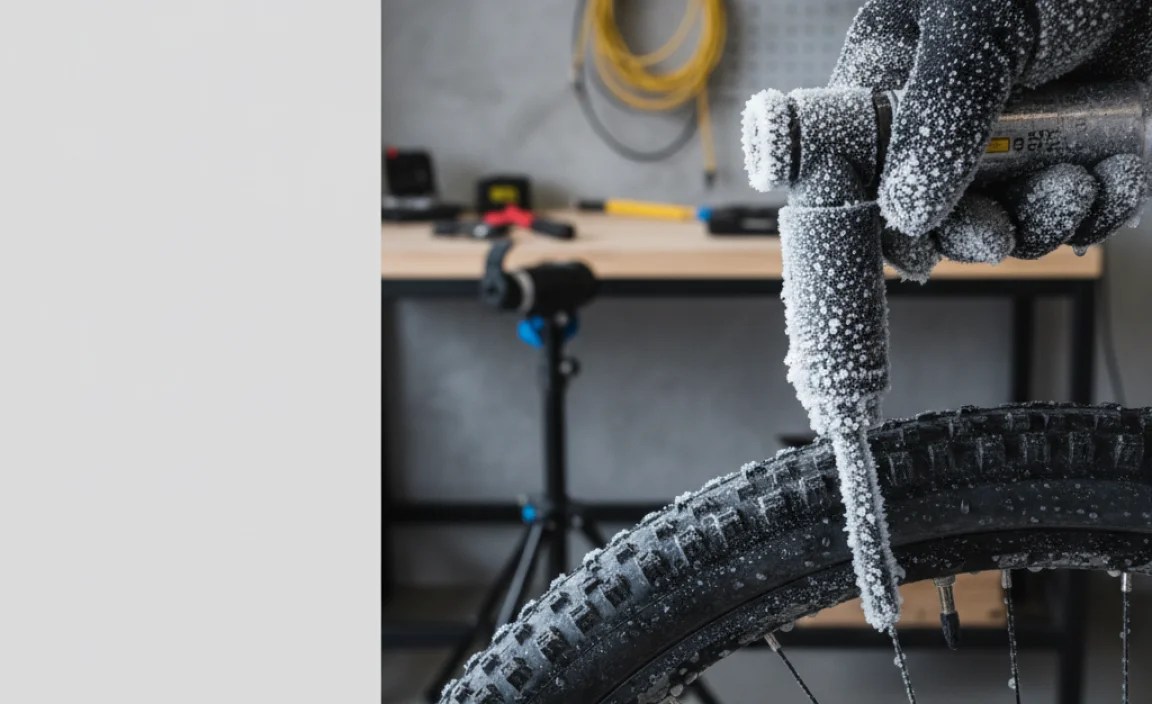
CO2 inflators get very cold when used. The rapid expansion of gas causes freezing. This can burn your skin. It can also make the inflator hard to handle. To deal with freezing, wear gloves. Gloves protect your hands from the cold. Use an inflator with a sleeve. A sleeve is a cover that insulates the inflator. This keeps it from getting too cold. Release the CO2 in short bursts. This gives the inflator time to warm up. Don’t hold the inflator for too long. Take breaks between bursts. If your hands get too cold, stop. Warm them up before continuing. Dealing with freezing makes CO2 inflators safer to use. It prevents burns and discomfort.
- Always wear gloves to protect your hands.
- Use inflators with insulated sleeves.
- Release CO2 in short, controlled bursts.
- Take breaks to let the inflator warm up.
- Avoid prolonged contact with bare skin.
- Have alternative inflation methods in case of issues.
To deal with freezing inflators effectively, prepare ahead. Carry thick gloves. Leather or insulated gloves work best. Keep them in an easy-to-reach pocket. This way, you can put them on quickly. If you don’t have a sleeve, wrap the inflator. Use a cloth or piece of foam. This adds insulation. Know the signs of frostbite. Numbness and pale skin are warnings. If you see these signs, stop using the inflator. Warm your hands right away. Freezing inflators are a challenge. But, with the right steps, you can handle them safely. You can fix your tire without getting hurt.
Why Do Inflators Get So Cold?
Have you ever felt something get cold when air rushes out? This happens with CO2 inflators too. The gas inside is compressed. When it’s released, it expands quickly. Expanding gas cools down. This is a basic rule of physics. The faster the gas expands, the colder it gets. This is why CO2 inflators freeze. It’s not a malfunction. It’s just how they work. Knowing this helps you prepare. You know to wear gloves. You know to be careful. Understanding the science makes you a safer rider.
Using Insulated Sleeves
Imagine holding a hot cup of coffee without a sleeve. It would burn your hand. Insulated sleeves protect your hands from cold inflators. They are made of foam or rubber. These materials don’t conduct heat well. They keep the cold away from your skin. Some inflators come with sleeves. If yours doesn’t, you can buy one. Or you can make your own. Cut a piece of foam. Wrap it around the inflator. Secure it with tape. A simple sleeve makes a big difference. It makes using CO2 inflators much more comfortable.
First Aid for Cold Burns
What if you touch a freezing inflator by accident? You might get a cold burn. It’s similar to a regular burn. But instead of heat, it’s caused by cold. The first step is to warm the affected area. Run lukewarm water over it. Don’t use hot water. Hot water can damage the skin. Wrap the area in a warm cloth. Don’t rub it. Rubbing can make it worse. If the burn is severe, see a doctor. Severe burns can cause lasting damage. Knowing first aid helps you act quickly. It can prevent serious problems.
Fun Fact or Stat: The scientific process of gas expanding and cooling is called the Joule-Thomson effect. This is what causes CO2 inflators to get so cold.
Troubleshooting Common Issues
Sometimes, CO2 inflators don’t work right. The tire won’t inflate. CO2 leaks out. The inflator jams. These problems can be frustrating. But, most have easy fixes. If the tire won’t inflate, check the connection. Make sure the inflator head is tight. Check the cartridge. Is it empty? If CO2 leaks, tighten the connections. The threads may be loose. If the inflator jams, try a different cartridge. The first one might be faulty. Always carry extra cartridges. They can save the day. Knowing how to troubleshoot helps you stay calm. You can fix problems quickly. Then, you can get back to your ride.
- Check connections if the tire won’t inflate.
- Tighten threads to stop CO2 leaks.
- Try a different cartridge if the inflator jams.
- Carry extra cartridges for emergencies.
- Inspect the valve core for damage.
- Ensure the valve is open.
To troubleshoot well, understand common causes. A dirty valve can block airflow. Clean it with a small brush. A bent valve core can prevent inflation. Straighten it carefully. An empty cartridge won’t inflate anything. Replace it with a full one. Before you start, inspect your equipment. Look for damage. Check for dirt. A little prevention goes a long way. If you can’t fix the problem, don’t force it. Use a hand pump instead. Or call for help. Knowing your limits is important. It keeps you safe. It also prevents further damage.
Why Won’t My Tire Inflate?
Imagine trying to blow up a balloon with a hole in it. No matter how hard you blow, it won’t inflate. The same thing can happen with your tire. If the inflator head isn’t on tight, the air will leak out. If the cartridge is empty, there’s no air to fill the tire. Check these things first. Make sure the head is tight. Try a new cartridge. If it still won’t inflate, check the tire itself. There might be a big hole. If so, you’ll need a patch or a new tube.
Fixing Leaks
Hearing a hissing sound is never good when fixing a tire. It means air is escaping. Find the leak. Check the connection between the inflator head and the tire valve. Tighten it. If that doesn’t work, check the connection between the head and the cartridge. Tighten that too. Sometimes, the valve core is loose. Use a valve core tool to tighten it. If you still hear a leak, the tire itself might be damaged. Look for holes or cuts. Patch them if you can. If not, replace the tube.
Dealing with Jammed Inflators
A jammed inflator is a pain. It stops you from fixing your tire. First, try a new cartridge. The old one might be faulty. If that doesn’t work, check the inflator head. There might be dirt inside. Clean it with a small brush. Sometimes, the piercing needle is bent. Try to straighten it carefully. If you can’t fix it, don’t force it. You might break it. Use a hand pump instead. Or ask for help. It’s better to be safe than sorry.
Fun Fact or Stat: Many professional cyclists carry two CO2 inflators and multiple cartridges during races to ensure they can handle multiple flat tires.
Summary
Using a CO2 inflator can be fast and easy. But, common mistakes using CO2 inflator and how to avoid them can cause problems. Make sure to thread the cartridge correctly. Align the inflator head properly. Always wear gloves. Control the CO2 flow to avoid over-inflation. Choose the right size cartridge for your tire. Deal with freezing inflators by using insulated sleeves. Troubleshoot common issues like leaks and jams. By following these tips, you can fix flat tires quickly and safely. This knowledge will help you fix problems on the go. Now you can get back to enjoying your ride. Stay safe and keep rolling!
Conclusion
CO2 inflators are great for quick tire repairs. They are small and easy to carry. Knowing common mistakes using CO2 inflator and how to avoid them makes you a better cyclist. Always practice using your inflator at home first. This helps you become familiar with the steps. Remember to wear gloves and control the CO2 flow. Carry extra cartridges for emergencies. With these tips, you’ll be ready for any flat tire. You can fix it quickly and get back on the road!
Frequently Asked Questions
Question No 1: Why is my CO2 inflator leaking?
Answer: A leaking CO2 inflator is a common problem. Usually, it’s due to a loose connection. Check where the cartridge screws into the inflator head. Make sure it’s tight. Also, check the connection between the inflator head and the tire valve. Ensure it’s properly sealed. Sometimes, the valve core in your tire is loose. Use a valve core tool to tighten it. If the leaking continues, the inflator head may be damaged. A damaged inflator head can prevent a proper seal. Consider replacing it. Learning about common mistakes using CO2 inflator and how to avoid them helps you fix this issue quickly and safely.
Question No 2: Can I reuse a CO2 cartridge?
Answer: No, you cannot reuse a CO2 cartridge. These cartridges are designed for single use. Once you pierce the cartridge, the CO2 gas is released. The cartridge is then empty. Trying to refill it is dangerous. It can cause the cartridge to explode. Always dispose of empty cartridges properly. Some recycling centers accept them. Check your local regulations. It is important to use a new cartridge each time you need to inflate a tire. This ensures you have enough pressure. It also ensures the inflator works correctly. Understanding this helps avoid common mistakes using CO2 inflator and how to avoid them.
Question No 3: How do I dispose of used CO2 cartridges?
Answer: Disposing of used CO2 cartridges properly is important. First, make sure the cartridge is completely empty. You can do this by attaching it to the inflator head. Then, release any remaining gas. Once empty, check your local recycling guidelines. Some areas allow you to recycle steel cartridges. Others require you to dispose of them as scrap metal. Never throw full or partially full cartridges in the trash. They can be dangerous. Puncturing them can cause an explosion. Always follow local regulations to ensure safe disposal. Knowing this prevents accidents and helps the environment.
Question No 4: What should I do if I over-inflate my tire?
Answer: Over-inflating your tire can be dangerous. Too much pressure can cause the tire to explode. If you over-inflate, release some air. Use a tire pressure gauge to check the pressure. Press the gauge onto the tire valve. It will show the current pressure. Gently press the valve core to release air. Check the pressure again. Repeat this process until you reach the correct pressure. The correct pressure is usually printed on the tire sidewall. Always stay within the recommended range. This prevents blowouts and ensures a safe ride. It is also one of the key things to remember when learning about common mistakes using CO2 inflator and how to avoid them.
Question No 5: Can I use a CO2 inflator on tubeless tires?
Answer: Yes, you can use a CO2 inflator on tubeless tires. However, there are a few things to keep in mind. Tubeless tires often need more air to seat properly. Use a larger CO2 cartridge. A 25-gram cartridge is usually best. After inflating, check the tire sealant. Make sure it seals any small leaks. Sometimes, CO2 can cause the sealant to dry out. This can lead to slow leaks. After your ride, check the tire pressure again. Add air with a pump if needed. CO2 can be a quick fix for tubeless tires. But, it’s important to monitor the tire afterwards. Avoiding common mistakes using CO2 inflator and how to avoid them is very important.
Question No 6: Are there alternatives to CO2 inflators?
Answer: Yes, there are several alternatives to CO2 inflators. One common alternative is a hand pump. Hand pumps are reliable and don’t require cartridges. They are great for long rides. Another option is a mini pump. Mini pumps are small and easy to carry. However, they can take longer to inflate a tire. Some cyclists use electric pumps. These pumps are battery-powered. They inflate tires quickly and easily. Each option has its pros and cons. Consider your needs and riding style. Choose the one that works best for you. Knowing the alternatives helps you prepare for any situation. It also helps you avoid common mistakes using CO2 inflator and how to avoid them.


