
CO2 Inflator for Tubeless Tyres: Smart Bleed/Seal Tip

Have you ever gotten a flat tire far from home? It can be a real bummer. Imagine you’re riding your bike. Suddenly, you hear a “hiss” and your tire goes flat. What do you do? A CO2 inflator for tubeless tires can help. But do you know about the bleed/seal tip? Let’s find out how to use one.
Key Takeaways
- A CO2 inflator for tubeless tires quickly refills tires on the go.
- Using the bleed/seal tip helps control CO2 flow for a better seal.
- Always check your tire pressure after using a CO2 inflator.
- Practice using the inflator at home before you need it on the road.
- Carry extra CO2 cartridges in case you need to refill again.
Understanding CO2 Inflators for Tubeless Tires

A CO2 inflator for tubeless tires is a small tool. It helps you fill your tires with air quickly. It uses a cartridge filled with CO2 gas. This gas inflates the tire fast. Tubeless tires don’t have an inner tube. They seal directly to the wheel. This can make them harder to inflate. A CO2 inflator is useful because it delivers a burst of air. The bleed/seal tip is important. It controls how fast the CO2 goes into the tire. This helps the tire seal properly against the wheel. Without it, the air might leak out before the tire seals. It’s good to understand how these inflators work. This makes fixing a flat tire much easier. Always read the instructions before using one.
- CO2 inflators are small and easy to carry.
- They fill tires much faster than hand pumps.
- Tubeless tires need a quick burst of air to seal.
- The bleed/seal tip controls the CO2 flow.
- Practice using the inflator before a real flat.
Using a CO2 inflator for tubeless tires can seem tricky. But it gets easier with practice. The bleed/seal tip is a small part. However, it plays a big role. It helps you control the flow of CO2. This stops you from over-inflating the tire. It also helps the tire seal correctly. Some people worry about damaging their tires. But with the right technique, it’s safe. Make sure to check the tire pressure after inflating. This will ensure you are at the right PSI. Knowing how to use this tool gives you confidence. You can fix flats quickly and get back to riding.
What is a CO2 Inflator?
Have you ever seen a tiny metal cylinder attached to a bike tire? That might be a CO2 inflator. It’s a small device. It releases compressed carbon dioxide (CO2) gas. This gas quickly fills a tire with air. They are useful for fixing flat tires fast. They are much quicker than using a hand pump. Many cyclists carry them on rides. They are lightweight and easy to use. But, it’s important to know how to use them correctly. The bleed/seal tip is a key part. It helps control the flow of CO2. This prevents over-inflation and helps the tire seal well.
Why Use CO2 for Tubeless Tires?
Why not just use a regular pump? Well, tubeless tires can be tricky. They need a quick burst of air to seal. This pushes the tire against the rim. A hand pump might not be fast enough. CO2 inflators deliver air very quickly. This helps the tire seat properly. Think of it like blowing up a balloon really fast. The sudden rush of air makes it pop open. CO2 does the same for your tubeless tire. The bleed/seal tip allows you to control that rush of air. It makes the process safer and more effective.
How Does the Bleed/Seal Tip Work?
Imagine a tiny valve on the CO2 inflator. That’s the bleed/seal tip. It controls how much CO2 goes into the tire. It also seals the cartridge to the inflator. When you twist or press the tip, it opens the valve. This lets the CO2 flow. By adjusting the tip, you can control the flow. This helps prevent over-inflation. It also helps the tire seal correctly. Some tips have a button to release small amounts of CO2. This is useful for fine-tuning the tire pressure. The bleed/seal tip is a small but important part of the inflator.
Fun Fact or Stat: Did you know that CO2 cartridges can inflate a tire in under 30 seconds?
Choosing the Right CO2 Inflator for You

Picking the right CO2 inflator can feel like a big decision. There are many different types. Some are simple and basic. Others have extra features. Consider what you need most. Do you want something small and light? Or do you prefer something with more control? The bleed/seal tip is a key feature to look for. It allows you to adjust the CO2 flow. This helps prevent over-inflation. Also, think about the type of valve your tires have. Some inflators only work with certain valves. Read reviews and compare models. Find one that fits your needs and budget. A good inflator can make flat tire repairs much easier.
- Consider the size and weight of the inflator.
- Check if it works with your tire valves.
- Look for a bleed/seal tip for better control.
- Read reviews from other cyclists.
- Think about your budget and needs.
Many cyclists find it helpful to have a few options. A small, basic inflator is good for short rides. A more advanced inflator with a bleed/seal tip is useful for longer trips. It gives you more control over the inflation process. Some inflators come with a pressure gauge. This helps you check the tire pressure as you inflate. Remember to buy extra CO2 cartridges. You don’t want to run out in the middle of a ride. Practice using the inflator at home. This way, you’ll be ready when you get a flat on the road. Choosing the right CO2 inflator can make a big difference in your cycling experience.
What are the Different Types of Inflators?
Have you seen those tiny inflators that look like little rockets? Those are CO2 inflators. Some are very simple. You just screw in the cartridge and go. Others have more features. Some have a bleed/seal tip to control the air flow. Some have a gauge to show the tire pressure. Some even have a built-in valve tool. The type you choose depends on your needs. If you want something light and simple, choose a basic model. If you want more control, choose one with extra features. No matter what, make sure it works with your tire valves.
What Features Should You Look For?
When buying a CO2 inflator, think about what’s important to you. Do you want something small and light? Or do you want more control? A bleed/seal tip is a great feature. It lets you control the flow of CO2. This helps prevent over-inflation. A pressure gauge is also useful. It shows you how much air is in the tire. Some inflators have a built-in valve tool. This can be handy for tightening or removing valve cores. Consider these features when making your choice. They can make fixing a flat tire much easier.
How to Match the Inflator to Your Tire Valves?
Bike tires have different types of valves. The two main types are Presta and Schrader. Presta valves are long and thin. Schrader valves are shorter and wider. CO2 inflators need to match your valve type. Some inflators work with both types. They have adapters to switch between them. Others only work with one type. Check your tire valves before buying an inflator. Make sure they are compatible. Using the wrong inflator can damage your valve. It can also make it impossible to inflate your tire. Always double-check before you buy.
Fun Fact or Stat: Many professional cyclists use CO2 inflators during races to quickly get back in the competition!
Step-by-Step Guide: Using a CO2 Inflator
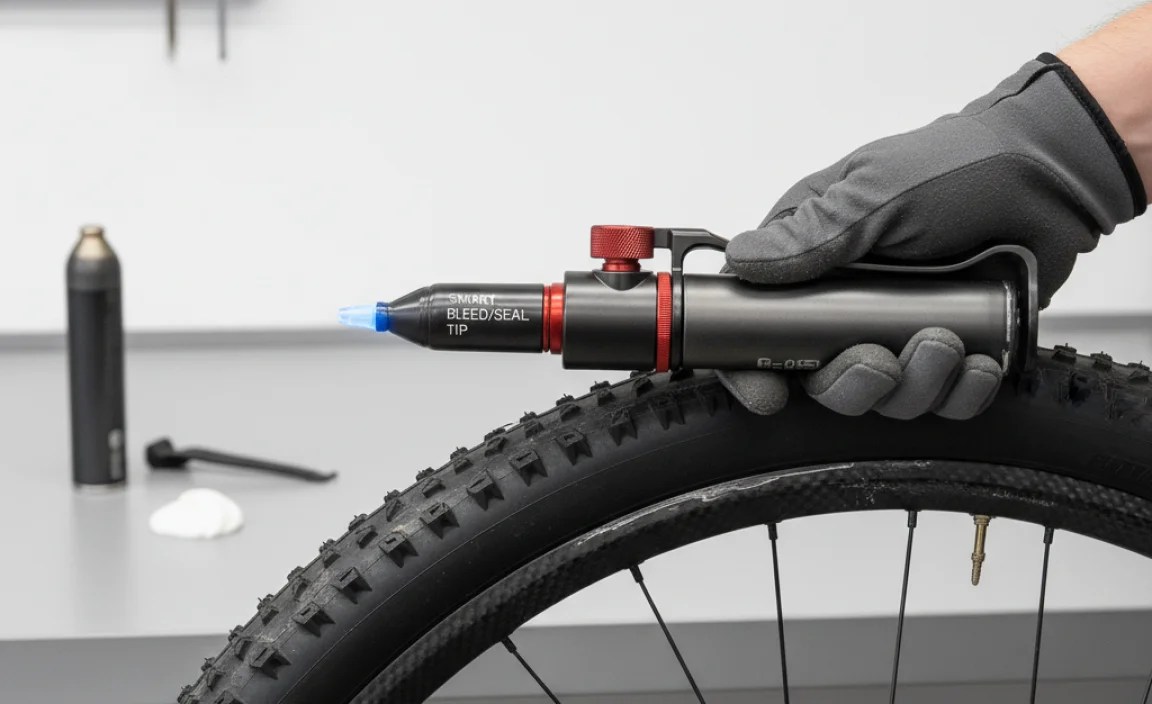
Using a CO2 inflator might seem hard. But it’s easy once you know the steps. First, find the hole in your tire. If you have a tubeless tire, you might need to plug it. Then, attach the CO2 inflator to the tire valve. Make sure it’s on tight. Next, activate the inflator. This releases the CO2 gas. Use the bleed/seal tip to control the flow. Fill the tire to the right pressure. Be careful not to over-inflate. Finally, remove the inflator. Check the tire pressure again. Now you’re ready to ride.
- Find the hole in your tire.
- Attach the CO2 inflator to the valve.
- Activate the inflator to release CO2.
- Use the bleed/seal tip to control the flow.
- Check the tire pressure after inflating.
Practicing these steps at home is a good idea. This way, you’ll be ready when you get a flat on the road. The bleed/seal tip is your friend. It gives you control over the inflation process. Always carry extra CO2 cartridges. You never know when you might need them. Also, bring a small multi-tool. This can help with other repairs. Remember to stay calm and take your time. Fixing a flat tire is a skill you can learn. With the right tools and knowledge, you’ll be back on the road in no time.
Preparing Your Tire and Inflator
Before you use your CO2 inflator, get everything ready. First, find the hole in your tire. If it’s a small hole, you might be able to use sealant. If it’s a big hole, you’ll need to plug it. Next, check your CO2 inflator. Make sure it’s working properly. Attach a CO2 cartridge to the inflator. But don’t activate it yet. Make sure the bleed/seal tip is ready to use. This will help you control the air flow. Having everything ready will make the process smoother.
Attaching the Inflator and Releasing CO2
Now it’s time to attach the CO2 inflator to your tire valve. Make sure it’s on tight. If it’s loose, the CO2 will leak out. Once it’s secure, activate the inflator. This will release the CO2 gas. Hold the inflator steady. Use the bleed/seal tip to control the flow. Don’t release all the CO2 at once. Use short bursts. This will help prevent over-inflation. Keep an eye on the tire. You want to fill it to the right pressure. This step requires a bit of practice.
Checking Tire Pressure and Final Adjustments
After you’ve inflated your tire, check the pressure. You can use a tire pressure gauge. This will tell you how much air is in the tire. The correct pressure is usually written on the side of the tire. If the pressure is too low, add more CO2. Use the bleed/seal tip to control the flow. If the pressure is too high, release some air. Again, use the bleed/seal tip. Make small adjustments until the pressure is just right. This will ensure a safe and comfortable ride.
Fun Fact or Stat: Over-inflating your tires can lead to a blowout, while under-inflating can cause a flat!
Bleeding/Sealing Tips for Tubeless Success

The bleed/seal tip is key to using a CO2 inflator for tubeless tires. It helps you control the CO2 flow. This prevents over-inflation and helps the tire seal. When you first attach the inflator, use short bursts of CO2. This allows the tire to seat properly on the rim. Watch the tire closely. If you see air leaking, try adjusting the bleed/seal tip. Sometimes a small adjustment is all you need. Practice using the tip at home. This way, you’ll be comfortable using it on the road. A good bleed/seal technique can make all the difference.
- Use short bursts of CO2 at first.
- Watch the tire for leaks as you inflate.
- Adjust the bleed/seal tip for better control.
- Practice at home before using it on the road.
- Make sure the tire seats properly on the rim.
Some cyclists find it helpful to carry a small rag. They use it to wipe the rim and tire. This helps create a better seal. Also, make sure your tire sealant is fresh. Old sealant can dry out and not work as well. If you’re having trouble sealing the tire, try spinning the wheel. This can help distribute the sealant. Remember, patience is important. It might take a few tries to get the tire to seal. But with the right technique and the bleed/seal tip, you’ll get there. Knowing these tips can save you time and frustration on the road.
Why is Bleeding Important?
Have you ever tried to fill a balloon too quickly? It can pop! The same thing can happen with a tire. If you release all the CO2 at once, you can over-inflate the tire. This can damage the tire or even cause it to explode. Bleeding, or controlling the flow of CO2, is important. It allows you to fill the tire slowly and safely. The bleed/seal tip helps you do this. It lets you release small amounts of CO2 at a time. This gives you more control over the inflation process.
How Does Sealing Work with Tubeless Tires?
Tubeless tires don’t have an inner tube. They seal directly to the wheel rim. This can be tricky. The tire needs to fit tightly against the rim. If there are any gaps, air will leak out. To seal the tire, you need a quick burst of air. This pushes the tire against the rim. The CO2 inflator provides that burst of air. The bleed/seal tip helps you control it. By releasing the CO2 quickly but carefully, you can seal the tire properly. This prevents air leaks and keeps you rolling.
Troubleshooting Common Sealing Issues
Sometimes, even with the right technique, your tire might not seal. What do you do then? First, check for any debris between the tire and the rim. Small rocks or dirt can prevent a good seal. Remove any debris you find. Next, try spinning the wheel. This can help distribute the sealant. If you still have leaks, try adding more sealant. Sometimes, the sealant has dried out. Finally, make sure your tire is properly seated on the rim. If it’s not, try deflating the tire and reseating it. With a little patience, you can usually solve these issues.
Fun Fact or Stat: Tubeless tires often have fewer flats than traditional tires with inner tubes!
Safety First: CO2 Inflator Precautions

Using a CO2 inflator is usually safe. But there are some things to keep in mind. First, CO2 cartridges get very cold when used. Don’t touch the cartridge with your bare hands. It can cause frostbite. Wear gloves or use a cloth to hold it. Also, be careful not to over-inflate the tire. This can cause a blowout. Use the bleed/seal tip to control the flow of CO2. Never point the inflator at your face or other people. The sudden burst of gas can be dangerous. Always follow the manufacturer’s instructions. Safety should always be your top priority.
- CO2 cartridges get very cold when used.
- Wear gloves to protect your hands.
- Be careful not to over-inflate the tire.
- Never point the inflator at your face.
- Follow the manufacturer’s instructions.
It’s a good idea to practice using the CO2 inflator at home. This will help you get comfortable with the process. It will also help you learn how to use the bleed/seal tip effectively. Always store CO2 cartridges in a safe place. Keep them away from heat and direct sunlight. Dispose of empty cartridges properly. Don’t leave them on the road. Recycling them is a good option. By following these precautions, you can use a CO2 inflator safely and effectively.
Handling Cold Cartridges Safely
Have you ever touched something really cold and felt a burning sensation? That’s frostbite. CO2 cartridges get very cold when they release gas. This can cause frostbite if you touch them with your bare hands. To avoid this, always wear gloves when using a CO2 inflator. If you don’t have gloves, use a cloth or rag to hold the cartridge. This will protect your hands from the cold. Be careful not to drop the cartridge. It could cause injury.
Avoiding Over-Inflation Dangers
Over-inflating your tires can be dangerous. It can cause the tire to explode. This is called a blowout. A blowout can cause you to lose control of your bike. It can also cause serious injury. To avoid over-inflation, use the bleed/seal tip on your CO2 inflator. This allows you to control the flow of CO2. Fill the tire slowly and carefully. Check the tire pressure frequently. The correct pressure is usually written on the side of the tire. Never exceed the maximum pressure.
Proper Storage and Disposal of Cartridges
CO2 cartridges should be stored in a safe place. Keep them away from heat and direct sunlight. Heat can cause the cartridges to explode. Sunlight can damage the cartridges. Store them in a cool, dry place. When you’re done with a cartridge, dispose of it properly. Don’t leave it on the road. This can be dangerous for other cyclists and drivers. Some cartridges can be recycled. Check with your local recycling center. Always follow local regulations for disposal.
Fun Fact or Stat: The pressure in a CO2 cartridge can reach over 800 pounds per square inch (PSI)!
Alternatives to CO2 Inflators
CO2 inflators are great for quick fixes. But they aren’t the only option. Hand pumps are a classic choice. They take longer, but they don’t require cartridges. Electric pumps are another alternative. They are small and easy to use. They run on batteries. Some cyclists also carry a small air compressor. This can be useful for tubeless tires. Each option has its pros and cons. Consider what works best for you. Think about your riding style and needs. You might even want to carry both a CO2 inflator and a hand pump. This gives you a backup option.
| Tool | Pros | Cons | Best For |
|---|---|---|---|
| CO2 Inflator | Fast inflation, lightweight | Requires cartridges, can be cold | Quick fixes during races or rides |
| Hand Pump | No cartridges needed, reliable | Takes longer, requires effort | Everyday rides and backups |
| Electric Pump | Easy to use, battery-powered | Requires charging, can be heavy | Home use or long trips |
| Air Compressor | Powerful, good for tubeless | Bulky, requires power source | Home use or car trips |
- Hand pumps are a reliable alternative.
- Electric pumps are easy to use.
- Air compressors can inflate tubeless tires.
- Consider the pros and cons of each option.
- Think about your riding style and needs.
If you choose a hand pump, look for one with a good gauge. This will help you inflate the tire to the right pressure. Electric pumps are convenient, but they need to be charged. Make sure to keep them charged before your rides. Air compressors are powerful, but they are larger and heavier. They are best for home use or car trips. No matter which option you choose, practice using it. This way, you’ll be ready when you get a flat. Knowing your options can give you peace of mind on the road.
Hand Pumps: The Classic Choice
Have you ever seen someone using a small pump to inflate a tire? That’s a hand pump. They are a classic choice for cyclists. Hand pumps don’t require CO2 cartridges. You just use your own muscle power to pump air into the tire. They are reliable and easy to use. But they can take longer than CO2 inflators. Some hand pumps have a built-in gauge. This helps you check the tire pressure. Hand pumps are a good option for everyday rides. They are also a good backup for CO2 inflators.
Electric Pumps: Convenience on the Go
Electric pumps are a modern alternative to hand pumps. They are small and battery-powered. You just attach them to the tire valve and press a button. The pump does the work for you. Electric pumps are convenient and easy to use. But they need to be charged. Make sure to keep them charged before your rides. Electric pumps can be a good option for people who have trouble using hand pumps. They are also good for inflating tires quickly.
Air Compressors: Powerful Inflation at Home
Air compressors are larger and more powerful than hand pumps or electric pumps. They are usually used at home or in a garage. Air compressors can inflate tires very quickly. They are also good for inflating tubeless tires. Tubeless tires need a quick burst of air to seal. Air compressors can provide that burst of air. But they are not very portable. You can’t easily carry them on a bike ride. Air compressors are best for home use.
Fun Fact or Stat: The first bicycle pump was invented in the 1880s and was much larger and heavier than today’s pumps!
Summary
A CO2 inflator for tubeless tires is a useful tool. It helps you fix flat tires quickly. The bleed/seal tip is an important part. It controls the flow of CO2. This prevents over-inflation and helps the tire seal. To use a CO2 inflator, attach it to the tire valve. Then, release the CO2. Use the bleed/seal tip to control the flow. Check the tire pressure after inflating. Remember to be careful and follow safety precautions. Alternatives to CO2 inflators include hand pumps and electric pumps. Choose the option that works best for you. Practice using your inflator at home. This way, you’ll be ready when you get a flat on the road.
Conclusion
Knowing how to use a CO2 inflator for tubeless tires can save you time and trouble. The bleed/seal tip is key to controlling the CO2 flow. Practice using the inflator at home. This way, you’ll be prepared for flats on the road. Remember to stay safe and follow the instructions. With a little practice, you’ll be able to fix flats quickly and get back to riding. A CO2 inflator is a valuable tool for any cyclist.
Frequently Asked Questions
Question No 1: What is a CO2 inflator and how does it work?
Answer: A CO2 inflator is a small device. It uses a cartridge filled with compressed carbon dioxide (CO2) gas. When you activate the inflator, it releases the gas. This gas quickly fills your tire with air. They are very useful for fixing flat tires quickly. They are much faster than using a hand pump. The bleed/seal tip is a key component. It allows you to control the flow of the gas. This prevents over-inflation and helps the tire seal properly.
Question No 2: Why should I use a CO2 inflator for tubeless tires?
Answer: Tubeless tires can be tricky to inflate. They need a quick burst of air to seal against the rim. A hand pump might not be fast enough. CO2 inflators deliver air very quickly. This helps the tire seat properly. The bleed/seal tip is also important. It allows you to control the flow of air. This prevents over-inflation. It also helps the tire seal correctly. Using a CO2 inflator can make inflating tubeless tires much easier.
Question No 3: What is a bleed/seal tip and why is it important?
Answer: The bleed/seal tip is a small part of the CO2 inflator. It controls how much CO2 goes into the tire. It also helps seal the cartridge to the inflator. When you twist or press the tip, it opens the valve. This lets the CO2 flow. By adjusting the tip, you can control the flow. This helps prevent over-inflation. It also helps the tire seal correctly. The bleed/seal tip is a small but important part of the inflator. It allows you to have better control of the CO2 release.
Question No 4: How do I use a CO2 inflator with a bleed/seal tip?
Answer: First, attach the CO2 inflator to the tire valve. Make sure it’s on tight. Next, activate the inflator. This releases the CO2 gas. Use the bleed/seal tip to control the flow. Release the gas in short bursts. This helps prevent over-inflation. Watch the tire closely as you inflate it. Once the tire is inflated, check the pressure. Use a tire pressure gauge. If the pressure is too high, release some air using the bleed/seal tip.
Question No 5: Are there any safety precautions I should take when using a CO2 inflator?
Answer: Yes, there are a few safety precautions to keep in mind. CO2 cartridges get very cold when used. Don’t touch the cartridge with your bare hands. It can cause frostbite. Wear gloves or use a cloth to hold it. Also, be careful not to over-inflate the tire. This can cause a blowout. Use the bleed/seal tip to control the flow of CO2. Never point the inflator at your face or other people. Always follow the manufacturer’s instructions. These tools, when used correctly, are safe and reliable.
Question No 6: What are some alternatives to using a CO2 inflator?
Answer: While CO2 inflators are handy, there are other options. Hand pumps are a classic choice. They take longer but don’t need cartridges. Electric pumps are battery-powered and easy to use. Some cyclists carry small air compressors. Each has pros and cons. A hand pump is reliable and doesn’t need refills. An electric pump is convenient but needs charging. An air compressor is powerful but less portable. Consider what fits your needs best and how well the bleed/seal tip helps you.


